Antimicrobials
Subcategories of "Antimicrobials"
- Antibiotics(4,137 products)
- Antifungals(904 products)
- Antiparasitics(700 products)
- Antivirals(767 products)
Found 2432 products of "Antimicrobials"
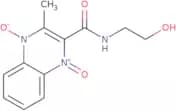
Olaquindox
CAS:Olaquindox is a quinoxaline derivative antibiotic with action on bacterial growth suppression in the gut and is used for promoting growth and controlling bacterial infections in livestock.
Formula:C12H13N3O4Purity:Min. 95%Color and Shape:PowderMolecular weight:263.25 g/molRef: 3D-FO26542
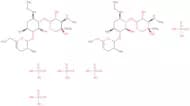
Discontinued productNetilmicin sulfate
CAS:Netilmicin sulfate is an aminoglycoside antibiotic with action on bacterial protein synthesis by binding to the 30S ribosomal subunit and is used for treating severe bacterial infections.
Formula:C42H92N10O34S5Purity:Min. 595 Ug/MgColor and Shape:PowderMolecular weight:1,441.56 g/molRef: 3D-AN36889
Discontinued productPristinamycin
CAS:Pristinamycin is a streptogramin antibiotic with action on bacterial protein synthesis by binding to the 50S ribosomal subunit and is used for treating staphylococcal and streptococcal infections, including MRSA.
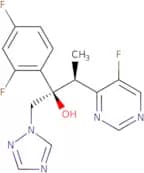
Formula:C73H89N11O17Purity:Min. 95%Color and Shape:PowderMolecular weight:1,392.55 g/molVoriconazole - Bio-X ™
CAS:Voriconazole is a synthetic, lipophilic molecule that is used in the treatment of fungal infections. Voriconazole binds to ergosterol which is the major sterol in the cell wall of fungi and inhibits its synthesis, leading to cell death. This drug binds to the enzyme 14α-demethylase allowing the conversion of lanosterol into ergosterol. As a result, this binding leads to the inhibition of ergosterol synthesis, as well as other sterols that are necessary for fungal growth (e.g., squalene).
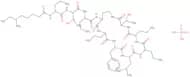
Formula:C16H14F3N5OPurity:Min. 95%Color and Shape:PowderMolecular weight:349.31 g/molPolymyxin B sulfate
CAS:Membrane-disrupting agent
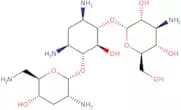
Formula:C56H98N16O13·H2SO4Purity:Min 6000 Iu/MgColor and Shape:White PowderMolecular weight:1,301.56 g/molTobramycin - high purity
CAS:Inhibitor of protein synthesis; aminoglycoside
Formula:C18H37N5O9Purity:Min. 900 Ug/MgColor and Shape:PowderMolecular weight:467.51 g/molAmpicillin - Bio-X ™
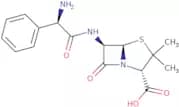
CAS:Ampicillin is a β-lactam antibiotic with a broad spectrum of activity against Gram-positive and Gram-negative bacteria. It is used in the treatment of bacterial infections, including those caused by methicillin-resistant Staphylococcus aureus (MRSA), Streptococcus pneumoniae, and Listeria monocytogenes. Ampicillin binds to penicillin-binding proteins in the bacterial cell wall by competitive inhibition. It prevents the formation of an antibiotic-inhibitor complex with the enzyme cell wall synthesis that is required for cell wall biosynthesis, inhibiting protein synthesis and cell division.
Formula:C16H19N3O4SPurity:Min. 95%Color and Shape:PowderMolecular weight:349.41 g/molRifaximin
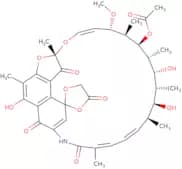
CAS:Rifaximin is a rifamycin antibiotic with action on bacterial RNA polymerase to inhibit transcription and is used for treating travelers' diarrhea, irritable bowel syndrome, and hepatic encephalopathy.
Formula:C43H51N3O11Purity:Min. 98 Area-%Color and Shape:Red PowderMolecular weight:785.88 g/molRifapentine
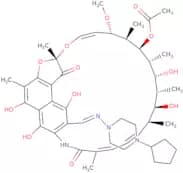
CAS:Rifapentine is a rifamycin antibiotic with action on bacterial RNA polymerase to inhibit transcription and is used for treating active and latent tuberculosis.
Formula:C47H64N4O12Purity:Min. 75 Area-%Color and Shape:Orange Red PowderMolecular weight:877.03 g/molAmopyroquine
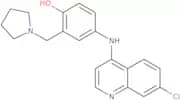
CAS:Amopyroquine is an antimalarial agent and is used for the treatment of malaria. Its mode of action involves the inhibition of haem polymerase in the parasite, leading to the accumulation of toxic haem
Formula:C20H20ClN3OPurity:Min. 95%Color and Shape:Slightly Yellow PowderMolecular weight:353.85 g/molCeftibuten dihydrate
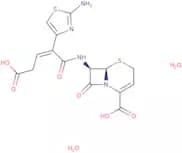
CAS:Ceftibuten dihydrate is a third-generation cephalosporin antibiotic with action on bacterial cell wall synthesis and is used for treating respiratory tract infections, otitis media, and urinary tract infections.
Formula:C15H14N4O6S2•(H2O)2Purity:Min. 95%Color and Shape:PowderMolecular weight:446.46 g/molRef: 3D-FC19876
Discontinued productPuromycin dihydrochloride
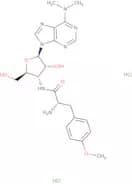
CAS:Puromycin is active against both prokaryotic and eukaryotic cells. Puromycin resistance gene (pac) is a common choice for the selection of mammalian cells since its first application in 1988, especially for therapeutic proteins in mammalian cells where it was used to produce high levels of protein of interest. Puromycin can also be used as a selection marker for Archea.
Formula:C22H31Cl2N7O5Purity:Min. 98 Area-%Color and Shape:White PowderMolecular weight:544.44 g/molRef: 3D-NP09203
Discontinued productTobramycin
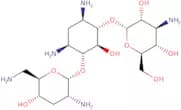
CAS:Tobramycin used to treat severe infections with gram-negative bacteria and it is often applied in combination with beta-lactams. It has similar antimicrobial effects to gentamicin and is effective against all Enterobacteriacae, but more effective than gentamicin against P. aeruginosa, which is why it is often used for gentamicin-resistant strains, especially in the case of cystic fibrosis.
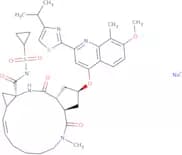
Formula:C18H37N5O9Purity:Min. 97 Area-%Color and Shape:White PowderMolecular weight:467.51 g/molSimeprevir sodium
CAS:Anti-viral; NS3/4A protease inhibitor
Formula:C38H47N5O7S2·xNaPurity:Min. 95%Molecular weight:771.92Nitrofurantoin
CAS:Nitrofurantoin is an antimicrobial agent, which is a synthetic chemical compound with bactericidal activity. Its source is synthetic, originating from the nitrofuran class of compounds. Nitrofurantoin's mode of action involves the inhibition of essential bacterial enzymes. It is reduced by bacterial flavoproteins to active intermediates, which subsequently alter or disrupt ribosomal proteins, DNA, and other vital macromolecules within bacterial cells, thereby inhibiting key metabolic processes.
Formula:C8H6N4O5Purity:Min. 98 Area-%Color and Shape:Yellow PowderMolecular weight:238.16 g/molGeldanamycin
CAS:Inhibits chaperone protein HSP90; anti-proliferative; antineoplastic
Formula:C29H40N2O9Purity:Min. 95%Color and Shape:Yellow PowderMolecular weight:560.64 g/molRef: 3D-AG23651
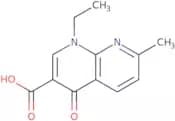
Discontinued productNalidixic acid
CAS:Nalidixic acid is a quinolone antibiotic with action on bacterial DNA gyrase to inhibit DNA replication and is used for treating urinary tract infections caused by gram-negative bacteria.Formula:C12H12N2O3Color and Shape:White Slightly Brown PowderMolecular weight:232.24 g/molPefloxacin
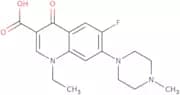
CAS:Pefloxacin is a mesylate prodrug that is converted to pefloxacin in the body. The optimum concentration for pefloxacin is 2 µg/mL, and it has been shown to be active against gram-positive bacteria such as Streptococcus pneumoniae, group A beta-hemolytic streptococci, and Enterococcus faecalis. Pefloxacin has also been shown to inhibit the growth of human leukemia cells (HL-60) and drug interactions have been documented with this drug. Pefloxacin is not active against Mycobacterium tuberculosis or Mycobacterium avium complex.
Formula:C17H20FN3O3Purity:Min. 95%Color and Shape:Slightly Yellow PowderMolecular weight:333.36 g/molTenofovir
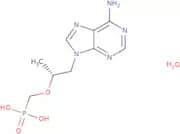
CAS:Tenofovir is a nucleoside reverse transcriptase inhibitor (NRTI) with action on viral reverse transcriptase to block replication and is used for treating HIV/AIDS and chronic hepatitis B.
Formula:C9H14N5O4P·H2OPurity:Min. 95%Molecular weight:305.23 g/molRef: 3D-GIA18449
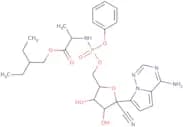
Discontinued productRemdesivir (R)-isomer
CAS:Remdesivir (R)-isomer is a nucleoside analog antiviral with action on RNA-dependent RNA polymerase to inhibit viral replication and is used for treating COVID-19 and other RNA virus infections.
Formula:C27H35N6O8PPurity:Min. 95%Color and Shape:PowderMolecular weight:602.6 g/molRef: 3D-LBD57875
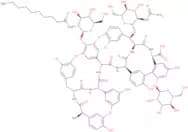
Discontinued productTeicoplanin
CAS:Teicoplanin is related to vancomycin and has similar effects against gram-positive bacteria and anaerobes, and usually requires less frequent administration than vancomycin, but it is less efficient against S. haemolyticus. Due its size and polarity, teicoplanin cant pass through the membrane of gram-negative bacteria thus it is not active against them. It is used to treat severe infections such as septicemia, endocarditis, bone and joint infections.
Formula:C89H99Cl2N9O29Purity:Min. 900 Ug/MgColor and Shape:White PowderMolecular weight:1827.59257Nourseothricin sulfate
CAS:Aminoglycoside antibiotic; inhibits protein synthesis by inducing miscoding
Formula:C19H34O8N8•H2SO4Purity:Min. 85%Color and Shape:White PowderMolecular weight:600 g/molRef: 3D-NN11350
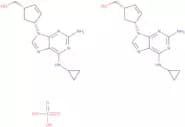
Discontinued productAbacavir sulfate - Bio-X ™
CAS:Abacavir sulfate is an antiviral drug that belongs to the class of HIV protease inhibitors. It is used in combination with other antiretroviral drugs to treat HIV-1 infection. Abacavir sulfate inhibits viral replication by blocking the activity of HIV-1 protease, which is necessary for the production of new virus particles.
Abacavir sulfate is part of our Bio-X ™ Range. These products are aimed at life science researchers who need high quality ready to use products for assay development, screening or other R&D work. With a solubility datasheet and convenient vials, all of our Bio-X ™ products are in stock across our global warehouses for rapid delivery and ease of use.Formula:C14H18N6OH2SO4Purity:Min. 98 Area-%Color and Shape:SolidMolecular weight:670.75 g/molCidofovir dihydrate - Bio-X ™
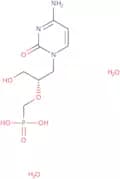
CAS:Cidofovir is an anti-viral agent that is used to treat Cytomegalovirus (CMV) retinitis in patients with AIDS. This drug suppresses CMV replication by inhibiting viral DNA synthesis.
Formula:C8H14N3O6P•(H2O)2Purity:Min. 98 Area-%Color and Shape:PowderMolecular weight:315.22 g/molD-Cycloserine
CAS:D-Cycloserine is a antibiotic and NMDA receptor partial agonist with action on bacterial cell wall synthesis and modulation of NMDA receptors and is used for treating tuberculosis and studying neuropsychiatric disorders.
Formula:C3H6N2O2Purity:Min. 98 Area-%Color and Shape:PowderMolecular weight:102.09 g/molRef: 3D-FC15208
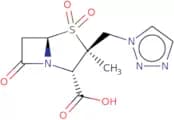
Discontinued productTazobactam
CAS:Inhibitor of beta-lactamase; inhibitor of cell wall synthesis; beta-lactam class
Formula:C10H12N4O5SPurity:Min. 95%Color and Shape:White Off-White PowderMolecular weight:300.29 g/molAtazanavir
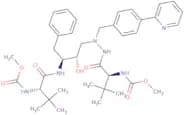
CAS:Atazanavir is a HIV-1 protease inhibitor, used in the anti-retroviral therapy of adult and sometimes paediatric patients infected with HIV. In in vitro studies with human pulmonary epithelial cells, atazanavir has been studied as a potential inhibitor of SARS-CoV-2 Mpro protease, with the aim of halting viral replication.
Formula:C38H52N6O7Purity:Min. 95%Color and Shape:White Beige PowderMolecular weight:704.86 g/molRef: 3D-FA18006
Discontinued productAmorolfine HCl - Bio-X ™
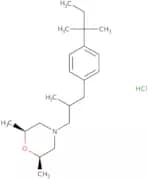
CAS:Amorolfine is an antifungal drug that inhibits fungal enzymes (D14 reductase and D7-D8 isomerase). Its inhibition has an affect on fungal sterol synthesis pathways, and it depletes ergosterol. This drug can be used as a treatment for inflammatory lesions such as Tinea corporis, Tinea pedis, and Tinea cruris due to its ability to penetrate the skin barrier with ease.
Formula:C21H35NO•HClPurity:Min. 95%Color and Shape:PowderMolecular weight:353.97 g/molGatifloxacin
CAS:Gatifloxacin is an antibiotic, which is a synthetic fluoroquinolone with broad-spectrum antibacterial activity. Its source lies in its chemical synthesis, designed to inhibit bacterial enzymes necessary for DNA replication. The mode of action involves the inhibition of bacterial DNA gyrase and topoisomerase IV, which are critical enzymes for bacterial DNA replication, transcription, and repair. This dual inhibitory mechanism disrupts bacterial cell division and growth, leading to the eventual eradication of susceptible bacterial strains.
Formula:C19H22FN3O4Purity:Min. 95%Color and Shape:White PowderMolecular weight:375.39 g/molRef: 3D-AC23649
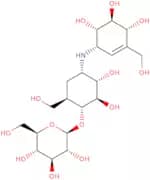
Discontinued productValidamycin A
CAS:Validamycin A is an antibiotic and fungicide with action as a trehalase inhibitor, disrupting carbohydrate metabolism in fungi and is used for controlling fungal diseases like sheath blight in rice and damping-off in cucumbers.
Formula:C20H35NO13Purity:Min. 92 Area-%Color and Shape:White PowderMolecular weight:497.49 g/molRef: 3D-AV59477
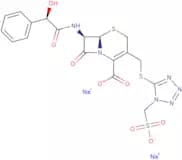
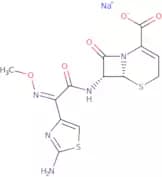
Discontinued productCefonicid sodium
CAS:Cephalosporin antibiotic; interferes with cell wall biosynthesis
Formula:C18H18N6Na2O8S3Purity:Min. 95%Color and Shape:PowderMolecular weight:588.55 g/molRef: 3D-FC50064
Discontinued productVancomycin hydrochloride (1:1)
CAS:Vancomycin hydrochloride (1:1) is a glycopeptide antibiotic with action on bacterial cell wall synthesis and is used for treating severe bacterial infections like septicemia, endocarditis, and skin infections.
Formula:C66H76Cl3N9O24Purity:Min. 95%Color and Shape:PowderMolecular weight:1,485.72 g/molStavudine - Bio-X ™
CAS:Stavudine is an antiviral, reverse transcriptase inhibitor that is used to treat HIV/AIDS. It belongs to the group of nucleoside analogues of thymidine that is converted into stavudine monophosphate. Stavudine works by inhibiting viral replication by preventing the incorporation of viral dNTPs into the growing DNA chain, thus blocking DNA synthesis.
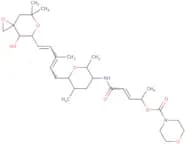
Formula:C10H12N2O4Purity:Min. 95%Color and Shape:PowderMolecular weight:224.21 g/molMeayamycin B
CAS:Meayamycin B is a synthetic macrolide, a complex organic compound, which is derived from the natural product FR901464. This compound functions as an antagonist of the spliceosome, the cellular machinery responsible for pre-mRNA splicing. By binding to specific components of the spliceosome, Meayamycin B disrupts the splicing process, leading to the accumulation of unspliced precursor mRNA. This action effectively induces apoptosis in cancer cells, making it a notable candidate for cancer therapy research.
Formula:C31H48N2O8Purity:Min. 95%Molecular weight:576.72 g/molRifamycin O
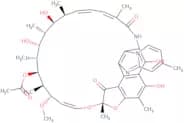
CAS:Rifamycin O is a rifamycin antibiotic with action on bacterial RNA polymerase to inhibit transcription and is used for treating tuberculosis and travelers' diarrhea.
Formula:C39H47NO14Purity:Min. 95%Color and Shape:Slightly Yellow Yellow PowderMolecular weight:753.79 g/molRef: 3D-AR27729
Discontinued productEtravirine - Bio-X ™
CAS:Etravirine is a non-nucleoside reverse transcriptase inhibitor (NNRTI) medication used in the treatment of human immunodeficiency virus (HIV) infections. It works by blocking reverse transcriptase, an enzyme essential for replication of the virus, thereby preventing the virus from multiplying and spreading. Etravirine is often used in combination with other antiretroviral drugs to effectively treat HIV/AIDS. It is commonly prescribed for patients with virus strains that are resistant to other NNRTI medications due to mutations that confer resistance- mutations K103N and Y181C. Etravirine is a diarylpyrimidine (DAPY) and has conformational isomerism meaning that it binds reverse transcriptase in an fleible manner, under multiple conformations. The impact of specific point mutations in the virus is therefore lessened.
Formula:C20H15BrN6OPurity:Min. 95%Color and Shape:PowderMolecular weight:435.28 g/molOseltamivir
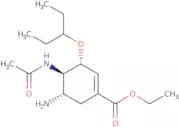
CAS:Inhibitor of viral neuraminidase enzyme, effective against influenza A and B viruses. This antiviral compound inhibits neuraminidase-mediated cleavage of host cell sialic acids, which interact with newly synthesised virions from the host cell. This prevents virion budding from the host, resulting in inhibition of virion release and viral infection overall.
Formula:C16H28N2O4Purity:Min. 95 Area-%Color and Shape:PowderMolecular weight:312.4 g/molRef: 3D-FO61474
Discontinued productiso-Nystatin
CAS:iso-Nystatin is an antifungal compound, which is derived from the bacterium *Streptomyces noursei*. This specific strain of actinobacteria produces polyene macrolide antifungals, and iso-Nystatin is a derivative that exhibits similar bioactivity as its parent compound, Nystatin. Its mode of action is based on binding ergosterol, a crucial component of fungal cell membranes. This binding disrupts the membrane's structural integrity, inducing pore formation, which leads to ion leakage and ultimately cell lysis and fungal cell death.
Formula:C47H75NO17Purity:Min. 95%Molecular weight:926.09 g/molPotassium clavulanate
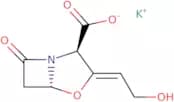
CAS:Potassium clavulanate is a beta-lactamase inhibitor and an antibacterial agent. The presence of potassium clavulanate in culture media inhibits the activity of beta-lactamases, which are enzymes that confer resistance to penicillin and other beta-lactam antibiotics. It also has been shown to be active against bacterial infections such as tuberculosis, sepsis, and pneumonia, where it can inhibit the growth of bacteria by interfering with their ability to form cell walls. Potassium clavulanate is also used as an antimicrobial agent for blood culture technique and antimicrobial treatment.
Formula:C8H8NO5·KPurity:Min. 95%Color and Shape:White PowderMolecular weight:237.25 g/molSulfasalazine
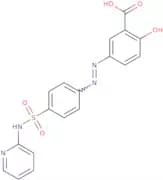
CAS:Sulfasalazine is a disease-modifying anti-rheumatic drug (DMARD) with action on reducing inflammation and immune system activity and is used for treating rheumatoid arthritis and inflammatory bowel disease.
Formula:C18H14N4O5SPurity:Min. 97 Area-%Color and Shape:PowderMolecular weight:398.39 g/molRef: 3D-AS27942
Discontinued productMicafungin sodium - Bio-X ™
CAS:Micafungin, as one of three echinocandina, has been proven to be a successful antifungal therapeutic in treating general Candida fungus infections. The treatment of immunocompromised patients is particularly important as Candida infections cause high mortality rates in patients in intensive care units, receiving chemotherapy, or stem cell transplants. This product acts as an anti-fungal by inhibiting the 1,3-beta-D-glucan synthase enzyme. As a result the production of 1,3-beta-D-glucan, which is crucial to the fungal cell wall, is hindered. Thus, the fungal cell wall loses integrity allowing for osmotic instability and cell lysis to occur.
Formula:C56H71N9O23S•NaPurity:Min. 95%Color and Shape:PowderMolecular weight:1,293.27 g/molAureothricin
CAS:Aureothricin is a dithiolopyrrolone antibiotic and is used for its antimicrobial properties. It inhibits transcription in bacteria, leading to growth inhibition
Formula:C9H10N2O2S2Purity:Min. 95%Color and Shape:Yellow PowderMolecular weight:242.32 g/molRef: 3D-AA32530
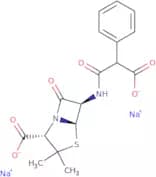
Discontinued productCarbenicillin disodium salt
CAS:Inhibitor of bacterial cell wall biogenesis; penicillin class
Formula:C17H16N2Na2O6SPurity:Min. 90 Area-%Color and Shape:White Slightly Yellow PowderMolecular weight:422.37 g/molRef: 3D-AC09915
Discontinued productPhleomycin HCl
CAS:Phleomycin HCl is an antibiotic compound derived from *Streptomyces verticillus*, which is known for its robust DNA-cleaving activity. As an antibiotic, it functions primarily by inducing breaks in DNA strands, thereby inhibiting DNA replication and transcription processes. This mechanism of action is particularly effective in targeting rapidly dividing cells, making Phleomycin a valuable tool in molecular biology.
Formula:C55H85O21N20S2Cu•HClColor and Shape:Blue PowderMolecular weight:1,525 g/molNetropsin dihydrochloride
CAS:Netropsin dihydrochloride is a pyrrole-amidine antibiotic with action on AT-rich sequences of DNA to inhibit replication and is used for research on DNA-binding properties and antiviral activity.
Formula:C18H28N10O3Cl2Purity:Min. 98 Area-%Color and Shape:PowderMolecular weight:503.39 g/molLincomycin
CAS:Inhibitor of protein synthesis; lincosamide
Formula:C18H34N2O6SPurity:Min. 97 Area-%Color and Shape:White Off-White PowderMolecular weight:406.54 g/molRef: 3D-AL76787
Discontinued productCeftizoxime sodium
CAS:Ceftizoxime sodium is a sodium salt form of ceftizoxime with similar action and applications as ceftizoxime.
Formula:C13H12N5NaO5S2Purity:Min. 95%Color and Shape:PowderMolecular weight:405.39 g/molRef: 3D-FC40872
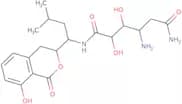
Discontinued productAmicoumacin A
CAS:Amicoumacin A is an antibiotic compound, which is derived from the bacterium Bacillus subtilis. This natural source is known for its production of a variety of biologically active compounds that contribute to its utility in numerous scientific contexts. The mode of action of Amicoumacin A involves the inhibition of bacterial protein synthesis by targeting the ribosomal subunit. Specifically, it interferes with the translation process, effectively disrupting the growth and proliferation of susceptible bacterial strains.
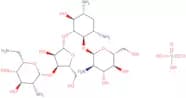
Amicoumacin A is primarily utilized in research settings to study bacterial resistance mechanisms, as well as to explore novel antibacterial therapies. Its application in scientific research extends to examining its potential synergistic effects with other antimicrobial agents, and it serves as a model compound for understanding ribosomal inhibition. The study of Amicoumacin A not only contributes to the broader field of antibiotic development but also offers insights into the molecular interactions that underlie bacterial protein synthesis and antibiotic resistance. This compound's unique properties make it an important subject of investigation for microbiologists and pharmacologists alike, emphasizing its relevance in the ongoing battle against antibiotic-resistant pathogens.Formula:C20H29N3O7Purity:Min. 95%Color and Shape:PowderMolecular weight:423.46 g/molParomomycin sulfate
CAS:Paromomycin sulfate is an aminoglycoside antibiotic with action on bacterial protein synthesis inhibition and is used for treating intestinal infections and leishmaniasis.
Formula:C23H45N5O14·xH2SO4Purity:≥675Μg/Mg(On Dried Basis)Color and Shape:Yellow PowderMolecular weight:615.63 g/molPefloxacin mesylate
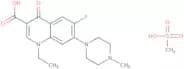
CAS:Pefloxacin mesylate is a fluoroquinolone antibiotic with action on bacterial DNA gyrase and topoisomerase IV and is used for treating bacterial infections, including urinary and respiratory tract infections.
Formula:C17H20FN3O3•CH4O3SPurity:Min. 95%Color and Shape:PowderMolecular weight:429.46 g/molRef: 3D-AP76653
Discontinued product