Sterols
Found 181 products for "Sterols".
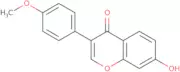
Formononetin
CAS:Formononetin is a naturally occurring isoflavone, which is a type of phytoestrogen found predominantly in legumes like red clover and other related plant species. It is a secondary metabolite that influences various biological processes by interacting with estrogen receptors. Formononetin acts primarily by mimicking or modulating the activity of natural estrogens within the body, binding to estrogen receptors and influencing gene expression and cellular responses.
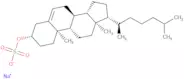
Formula:C16H12O4Purity:Min. 95%Color and Shape:PowderMolecular weight:268.26 g/molCholesterol 3-sulfate sodium
CAS:Cholesterol 3-sulfate sodium salt is a fine chemical that is used as a versatile building block and reagent. It is a useful intermediate that can be used in the synthesis of complex compounds, speciality chemicals, and reaction components. Cholesterol 3-sulfate sodium salt can be used to synthesize cholesterol derivatives. This compound has been shown to have high reactivity with nucleophiles and can be used as a building block for other organic compounds. The CAS number for Cholesterol 3-sulfate sodium salt is 2864-50-8.Formula:C27H45NaO4SPurity:Min. 95%Color and Shape:White PowderMolecular weight:488.7 g/molBetamethasone
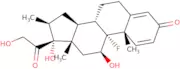
CAS:Controlled ProductBetamethasone is a synthetic corticosteroid, which is an analogue of a glucocorticoid sourced from adrenal cortex hormones. Its mode of action involves modulating the immune response by inhibiting the release of substances in the body that cause inflammation. This is achieved through its binding affinity to glucocorticoid receptors, leading to transcriptional changes that suppress pro-inflammatory cytokine production and other mediators of inflammation.
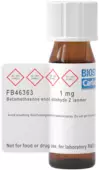
Formula:C22H29FO5Purity:Min. 97 Area-%Color and Shape:White PowderMolecular weight:392.46 g/molBetamethasone enol aldehyde Z isomer
CAS:Controlled ProductBetamethasone enol aldehyde Z isomer is a synthetic corticosteroid, which is derived from modifications of the naturally occurring glucocorticoid, cortisol. Its structure has been altered to enhance anti-inflammatory and immunosuppressive potency. As a Z isomer, it exhibits specific stereochemistry, potentially affecting its pharmacokinetics and interactions at the molecular level.Formula:C22H27FO4Purity:Min. 95 Area-%Color and Shape:PowderMolecular weight:374.45 g/molEstriol
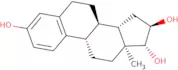
CAS:Controlled ProductEstriol is a steroidal estrogen, which is a naturally occurring hormone primarily sourced from the placenta during pregnancy. Its mode of action involves binding to estrogen receptors, thereby exerting its effects as part of the broader group of estrogens. Estriol has a relatively lower affinity for estrogen receptors compared to estradiol, contributing to its unique pharmacological profile.In scientific research and clinical settings, Estriol is employed in hormone replacement therapy, especially in postmenopausal women, due to its milder estrogenic effects and lower associated risks compared to other estrogens. It is also studied for its potential benefits in urogynecological health, such as the treatment of menopausal symptoms like vaginal atrophy. Furthermore, its application is under investigation for autoimmune conditions such as multiple sclerosis, given its immunomodulatory properties. Ongoing research aims to delineate the therapeutic potential and safety profile of Estriol in various clinical contexts.Formula:C18H24O3Purity:Min. 97 Area-%Color and Shape:White PowderMolecular weight:288.38 g/molCoumestrol
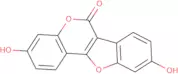
CAS:Coumestrol is a phytoestrogen compound, which is a naturally occurring compound found in a variety of plants, such as soybeans, clover, and alfalfa. It is derived from the metabolic processes within these plants. Coumestrol exhibits estrogenic activity, acting as an agonist for estrogen receptors. This biological activity enables coumestrol to mimic the action of endogenous estrogens, thereby influencing estrogen-responsive pathways.Formula:C15H8O5Purity:Min. 95%Color and Shape:PowderMolecular weight:268.22 g/molErizimoside
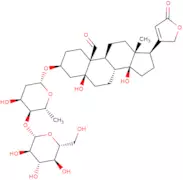
CAS:Please enquire for more information about Erizimoside including the price, delivery time and more detailed product information at the technical inquiry form on this pageFormula:C35H52O14Purity:Min. 95%Color and Shape:PowderMolecular weight:696.78 g/molBrassicasterol
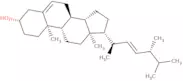
CAS:Controlled ProductBrassicasterol is a phytosterol, which is synthesized by various plant sources, particularly found in the seeds of plants such as rapeseed, mustard, and some algae. As a sterol, it is structurally similar to cholesterol but differs by having a methyl group at C24. This characteristic structure plays a vital role in its mode of action, modulating membrane fluidity and cell signaling pathways in organisms. In mammalian systems, brassicasterol may contribute to the reduction of cholesterol absorption by competing for incorporation into micelles, thus influencing metabolic pathways related to lipid processing and absorption.
Formula:C28H46OPurity:Min. 95 Area-%Color and Shape:Off-White PowderMolecular weight:398.66 g/molCholesterol
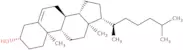
CAS:Controlled ProductCholesterol is a complex lipid molecule, which is an essential component of cell membranes in animals. It is primarily synthesized in the liver, though it can also be obtained from dietary sources such as meat, dairy, and eggs. Cholesterol's mode of action involves its incorporation into the phospholipid bilayer of cell membranes, where it modulates fluidity and structural integrity, impacting membrane protein function and cellular signaling pathways.Formula:C27H46OPurity:Min. 95 Area-%Color and Shape:White Clear LiquidMolecular weight:386.65 g/molCoumestrol-9-methyl ether
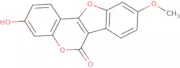
CAS:Coumestrol-9-methyl ether is a synthetic estrogen analogue, which is derived from coumestrol, a naturally occurring phytoestrogen found in various plant sources such as soybeans and clover. This compound is synthesized through chemical modification to enhance its stability and bioactivity, differing from its naturally occurring counterpart by the addition of a methyl group.Formula:C16H10O5Purity:Min. 95%Molecular weight:282.25 g/molβ-Sitosterol β-D-glucoside
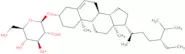
CAS:β-Sitosterol β-D-glucoside is a phytosterol glycoside, which is primarily derived from plant sources such as fruits, vegetables, nuts, and seeds. As a natural component of plant cell membranes, it exhibits bioactive properties. The compound functions by modulating cholesterol metabolism and has anti-inflammatory, immunomodulatory, and antioxidant effects. It achieves this by interfering with the absorption of cholesterol in the intestines and modulating the activity of enzymes involved in its metabolism.
Formula:C35H60O6Purity:Min. 98 Area-%Color and Shape:White PowderMolecular weight:576.85 g/molMestranol
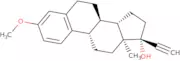
CAS:Mestranol is a synthetic estrogen, which is derived from chemical synthesis. Its mode of action involves being a prodrug of ethinylestradiol, meaning it is metabolized in the liver to its active form, which then binds to estrogen receptors in target tissues. This binding alters the expression of genes, influencing the reproductive system to prevent ovulation. By inhibiting the release of gonadotropins (LH and FSH) from the pituitary, it effectively halts the maturation of ovarian follicles.Formula:C21H26O2Purity:Min. 95%Color and Shape:White PowderMolecular weight:310.43 g/molPeriplogenin
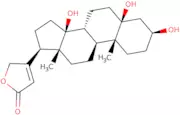
CAS:Periplogenin is a compound classified as a cardiac glycoside, which is typically derived from certain plant species such as those in the Apocynaceae family. These compounds are known for affecting the heart by influencing cellular ion transport mechanisms. The primary mode of action of periplogenin involves inhibition of the Na⁺/K⁺-ATPase pump. This inhibition leads to an increased intracellular concentration of sodium ions, which indirectly increases intracellular calcium levels via the sodium-calcium exchanger. The elevated calcium concentration enhances cardiac muscle contractility, a mechanism often leveraged in treating certain heart conditions.
Formula:C23H34O5Purity:Min. 95%Molecular weight:390.51 g/molHydrocortisone acetate
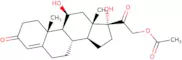
CAS:Controlled ProductHydrocortisone acetate is a synthetic corticosteroid, which is a product derived from the modification of natural adrenal cortex hormones. It functions as an anti-inflammatory and immunosuppressive agent through its interaction with glucocorticoid receptors, leading to the modulation of gene expression involved in immune and inflammatory responses. This interaction inhibits the release of pro-inflammatory mediators and reduces the permeability of capillaries, thereby diminishing inflammation and immune activity.Formula:C23H32O6Purity:Min. 97 Area-%Color and Shape:PowderMolecular weight:404.5 g/molStigmasterol
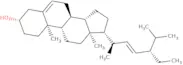
CAS:Controlled ProductPhytosterol with anti-osteoarthritic activity; inhibits cholesterol biosynthesis
Formula:C29H48OPurity:Min. 95 Area-%Color and Shape:White PowderMolecular weight:412.69 g/molBufalin
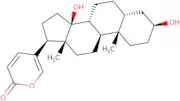
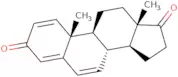
CAS:Bufalin is a bufadienolide compound, which is a type of steroid derived primarily from toad venom, specifically from the skin and parotid venom glands of the toad species Bufo gargarizans. Its mode of action involves the inhibition of Na+/K+-ATPase, an enzyme critical for maintaining the electrochemical gradient across cell membranes. By disrupting this gradient, Bufalin affects cellular ion homeostasis and induces apoptosis in various cancer cell lines.Formula:C24H34O4Purity:Min. 95%Color and Shape:White PowderMolecular weight:386.52 g/molAndrosta-1,4,6-triene-3,17-dione
CAS:Controlled ProductAndrosta-1,4,6-triene-3,17-dione is a steroidal aromatase inhibitor, which is a synthetic compound derived from modifications of naturally occurring steroid structures. Its mode of action involves the inhibition of the aromatase enzyme. Aromatase catalyzes the conversion of androgens into estrogens, a critical step in the biosynthesis of estrogens. By inhibiting this enzyme, Androsta-1,4,6-triene-3,17-dione effectively reduces estrogen levels, which can be of particular interest in research environments exploring the role of estrogens in various biological processes.
Formula:C19H22O2Purity:Min. 95%Color and Shape:Yellow PowderMolecular weight:282.38 g/molSaponin - from quillaja plant - 25%-30% sapogenin content
CAS:Saponin from the quillaja plant is a natural extract characterized by a significant sapogenin content of 25%-30%. This product is derived from the bark of the Quillaja saponaria tree, a native species of Chile. The primary mode of action of these saponins involves the interaction with cell membranes due to their surfactant properties, which can lead to membrane permeabilization and subsequent cellular responses.Purity:Min. 95%Color and Shape:PowderWithaferin A
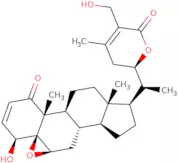
CAS:Withaferin A is a bioactive compound, which is a steroidal lactone with antiproliferative properties. It is derived from the medicinal plant *Withania somnifera*, commonly known as Ashwagandha. Withaferin A exerts its effects by modulating various signaling pathways, including the inhibition of NF-kB and induction of oxidative stress, which lead to apoptotic cell death in cancer cells and reduced inflammation.
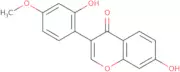
Formula:C28H38O6Purity:Min. 98 Area-%Color and Shape:White PowderMolecular weight:470.6 g/mol2'-Hydroxyformononetin
CAS:2'-Hydroxyformononetin is a naturally occurring isoflavone, which is predominantly found in certain plants such as red clover and soy. It is a type of phytoestrogen, which exhibits estrogen-like activity due to its ability to bind estrogen receptors. The mode of action involves modulating estrogen receptor pathways, which in turn can affect various physiological processes related to hormone balance and cell proliferation.Formula:C16H12O5Purity:Min. 95%Color and Shape:PowderMolecular weight:284.26 g/mol