Terpenoids
Subcategories of "Terpenoids"
- Diterpenes (C₂₀)(671 products)
- Hemiterpenes (C₅)(21 products)
- Monoterpenes (C₁₀)(709 products)
- Sesquiterpenes (C₂₅)(452 products)
- Tetraterpenes (C₄₀)(63 products)
- Triterpenes (C₃₀)(1,128 products)
Found 1423 products of "Terpenoids"
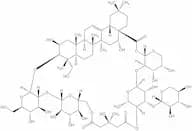
Tubeimoside iii
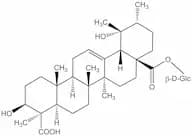
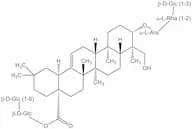
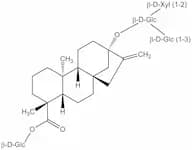
CAS:Natural glycosideFormula:C64H100O31Purity:≥ 90.0 % (HPLC)Molecular weight:1365.46Pedunculoside
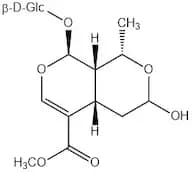
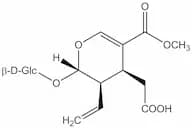
CAS:Natural glycosideFormula:C36H58O10Purity:≥ 95.0 % (HPLC)Color and Shape:PowderMolecular weight:650.847α,β-morroniside
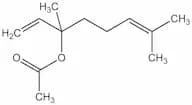
CAS:Natural glycosideFormula:C17H26O11Purity:≥ 90.0 % (HPLC)Color and Shape:PowderMolecular weight:406.39Linalyl acetate
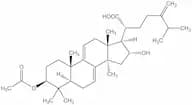
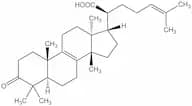
CAS:Acetic acid esterFormula:C12H20O2Purity:≥ 90.0 % (GC)Color and Shape:LiquidMolecular weight:196.299-dehydropachymic acid
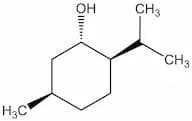
CAS:Carboxylic acid with additional oxygen functionsFormula:C33H50O5Purity:≥ 90.0 % (HPLC)Molecular weight:526.75(+)-isomenthol
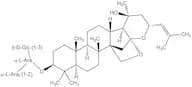
CAS:Cyclic alcoholFormula:C10H20OPurity:≥ 95.0 % (GC)Color and Shape:CrystalsMolecular weight:156.27Bacopaside x
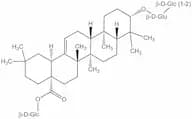
CAS:Natural glycosideFormula:C46H74O17Purity:≥ 90.0 % (HPLC)Color and Shape:PowderMolecular weight:899.09Ginsenoside ro
CAS:Natural glycosideFormula:C48H76O19Purity:≥ 90.0 % (HPLC)Color and Shape:PowderMolecular weight:957.12Cucurbitacin d
CAS:Ketone alcoholFormula:C30H44O7Purity:≥ 98.0 % (HPLC)Color and Shape:PowderMolecular weight:516.67Atractylenolide iii
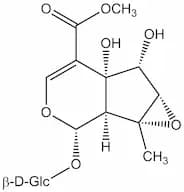
CAS:LactoneFormula:C15H20O3Purity:≥ 98.0 % (HPLC)Color and Shape:PowderMolecular weight:248.32Secoxyloganin
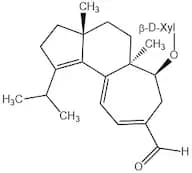
CAS:Natural glycosideFormula:C17H24O11Purity:≥ 95.0 % (HPLC)Color and Shape:CrystalsMolecular weight:404.37(+)-erinacin a
CAS:Natural glycosideFormula:C25H36O6Purity:≥ 90.0 % (HPLC)Color and Shape:PowderMolecular weight:432.55Eurycomanone
CAS:Oxygen-heterocyclic compoundFormula:C20H24O9Purity:≥ 90.0 % (HPLC)Color and Shape:PowderMolecular weight:408.4Amarogentin
CAS:Natural glycosideFormula:C29H30O13Purity:≥ 90.0 % (HPLC)Color and Shape:PowderMolecular weight:586.55Sesamoside
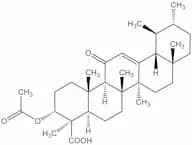
CAS:Natural glycosideFormula:C17H24O12Purity:≥ 95.0 % (HPLC)Color and Shape:PowderMolecular weight:420.373-o-acetyl 11-keto-β-boswellic acid
CAS:Carboxylic acid with additional oxygen functionsFormula:C32H48O5Purity:≥ 98.0 % (HPLC)Color and Shape:PowderMolecular weight:512.73Ginsenoside rb1
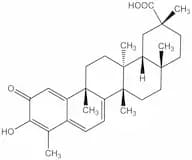
CAS:Natural glycosideFormula:C54H92O23Purity:≥ 90.0 % (HPLC)Color and Shape:PowderMolecular weight:1109.31Celastrol
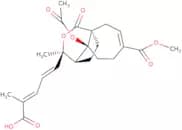
CAS:Carboxylic acid with additional oxygen functionsFormula:C29H38O4Purity:≥ 95.0 % (HPLC)Color and Shape:CrystallineMolecular weight:450.62Pseudolaric acid b
CAS:LactoneFormula:C23H28O8Purity:≥ 98.0 % (HPLC)Color and Shape:PowderMolecular weight:432.47Rebaudioside f
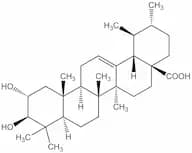
CAS:Natural glycosideFormula:C43H68O22Purity:≥ 90.0 % (HPLC)Color and Shape:PowderMolecular weight:936.99Corosolic acid
CAS:Carboxylic acid with alcohol functionFormula:C30H48O4Purity:≥ 90.0 % (HPLC)Color and Shape:PowderMolecular weight:472.71Α-santonin
CAS:LactoneFormula:C15H18O3Purity:≥ 95.0 % (HPLC)Color and Shape:CrystallineMolecular weight:246.31Β-elemonic acid
CAS:Carboxylic acid with ketone functionFormula:C30H46O3Purity:≥ 90.0 % (HPLC)Color and Shape:PowderMolecular weight:454.7Rebaudioside a
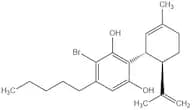
CAS:Natural glycosideFormula:C44H70O23Purity:≥ 95.0 % (HPLC)Color and Shape:PowderMolecular weight:967.034-monobromocannabidiol
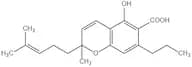
CAS:Halogen derivative of polyphenolFormula:C21H29BrO2Purity:≥ 90.0 % (HPLC)Color and Shape:Viscous liquidMolecular weight:393.36Cannabichromevarinic acid
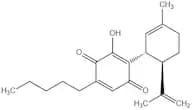
CAS:Carboxylic acid with phenol functionFormula:C20H26O4Purity:≥ 98.0 % (HPLC)Color and Shape:PowderMolecular weight:330.42Cannabidiol hydroxyquinone
CAS:QuinoneFormula:C21H28O3Purity:≥ 90.0 % (HPLC)Color and Shape:PowderMolecular weight:328.45Lycopene
CAS:Acyclic unsaturated hydrocarbonFormula:C40H56Purity:>=90.0% (HPLC)Molecular weight:536.87Carvone
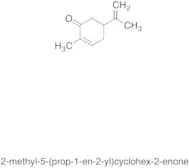
CAS:Controlled ProductStability Light Sensitive
Applications Carvone is useful for the treatment of various metabolic disorders and GI related disorders.
References Shabi, M. M., et al.: Res. J. Pharm. Biol. Chem. Sci., 8, 328 (2017)Formula:C10H14OColor and Shape:Light Yellow To Light BrownMolecular weight:150.22D-(+)-Carvone
CAS:Applications D-(+)-Carvone, is used for the synthesis of (-)-terpestacin, a fungal metabolite with anticancer activity.It is also found in the essential oils of the in vitro M. longifolia plantlets and callus, that can be used as a potential source of a safe flavouring agent.
References Jin , Y., et al.: Org. Biomol. Chem., 10(28), 5452 (12012); Morcia, C., et al.: Acta. Biochimica. Polonica., 58(4), 581 (2011);Formula:C10H14OColor and Shape:NeatMolecular weight:150.22Levopimaric Acid
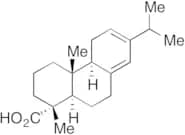
CAS:Controlled ProductStability Air Sensitive
Applications Levopimaric Acid is a major component of pine oleoresin. It is an abietane-type of diterpene resin acid and has antibacterial, cardiovascular, and antioxidant properties.
References Kersten, P. J., et al.: J. Chem. Ecol., 32(12), 2679-85 (2006)Formula:C20H30O2Color and Shape:White To Off-WhiteMolecular weight:302.45Limetol
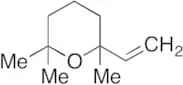
CAS:Controlled ProductApplications Limetol, is the cyclized derivative of linalool (L465950), melanol, and other unsaturated alcohols, that was shown to give a product mixture that can be used in fragrance and perfumery industry.
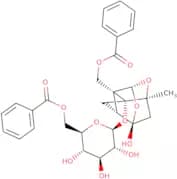
References Klimánková, E., et al.: Food Chem., 107, 464 (2008); Nakamura, A., et al.: J. Agric. Food Chem., 57, 5480 (2009); Soni, A. et al.: Synth. Comm., 40, 74 (2010);Formula:C10H18OColor and Shape:NeatMolecular weight:154.25Benzoylpaeoniflorin
CAS:Benzoylpaeoniflorin is a glycoside, which is a naturally occurring compound found in certain plants. It is primarily sourced from the roots of *Paeonia lactiflora*, a herbaceous plant commonly used in traditional medicine. The compound exerts its effects through several mechanisms, including the inhibition of inflammatory mediators and modulation of oxidative stress pathways. Benzoylpaeoniflorin acts by targeting specific signaling pathways that regulate inflammation and cellular stress responses, contributing to its therapeutic potential.Formula:C30H32O12Purity:Min. 95%Color and Shape:White Off-White PowderMolecular weight:584.57 g/molCiwujianoside E
CAS:Ciwujianoside E is a natural compound, which is a saponin derived from the roots of *Eleutherococcus senticosus*, commonly known as Siberian ginseng. This plant is native to regions in Northeast Asia, and it belongs to the Araliaceae family. Ciwujianoside E is one of several bioactive constituents found in the root extracts, which are traditionally used in herbal medicine.Formula:C40H62O11Purity:Min. 95%Color and Shape:Beige PowderMolecular weight:718.91 g/molPseudolaric acid B
CAS:Pseudolaric acid B is a diterpenoid acid, which is isolated from the roots and bark of the Pseudolarix amabilis, a tree native to China. This compound exhibits a complex mode of action, primarily disrupting microtubule dynamics, which interferes with cell division. Pseudolaric acid B targets the polymerization of tubulin, thereby inhibiting mitotic spindle formation and leading to cell cycle arrest. Its bioactivity has been extensively studied for its potential applications in both anti-fungal and anti-cancer therapies. In the context of cancer research, pseudolaric acid B is of particular interest due to its ability to selectively induce apoptosis in tumor cells. As an anti-fungal agent, it has been shown to possess efficacy against various pathogenic fungi, offering potential utility in agricultural contexts as well. The multi-faceted mechanisms of action and broad application possibilities make Pseudolaric acid B a subject of ongoing research in pharmacology and biotechnology.
Formula:C23H28O8Purity:Min. 98 Area-%Color and Shape:White PowderMolecular weight:432.46 g/molDigitoxin
CAS:Digitoxin is a cardiac glycoside, which is a type of compound extracted primarily from the leaves of the Digitalis purpurea plant, also known as the common foxglove. This natural source provides digitoxin with its potent pharmacological properties.Formula:C41H64O13Purity:Min. 95 Area-%Color and Shape:White Off-White PowderMolecular weight:764.96 g/mol(R)-Pulegone - 95%
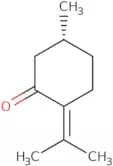
CAS:(R)-Pulegone - 95% is a monoterpene ketone, which is a type of organic compound commonly found in essential oils of mint plants, particularly in Mentha species. This compound is naturally derived from the aromatic leaves of these plants and is a major component contributing to their characteristic scent.
Formula:C10H16OPurity:Min. 95%Color and Shape:Colourless To Yellow LiquidMolecular weight:152.23 g/molBetulin diacetate
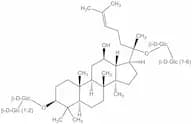
CAS:Betulin diacetate is a synthesized compound derived from betulin, a naturally occurring triterpenoid. Betulin is primarily sourced from the bark of birch trees, specifically Betula species. The compound undergoes acetylation to form betulin diacetate, which enhances its solubility and bioavailability compared to its precursor.Formula:C34H54O4Purity:Min. 95%Color and Shape:White Off-White PowderMolecular weight:526.79 g/molPseudoginsenoside FII
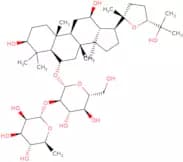
CAS:Pseudoginsenoside FII is a ginsenoside derivative, which is an active saponin constituent derived from the plant Panax ginseng. This compound is known for its complex interaction with cellular pathways, primarily influencing metabolic and signaling processes within the human body. The mode of action involves modulation of various signal transduction pathways, including MAPK and PI3K/Akt, impacting apoptosis, proliferation, and differentiation of cells.Formula:C42H72O14Purity:Min. 95%Color and Shape:PowderMolecular weight:801.01 g/molGinsenoside Rb1 - 98%
CAS:Ginsenoside Rb1 - 98% is a purified chemical compound, specifically a saponin, derived from the roots of Panax ginseng, a perennial plant native to East Asia. The compound belongs to the ginsenoside family, which constitutes the primary active components of ginseng.
Formula:C54H92O23Purity:Min. 98 Area-%Color and Shape:White Off-White PowderMolecular weight:1,109.32 g/molLanatoside C
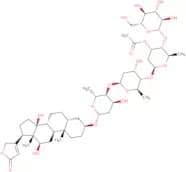
CAS:Lanatoside C is a cardiac glycoside, which is a bioactive compound derived from the leaves of the plant Digitalis lanata. This compound exerts its effects primarily through inhibition of the Na⁺/K⁺-ATPase enzyme in cardiac muscle cells. By inhibiting this enzyme, Lanatoside C increases intracellular sodium levels, which indirectly leads to an increase in intracellular calcium via the sodium-calcium exchange mechanism. The elevated calcium concentrations enhance cardiac muscle contraction, thereby improving cardiac output and efficiency.Formula:C49H76O20Purity:Min. 95%Color and Shape:White PowderMolecular weight:985.12 g/molOridonin
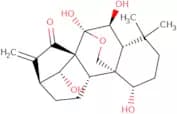
CAS:A diterpenoid from Chinese medicinal plant Rabdosia rubescens with anti-inflammatory activity. It is a potent inhibitor of NF-κB and MAPK activation and suppresses the release of proinflammatory cytokines. It is also a covalent inhibitor of NLRP3, a sensor component of NLRP3 inflammasome. In a rodent model for cerebral amyloidosis, oridonin effectively prevented neuroinflammation and Alzheimer’s disease-associated neuropathological changes. It reduced numbers of amyloid-β plaques in mice brain and reversed behaviour and social impairment.
Formula:C20H28O6Purity:Min. 98 Area-%Color and Shape:White PowderMolecular weight:364.44 g/molbeta-Eudesmol
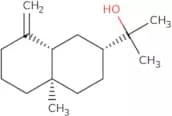
CAS:Beta-Eudesmol is a sesquiterpenoid alcohol, which is a naturally occurring compound found in several essential oils extracted from plants, particularly those belonging to the genus Zingiberaceae. It is a major component in some aromatic species, manifesting as a colorless or pale yellow viscous liquid at room temperature.Formula:C15H26OPurity:Min. 95%Color and Shape:White PowderMolecular weight:222.37 g/molHispidol
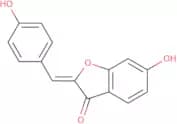
CAS:Hispidol is a naturally occurring flavonoid compound, which is extracted from the Leguminosae family of plants. This class of compounds is characterized by its polyphenolic structure, contributing to its role within plant defense mechanisms. With an origin primarily in legumes, hispidol’s bioactive properties stem from its ability to interact with various enzymatic and receptor pathways.Formula:C15H10O4Purity:Min. 95%Color and Shape:Slightly Brown PowderMolecular weight:254.24 g/mol