Nucleosides
Found 3569 products of "Nucleosides"
N6-([6-Aminohexyl]carbamoylmethyl)adenosine 5'-triphosphate lithium salt
CAS:N6-([6-Aminohexyl]carbamoylmethyl)adenosine 5'-triphosphate lithium salt is a monophosphate nucleoside that has been modified with a 6-aminohexylaminocarbonyl group. It is an antiviral and anticancer agent that inhibits the synthesis of DNA, RNA, and proteins. N6-[(6-Aminohexyl)carbamoylmethyl]adenosine 5'-triphosphate lithium salt is novel and high quality.Formula:C18H32N7O14P3·xLiPurity:Min. 95%5'-O-tert-Butyldimethylsilylthymidine 3'-CE phosphoramidite
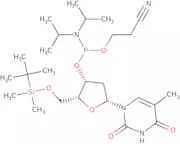
5'-O-tert-Butyldimethylsilylthymidine 3'-CE phosphoramidite is a nucleoside which is an activator for DNA synthesis. It is synthesized from the natural substance thymidine, and it can be modified to have various properties by changing the chemical group that attaches to the 3' carbon. 5'-O-tert-Butyldimethylsilylthymidine 3'-CE phosphoramidite is a novel nucleoside that has been shown to be anticancerous in vitro. This compound may also play a role in treating viral infections due to its antiviral properties.Formula:C25H45N4O6PSiPurity:Min. 95%Molecular weight:556.72 g/mol2-Deoxy-2-fluoro-b-D-arabinofuranosylamine
CAS:2-Deoxy-2-fluoro-b-D-arabinofuranosylamine (2DF) is a monophosphate nucleoside analog that is chemically modified to form 2DF. The 2DF has shown antiviral, anticancer, and anti-inflammatory activities. It inhibits the proliferation of cancer cells by blocking the synthesis of DNA and RNA, which are necessary for cellular reproduction. This drug also has been shown to have an activator effect on diphosphate nucleotide incorporation into DNA.Formula:C5H10FNO3Purity:Min. 95%Molecular weight:151.14 g/mol3'-Amino-5'-O-p-anisoyl-3'-deoxy-D3-thymidine
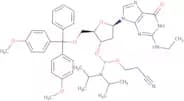
Controlled Product3'-Amino-5'-O-p-anisoyl-3'-deoxy-D3-thymidine is a novel modified nucleoside that has antiviral and anticancer properties. It is an activator of the DNA polymerase, ribonucleotide reductase, and thymidine kinase enzymes. 3'-Amino-5'-O-p-anisoyl-3'-deoxy-D3-thymidine has been shown to inhibit the growth of human cancer cells in vitro and in vivo.Formula:C18H18N3O7D3Purity:Min. 95%Molecular weight:394.39 g/mol2'-Deoxy-5'-O-DMT-N2-ethylguanosine 3'-CE phosphoramidite
CAS:2'-Deoxy-5'-O-DMT-N2-ethylguanosine 3'-CE phosphoramidite is a novel nucleoside analogue. It is a nucleotide analog with potent antiviral and anticancer activities. This compound has been shown to be an activator of deoxyribonucleosides and ribonucleosides, which may lead to the activation of their respective polymerases. It also has high purity, quality, and stability, as well as being inexpensive. Rifapentine is an anti-tuberculosis drug that belongs to the class of rifamycins. It is the most active of the rifamycins for the treatment of tuberculosis. Rifapentine inhibits bacterial growth by binding to DNA-dependent RNA polymerase, thereby preventing transcription and replication. The high frequency of human activity has been shown using a patch-clamp technique on human erythrocytes. This active formFormula:C42H52N7O7PPurity:Min. 95%Color and Shape:SolidMolecular weight:797.88 g/mol4’-C-Methyl-4-deoxyuridine
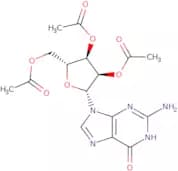
CAS:4’-C-Methyl-4-deoxyuridine is an antiviral and anticancer drug that belongs to the group of nucleosides. It has shown novel anti-tumor activities in vitro and in vivo, as well as antiviral effects against herpes simplex virus type 1 (HSV-1) and type 2 (HSV-2). 4’-C-Methyl-4-deoxyuridine is a modified nucleoside that is synthesized from uridine. It has been shown to inhibit viral replication by inhibiting viral DNA synthesis. This drug also inhibits the multiplication of tumor cells by inhibiting DNA synthesis. The product is high purity, high quality, and CAS No. 1064364-21-1.Purity:Min. 95%2',3',5'-Tri-O-acetylguanosine
CAS:2',3',5'-Tri-O-acetylguanosine is a protected form of the nucleoside guanosine which has potential application as a synthetic intermediate in nucleic acid and nucleoside chemistry.Formula:C16H19N5O8Purity:Min. 95%Color and Shape:White PowderMolecular weight:409.35 g/mol7-Methyl-2'-deoxywyosine
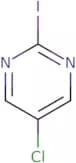
7-Methyl-2'-deoxywyosine is a nucleoside analogue that inhibits the growth of cells by interfering with DNA replication. It is a modified form of deoxywyosine, which is the natural precursor of DNA and RNA. 7-Methyl-2'-deoxywyosine has antiviral activity against herpes simplex virus type 1 (HSV-1) and human cytomegalovirus (CMV). This compound has shown anticancer activity in vivo and in vitro, as well as high purity and quality.Purity:Min. 95%5-Chloro-2-iodopyrimidine
CAS:5-Chloro-2-iodopyrimidine is an organic molecule that belongs to the class of trifluoromethylated molecules. It was discovered by a team of chemists in 2006 and has been used as a reagent for the efficient trifluoromethylation of organic molecules. 5-Chloro-2-iodopyrimidine can be catalyzed with copper, which is responsible for its unique reactivity. The synthesis of this molecule has been shown to be efficient in organic chemistry. END>Formula:C4H2ClIN2Purity:Min. 95%Color and Shape:PowderMolecular weight:240.43 g/mol1-(b-D-Xylofuranosyl)-2-thiouracil
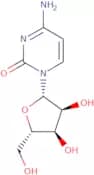
CAS:1-(b-D-Xylofuranosyl)-2-thiouracil is a synthetic nucleoside that inhibits viral and cancer cell growth. It is an analog of the natural nucleoside thymidine, with an extra oxygen atom at position 2. The molecule forms a monophosphate, which is converted to a diphosphate by phosphoramidate synthase. This diphosphate is then incorporated into DNA, where it inhibits the activity of DNA polymerase and deoxyribonucleases, leading to inhibition of DNA synthesis. 1-(b-D-Xylofuranosyl)-2-thiouracil also has antiviral properties as it can inhibit viral replication by blocking the incorporation of nucleotides into the growing DNA strand.Formula:C9H12N2O5SPurity:Min. 95%Molecular weight:260.27 g/molL-Cytidine
CAS:L-Cytidine is a nucleoside that is found in the body, and is also used as a drug. It is a precursor to other nucleosides, such as cytidine triphosphate, which is involved in DNA synthesis and repair. L-Cytidine has been shown to be effective against HIV infection by inhibiting the activity of the enzyme ns3 protease. This inhibition prevents viral proteins from being released from cells and infecting other cells. L-Cytidine has also been shown to be an inhibitor of creatine kinase and glycosidation, two enzymes that are necessary for cell metabolism. L-Cytidine has also been shown to be reactive with halides, which may lead to unwanted side effects.
Formula:C9H13N3O5Purity:Min. 95%Color and Shape:PowderMolecular weight:243.22 g/mol5-Bromo-7-(2-C-methyl-b-D-ribofuranosyl)-7H-pyrrolo[2,3-d]pyrimidin-4-amine
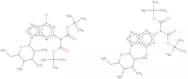
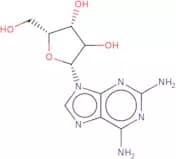
CAS:5-Bromo-7-(2-C-methyl-b-D-ribofuranosyl)-7H-pyrrolo[2,3-d]pyrimidin-4-amine is a chemical compound that has antiviral and anticancer properties. It is synthesized by the reaction of 5,5'-dibromoimidazole with 4,4'-dimethoxytrityl chloride. This product is used as a building block in the synthesis of deoxyribonucleosides, modified phosphoramidites, and nucleosides. It also has high purity and high quality.Purity:Min. 95%2-Aminoadenosine
CAS:2-Aminoadenosine is a synthetic nucleoside analog of adenosine in which the purine base is 2,6-diaminopurine, featuring an additional amino group at the C2 position. This modification enhances hydrogen bonding potential and alters base-pairing specificity, allowing it to form three hydrogen bonds with uracil or thymine, in contrast to adenine's two. As a result, 2-aminoadenosine has been studied for its impact on nucleic acid stability, replication fidelity, and enzymatic recognition. It has also shown potential in antiviral and anticancer research due to its ability to disrupt normal RNA and DNA metabolism.Formula:C10H14N6O4Purity:Min. 98 Area-%Color and Shape:White PowderMolecular weight:282.26 g/mol2’,3’-Bis-O-tert-butyldimethylsilyl-5-methoxyuridine
2’,3’-Bis-O-tert-butyldimethylsilyl-5-methoxyuridine is an antiviral nucleoside that is chemically synthesized from 5-methoxyuridine. It has been shown to inhibit the replication of HIV in cell cultures and animal models. This drug can be used as a phosphoramidite for the synthesis of oligonucleotides. 2’,3’-Bis-O-tert-butyldimethylsilyl-5-methoxyuridine is a novel nucleoside that has not been previously reported in the chemical literature.Purity:Min. 95%5-Amino-2’-deoxy-2’-O-methyluridine HCl
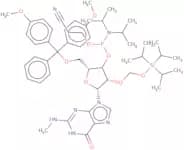
5-Amino-2’-deoxy-2’-O-methyluridine HCl is a novel nucleoside analog that has been modified with an O-methyl group at the 5′ position of the ribose moiety. This modification inhibits phosphorylation by inhibiting DNA polymerase and thus, preventing DNA synthesis. 5-Amino-2’-deoxy-2’-O-methyluridine HCl has also been shown to inhibit viral replication by inhibiting viral RNA and protein synthesis, while not affecting human RNA and protein synthesis. 5AADMUT is an activator of diphosphate metabolism in cells which may be due to its ability to inhibit enzymes involved in nucleotide metabolism (e.g., adenosine kinase).Purity:Min. 95%5'-O-DMT-2'-O-triisopropylsilyloxymethyl-N2-methylguanosine 3'-CE phosphoramidite
5'-O-DMT-2'-O-triisopropylsilyloxymethyl-N2-methylguanosine 3'-CE phosphoramidite is a novel monophosphate nucleotide analog of guanosine, which has been modified to include an additional methyl group on the 2' position. It exhibits antiviral activity and is a potent activator of RNA polymerase II, with a Km of ∼0.05 μM. 5'-O-DMT-2'-O-triisopropylsilyloxymethyl-N2-methylguanosine 3'-CE phosphoramidite is used in the synthesis of ribonucleosides and deoxyribonucleosides for DNA and RNA experiments. The compound has also been shown to be active against some cancers, such as leukemia, breast cancer, prostate cancer, and colon cancer. 5'-O-DMT-2'-O-Formula:C51H72N7O9PSiPurity:Min. 95%Molecular weight:986.22 g/molN4-Methylcytidine 5'-triphosphate triethylammonium salt
N4-Methylcytidine 5'-triphosphate triethylammonium salt is a novel nucleoside analog that inhibits the growth of tumor cells. It is synthesized by reacting N4-methylcytidine with phosphoramidite in an amine base, and then treated with triethylamine to produce a triethylammonium salt. This nucleoside analog inhibits DNA synthesis by inhibiting the enzyme ribonucleotide reductase, which converts ribonucleotides to deoxyribonucleotides. The resulting monophosphate compound has been shown to be effective in cancer treatment and may also be used as an antiviral agent.Formula:C10H18N3O14P3Purity:Min. 95%Molecular weight:497.18 g/molPalmitoyl coenzyme A potassium salt
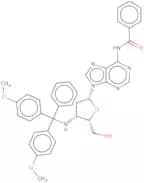
CAS:Palmitoyl coenzyme A potassium salt is a novel, modified nucleoside that has antiviral and anticancer activities. It is a phosphoramidite with a phosphate group at one end and a palmitoyl group at the other. The phosphate group is attached to the 5' position of the sugar, while the palmitoyl group is attached to the 3' position of the sugar. Palmitoyl coenzyme A potassium salt can be used in DNA synthesis.Formula:C37H65N7O17P3SKPurity:Min. 95%Color and Shape:White PowderMolecular weight:1,044.03 g/molN6-Benzoyl-2',3'-dideoxy-3'-N-DMT-adenosine
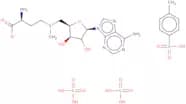
N6-Benzoyl-2',3'-dideoxy-3'-N-DMT-adenosine is a novel nucleoside that can be used as an antiviral agent. It is a phosphoramidite and has been shown to inhibit replication of HIV, HSV, and CMV. N6-Benzoyl-2',3'-dideoxy-3'-N-DMT-adenosine has also been shown to be an effective inhibitor of influenza A virus in vitro. This drug inhibits viral DNA synthesis by competing with natural nucleosides for incorporation into the viral DNA chain and by inhibiting viral DNA polymerase activity.Formula:C38H36N6O5Purity:Min. 95%Molecular weight:656.75 g/molS-Adenosyl-L-methionine disulfate tosylate
CAS:S-Adenosyl-L-methionine disulfate tosylate (SAMe) is a dietary supplement that is used to treat depression and liver disease. It is also a metabolite of the amino acid methionine, which is formed by the enzyme S-adenosylmethionine synthase. SAMe has been shown to inhibit the activation of caspase 3, which causes apoptosis in cells, and may be useful for treating cancer and other diseases. The chromatographic method used to separate SAMe from other compounds relies on its evaporative properties, due to its high water solubility.Formula:C22H34N6O16S4Purity:Min. 95 Area-%Color and Shape:White PowderMolecular weight:766.8 g/mol2',3'-Dideoxy-2',3'-didehydroadenosine
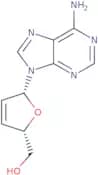
CAS:2′,3′-Dideoxy-2′,3′-didehydroadenosine, abbreviated to d4A, is a synthetic purine nucleoside analog. Possible applications are its use to study antiviral activity.Formula:C10H11N5O2Purity:Min. 95%Color and Shape:Off-White PowderMolecular weight:233.23 g/molN2,2'-O-Dimethylguanosine
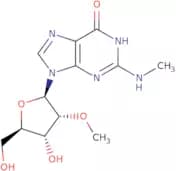
CAS:N2,2'-O-Dimethylguanosine is a nucleoside that belongs to the category of modified bases. It is synthesized from adenosine and a methyl group by a mutant strain of Escherichia coli. N2,2'-O-Dimethylguanosine can be identified by its characteristic UV-visible spectrum and high retention time on chromatographic columns. It has been shown to inhibit translation in E. coli at concentrations as low as 1 mM and also inhibits growth rate at concentrations as low as 2 mM. The chemical structure of this compound is similar to that of guanosine, but it contains an extra methyl group on its 2' carbon atom. This chemical modification may result in changes in the way the molecule interacts with other molecules or how it functions in the cell. N2,2'-O-Dimethylguanosine was first identified from a mutant strain of Escherichia coli that had been subjected to mutagenesisFormula:C12H17N5O5Purity:Min. 95%Molecular weight:311.29 g/mol10-O-[1-Propyl-3-N-carbamoylcholesteryl]-TEG-CE phosphoramidite
CAS:10-O-[1-Propyl-3-N-carbamoylcholesteryl]-TEG-CE phosphoramidite is a cholesterol-conjugated phosphoramidite. The cholesteryl group is a lipophilic moiety which can be used to enhance cellular uptake of oligonucleotides.Formula:C46H82N3O7PPurity:(31P-Nmr) Min. 95 Area-%Color and Shape:Colorless PowderMolecular weight:820.13 g/mol2,2'-Anhydro-L-uridine
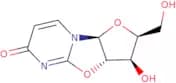
CAS:2,2'-Anhydro-L-uridine is a nucleoside used in for research purposes. It is of particular interest due to it being an L-isomer which is different from the D-form sugars used by the human body. It is useful to study these kinds of molecules for their use in medicine, especially as antiviralsFormula:C9H10N2O5Purity:Min. 95%Color and Shape:PowderMolecular weight:226.19 g/mol5,6-Dichlorobenzimidazole-1-b-D-ribofuranoside
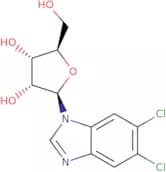
CAS:5,6-Dichlorobenzimidazole-1-b-D-ribofuranoside is a chemical compound that has been shown to be neurotoxic in vitro. It has significant cytotoxicity against human leukemia cells (HL60) and induces neuronal death. This drug also inhibits the production of neurotrophic factors, which are vital for the normal development of neurons. 5,6-Dichlorobenzimidazole-1-b-D-ribofuranoside inhibits transcriptional regulation of genes that encode for receptors and enzymes. The compound is chemically stable and does not degrade easily by hydrolysis or oxidation. It can bind to polymerase chain reaction (PCR) primers and inhibit DNA synthesis. 5,6-Dichlorobenzimidazole-1-b-D-ribofuranoside also affects cell nuclei by inhibiting DNA synthesis and enzyme activities.Formula:C12H12Cl2N2O4Purity:Min. 98 Area-%Color and Shape:White PowderMolecular weight:319.15 g/molN6-Benzoyl-5'-O-benzyl-2'-O-tert-butyldimethylsilyladenosine 3'-CE phosphoramidite
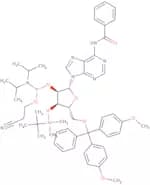
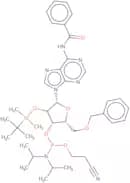
N6-Benzoyl-5'-O-benzyl-2'-O-tert-butyldimethylsilyladenosine 3'-CE phosphoramidite is an activator of ribonucleosides and deoxyribonucleosides. It is a novel synthetic nucleoside, which has high quality and purity. The chemical modification of the base allows for the synthesis of DNA with modified bases. This product has been shown to have anticancer effects in vitro and in vivo, as well as antiviral activities against HIV.Formula:C39H54N7O6PSiPurity:Min. 95%Molecular weight:775.97 g/mol5'-(Furan-2-yl)-2’-O-methyluridine
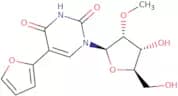
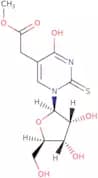
CAS:5'-(Furan-2-yl)-2’-O-methyluridine is a modified nucleoside that is used as an antiviral agent. It is a monophosphate nucleotide analog and has been shown to be active against HIV, herpes simplex virus, cytomegalovirus, and Epstein Barr virus. 5'-(Furan-2-yl)-2’-O-methyluridine is synthesized by the phosphoramidite method and has high purity and quality. The CAS number for this compound is 2095417-32-4.Purity:Min. 95%5-(2-Amino-2-oxoethyl)-2-thiouridine
CAS:5-(2-Amino-2-oxoethyl)-2-thiouridine is a modified deoxyribonucleoside that is used as a phosphoramidite to synthesize oligonucleotides. 5-(2-Amino-2-oxoethyl)-2-thiouridine inhibits the synthesis of viral DNA and RNA, and its antiviral activity has been shown in vitro. It also may have anticancer activity due to its ability to inhibit DNA synthesis and cell proliferation. This compound has high quality, high purity, and novel properties.Formula:C11H15N3O6SPurity:Min. 95%Color and Shape:PowderMolecular weight:317.32 g/mol5'-(Furan-2-yl)-5'-O-DMT-2’-O-methylcytidine
CAS:5'-(Furan-2-yl)-5'-O-DMT-2’-O-methylcytidine is a high purity phosphoramidite, deoxyribonucleoside, and ribonucleoside that can be used in the synthesis of antiviral drugs, anti-cancer agents, and nucleotides. 5'-(Furan-2-yl)-5'-O-DMT-2’-O-methylcytidine has been shown to inhibit the growth of various cancer cells. This product also belongs to a novel class of synthetic nucleosides that can be modified with fluorine or other substituents at any position on the sugar ring.Purity:Min. 95%Kinetin riboside
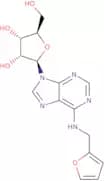
CAS:Kinetin is a plant hormone that regulates cell proliferation and differentiation. Kinetin riboside is a derivative of kinetin in which the ribose moiety has been converted to ribosyl-ribitol. Kinetin riboside has shown the ability to inhibit cancer cells by inducing apoptosis, which may be related to its ability to inhibit cyclin D2 and mitochondrial membrane potential. In addition, kinetin riboside has been shown to protect against oxidative stress and decrease mitochondrial function in cells. This compound may have therapeutic potential for cancer treatment and other diseases caused by oxidative stress or mitochondrial dysfunction.Formula:C15H17N5O5Purity:Min. 98 Area-%Color and Shape:White PowderMolecular weight:347.33 g/mol2'-Deoxyisocytidine
CAS:2'-deoxyisocytidine is a nucleoside that is used in biochemical research. It can be synthesized by two methods: solid-phase synthesis and depyrimidination. 2'-deoxyisocytidine has been shown to be more efficient than other fluorescent nucleosides when used with the excimer laser technique. The stability of this compound has also been shown to be greater than other fluorescein-based compounds, which makes it an appropriate substitute when using phosphoramidite chemistry.Formula:C9H13N3O4Purity:Min. 95%Color and Shape:PowderMolecular weight:227.22 g/mol4-Amino-5-chloro-2,6-dimethylpyrimidine
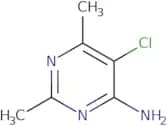
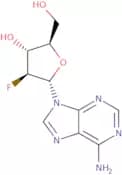
CAS:4-Amino-5-chloro-2,6-dimethylpyrimidine is a supramolecular complex that is characterized by the coordination geometry of its metal ion and the donor atoms. It has been proposed as a potential drug for the treatment of bacterial infections, such as tuberculosis. The 4-Amino-5-chloro-2,6,dimethylpyrimidine is structurally similar to nucleobases and may be able to form hydrogen bonds with water molecules. This molecule also has a high melting point and is not soluble in water. It can be protonated at different pH values and forms complexes with hydroxyl groups found in nucleic acids.Formula:C6H8ClN3Purity:Min. 95%Color and Shape:PowderMolecular weight:157.6 g/mol9-(2'-Deoxy- 2'- fluoro- a- D- arabinofuranosyl) -9H- purin- 6- amine
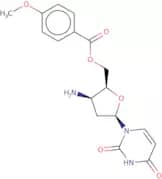
CAS:9-(2'-Deoxy- 2'- fluoro- a- D- arabinofuranosyl) -9H- purin- 6- amine is an antiviral and anticancer agent. It can be used as a monophosphate or as a phosphoramidite for the synthesis of DNA, RNA, and modified nucleosides. The chemical name is 9-(2'-deoxy-2'-fluoro-a-D-arabinofuranosyl)-9H-purin-6-amine. It has the CAS number 20187-82-0. This drug was synthesized in 1976 by Koehler and colleagues at Bayer. The molecular weight is 268.46 g/mol, with a melting point of 190°C, boiling point of 320°C and density of 1.408 g/mL at 20°C. It is soluble in water, methanol, ethanol, chloroform and acetic acidFormula:C10H12FN5O3Purity:Min. 95%Color and Shape:SolidMolecular weight:269.23 g/mol3'-Amino-5'-O-p-anisoyl-2',3'-dideoxyuridine
3'-Amino-5'-O-p-anisoyl-2',3'-dideoxyuridine is a novel compound that has been synthesized. This compound is a diphosphate, which can be used as an activator for the synthesis of modified nucleosides and antiviral agents. It is also a DNA phosphoramidite, which can be used in the synthesis of oligonucleotides with high purity and high quality.
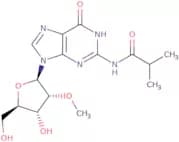
Formula:C17H19N3O6Purity:Min. 95%Molecular weight:361.35 g/molN2-Isobutyryl-2'-O-methylguanosine
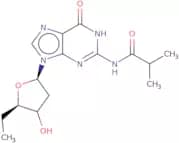
CAS:N2-Isobutyryl-2'-O-methylguanosine (IBOG) is a modified nucleoside that can be used as an activator for DNA synthesis. IBOG is a high purity, high quality chemical with CAS No. 63264-29-9 and has antiviral and anticancer properties.Formula:C15H21N5O6Purity:Min. 95%Color and Shape:White To Yellow SolidMolecular weight:367.36 g/mol2'-Deoxy-N2-isobutyryl-5'-O-MMT-guanosine
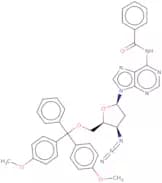
CAS:2'-Deoxy-N2-isobutyryl-5'-O-MMT-guanosine is a synthetic, modified nucleoside. It is an activator of DNA synthesis, and it has been found to inhibit the growth of cancer cells in vitro. This compound has shown success in the treatment of HIV infection in vitro and has also been shown to be effective against hepatitis B virus (HBV) and herpes simplex virus type 1 (HSV). The compound may be useful as an antiviral agent.Formula:C34H35N5O6Purity:Min. 95%Molecular weight:609.69 g/mol3'-Azido-N6-benzoyl-5'-O-DMT-2',3'-dideoxyadenosine
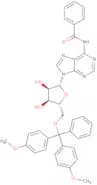
3'-Azido-N6-benzoyl-5'-O-DMT-2',3'-dideoxyadenosine is a nucleoside analog and activator that inhibits the replication of DNA. It is a novel antiviral drug that has antiproliferative properties and may be useful in the treatment of cancer. 3'-Azido-N6-benzoyl-5'-O-DMT-2',3'-dideoxyadenosine is synthesized by reacting an activated phosphoramidite with 2',3'-dideoxyadenosine monophosphate to produce 3',5' dideoxythymidine 5'-monophosphate, which is then converted to 3',5' dideoxyuridine 5'-monophosphate. The last step involves the conversion of 3',5' dideoxyuridine 5'-monophosphate to 3' azidouridine 5'-monophFormula:C38H34N8O5Purity:Min. 95%Molecular weight:682.73 g/molN6-Benzoyl-5'-O-DMT-adenosine
CAS:N6-Benzoyl-5'-O-DMT-adenosine is a synthetic nucleoside with antiviral activity. It is an activator of viral DNA polymerase and inhibits viral replication by inhibiting DNA synthesis in the host cell. N6-Benzoyl-5'-O-DMT-adenosine has shown anticancer activity in tumor cells, which may be due to its ability to inhibit ribonucleotide reductase and diphosphate kinase.
Formula:C38H35N5O7Purity:Min. 95%Color and Shape:White PowderMolecular weight:673.73 g/molGuanosine 5'-monophosphate calcium salt
CAS:guanosine 5'-monophosphate calcium salt is a dietary supplement that contains calcium carbonate and guanosine 5'-monophosphate. This product is a light-exposed supplement that contains phenolic acids, polycarboxylic acids, and cyclic nucleotide phosphodiesterases. It is used to maintain ATP levels in the body. Guanosine 5'-monophosphate calcium salt should not be taken by people with a history of kidney stones or those taking other supplements containing calcium. This product may contain preservatives, excipients, or pharmaceutical ingredients for potency and stability purposes.
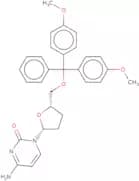
Formula:C10H12CaN5O8PPurity:Min. 95%Molecular weight:401.28 g/mol2',3'-Dideoxy-5'-O-DMT-cytidine
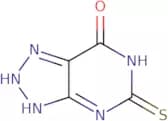
CAS:2',3'-Dideoxy-5'-O-DMT-cytidine is a chemically modified cytidine nucleoside which can be used in synthetic chemistry, especially in nucleic acid synthesis. A dimethoxytrityl (DMT) protecting group is attached to the 5'-oxygen of the sugar. This is not biologically active, but it’s commonly used in solid-phase oligonucleotide synthesis to protect the 5' end during step-by-step DNA or RNA construction.Formula:C30H31N3O5Purity:Min. 95%Color and Shape:PowderMolecular weight:513.6 g/mol8-Aza-6-hydroxy-2-mercaptopurine
CAS:8-Aza-6-hydroxy-2-mercaptopurine (8AzaMP) is a novel nucleoside analog that is an activator of the thymidylate synthase enzyme. It has been shown to inhibit the replication of many DNA viruses and to inhibit tumor growth in animal models. 8AZA MP has been evaluated in Phase I and II clinical trials for the treatment of various cancers, including malignant melanoma, renal cell carcinoma, and chronic lymphocytic leukemia. This drug has also shown promise as a chemotherapeutic agent for AIDS patients with HIV infection or AIDS-related complex.Formula:C4H3N5OSPurity:Min. 95%Color and Shape:PowderMolecular weight:169.17 g/mol3',5'-O-(1,1,3,3-Tetraisopropyl-1,3-disiloxanediyl)guanosine
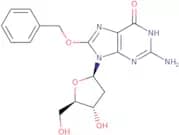
CAS:Used as a protected guanosine nucleoside in RNA synthesis. The 1,1,3,3-tetraisopropyl-1,3-disiloxanediyl (TIPDS or TBDPSi2) group acts as a bulky and selectively acid-labile protecting group for the 3' and 5' hydroxyl groups of the guanosine ribonucleoside during RNA oligonucleotide synthesis.Formula:C22H39N5O6Si2Purity:Min. 97 Area-%Color and Shape:PowderMolecular weight:525.76 g/mol8-Benzyloxy-2'-deoxyguanosine
CAS:8-Benzyloxy-2'-deoxyguanosine is a dinucleoside that is synthesised from uracil and hydrogenated 8-hydroxyquinoline. The synthesis of 8-benzyloxy-2'-deoxyguanosine was achieved by cyclic photocyclization of 2,4,6-trichlorobenzaldehyde with 2,4,6-trimethoxyphenylacetone in the presence of sodium nitrite. This compound has been used for the quantification of DNA damage caused by irradiation or sodium chloride. 8-Benzyloxy-2'-deoxyguanosine has also been shown to inhibit the polymerase chain reaction (PCR) amplification of oligodeoxynucleotides.Formula:C17H19N5O5Purity:Min. 95%Color and Shape:Off-White To Brown SolidMolecular weight:373.36 g/mol5’-O-Acetyl-5-acetyloxymethyluridine
CAS:5’-O-Acetyl-5-acetyloxymethyluridine is an activated nucleoside that is a phosphoramidite. It can be used in the synthesis of oligonucleotides and has antiviral, anticancer, and antiretroviral activities. This product is a novel compound that can be used to synthesize high quality deoxyribonucleosides and diphosphate ribonucleosides. 5’-O-Acetyl-5-acetyloxymethyluridine is an activator for DNA polymerases and RNA polymerases with a high degree of purity.Formula:C14H18N2O9Purity:Min. 95%Molecular weight:358.3 g/mol4’-C-Methyl-N6-methyladenosine
CAS:4’-C-Methyl-N6-methyladenosine (4’-MeA) is a novel, synthetic nucleoside that has antiviral activity. It is a phosphoramidite nucleoside that is modified by the methylation of the adenosine moiety to give it antiviral activity. 4’-MeA can be used as an activator for oligonucleotide synthesis and as a potential anticancer drug.Purity:Min. 95%4’,5’-Didehydro-2’-O-(2-methoxyethyl)-5-methyluridine
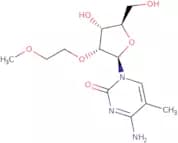
CAS:4’,5’-Didehydro-2’-O-(2-methoxyethyl)-5-methyluridine (DdeO) is a novel phosphoramidite that is synthesized from 2’,3’-dideoxycytidine. It is used in DNA synthesis and as an antiviral and anticancer agent. DdeO has shown to be a potent activator of the p53 tumor suppressor gene and inhibits the proliferation of human cancer cells by inhibiting the activity of DNA polymerase alpha. DdeO also inhibits viral replication by interfering with viral DNA synthesis.Purity:Min. 95%Guanosine-5'-[(b,γ)-imido]triphosphate sodium salt
CAS:Guanosine-5'-[(b,gamma)-imido]triphosphate sodium salt is a novel antiviral agent that has been shown to inhibit the replication of human adenovirus type 5 (AdV-5) and herpes simplex virus type 1 (HSV-1). It is phosphorylated by adenylate kinase to guanosine diphosphate. Guanosine-5'-[(b,gamma)-imido]triphosphate sodium salt is an activator for DNA polymerase alpha and DNA topoisomerase I. It also inhibits the proliferation of tumor cells in culture.Formula:C10H17N6O13P3·xNaPurity:Min. 95%Color and Shape:White PowderMolecular weight:522.2 g/mol5’(R)-C-Methyl-5-fluorouridine
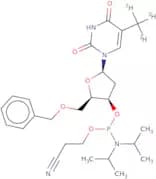
5’(R)-C-Methyl-5-fluorouridine is a nucleoside that has been shown to activate both ribonucleosides and deoxyribonucleosides. 5’(R)-C-Methyl-5-fluorouridine is a novel nucleotide with the potential to be used in anticancer therapy. It can be used as a building block for DNA synthesis, as well as being able to act as an anticancer drug by inhibiting the growth of cancer cells. This product is made from high quality raw materials and has a purity of at least 98%. It is available in powder form.Purity:Min. 95%5'-O-Benzyl-D3-thymidine 3'-CE phosphoramidite
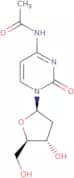
Controlled Product5'-O-Benzyl-D3-thymidine 3'-CE phosphoramidite is a novel 5'-O-benzyl modified nucleoside. It has antiviral, anticancer and monophosphate properties. It is also an activator of the diphosphate moiety and has been used in DNA synthesis and in the preparation of oligonucleotides. This compound has been shown to be an efficient inhibitor of HIV reverse transcriptase and human T cell leukemia virus type 1 (HTLV-1) replication. 5'-O-Benzyl-D3-thymidine 3'-CE phosphoramidite is an analogue of thymidine 3'-CMP that has been synthesized with a benzyl group on the 5' position.Formula:C26H34N4O6PD3Purity:Min. 95%Molecular weight:535.6 g/molN4-Acetyl-2'-deoxycytidine
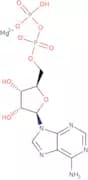
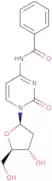
CAS:N4-Acetyl-2'-deoxycytidine is a nucleoside analogue that acts as an inhibitor of DNA synthesis. It binds to the active site of the enzyme ribonucleotide reductase, blocking the conversion of ribonucleotides to deoxyribonucleotides. This prevents DNA synthesis and replication, which leads to cell death. N4-Acetyl-2'-deoxycytidine has been shown to be more efficient than other analogues in terms of energy efficiency, control levels, and constant linear model. This compound is reactive and can cause low yields when isolated from solutions with high concentrations. A diode can be used for analytical purposes, while calcium binding may be used as a mathematical model in order to analyze this drug.Formula:C11H15N3O5Purity:Min. 98 Area-%Color and Shape:PowderMolecular weight:269.25 g/molAdenosine 5'-diphosphate magnesium salt
CAS:Adenosine 5'-diphosphate magnesium salt (ADP-Mg) is a pharmacological agent that has inhibitory properties. It is used as a model system to study platelet function and the effect of adenosine on platelet aggregation. ADP-Mg is also used as a reagent in the study of protein synthesis and regulation. This chemical has been shown to potentiate the activity of serotonin receptors, which may contribute to its anti-inflammatory effects. Adenosine 5'-diphosphate magnesium salt also inhibits papillary muscle contractions by inhibiting Ca2+ currents, leading to an improved ejection fraction in patients with congestive heart failure.Formula:C10H13N5O10P2·MgPurity:Min. 95%Color and Shape:PowderMolecular weight:449.49 g/mol5-Bromo-2'-deoxy-5'-O-DMT-uridine
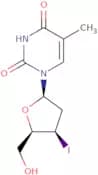
5-Bromo-2'-deoxy-5'-O-DMT-uridine is an antiviral nucleoside that is a monophosphate analog of deoxyuridine. 5-Bromo-2'-deoxy-5'-O-DMT-uridine can be used to treat patients with leukemia and other cancers. 5-Bromo-2'-deoxy-5'-O-DMT-uridine has been shown to induce tumor cell apoptosis in vitro and in vivo, as well as inhibit the proliferation of tumor cells by blocking the synthesis of DNA. This drug also has anticancer properties, which are due to its ability to block RNA synthesis.Formula:C30H29BrN2O7Purity:Min. 95%Color and Shape:Off-white to beige solid.Molecular weight:609.48 g/mol3'-Deoxy-3'-iodothymidine
CAS:3'-Deoxy-3'-iodothymidine is a nucleoside that is found in DNA. It has a constant of -1.5 and can be protonated to form the anion. The molecule has a reactive radical anion, which is stabilized by electron delocalization with the aromatic rings. 3'-Deoxy-3'-iodothymidine has been studied for use as a medicine for cancer treatment, but it also has applications in biology and chemistry. This compound can be used in conductometry and electron spectroscopy, as well as other chemical experiments that require ionic compounds or radiation.
Formula:C10H13IN2O4Purity:Min. 95%Color and Shape:PowderMolecular weight:352.13 g/molN4-Benzoyl-2'-deoxy-5'-O-DMT-cytidine 3'-thiophosphoramidite
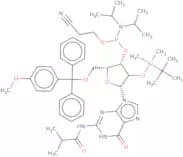
N4-Benzoyl-2'-deoxy-5'-O-DMT-cytidine 3'-thiophosphoramidite is a novel nucleoside that has been shown to inhibit the growth of cancer cells in vitro. It is an analogue of cytidine and inhibits DNA synthesis by inhibiting the enzyme ribonucleotide reductase, which converts ribonucleotides to deoxyribonucleotides. This drug also inhibits the synthesis of viral RNA in cells infected with human immunodeficiency virus (HIV) and herpes simplex virus type 1 (HSV-1). N4-Benzoyl-2'-deoxy-5'-O-DMT-cytidine 3'-thiophosphoramidite is a phosphoramidite that is synthesized from 2,4,6-trichlorobenzoyl chloride, 5'-O-[(N,N-diisopropFormula:C50H51N4O8PS2Purity:Min. 95%Molecular weight:931.07 g/mol2'-O-tert-Butyldimethylsilyl-N2-isobutyryl-5'-O-MMT-guanosine 3'-CE phosphoramidite
2'-O-tert-Butyldimethylsilyl-N2-isobutyryl-5'-O-MMT-guanosine 3'-CE phosphoramidite is a novel modified ribonucleoside that has been synthesized to mimic the natural nucleotide. It has been shown to activate DNA synthesis, inhibit cancer cell division and proliferation, and inhibit viral replication. 2'-O-tert-Butyldimethylsilyl-N2-isobutyryl-5'-O-MMTguanosine 3'-CE phosphoramidite is a monophosphate nucleotide with an anticancer activity. It has also showed antiviral effects against HIV and Hepatitis B virus. This novel modified ribonucleoside is highly pure and can be used for the synthesis of high quality DNA, RNA, or phosphoramidites.Formula:C49H66N7O8PSiPurity:Min. 95%Molecular weight:940.17 g/molN4-Benzoyl-5-methylcytidine
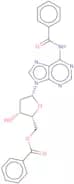
CAS:N4-Benzoyl-5-methylcytidine is a labile chemical that can be uniquely prepared using biochimie. It has been shown to have anticodon activity in assays and is synthesized chemically. The nucleoside is phosphoramidite, which is methylated and reproducible. N4-Benzoyl-5-methylcytidine has been shown to inhibit the growth of cells by blocking the synthesis of purines and pyrimidines. It may also have biophysical properties that are related to its ability to bind to DNA.Formula:C17H19N3O6Purity:Min. 95%Color and Shape:PowderMolecular weight:361.35 g/molN6-Benzoyl-5'-O-benzoyl-2'-deoxyadenosine
CAS:N6-Benzoyl-5'-O-benzoyl-2'-deoxyadenosine is an antiviral and anticancer compound. It has been shown to be active against a number of viruses, including human immunodeficiency virus type 1 (HIV-1), herpes simplex virus type 1, and influenza A virus. It also inhibits DNA polymerase α and β by competitive inhibition, preventing the incorporation of ribonucleotides into DNA. This compound may be used for the treatment of AIDS or as a cytostatic agent for the treatment of leukemia or lymphoma.Formula:C24H21N5O5Purity:Min. 95%Molecular weight:459.47 g/mol5'-O-DMT-N2-isobutyryl-2'-O-(2-methoxyethyl)guanosine
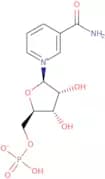
CAS:5'-O-DMT-N2-isobutyryl-2'-O-(2-methoxyethyl)guanosine is an antiviral monophosphate nucleoside. It has been shown to be a novel, high purity, and CAS No. 251647-50-4. It is a modified nucleic acid analogue that acts as an activator of ribonucleotide reductase and DNA polymerase. The anticancer activity of this product may be due to its ability to inhibit the synthesis of diphosphate nucleotides.Formula:C38H43N5O9Purity:Min. 98 Area-%Color and Shape:White PowderMolecular weight:713.78 g/molb-Nicotinamide mononucleotide
CAS:b-Nicotinamide mononucleotide, or NMN, is a precursor to nicotinamide adenine dinucleotide (NAD+), a coenzyme found in all living cells that is essential for various metabolic processes. NAD+ is involved in critical functions such as DNA repair, gene expression, and cellular stress responses.Formula:C11H15N2O8PPurity:Min. 95 Area-%Color and Shape:PowderMolecular weight:334.22 g/mol3-Methyl-2-nitropyridine
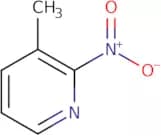
CAS:3-Methyl-2-nitropyridine is a high yield byproduct of formamide, which can be activated to form an intermediate for the synthesis of nucleosides. The kinetics and labeling of this intermediate were studied using a transfer experiment. 3-Methyl-2-nitropyridine is acidic, with a pKa value of 3.6, and is reactive towards nucleophiles. It is also catalytic, yielding methyl groups and dioxane as products when heated at temperatures between 180°C and 220°C. In addition, it undergoes nucleophilic substitutions at methoxy groups.
Formula:C6H6N2O2Purity:Min. 95%Color and Shape:PowderMolecular weight:138.12 g/mol5'-O-DMT-2'-O-methyl-5-methyluridine
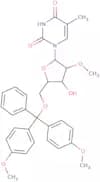
CAS:5'-O-DMT-2'-O-methyl-5-methyluridine is a modified nucleoside that is used in the synthesis of DNA. It is an anticancer drug and antiviral agent. 5'-O-DMT-2'-O-methyl-5-methyluridine has been shown to inhibit the growth of leukemia cells, even when they are resistant to other drugs. It also inhibits certain viruses, such as herpes simplex virus type 1 (HSV1), by preventing viral replication and inhibiting protein synthesis. This nucleoside is synthesized from 5'-O-DMT and 2'-O-methylcytosine.Formula:C32H34N2O8Purity:Min. 95%Color and Shape:PowderMolecular weight:574.64 g/mol2-Methylmercapto-4-oxo-6-aminopyrimidine monohydrate
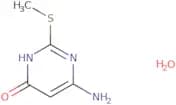
CAS:2-Methylmercapto-4-oxo-6-aminopyrimidine monohydrate is a chemical substance that is used as an anticancer and antiviral agent. It has been demonstrated to inhibit the proliferation of tumor cells in vitro and in vivo, and to deplete tumor cell lines of the enzyme ribonucleotide reductase, which is essential for DNA synthesis. The compound also inhibits the synthesis of viral nucleic acid. 2MMAP has a novel chemical structure that includes a methyl group attached to one nitrogen atom. This modification increases its affinity for DNA and RNA molecules by binding to the phosphate groups on these molecules.Formula:C5H7N3OS·H2OPurity:Min. 95%Color and Shape:PowderMolecular weight:175.21 g/mol5'-O-tert-Butyldiphenylsilyl-7-deaza-2'-deoxy-7-iodoadenosine
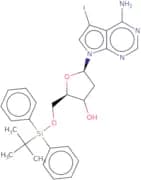
5'-O-tert-Butyldiphenylsilyl-7-deaza-2'-deoxy-7-iodoadenosine is a novel synthetic nucleoside with antiviral and antitumor activities. It has been shown to inhibit the activity of the HIV virus by preventing DNA replication. 5'-O-tert-Butyldiphenylsilyl-7-deaza-2'-deoxy-7-iodoadenosine also inhibits the synthesis of RNA and proteins, which can lead to cell death. The compound's high purity and quality are ensured by its CAS number.Formula:C27H31IN4O3SiPurity:Min. 95 Area-%Color and Shape:White Off-White PowderMolecular weight:614.55 g/molN4-Benzoyl-2'-deoxycytidine
CAS:N4-Benzoyl-2'-deoxycytidine is a fluorescent nucleoside that has been used to study the molecular interactions between sugar residues and the phosphate groups of nucleic acids. It is used as a reagent for glycosidation, which involves the formation of a glycosidic linkage between an alcohol group in a saccharide or oligosaccharide and the hydroxyl group in an aromatic acid. N4-Benzoyl-2'-deoxycytidine has also been synthesized by solid-phase techniques. This synthetic method is based on phosphoramidite chemistry and uses an automated DNA synthesizer to produce oligonucleotides with specific sequences. The synthesis of this nucleoside relies on the use of fluorescent dyes such as fluorescein, rhodamine, and coumarin to monitor progress during synthesis.Formula:C16H17N3O5Purity:Min. 95%Color and Shape:White PowderMolecular weight:331.33 g/molGuanosine 5'-O-(2-thiodiphosphate) trilithium salt
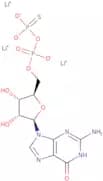
CAS:Guanosine 5'-O-(2-thiodiphosphate) trilithium salt (GTPTS) is a membrane-permeable molecule that hyperpolarizes cells by inhibiting the movement of ions through the cell membrane. GTPTS is activated by extracellular calcium and potassium ions, which are involved in signal transduction pathways. It has been shown to inhibit the release of neurotransmitters, such as acetylcholine, dopamine, serotonin, and norepinephrine. GTPTS also blocks voltage-gated sodium channels, which leads to a reduction in neuronal excitability. The drug has been shown to have analgesic effects in animal models of pain and can be used to treat chronic pain due to nerve damage.Formula:C10H12Li3N5O10P2SPurity:Min. 85 Area-%Color and Shape:PowderMolecular weight:477.06 g/mol5'-O-p-Anisoyl-N6-benzoyl-2'-deoxyadenosine
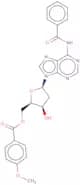
5'-O-p-Anisoyl-N6-benzoyl-2'-deoxyadenosine is a novel nucleoside analog with anticancer, antiviral, and antimalarial activities. It is synthesized by the condensation of 2'-deoxyadenosine with anisic acid in the presence of phosphoramidites. The compound is a potent inhibitor of DNA synthesis in cultured cells, and has been shown to inhibit replication of human immunodeficiency virus type 1 (HIV-1) in vitro. 5'-O-p-Anisoyl-N6-benzoyl-2'-deoxyadenosine also exhibits antiinflammatory activity against carrageenan induced paw edema in rats.Formula:C25H23N5O6Purity:Min. 95%Molecular weight:489.48 g/molCyclopentenyl cytosine 5'-triphosphate sodium salt
Cyclopentenyl cytosine 5'-triphosphate sodium salt is a synthetic, activator diphosphate. It is used as a phosphoramidite in the synthesis of DNA and RNA. Cyclopentenyl cytosine 5'-triphosphate sodium salt has been shown to have anticancer and antiviral properties.Purity:Min. 95%3'-Azido-3'-deoxy-5-fluoro-b-L-cytidine
CAS:3'-Azido-3'-deoxy-5-fluoro-b-L-cytidine is an antiviral drug. It is a modified nucleoside with phosphoramidite and azido groups. This product can be used as an activator for DNA synthesis, in anticancer drug development, as well as in the treatment of HIV. 3'-Azido-3'-deoxy-5-fluoro-b-L-cytidine has been shown to inhibit the growth of human tumor cells by inhibiting protein synthesis and enhancing the production of reactive oxygen species (ROS). It also inhibits the activity of ribonucleotide reductase, which is a critical enzyme for DNA synthesis.Purity:Min. 95%N2-Carbamoylthreonylguanosine sodium salt
N2-Carbamoylthreonylguanosine sodium salt is a modified nucleotide that has been synthesized and tested in vitro. It has been shown to be an activator of the phosphoramidites, deoxyribonucleosides, and ribonucleosides. N2-Carbamoylthreonylguanosine sodium salt has also been shown to have anticancer properties as well as antiviral activity. This drug is being developed as a new treatment for cancer and HIV/AIDS.Purity:Min. 95%N4-Acetyl-2'-O-tert-butyldimethylsilyl-5'-O-DMT-cytidine 3'-CE phosphoramidite
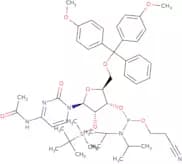
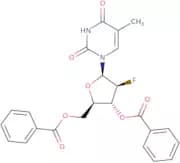
CAS:N4-Acetyl-2'-O-tert-butyldimethylsilyl-5'-O-DMT-cytidine 3'-CE phosphoramidite is a novel nucleoside analogue with antiviral and anticancer potential. It is a modified nucleoside that contains an acetyl group at the 4' position. The 3'-OH group has been replaced by a tertiary butyldimethylsilyl group, which renders the compound resistant to deamination by nucleases. N4-Acetyl-2'-O-tert-butyldimethylsilyl-5'-O-DMT-cytidine 3'-CE phosphoramidite also shows high purity and high quality.Formula:C47H64N5O9PSiPurity:Min. 98 Area-%Color and Shape:White PowderMolecular weight:902.11 g/mol1-(3',5'-Di-O-benzoyl-2'-deoxy-2'-fluoro-β-D-arabinofuranosyl)thymine
CAS:1-(3',5'-Di-O-benzoyl-2'-deoxy-2'-fluoro-b-D-arabinofuranosyl)thymine is a chemically modified nucleoside analog. This compound contains a thymine base, a 2'-fluoro-β-D-arabinofuranose sugar, which alters biological stability and function and benzoyl protecting groups at the 3' and 5' positions, commonly used in nucleoside synthesis to control selective modifications.Formula:C24H21FN2O7Purity:Min. 95%Color and Shape:White To Off-White SolidMolecular weight:468.43 g/mol2'-O-Methyl-2-thiouridine
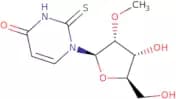
CAS:2'-O-Methyl-2-thiouridine is a modified nucleoside that is categorized as a mismatched nucleotide. It is found in RNA, where it replaces uridine and acts as a mismatch base. 2'-O-Methyl-2-thiouridine has been shown to stabilize duplex DNA against thermal denaturation by forming triplexes with complementary sequences. It also stabilizes dsDNA against hydrolysis by the enzyme ribonuclease H (RNase H) and has been used in the design of antisense therapeutics. Thermophilic bacteria use this molecule to synthesize their own thymine nucleotides, which are structurally similar to 2'-O-methyl-2-thiouridine. This modification prevents mismatches in their own dna and helps protect them from heat stress. The thermodynamic stability of this molecule has been calculated using an algorithm that takes into account the hybridization free energy, enthalpy change, entropyFormula:C10H14N2O5SPurity:Min. 95%Color and Shape:PowderMolecular weight:274.29 g/mol1-Methyl-2'-O-methylinosine
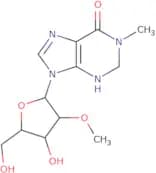
CAS:1-Methyl-2'-O-methylinosine is a nucleoside that is naturally found in RNA. It is the methylated form of inosine, which is a nonessential amino acid and purine nucleotide. 1-Methyl-2'-O-methylinosine's chemical name is β--D--ribofuranosyl-(1'→2')--N--(6-fluoro-3-indoxyl)glycinamide monohydrochloride. This nucleoside has been researched for its potential use as an indexing tool for phylogenetic research of DNA and RNA. 1-Methyl-2'-O-methylinosine has also been shown to be structurally similar to other nucleic acids and has been classified as a nucleoside.Formula:C12H16N4O5Purity:Min. 95%Molecular weight:296.28 g/molAdenosine 5′-phosphosulfate triethylammonium salt
Adenosine 5′-phosphosulfate triethylammonium salt serves as a donor of sulfate groups in biochemical processes, such as in the synthesis of sulfate esters. The triethylammonium salt form improves the solubility and stability of the compound, making it useful in laboratory applications involving enzymatic assays and the synthesis of sulfated biomolecules.
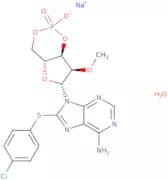
Formula:C10H14N5O10PS·xC6H15NPurity:Min. 98.0 Area-%Color and Shape:PowderMolecular weight:427.29 g/mol8-(4-Chlorophenylthio)-2'-O-methyladenosine 3',5'-cyclic monophosphate sodium salt
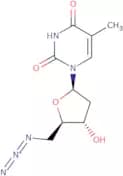
CAS:8-(4-Chlorophenylthio)-2'-O-methyladenosine 3',5'-cyclic monophosphate sodium salt (8-CPT-cAMP) is a cyclic nucleotide that activates adenyl cyclase, which increases intracellular levels of the second messenger cAMP. It also inhibits P2Y receptors and other ion channels. 8-CPT-cAMP has been shown to be effective in activating cells expressing the enzyme camp levels, such as those found in heart muscle cells. This drug is used clinically to lower blood pressure, as it has been shown to activate amp-activated protein kinase and calcium chelator. 8-CPT-cAMP may have clinical applications for the treatment of cancer due to its ability to induce cell cycle arrest and apoptosis.Formula:C17H16ClN5O6PS·NaPurity:Min. 95%Color and Shape:PowderMolecular weight:507.82 g/mol5'-Azido-5'-deoxythymidine
CAS:5'-Azido-5'-deoxythymidine is a synthetic analogue of thymidine. The compound has been synthesised and fluorescently labelled with ferrocene. 5'-Azido-5'-deoxythymidine is not cytotoxic to cancer cells, but it is shown to be an effective inhibitor of DNA synthesis by binding to the enzyme DNA polymerase. This causes a decrease in the rate of DNA synthesis and thus inhibits cancer cell growth.Formula:C10H13N5O4Purity:Min. 95%Color and Shape:White PowderMolecular weight:267.24 g/mol3'-Azido-N4-benzoyl-2',3'-dideoxycytidine
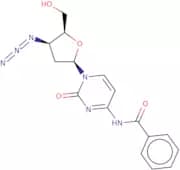
CAS:3'-Azido-N4-benzoyl-2',3'-dideoxycytidine is a novel nucleoside analog with antiviral and anticancer activities. It is used for the treatment of HIV, hepatitis B and C, herpes, and influenza. 3'-Azido-N4-benzoyl-2',3'-dideoxycytidine has been shown to inhibit the proliferation of cells in culture and to induce apoptosis in various cancer cell lines.
The synthesis of 3'-azido-N4-benzoyl-2',3'-dideoxycytidine starts with the condensation of 4-(hydroxymethyl)phenylacetic acid (1) with 2,6-dichloroisonicotinic acid chloride (2) in the presence of triethylamine to give 4-(hydroxymethyl)phenylacetic acid chloride (3). The N4 benzoylFormula:C16H16N6O4Purity:Min. 95%Color and Shape:Off-White PowderMolecular weight:356.34 g/molN3-Methyl-2’-O-(2-methoxyethyl)uridine
CAS:N3-Methyl-2’-O-(2-methoxyethyl)uridine is a modified nucleoside that is synthesized from deoxyribonucleosides and ribonucleosides. It has antiviral, anticancer, and antifungal properties. N3-Methyl-2’-O-(2-methoxyethyl)uridine has been shown to be an effective inhibitor of HIV replication in vitro and in vivo. This drug also inhibits the growth of human cancer cells in vitro and has been shown to be active against breast cancer cells. N3-Methyl-2’-O-(2-methoxyethyl)uridine is phosphorylated by cellular enzymes to form its active form, which binds to the viral reverse transcriptase enzyme and prevents DNA synthesis.Formula:C13H20N2O7Purity:Min. 95%Molecular weight:316.31 g/molAdenosine 5'-O-(3-thiotriphosphate), BODIPY FL thioester sodium salt - 5mM buffered aqueous solution
Adenosine 5'-O-(3-thiotriphosphate), BODIPY FL thioester sodium salt - 5mM buffered aqueous solution is a novel nucleoside that is synthesized from the corresponding phosphoramidites. This compound is an activator of DNA synthesis in mammalian cells and a potent inhibitor of viral replication. It has antiviral activity against HIV, herpes, and influenza viruses. The molecule can be modified to include different substituents such as fluoro, bromo, or chloro groups and has been shown to have anticancer activity.Formula:C24H27BF2N8Na3O13P3SPurity:Min. 95%Molecular weight:878.28 g/molAcetoacetyl coenzyme A lithium salt
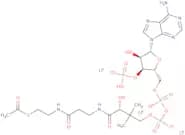
CAS:Acetoacetyl coenzyme A lithium salt is a novel phosphoramidite building block. It's a modified nucleoside that can be used in the synthesis of oligonucleotides and DNA. Acetoacetyl coenzyme A lithium salt has antiviral, anticancer, and antifungal activities.Formula:C25H36N7O18P3SLi4·5H2OPurity:Min. 96 Area-%Color and Shape:PowderMolecular weight:965.42 g/mol3'-Deoxy-3'-fluoroadenosine
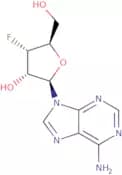
CAS:3'-Deoxy-3'-fluoroadenosine is a potent inhibitor of the phosphodiesterase enzyme, which is an important component of many different cellular processes. It has been shown to inhibit the activity of phosphodiesterase in cell culture and in serum alanine. 3'-Deoxy-3'-fluoroadenosine also inhibits the synthesis of uridine triphosphate, which is required for DNA replication and protein synthesis. The acid complex form has potent inhibition properties against viruses such as alphaviruses, and it also inhibits transport of nucleic acids into cells. 3'-Deoxy-3'-fluoroadenosine can act as an analog to adenosine and may be used to treat viral infections such as HIV or herpes simplex virus.Formula:C10H12FN5O3Purity:Min. 95%Color and Shape:White PowderMolecular weight:269.23 g/molN4-Benzoyl-2'-C-methylcytidine
N4-Benzoyl-2'-C-methylcytidine is a nucleoside that is used in the synthesis of DNA and RNA. This drug has been shown to have antiviral and anticancer properties. It inhibits the activity of DNA polymerase, reverse transcriptase, and ribonuclease H. It also has an activator effect on phosphoramidite synthesis, increasing the yield of oligodeoxynucleotides by up to 20%. N4-Benzoyl-2'-C-methylcytidine is a novel nucleoside that belongs to the group of deoxyribonucleosides with a diphosphate linkage.Purity:Min. 95%Inosine 5'-triphosphate lithium salt
Inosine 5'-triphosphate lithium salt is a nucleoside that is used as an activator for DNA polymerase in the synthesis of deoxyribonucleotides. It has been shown to have anticancer properties and can be used to treat leukemia, lymphoma, and ovarian cancer. Inosine 5'-triphosphate lithium salt has also been shown to inhibit the growth of bacteria by inhibiting RNA synthesis.Formula:C10H15N4O14P3FPurity:Min. 95%Molecular weight:527.16 g/mol2'-O-(2-Methoxyethyl)-5-methylcytidine
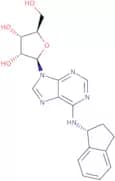
CAS:2'-O-(2-methoxyethyl)-5-methylcytidine is a novel antiviral monophosphate nucleoside that has been shown to be a potent activator of the immune system. It was synthesized by modifying a deoxyribonucleoside and phosphoramidite. 2'-O-(2-methoxyethyl)-5-methylcytidine is synthetic and can be used as an anticancer drug for the treatment of leukemia, lymphoma, and other cancers. This compound has also shown efficacy in treating diphosphate nucleotides such as HIV-1 reverse transcriptase, which is an enzyme crucial for viral replication.Formula:C13H21N3O6Purity:Min. 98 Area-%Color and Shape:PowderMolecular weight:315.32 g/mol(R)-N-(2,3-Dihydro-1H-indenyl)adenosine
CAS:(R)-N-(2,3-Dihydro-1H-indenyl)adenosine is a purine nucleoside with the attachment of a 2,3-dihydro-1H-indenyl group via a nitrogen atom. This adenosine-based product can be used for research purposesFormula:C19H21N5O4Purity:Min. 95 Area-%Color and Shape:White PowderMolecular weight:383.4 g/mol2’-Deoxy-N6-isopentenyladenosine
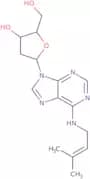
CAS:2’-Deoxy-N6-isopentenyladenosine (2’-DIA) is a monophosphate nucleoside that has antiviral properties. It activates DNA polymerase and inhibits tumor proliferation by inhibiting the synthesis of RNA and DNA. 2’-DIA is an analog of adenosine, which is used in the anticancer drug gemcitabine. 2’-DIA is synthesized through the condensation of 6-(2'-deoxyisopentenyl)adenosine with diphosphate. This compound also functions as a ribonucleotide, meaning it can be incorporated into RNA chains to form new proteins.Purity:Min. 95%5-(Cyanomethyl)-uridine
CAS:5-(Cyanomethyl)-uridine (5-CMU) is a monophosphate nucleoside that is synthetically derived from uracil. This nucleoside has antiviral activity and can be used to treat infections caused by the herpesviridae family, such as herpes simplex virus type 1 and 2. 5-CMU is modified with cyanomethyl groups on the ribose moiety. It is also a phosphoramidite building block for DNA synthesis and can be used in the preparation of oligonucleotides. The CAS number for 5-CMU is 58479-73-5.Formula:C11H13N3O6Purity:Min. 95%Color and Shape:PowderMolecular weight:283.24 g/molN-Cbz gemcitabine
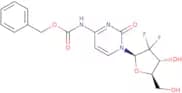
CAS:N-Cbz gemcitabine is a novel nucleoside analog that is chemically modified to be activated by enzymes in the cell. It has been shown to have high purity and high quality. In addition, N-Cbz gemcitabine is an anticancer drug that is most effective against cells with a low number of nucleotides per cell. This drug has shown antiviral properties and is used for the treatment of HIV/AIDS patients.Formula:C17H17F2N3O6Purity:Min. 95%Color and Shape:Off-White To Yellow SolidMolecular weight:397.33 g/mol2'-Deoxy-5'-O-tritylinosine 3'-CE phosphoramidite
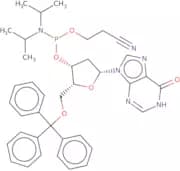
2'-Deoxy-5'-O-tritylinosine 3'-CE phosphoramidite is an anticancer drug that inhibits the growth of cancer cells. It is a modified nucleoside that is synthesized by reacting 2'-deoxy-5'-O-tritylinosine with a phosphoramidite. This product can be used for the synthesis of DNA, RNA and deoxyribonucleic acid (DNA).Formula:C38H43N6O5PPurity:Min. 95%Molecular weight:694.78 g/mol3'-Deoxy-N-dimethylformamidine- 5'-O-DMT-guanosine-2'-O-succinoyl-long chain alkylamino-CPG
3'-Deoxy-N-dimethylformamidine-5'-O-DMT-guanosine-2'-O-succinoyl-long chain alkylamino-CPG is an anticancer, antiviral, and modified nucleoside. It is a novel monophosphate nucleoside that can be used in the synthesis of DNA or RNA. 3'-Deoxy-N-dimethylformamidine is a synthetic phosphoramidite that is activated with triethylamine and reacts with 5'--DMT--guanosine to yield a novel nucleoside. The compound has high purity and high quality.Purity:Min. 95%3'-O-Allyladenosine
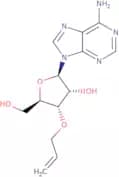
CAS:3'-O-Allyladenosine is an antiviral agent that inhibits the replication of DNA and RNA viruses. It has been shown to have anticancer properties, and is a novel nucleoside analog with potential as an antitumor agent. 3'-O-Allyladenosine is a modified nucleoside analog that can be synthesized with high purity and quality. This compound has shown antiviral activity against influenza virus and herpes simplex virus type 1. In addition, 3'-O-Allyladenosine has been found to inhibit tumor growth in mice without any significant side effects.
Formula:C13H17N5O4Purity:Min. 95%Color and Shape:PowderMolecular weight:307.31 g/mol2'-Deoxy-5'-O-DMT-N6-phenoxyacetyladenosine 3'-CE phosphoramidite
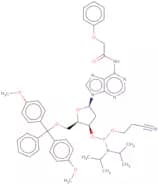
CAS:Amidite designed to withstand prolonged exposure to strongly alkaline conditions during heating with ammonium hydroxide solution.Formula:C48H54N7O8PPurity:Min. 95%Color and Shape:PowderMolecular weight:887.98 g/mol5-Methoxycarbonylmethyl-2-thiouridine
CAS:Nucleoside functionalised on the baseFormula:C12H16N2O7SPurity:Min. 95 Area-%Color and Shape:White Off-White PowderMolecular weight:332.33 g/mol4-Chloro-7-(2C-methyl-3,5-bis-O-(4-methylbenzoyl)-b-D- ribofuranosyl)-7H-pyrrolo[2,3-d]pyrimidine
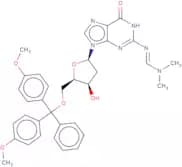
CAS:4-Chloro-7-(2C-methyl-3,5-bis-O-(4-methylbenzoyl)-b-D ribofuranosyl)-7H-pyrrolo[2,3-d]pyrimidine is a monophosphate nucleotide analog. It is structurally related to the natural nucleoside 2′,3′ dideoxyadenosine. It can be used as an antiviral agent and has also been shown to have possible use in the treatment of HIV infections. 4C7DPP is a novel compound that is synthesized from phosphoramidites and activated with a novel activator. The purity of this compound is high and the quality is very good. CAS No. 1338072-45-9Purity:Min. 95%2'-Deoxy-N2-DMF-5'-O-DMT-guanosine
CAS:2'-Deoxy-N2-DMF-5'-O-DMT-guanosine is a monophosphate nucleoside that has antiviral, anticancer, and high purity properties. It is synthesized by the phosphoramidite method from 2'-deoxy-N2-DMF and 5'-O-DMT guanosine. This compound has been shown to inhibit the growth of human cancer cells in vitro and in vivo. It also inhibits HIV replication in vitro and is not toxic to normal cells.Formula:C34H36N6O6Purity:Min. 95%Color and Shape:White PowderMolecular weight:624.7 g/mol5-O-[[[(1S)-1-Methyl-2-(1-methylethoxy)-2-oxoethyl]amino]-phenoxyphosphinyl]-cytidine
CAS:5-O-[[[(1S)-1-Methyl-2-(1-methylethoxy)-2-oxoethyl]amino]-phenoxyphosphinyl]-cytidine is a modified nucleoside analog that inhibits the synthesis of DNA and RNA. It has been shown to have antiviral, anticancer, and antiinflammatory activities. 5-O-[[[(1S)-1-Methyl-2-(1-methylethoxy)-2-oxoethyl]amino]-phenoxyphosphinyl]-cytidine is a ribonucleoside that can be used as a building block for the production of deoxyribonucleosides (i.e., as an activator). This product also has high purity and quality, as well as being novel in structure.Formula:C21H29N4O9PPurity:Min. 95%Color and Shape:White to off-white solid.Molecular weight:512.45 g/mol1-(2'-Deoxy-5'-O-DMT-2'-fluoro-β-D-arabinofuranosyl)thymine
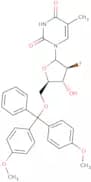
CAS:1-(2'-Deoxy-5'-O-DMT-2'-fluoro-b-D-arabinofuranosyl)thymine is a chemically modified nucleoside that contains a fluorinated sugar moiety and a thymine base, with a dimethoxytrityl (DMT) protecting group on the 5'-hydroxyl of the sugar.Formula:C31H31FN2O7Purity:Min. 95%Molecular weight:562.6 g/molN2-Diboc-7/9-(2,3,4,6-tetra-O-acetyl-D-mannopyranosyl)-6-chloro-2-aminopurine
N2-Diboc-7/9-(2,3,4,6-tetra-O-acetyl-D-mannopyranosyl)-6-chloro-2-aminopurine is a nucleoside that is modified with a chlorine group. The modification of the nucleoside may enhance its anticancer activity. N2-Diboc-7/9-(2,3,4,6-tetra-O-acetyl-D-mannopyranosyl)-6-chloro-2 aminopurine has been shown to inhibit the growth of virus and cancer cells by inhibiting DNA synthesis. It has also been shown to induce apoptosis in human leukemia cells.Formula:C21H30ClN5O9Purity:Min. 95%Color and Shape:White to beige solid.Molecular weight:531.94 g/mol1-Methylpseudouridine
CAS:1-Methylpseudouridine is a substitute for uridine in modified mRNA. This substitution has shown to increase transfection by reducing immuogenicity. The 1-methylpseudouridine substituted mRNA increases protein expression due to low immune stimulation as it evades detection by the edosomal Toll-like receptor (TLR3).Formula:C10H14N2O6Purity:Min. 98.0 Area-%Molecular weight:258.23 g/molRef: 3D-M-4320
1gTo inquire5gTo inquire250mgTo inquire500mgTo inquire2500mgTo inquire-Unit-ggTo inquireN6-Benzoyl-3'-O-tert-butyldimethylsilyl-5'-O-DMT-adenosine 2'-CE phosphoramidite
CAS:N6-Benzoyl-3'-O-tert-butyldimethylsilyl-5'-O-DMT-adenosine 2'-CE phosphoramidite is an antiviral nucleoside phosphoramidite that is used in the synthesis of DNA. It has been shown to have antiviral activity against HIV and herpes, as well as anticancer effects. It also has high purity, being a novel synthetic nucleoside with a CAS number. N6-Benzoyl-3'-O-tert-butyldimethylsilyl-5'-O-DMT-adenosine 2'-CE phosphoramidite is synthesized using novel methods. The synthesis process includes activation with diphosphate, DNA, and Novel nucleosides, which are high quality and modified.Formula:C53H66N7O8PSiPurity:Min. 95%Color and Shape:PowderMolecular weight:988.19 g/mol
![N6-([6-Aminohexyl]carbamoylmethyl)adenosine 5'-triphosphate lithium salt](/_next/image/?url=https%3A%2Fstatic.cymitquimica.com%2Fproducts%2F3D%2Fthumb-webp%2FNA73270.webp&w=3840&q=75)






![5-Bromo-7-(2-C-methyl-b-D-ribofuranosyl)-7H-pyrrolo[2,3-d]pyrimidin-4-amine](/_next/image/?url=https%3A%2Fstatic.cymitquimica.com%2Fproducts%2F3D%2Fthumb-webp%2FNB14095.webp&w=3840&q=75)




![10-O-[1-Propyl-3-N-carbamoylcholesteryl]-TEG-CE phosphoramidite](/_next/image/?url=https%3A%2Fstatic.cymitquimica.com%2Fproducts%2F3D%2Fthumb-webp%2FPP138032.webp&w=3840&q=75)








![Guanosine-5'-[(b,γ)-imido]triphosphate sodium salt](/_next/image/?url=https%3A%2Fstatic.cymitquimica.com%2Fproducts%2F3D%2Fthumb-webp%2FNG35450.webp&w=3840&q=75)














![4-Chloro-7-(2C-methyl-3,5-bis-O-(4-methylbenzoyl)-b-D- ribofuranosyl)-7H-pyrrolo[2,3-d]pyrimidine](/_next/image/?url=https%3A%2Fstatic.cymitquimica.com%2Fproducts%2F3D%2Fthumb-webp%2FNC163171.webp&w=3840&q=75)
![5-O-[[[(1S)-1-Methyl-2-(1-methylethoxy)-2-oxoethyl]amino]-phenoxyphosphinyl]-cytidine](/_next/image/?url=https%3A%2Fstatic.cymitquimica.com%2Fproducts%2F3D%2Fthumb-webp%2FNM46513.webp&w=3840&q=75)