Monosaccharides
Monosaccharides are the simplest form of carbohydrates and serve as fundamental building blocks for more complex sugars and polysaccharides. These single sugar molecules play critical roles in energy metabolism, cellular communication, and structural components of cells. In this section, you will find a wide variety of monosaccharides essential for research in biochemistry, molecular biology, and glycoscience. These compounds are crucial for studying metabolic pathways, glycosylation processes, and developing therapeutic agents. At CymitQuimica, we offer high-quality monosaccharides to support your research needs, ensuring precision and reliability in your scientific investigations.
Subcategories of "Monosaccharides"
- Alloses(11 products)
- Arabinoses(21 products)
- Erythroses(11 products)
- Fructoses(9 products)
- Fucoses(36 products)
- Galactosamine(41 products)
- Galactose(260 products)
- Glucoses(365 products)
- Glucuronic Acids(51 products)
- Glyco-substrates for Enzyme(77 products)
- Guloses(6 products)
- Idoses(4 products)
- Inositols(15 products)
- Lyxoses(4 products)
- Mannoses(65 products)
- O-Glycans(48 products)
- Psicoses(3 products)
- Rhamnoses(10 products)
- Riboses(61 products)
- Sialic Acids(100 products)
- Sorboses(4 products)
- Sugars(173 products)
- Tagatoses(4 products)
- Taloses(8 products)
- Xyloses(20 products)
Show 17 more subcategories
Found 6088 products of "Monosaccharides"
Sort by
Purity (%)
0
100
|
0
|
50
|
90
|
95
|
100
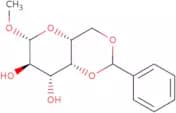
Methyl 4,6-O-benzylidene-β-D-galactopyranoside
CAS:<p>Methyl 4,6-O-benzylidene-b-D-galactopyranoside is a sugar that has a molecular formula of C14H18O7. This compound crystallizes in the monoclinic system with unit cell dimensions of a=11.74 Å, b=8.92 Å, c=5.81 Å and β=106.39°. The methyl 4,6-O-benzylidene group is attached to the galactose ring via an ether bond at C4' and C6'. Methyl 4,6-O-benzylidene-b-D-galactopyranoside has been shown to possess receptor binding properties by inhibiting acetylcholine release when it binds to the acetylcholine receptors on the surface of muscle cells. Methyl 4,6-O-benzylidene-b-D-galactopyr</p>Formula:C14H18O6Purity:Min. 95%Color and Shape:PowderMolecular weight:282.29 g/mol1,2,6-Tri-O-acetyl-3,4-di-O-benzyl-α-D-mannopyranose
CAS:<p>1,2,6-Tri-O-acetyl-3,4-di-O-benzyl-a-D-mannopyranose is a synthetic sugar that has been modified with three acetates and benzyl groups. It is used in the synthesis of glycosides and oligosaccharides. 1,2,6-Tri-O-acetyl-3,4-di-O-benzyl-a-D-mannopyranose is also an important building block for the synthesis of complex carbohydrates.</p>Formula:C26H30O9Purity:Min. 95%Molecular weight:486.51 g/molMethyl 7-chloro-7-deoxy-1-thiolincosaminide
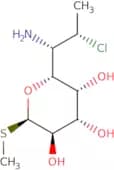
CAS:<p>Methyl 7-chloro-7-deoxy-1-thiolincosaminide is a modification of the monosaccharide D-glucose. It has a CAS number of 22965-79-3 and is a white powder. Methyl 7-chloro-7-deoxy-1-thiolincosaminide can be used in the production of various carbohydrates, such as oligosaccharides and polysaccharides. This compound is also useful for the synthesis of sugar related products, including saccharides, glycosylation, and fluorination. Methyl 7-chloro-7-deoxy 1 -thiolincosaminide has been shown to be highly pure and synthetic, making it suitable for use in research or industrial settings.</p>Formula:C9H18ClNO4SPurity:Min. 95%Color and Shape:PowderMolecular weight:271.76 g/mol4-Methoxyphenyl 2,4,6-tri-O-benzyl-b-D-galactopyranoside
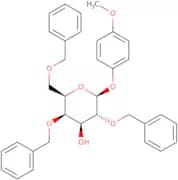
CAS:<p>4-Methoxyphenyl 2,4,6-tri-O-benzyl-b-D-galactopyranoside is a custom synthesis that belongs to the group of complex carbohydrates. It is an Oligosaccharide with CAS No. 247027-79-8 and Polysaccharide. 4MPG has been modified by Methylation, Glycosylation, Carbohydrate, Click modification, sugar, High purity, Fluorination and Synthetic methods. This product is available in high purity and can be used for research purposes.</p>Formula:C34H36O7Purity:Min. 97 Area-%Color and Shape:PowderMolecular weight:556.65 g/molHyacinthine crystals
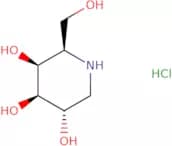
<p>Hyacinthine is a sugar that is synthesized in the laboratory. It is modified with fluorine, methyl, and click chemistry. Hyacinthine has been shown to have antifungal, antiviral, and antitumour properties. It also has been shown to have anti-inflammatory effects. Hyacinthine can be used as a probe for the study of glycosylation reactions or as a model for the synthesis of complex carbohydrates.</p>Purity:Min. 95%1-Deoxygalactonojirimycin hydrochloride salt
CAS:<p>Specific and potent inhibitor of lysosomal α-galactosidase with IC50 in nanomolar range. It acts as pharmacological chaperone and assists folding of the wild type and mutant versions of the enzyme. It places itself in the instable active site and prevents the damage to the enzyme during the passage through Golgi apparatus, endoplasmatic reticulum and lysosome axis. The exposure to this compound leads to increased levels of functional α-galactosidase in models for lysosomal storage disorders and brings therapeutic benefits to patients with Fabry disease.</p>Formula:C6H13NO4·HClPurity:Min. 95 Area-%Color and Shape:White PowderMolecular weight:199.63 g/mol1,2,3,4,6-Penta-O-(3,4,5-tri-O-benzylgalloyl)-b-D-glucopyranose
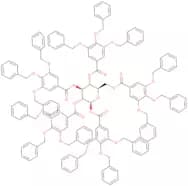
CAS:<p>1,2,3,4,6-Penta-O-(3,4,5-tri-O-benzylgalloyl)-b-D-glucopyranose is a custom synthesis, complex carbohydrate that has been modified with methylation and glycosylation. It is also a saccharide that can be found in the form of an Oligosaccharide or Polysaccharide. The CAS No. for this compound is 122625-60-9. This compound has a purity level of 99% and is 100% synthetic. It has been fluorinated to make it more stable.<br>1,2,3,4,6-Penta-O-(3,4,5-tri-O-benzylgalloyl)-b-D-glucopyranose can be used in pharmaceuticals as a sugar or carbohydrate. It can also be used as a food additive for flavoring purposes</p>Formula:C146H122O26Purity:Min. 95%Molecular weight:2,292.52 g/mol1,3,4,6-Tetra-O-acetyl-2-deoxy-2-phthalimido-b-D-glucopyranoside
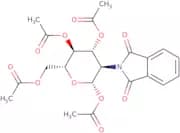
CAS:<p>The interaction of 1,3,4,6-tetra-O-acetyl-2-deoxy-2-phthalimido-b-D-glucopyranoside with DNA is selective for the hydroxyl group and for the stacking of its glycosidic bonds. The data obtained from the spectra show that this compound interacts with the sugar moiety of nucleosides to yield a product with a lower melting point. The binding constants are high and the yields are low.</p>Formula:C22H23NO11Purity:Min. 95%Color and Shape:White PowderMolecular weight:477.42 g/mol5-Aldo-1,2-O-isopropylidene-b-D-arabinofuranose
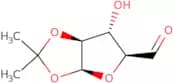
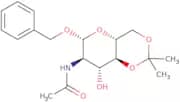
CAS:<p>5-Aldo-1,2-O-isopropylidene-b-D-arabinofuranose is a sugar that is synthesized from D-glucose. It has been modified with fluorine to produce an analogue of 5-fluoroarabinofuranose. The methylation and glycosylation of this compound have also been investigated. This chemical can be used for the synthesis of complex carbohydrates.</p>Formula:C8H12O5Purity:Min. 95%Color and Shape:PowderMolecular weight:188.18 g/molBenzyl 2-acetamido-2-deoxy-4,6-O-isopropylidene-b-D-glucopyranoside
CAS:<p>Benzyl 2-acetamido-2-deoxy-4,6-O-isopropylidene-b-D-glucopyranoside is a surfactant that is used in the measurement of polymers. It is soluble in water and has a low concentration. This surfactant can be used as a copolymer with terephthalate to form polyurethane foam. Benzyl 2-acetamido-2-deoxy-4,6-O-isopropylidene b -D -glucopyranoside also has high concentrations for sedimentation and sulfonate properties.</p>Formula:C18H25NO6Purity:Min. 95%Color and Shape:PowderMolecular weight:351.39 g/molPhloridzin dihydrate
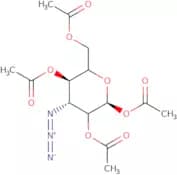
CAS:<p>Phloridzin is a phenolic acid that is found in the cell walls of plants. It has been shown to be a potent antioxidant, with anti-inflammatory and anti-tumour properties. Phloridzin is also an inhibitor of the divalent metal ion-dependent diphenolase activity that causes oxidative DNA damage. The dihydrate form of phloridzin has been shown to inhibit cisplatin-induced nephrotoxicity in mice by reducing oxidative stress.</p>Formula:C21H24O10·2H2OPurity:Min. 95%Color and Shape:Off-White PowderMolecular weight:472.44 g/mol1,2,4,6-Tetra-O-acetyl-3-azido-3-deoxy-D-galactopyranose
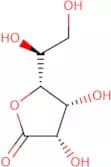
CAS:<p>Building block for galectin-3 inhibitors based on 3â-modified LacNAc</p>Formula:C14H19N3O9Purity:Min. 98 Area-%Color and Shape:White PowderMolecular weight:373.32 g/molL-Gulonic acid-1,4-lactone
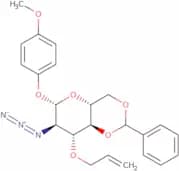
CAS:<p>L-Gulonic acid-1,4-lactone is an ascorbic acid derivative that inhibits the production of matrix metalloproteinases (MMPs) and other enzymes. L-Gulonic acid-1,4-lactone has been shown to inhibit the activity of MMPs in hl-60 cells, which may be due to its ability to chelate metal ions, such as zinc and copper. This molecule also has a stabilizing effect on collagen type I because it prevents cross linking between lysine amino acids. The discovery process for this molecule was found by screening clones from a cDNA library with biochemical properties similar to those of ascorbic acid. This molecule has been shown to inhibit the activation of protein kinase C (PKC) and phosphorylation of extracellular signal regulated kinase (ERK). L-Gulonic acid-1,4-lactone is metabolized through plant metabolism</p>Formula:C6H10O6Purity:Min. 95 Area-%Color and Shape:White PowderMolecular weight:178.14 g/mol4-Methoxyphenyl 3-O-allyl-2-azido-4,6-O-benzylidene-2-deoxy-β-D-glucopyranoside
CAS:<p>4-Methoxyphenyl 3-O-allyl-2-azido-4,6-O-benzylidene-2-deoxy-b-D-glucopyranoside (MPA) is a glycosylated antigen that has been shown to be specific for mycobacterium avium. It is a cytosolic calcium ionophore and can induce platelet membrane activation and coagulation. MPA has also been found to be chemoprotective in animal models of cancer. MPA can be used as an indicator of the body mass index (BMI).</p>Formula:C23H25N3O6Purity:Min. 95%Color and Shape:PowderMolecular weight:439.47 g/molMethyl a-L-fucopyranoside
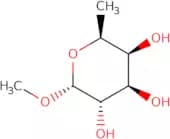
CAS:<p>Methyl a-L-fucopyranoside is a natural product that has been shown to have many biological effects, including antioxidant and anti-inflammatory properties. It has been shown to inhibit the growth of bacteria by binding to the ribosome, preventing protein synthesis and cell division. The compound has also been shown to have anti-inflammatory effects in mice with inflammatory bowel disease. Methyl a-L-fucopyranoside inhibits the production of pro-inflammatory cytokines, such as interferon alfa-2b (IFNα2β), which is induced by IFNγ. This inhibition of IFNα2β activity may be due to methyl a-L-fucopyranoside's ability to bind to cytosolic calcium and inhibit its transport into the nucleus. Methyl a-L-fucopyranoside also blocks the production of antimicrobial peptides, such as defensins or cathelicidins.</p>Formula:C7H14O5Purity:Min. 98 Area-%Color and Shape:White PowderMolecular weight:178.18 g/mol3,4,6-Tri-O-acetyl-2-O-trifluoromethanesulfonyl-b-D-mannopyranosyl azide
CAS:<p>3,4,6-Tri-O-acetyl-2-O-trifluoromethanesulfonyl-b-D-mannopyranosyl azide is a chemically synthesized compound that can be used for methylation reactions. It is an Oligosaccharide with a molecular weight of 597.5 and contains the following structural features: A saccharide composed of three monosaccharides (D-glucose, D-mannose, and D-galactose), which is bonded by alpha 1,6 linkages. The chemical formula is C12H14F3N3O8. The CAS number is 1159265-99-2.</p>Formula:C13H16F3N3O10SPurity:Min. 95%Color and Shape:PowderMolecular weight:463.34 g/mol1,3,5-Tri-O-benzoyl-2-O-(1H-imidazole-1-sulfonate) a-L-arabinofuranose
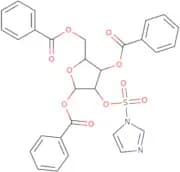
CAS:<p>1,3,5-Tri-O-benzoyl-2-O-(1H-imidazole-1-sulfonate) a-L-arabinofuranose is a methylated and modified arabinofuranose. It is one of the most common monosaccharides in nature. This compound is an important component of polysaccharides such as cellulose and starch. 1,3,5-Tri-O-benzoyl-2-O-(1H-imidazole-1-sulfonate) aL arabinofuranose is used to create saccharide derivatives that are widely used in the pharmaceutical industry.</p>Purity:Min. 95%Color and Shape:PowderN-Propanoyl mannosamine
CAS:<p>N-Propanoyl mannosamine is a biochemical that belongs to the group of glycoconjugates. It is an intracellular messenger that modulates the concentration of intracellular calcium and controls the release of gamma-aminobutyric acid (GABA). N-Propanoyl mannosamine has been shown to stimulate axonal growth in cell culture, which is mediated by the polysialic acid receptor. This molecule also has a role in human osteoblast differentiation and bone formation.<br>N-Propanoyl mannosamine can be synthesized from dopamine and erythrose via a series of reactions involving acidification, oxidation, reduction, and decarboxylation. The synthesis of this molecule requires blood group O as an acceptor.</p>Formula:C9H17NO6Purity:Min. 95%Color and Shape:White To Off-White SolidMolecular weight:235.23 g/mol1,2,3,4,6-Penta-O-benzoyl-D-glucopyranoside
CAS:<p>Penta-O-benzoyl-D-glucopyranoside is a carbohydrate that has been prepared in a preparative scale. It is an organic compound and the structural formula is C12H22O11. The diameter of this molecule is around 1.5 nm, which makes it mesoporous. Penta-O-benzoyl-D-glucopyranoside has been analysed by high performance liquid chromatography (HPLC) and mass spectrometry (MS). The tree ring processability of this product is good and can be processed thermally.</p>Formula:C41H32O11Purity:Min. 95%Molecular weight:700.69 g/mol2,3,4,6-Tetra-O-benzyl-1-deoxynojirimycin hydrochloric acid salt
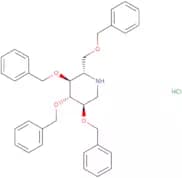
CAS:<p>2,3,4,6-Tetra-O-benzyl-1-deoxynojirimycin hydrochloric acid salt is a synthetic monosaccharide. It was originally synthesized by the methylation of a native oligosaccharide before being subjected to click chemistry. The resulting product is a complex carbohydrate with an aromatic ring in place of the sugar alcohol moiety. 2,3,4,6-Tetra-O-benzyl-1-deoxynojirimycin hydrochloric acid salt has CAS number 72983-76-7 and is soluble in water. This product is also available as a custom synthesis service and can be modified to meet your needs.</p>Formula:C34H38ClNO4Purity:Min. 95 Area-%Color and Shape:PowderMolecular weight:560.12 g/mol