Monosaccharides
Monosaccharides are the simplest form of carbohydrates and serve as fundamental building blocks for more complex sugars and polysaccharides. These single sugar molecules play critical roles in energy metabolism, cellular communication, and structural components of cells. In this section, you will find a wide variety of monosaccharides essential for research in biochemistry, molecular biology, and glycoscience. These compounds are crucial for studying metabolic pathways, glycosylation processes, and developing therapeutic agents. At CymitQuimica, we offer high-quality monosaccharides to support your research needs, ensuring precision and reliability in your scientific investigations.
Subcategories of "Monosaccharides"
- Alloses(11 products)
- Arabinoses(21 products)
- Erythroses(11 products)
- Fructoses(9 products)
- Fucoses(36 products)
- Galactosamine(41 products)
- Galactose(261 products)
- Glucoses(365 products)
- Glucuronic Acids(51 products)
- Glyco-substrates for Enzyme(77 products)
- Guloses(6 products)
- Idoses(4 products)
- Inositols(15 products)
- Lyxoses(4 products)
- Mannoses(65 products)
- O-Glycans(48 products)
- Psicoses(3 products)
- Rhamnoses(10 products)
- Riboses(61 products)
- Sialic Acids(100 products)
- Sorboses(4 products)
- Sugars(173 products)
- Tagatoses(4 products)
- Taloses(8 products)
- Xyloses(20 products)
Show 17 more subcategories
Found 6088 products of "Monosaccharides"
Sort by
Purity (%)
0
100
|
0
|
50
|
90
|
95
|
100
1,2,3,4,6-Penta-O-galloyl-a-D-glucopyranose
CAS:<p>1,2,3,4,6-Penta-O-galloyl-a-D-glucopyranose is a natural compound that inhibits the Cox-2 enzyme and has anti-cancer properties. It induces cell death by increasing oxidative injury and suppressing autophagy. 1,2,3,4,6-Penta-O-galloyl-a-D-glucopyranose has been shown to reduce xenograft tumor growth in mice while causing no observable toxic effects on normal tissues. This compound also inhibits the proapoptotic protein Bax and promotes the expression of Bcl2 in 3T3L1 preadipocytes. The mechanism of action may be related to its ability to inhibit basic fibroblast proliferation and induce apoptosis in k562 cells.</p>Formula:C41H32O26Purity:Min. 95%Color and Shape:Off-White PowderMolecular weight:940.68 g/mol2-Acetamido-2-deoxy-b-D-thioglucopyranose
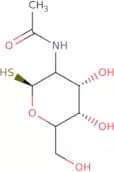
CAS:<p>2-Acetamido-2-deoxy-b-D-thioglucopyranose is a sugar with the chemical formula C6H14O7. It has been synthesized by Click chemistry to have an acetamido group on one of the carbon atoms and a 2,3,5-triiodo substituent on the other. The methylene protons at the 3 and 5 positions of the glycosidic linkage are fluorinated to give this modified sugar. It is also glycosylated with glucose to form a complex carbohydrate. 2-Acetamido-2-deoxy-b-D-thioglucopyranose has CAS number 781581-10-0 and a molecular weight of 318.19 g/mol.</p>Formula:C8H15NO5SPurity:Min. 95%Color and Shape:PowderMolecular weight:237.27 g/mol1,3,4,6-Tetra-O-acetyl-2-azido-2-deoxy-b-D-galactopyranose
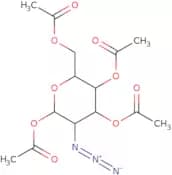
CAS:<p>1,3,4,6-Tetra-O-acetyl-2-azido-2-deoxy-b-D-galactopyranose (TAZ) is an aromatic heterocyclic sugar compound that is used in pharmaceutical formulations. It has low toxicity and can be synthesized using a number of methods. TAZ has been shown to have antifungal effects against Candida albicans and antitumor effects against cancer cells. TAZ also inhibits the activity of teniposide, which is a drug used for the treatment of leukemia. TAZ may be effective against cancer cells by acting as an amido donor and changing the conformation of the cyclic peptide.</p>Formula:C14H19N3O9Purity:Min. 95%Color and Shape:PowderMolecular weight:373.32 g/mol1-Bromo-2,3,4-tri-O-acetyl-a-D-glucuronide methyl ester
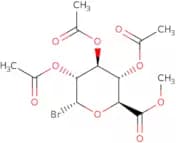
CAS:<p>1-Bromo-2,3,4-tri-O-acetyl-a-D-glucuronide methyl ester is a protected D-glucoronic acid with an alpha bromide at the anomeric position ready to undergo glycosylation reactions with suitable glycoside acceptors. Pharmaceutically active compounds have been used as acceptors to form β-linked D-glucuronide prodrugs which can be used to modify pharmacokinetics, improve solubility and lower the toxicity of the drug.</p>Formula:C13H17BrO9Purity:Min. 80%Molecular weight:397.17 g/mol2-Acetamido-1,6-anhydro-2-deoxy-β-D-glucopyranose
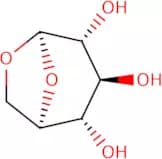
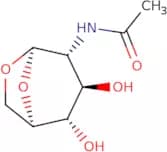
CAS:<p>2-Acetamido-1,6-anhydro-2-deoxy-b-D-glucopyranose is widely used in carbohydrate chemistry. It is used as reagent for the synthesis of oligosaccharides and also as a precursor in the synthesis of oligopeptides. 2-Acetamido-1,6-anhydro-2-deoxy-b-D-glucopyranose is an analog of levoglucosan, a compound that is often used to trace for biomass burning in enviromental chemistry studies.</p>Formula:C8H13NO5Purity:Min. 95%Color and Shape:PowderMolecular weight:203.19 g/mol2-Amino-b-L-arabinofurano[1,2:4,5]oxazoline
CAS:<p>2-Amino-b-L-arabinofurano[1,2:4,5]oxazoline is a custom synthesis. It is a white to off-white powder with a molecular weight of 264.50 and a melting point of about 160°C. The purity of this compound is >98% by HPLC analysis. This product has been modified with glycosylation, methylation, click modification, fluorination, saccharide modification, sugar modification, and oligosaccharide modification.</p>Formula:C6H10N2O4Purity:Min. 95%Color and Shape:PowderMolecular weight:174.15 g/mol4-Methylphenyl 2,3,4-tri-O-benzyl-β-L-thiofucopyranoside
<p>4-Methylphenyl 2,3,4-tri-O-benzyl-b-L-thiofucopyranoside is a custom synthesis of an oligosaccharide. It is a complex carbohydrate with CAS No. that belongs to the class of saccharide and sugar. Polysaccharides are made up of several monosaccharides linked together by glycosidic bonds, which are formed by the action of enzymes called glycosyltransferases or glycosidases. Glycosylation is the process in which a sugar molecule (usually glucose) is added to another molecule by means of a glycosidic bond. Carbohydrates are one type of macromolecule and they are important sources of energy in living things. They also play important roles in cell walls and as structural components in plants and animals. The chemical modification carried out on this compound is methylation, which refers to the addition of one or more methyl</p>Formula:C34H36O4SPurity:Min. 95%Molecular weight:540.71 g/molPropargyl β-D-glucopyranoside
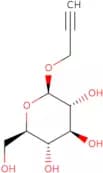
CAS:<p>A beta glycoside with an alkyne handle suitable to click chemistry</p>Formula:C9H14O6Purity:Min. 95%Color and Shape:PowderMolecular weight:218.2 g/mol2,3,4,6-Tetra-O-acetyl-a-D-mannopyranosyl bromide - stabilised with 2% CaCO3
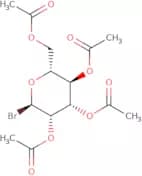
CAS:<p>Donor for Koenigs-Knorr type mannosylation and other anomeric substitutions</p>Formula:C14H19BrO9Purity:Min. 95%Color and Shape:Yellow PowderMolecular weight:411.2 g/mola-D-Mannose-1-phosphate dipotassium salt
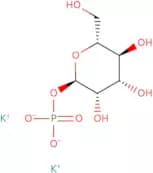
CAS:<p>a-D-Mannose-1-phosphate dipotassium salt (DMDK) is a synthetic oligosaccharide that was designed and synthesized for use as a potential drug in the treatment of cancer. DMDK has been shown to be an inhibitor of protein glycosylation, which may lead to the prevention of tumor formation. It also has anti-inflammatory properties and can inhibit the growth of bacteria by binding to bacterial 16S ribosomal RNA and inhibiting protein synthesis.</p>Formula:C6H11K2O9PPurity:Min. 95%Color and Shape:PowderMolecular weight:336.32 g/molMethyl 2,3,4-tri-O-benzyl-α-D-glucuronide benzyl ester
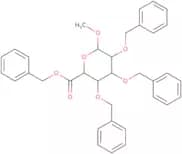
CAS:<p>Methyl 2,3,4-tri-O-benzyl-α-D-glucuronide benzyl ester is a Carbohydrate. It is soluble in water and insoluble in alcohol. The molecular weight of Methyl 2,3,4-tri-O-benzyl-α-D-glucuronide benzyl ester is 584.1 g/mol. The CAS Registry Number for Methyl 2,3,4-tri-O-benzyl-α-D-glucuronide benzyl ester is 14279733.</p>Formula:C35H36O7Purity:Min. 95%Color and Shape:Colorless Clear LiquidMolecular weight:568.66 g/mol1,2,3,4-Tetra-O-acetyl-α-L-fucopyranose
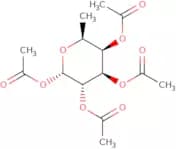
CAS:<p>1,2,3,4-Tetra-O-acetyl-α-L-fucopyranose is a chiral compound and it has been used as a biocatalyst in the industrial production of L-amino acids. The enantiomers are obtained by enzymatic hydrolysis of the racemic mixture with lipases. It has been shown that 1,2,3,4-Tetra-O-acetyl-α-L-fucopyranose is an enantioselective substrate for lipolytic enzymes. Lipolytic enzymes are also screened for lipase activity using this compound as a surrogate.</p>Formula:C14H20O9Purity:Min. 95%Color and Shape:White Off-White PowderMolecular weight:332.3 g/mol1,2:3,5-Di-O-isopropylidene-a-D-xylofuranose
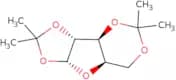
CAS:<p>1,2:3,5-Di-O-isopropylidene-a-D-xylofuranose is a synthetic glycoside that is used in the synthesis of complex carbohydrates. It has been used for the modification of polysaccharides and oligosaccharides. This compound has also been modified with fluorine to form 1,2:3,5-Di-O-isopropylidene-a-D-(1'-fluoro)-xylofuranose. The chemical name of this product is CAS No. 20881-04-3.</p>Formula:C11H18O5Purity:Min. 95%Color and Shape:White PowderMolecular weight:230.26 g/mol4-Aminophenyl a-D-mannopyranoside
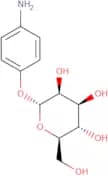
CAS:<p>4-Aminophenyl a-D-mannopyranoside is a compound that has been shown to have anti-inflammatory properties. It is also used as a starting material in the synthesis of other drugs. Rats with chronic kidney disease were given 4-aminophenyl a-D-mannopyranoside daily for three weeks, and it was found that this compound prevented the development of kidney injury markers. This drug has also been shown to be effective against mouse strains with nervous system diseases. 4-Aminophenyl a-D-mannopyranoside binds to lysine residues on proteins and prevents the interactions between these residues and the amino acid glutathione, which is required for glut1 uptake in brain cells. This uptake is essential for cellular function, and therefore 4-aminophenyl a-D-mannopyranoside may be useful as chemotherapeutic treatment for brain cancer.</p>Formula:C12H17NO6Purity:Min. 95%Color and Shape:Off-White PowderMolecular weight:271.27 g/mol1,6-Anhydro-β-D-glucopyranose
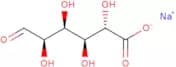
CAS:<p>Used for preparation of biologically active compounds</p>Formula:C6H10O5Purity:Min. 98 Area-%Color and Shape:White PowderMolecular weight:162.14 g/molD-Glucuronic acid, sodium salt monohydrate
CAS:<p>Custom synthesis of D-glucuronic acid, sodium salt monohydrate.</p>Purity:Min. 95%D-Glucal
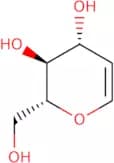
CAS:<p>D-Glucal is a protonated d-glucal, which is a simple sugar. It reacts with the electron acceptor oxygen to form an oxidized product. This product can be reduced back to the original molecule by using a reducing agent, such as sodium borohydride or sodium dithionite. D-Glucal has been shown to inhibit the growth of tumor cells in mice that are resistant to other anticancer drugs. D-Glucal inhibits transcription and replication of DNA by binding to the DNA-dependent RNA polymerase and blocking its ability to transcribe messenger RNA (mRNA). The enzyme is also inhibited by glycosidic bond architectures that prevent it from binding to the DNA template strand. D-Glucal also has an effect on protein synthesis because it binds to proteins and prevents them from performing their normal functions.<br>D-Glucal has been used as a model system for studying cellular processes in mammalian cells, such as oxidation</p>Formula:C6H10O4Purity:Min. 98 Area-%Color and Shape:White Off-White PowderMolecular weight:146.14 g/mol4-O-Acetyl-3,6-di-O-benzyl-2-deoxy-2-phthalimido-b-D-glucopyranosyl trichloroacetimidate
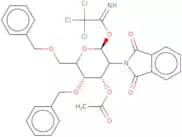
CAS:<p>4-O-Acetyl-3,6-di-O-benzyl-2-deoxy-2-phthalimido-b-D-glucopyranosyl trichloroacetimidate is a methylated saccharide that can be obtained through the Click modification of an oligosaccharide. It is a custom synthesis that has been modified with fluorination. This product is available in high purity and has been glycosylated. It is also a synthetic carbohydrate with a complex structure.</p>Formula:C32H29Cl3N2O8Purity:Min. 95%Molecular weight:675.94 g/mola-D-Glucose-1,6-diphosphate tetra(cyclohexylammonium) salt hydrate
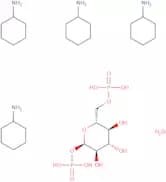
CAS:<p>a-D-Glucose-1,6-diphosphate tetra(cyclohexylammonium) salt hydrate is a synthetic sugar that can be used as a building block for polymer synthesis. It is an oligosaccharide that is synthesized by the click reaction of methylated glucose and cyclohexane diamine. This compound has been shown to be effective in the synthesis of polysaccharides and glycoproteins.</p>Formula:C6H14O12P2·4C6H13N·H2OPurity:Min. 95%Color and Shape:PowderMolecular weight:754.83 g/molDiethyl stilbestrol β-D-glucuronide
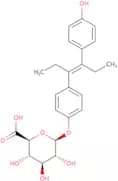
CAS:<p>Diethylstilbestrol (DES) is an endogenous substance that has been shown to be a potent estrogen. It is metabolized in the body to form stilbestrol glucuronide, which is excreted in the urine. Radiolabeling studies have shown that DES has a chemical structure similar to estradiol, although its pharmacologic effects are not as potent. Diethylstilbestrol glucuronide can be used for the diagnosis of cancer and other diseases by using nuclear medicine techniques such as positron emission tomography (PET) and single-photon emission computed tomography (SPECT). Studies have also demonstrated that DES can induce erythropoietic protoporphyria in animals.</p>Formula:C24H28O8Purity:Min. 95%Color and Shape:White to off-white powder.Molecular weight:444.47 g/mol


![2-Amino-b-L-arabinofurano[1,2:4,5]oxazoline](/_next/image/?url=https%3A%2Fstatic.cymitquimica.com%2Fproducts%2F3D%2Fthumb-webp%2FMA06535.webp&w=3840&q=75)