Monosaccharides
Monosaccharides are the simplest form of carbohydrates and serve as fundamental building blocks for more complex sugars and polysaccharides. These single sugar molecules play critical roles in energy metabolism, cellular communication, and structural components of cells. In this section, you will find a wide variety of monosaccharides essential for research in biochemistry, molecular biology, and glycoscience. These compounds are crucial for studying metabolic pathways, glycosylation processes, and developing therapeutic agents. At CymitQuimica, we offer high-quality monosaccharides to support your research needs, ensuring precision and reliability in your scientific investigations.
Subcategories of "Monosaccharides"
- Alloses(11 products)
- Arabinoses(21 products)
- Erythroses(11 products)
- Fructoses(9 products)
- Fucoses(36 products)
- Galactosamine(41 products)
- Galactose(261 products)
- Glucoses(365 products)
- Glucuronic Acids(51 products)
- Glyco-substrates for Enzyme(77 products)
- Guloses(6 products)
- Idoses(4 products)
- Inositols(15 products)
- Lyxoses(4 products)
- Mannoses(65 products)
- O-Glycans(48 products)
- Psicoses(3 products)
- Rhamnoses(10 products)
- Riboses(61 products)
- Sialic Acids(100 products)
- Sorboses(4 products)
- Sugars(173 products)
- Tagatoses(4 products)
- Taloses(8 products)
- Xyloses(20 products)
Show 17 more subcategories
Found 6088 products of "Monosaccharides"
Sort by
Purity (%)
0
100
|
0
|
50
|
90
|
95
|
100
2-Acetamido-2,4-dideoxy-4-fluoro-D-galactopyranose
CAS:<p>2-Acetamido-2,4-dideoxy-4-fluoro-D-galactopyranose (2ADF) is a synthetic ligand that binds to selectins, which are receptors expressed on the surface of cells. 2ADF has been shown to have a pharmacological effect in inhibiting inflammatory diseases by binding to and blocking the function of selectins. This drug has also been shown to inhibit leukocyte trafficking and chemotaxis by preventing the binding of selectins with their ligands, galectin 1 or galectin 3. 2ADF does not bind to glycan structures found on the cell membrane, but instead binds to glycan structures found on the surfaces of cells.</p>Formula:C8H14FNO5Purity:Min. 95%Molecular weight:223.2 g/molPhenyl 6-O-t-butyldimethylsilyl-b-D-thiogalactopyranoside
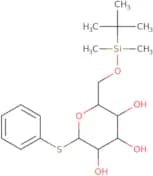
CAS:<p>Phenyl 6-O-t-butyldimethylsilyl-b-D-thiogalactopyranoside is a custom synthesis that can be used to modify the fluoroquinolone antibiotic Gatifloxacin. It has been shown to inhibit the growth of bacteria in vitro and in vivo. Phenyl 6-O-t-butyldimethylsilyl-b-D-thiogalactopyranoside is not active against acid-fast bacteria such as Mycobacterium tuberculosis or Mycobacterium avium complex.</p>Purity:Min. 95%2-Acetamido-3,4,6-tri-O-benzyl-2-deoxy-b-D-glucopyranosyl azide
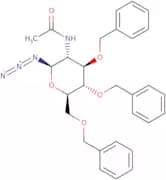
CAS:<p>2-Acetamido-3,4,6-tri-O-benzyl-2-deoxy-b-D-glucopyranosyl azide is a custom synthesis of an oligosaccharide that has been modified with fluorination and methylation. This carbohydrate is a sugar that can be used in the production of glycosylations or click chemistry reactions. It is a complex carbohydrate with high purity and can be used for research purposes or other applications.</p>Formula:C29H32N4O5Purity:Min. 95%Molecular weight:516.59 g/mol3-O-Benzyl-1,2:5,6-di-O-cyclohexylidene-a-D-glucofuranose
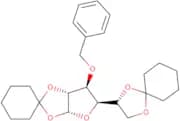
CAS:<p>3-O-Benzyl-1,2:5,6-di-O-cyclohexylidene-a-D-glucofuranose is a synthetic sugar that is used in the synthesis of glycosides and other carbohydrates. 3-O-Benzyl-1,2:5,6-di-O-cyclohexylideneglucopyranose is an oligosaccharide that has been modified with fluorine at the C3 position. This modification is often seen in saccharides that are synthesized from monosaccharides. It is also possible to methylate the C3 position of this molecule to produce 3′-[methyl(4′)benzyl] glucopyranose. This molecule can be glycosylated or click modified to create a custom synthesis.</p>Formula:C25H34O6Purity:Min. 95%Molecular weight:430.53 g/mol(4R)-Benzyl-4-deoxy-4-C-nitromethyl-b-D-arabinopyranoside
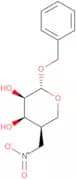
CAS:(4R)-Benzyl-4-deoxy-4-C-nitromethyl-b-D-arabinopyranoside is a custom synthesis of an oligosaccharide. It is a polysaccharide, which are complex carbohydrates that consist of many sugar molecules linked together. The saccharide in this compound has been modified with methylation and glycosylation, which are important modifications for the structure and function of saccharides. This compound also contains a carbohydrate modification called click chemistry, where two molecules are connected by a copper ion. There is high purity in this compound and it has been fluorinated to increase its biological stability. Molecular Formula: C11H14O6N2O3 Molecular Weight: 282.25 CAS Number: 383173-71-5 Purity: >99%Formula:C13H17NO6Purity:Min. 95%Molecular weight:283.28 g/mol1,3,4,6-Tetra-O-acetyl-N-(4-methoxybenzylidene)-b-D-glucosamine
CAS:<p>1,3,4,6-Tetra-O-acetyl-N-(4-methoxybenzylidene)-b-D-glucosamine is a high purity custom synthesis sugar that has been fluorinated and glycosylated. It is synthesized from the methylation of 4-(1,3,4,6-tetra-O-acetyl)-N-(4-hydroxybenzylidene)-b-D-glucosamine and can be used for the modification of saccharides or oligosaccharides. This compound has CAS No. 7597-81-1 and is known as a carbohydrate.</p>Formula:C22H27NO10Purity:Min. 95%Molecular weight:465.45 g/molAllyl 2,3,4,-tri-O-benzyl-b-L-fucopyranoside
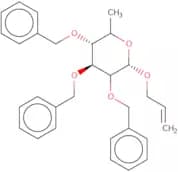
CAS:<p>Please enquire for more information about Allyl 2,3,4,-tri-O-benzyl-b-L-fucopyranoside including the price, delivery time and more detailed product information at the technical inquiry form on this page</p>Formula:C30H34O5Purity:Min. 95%Molecular weight:474.59 g/mol1,2-Dideoxy-2-fluoro-galactonojirimycin
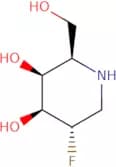
CAS:<p>1,2-Dideoxy-2-fluoro-galactonojirimycin is a synthetic glycoside derived from galactonojirimycin. It has been modified to include fluorine and methyl groups. 1,2-Dideoxy-2-fluoro-galactonojirimycin is an oligosaccharide with a complex carbohydrate structure. It can be synthesized by Click modification of the sugar moiety with fluoroacetate followed by glycosylation and methylation of the saccharide chain.</p>Formula:C6H12NO3FPurity:Min. 95%Molecular weight:165.16 g/mol5-O-tert-Butyldimethylsilyl-2,3-O-isopropylidene-D-lyxono-1,4-lactone
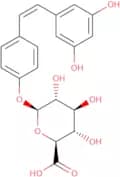
CAS:<p>5-O-tert-Butyldimethylsilyl-2,3-O-isopropylidene-D-lyxono-1,4-lactone is a synthetic monosaccharide that has been modified with fluorine. It is an oligosaccharide that has been synthesized from D-lyxose by glycosylation and methylation. The CAS number for this product is 1266546-70-6. This chemical can be used in the synthesis of complex carbohydrates such as polysaccharides or glycoconjugates. 5SDMTDSL is a white crystalline powder that can be custom synthesized to meet the requirements of customers.</p>Formula:C14H26O5SiPurity:Min. 95%Molecular weight:302.45 g/molcis-Resveratrol 4'-O-b-D-glucuronide
CAS:<p>cis-Resveratrol 4'-O-b-D-glucuronide is a synthetic compound that is a sugar, with a molecular weight of 598. It is an oligosaccharide and has been modified with fluorination on the C2 position. cis-Resveratrol 4'-O-b-D-glucuronide is the methylated form of resveratrol. It has been shown to have anti-inflammatory properties and can be used for the treatment of inflammation associated with arthritis, psoriasis, or septic shock. cis-Resveratrol 4'-O-b-D-glucuronide binds to polysaccharides in the body and inhibits their ability to bind to glycoproteins on cell surfaces. This results in a decrease in inflammation and other inflammatory responses that are mediated by these cells.</p>Formula:C20H20O9Purity:Min. 95%Molecular weight:404.37 g/molMethyl 6-azido-6-deoxy-2,3-di-O-benzyl-a-D-glucopyranoside
CAS:<p>Methyl 6-azido-6-deoxy-2,3-di-O-benzyl-a-D-glucopyranoside is a custom synthesized compound that belongs to the group of glycosylation. It is an Oligosaccharide, sugar, Synthetic, Fluorination, Custom synthesis, Methylation, Monosaccharide, Polysaccharide and saccharide. This compound has CAS No. 54522-58-6 and a molecular weight of 598.29 g/mol. The purity level is >99% and the modification level is Click modification.</p>Formula:C21H25N3O5Purity:Min. 95%Molecular weight:399.18 g/molMethyl 2,4,6-tri-O-methyl-a-D-glucopyranoside
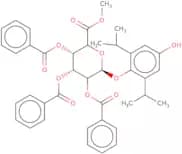
CAS:<p>Methyl 2,4,6-tri-O-methyl-a-D-glucopyranoside is a sugar that has been modified by the addition of a methyl group to the hydroxyl group at the C2 position. The chemical name for this sugar is methyl 2,4,6-tri-O-methyl-β--glucopyranoside. This modification of the sugar molecule can be achieved through either a Click or an Oligosaccharide synthesis approach.<br>Methyl 2,4,6-tri-O-methyl-a-D--glucopyranoside is used in various applications including as a synthetic intermediate for saccharides or as a carbohydrate building block for glycosylations. Methyl 2,4,6--tri--O--methyl--β--glucopyranoside is also used in fluorination reactions to produce fluoro sugars and can be used as a custom synthesis service with high purity</p>Purity:Min. 95%Propofol 2,3,4-tri-O-benzoyl-b-D-glucuronide methyl ester
<p>Propofol is a general anesthetic that is used to induce and maintain anesthesia. It binds to GABA receptors in the brain, leading to suppression of neuronal activity. Propofol is metabolized by esterases in the liver, resulting in its active form 2,3,4-tri-O-benzoyl-b-D-glucuronide methyl ester. This active form inhibits glycolysis by inhibiting the conversion of glucose to fructose 1,6-bisphosphate and glyceraldehyde 3-phosphate by phosphoglucose isomerase and triose phosphate isomerase respectively. It also inhibits protein synthesis by binding to the ribosomes and preventing peptide bond formation on amino acids.</p>Formula:C40H40O10Purity:Min. 95%Molecular weight:680.74 g/mol5,7-Bis-(benzyloxy)-a-(4-(benzyloxy)phenyl)-3-[3,4-di-O-acetyl-a-O-acetyl-a-L-rhamnopyranosyloxyl]-4H-chromen-4-one
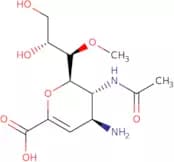
CAS:<p>This product is a custom synthesis. This product is a methylation, click modification, and oligosaccharide. This product is a polysaccharide and saccharide. This product is fluorinated and complex carbohydrate. This product is high purity with modification. This product has monosaccharides and sugar. This product is synthetic and CAS No. 849938-27-8.</p>Formula:C53H48O12Purity:Min. 95%Molecular weight:876.94 g/mol5-(Acetylamino)-4-amino-2,6-anhydro-3,4,5-trideoxy-7-O-methyl-D-glycero-D-galacto-non-2-enonic acid
CAS:<p>5-(Acetylamino)-4-amino-2,6-anhydro-3,4,5-trideoxy-7-O-methyl-D-glycero-D-galacto-non-2-enonic acid is a custom synthesis. It is synthesized by modification of the 7th carbon in the glycosidic bond and fluorination of the 4th carbon on the sugar ring. The chemical structure is based on an amino sugar composed of two acetic acid residues, one anhydro sugar residue and one methyl group. This product is a white to off white solid with a molecular weight of 597.07 g/mol that has a melting point of 154°C.</p>Formula:C12H20N2O7Purity:Min. 95%Molecular weight:304.3 g/molCys-spacer-Gly-Gly-Tyr-D-Thr-Gly-Phe-Leu-Ser(glucoside)-amide
<p>Custom synthesis, Modification, Fluorination, Methylation, Monosaccharide, Synthetic, Click modification, Oligosaccharide, saccharide<br>CAS No.: 1101-98-2<br>Polysaccharide: Glycosylated<br>Sugar: Carbohydrate<br>Complex carbohydrate: Glycosylated<br>Glycosylation: sugar</p>Purity:Min. 95%Methyl 2,3,5-tri-O-acetyl-D-arabinofuranoside
CAS:<p>Methyl 2,3,5-tri-O-acetyl-D-arabinofuranoside is a monosaccharide that is used in the synthesis of carbohydrates. It has been shown to inhibit the growth of Rhizopus stolonifer and other fungi. Methyl 2,3,5-tri-O-acetyl-D-arabinofuranoside has also been used for the quantitative analysis of deacetylated sugars. A chromatographic method was developed using an ion exchange resin and methyl glycosides as standards. The sugar was quantified by electron ionization mass spectrometry (EI) after conversion to its trimethylsilyl ether derivatives with triethylamine in methylene chloride. The spectrum obtained from EI analysis showed the presence of anomeric proton peaks at m/z 184 and 186, indicating that this sugar contains two anomeric hydroxyl groups on the same carbon atom.</p>Formula:C12H18O8Purity:Min. 95%Molecular weight:290.27 g/molMethyl 2,3,6-tri-O-benzoyl-a-D-glucopyranoside
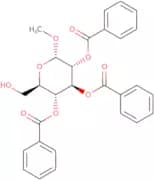
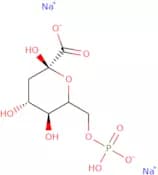
CAS:<p>Methyl 2,3,6-tri-O-benzoyl-a-D-glucopyranoside is a biodegradable polymer that can be used for the prevention of boron diffusion into a prosthesis. It is also resistant to corrosion. Methyl 2,3,6-tri-O-benzoyl-a-D-glucopyranoside has been shown to have a transition temperature of 232 °C and this property makes it suitable for use in high temperature applications. This material is resistant to refractory environments and can be used as an additive in thermodynamic systems.</p>Formula:C28H26O9Purity:Min. 98 Area-%Color and Shape:PowderMolecular weight:506.5 g/mol3-Deoxy-D-arabino-heptulosonic acid 7-phosphate disodium salt
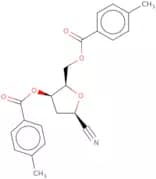
CAS:<p>3-Deoxy-D-arabinonoheptulosonic acid 7-phosphate disodium salt is a phosphate derivative of 3-deoxy-D-arabinoheptulosonic acid (DAHP), which is an intermediate in the biosynthesis of heparin. DAHP is synthesized by the enzyme DAHP synthetase, which catalyses the conversion of D-xylose to DAHP. The enzyme can be activated by adding xylose or other sugar phosphates, and it can be inhibited by adding anthranilate or arabinose. 3-Deoxy-D-arabinonoheptulosonic acid 7-phosphate disodium salt is used as a substrate for various enzymes, including enzymes in biological samples and model systems. It was also used to study the rate constant for the polymerase chain reaction (PCR).</p>Formula:C7H11Na2O10PPurity:Min. 95%Color and Shape:Off-White PowderMolecular weight:332.11 g/mol2-Deoxy-3,5-di-O-toluoyl-b-D-ribofuranosyl cyanide
<p>2-Deoxy-3,5-di-O-toluoyl-b-D-ribofuranosyl cyanide is a fluorinated sugar that is synthesized from 2,6-dichloro-1,4,5,8,-tetraoxybenzene and 3,5-di-O-toluoyl bromide. It is a carbohydrate that belongs to the family of oligosaccharides.</p>Formula:C22H21NO5Purity:Min. 95%Molecular weight:379.41 g/mol3,6-Di-O-tert-butyldiphenylsilyl-D-glucal
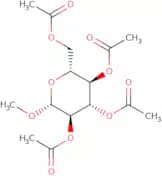
CAS:<p>3,6-Di-O-tert-butyldiphenylsilyl-D-glucal is a monosaccharide that is synthesized from D-glucal. It can be modified with methyl groups and fluorine atoms. 3,6-Di-O-tert-butyldiphenylsilyl-D-glucal has been shown to be effective in modifying polysaccharides, glycosylation, and oligosaccharides. This compound is also used in the synthesis of complex carbohydrates.</p>Purity:Min. 95%Methyl 2,3,4,6-tetra-O-acetyl-b-D-glucopyranose
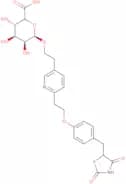
CAS:<p>Methyl 2,3,4,6-tetra-O-acetyl-b-D-glucopyranose is a fluorinated synthetic oligosaccharide. It is custom synthesized to meet your specifications. Methyl 2,3,4,6-tetra-O-acetyl-b-D-glucopyranose is a complex carbohydrate with a glycosylation pattern that can be modified and methylated. This product has CAS No. 486085 9 and purity of >99%.</p>Formula:C15H22O10Purity:Min. 95%Molecular weight:362.33 g/molHydroxy pioglitazone (M-VII) b-D-glucuronide
CAS:<p>Hydroxy pioglitazone (M-VII) b-D-glucuronide is a synthetic, fluorinated glucuronide of hydroxy pioglitazone. It has been shown to inhibit the activity of bacterial dna gyrase and topoisomerase IV enzymes.</p>Formula:C25H28N2O10SPurity:Min. 95%Molecular weight:548.56 g/molMethyl 3-acetamido-4-O-benzoyl-6-bromo-2,3,6-trideoxy-a-D-ribo-hexopyranoside
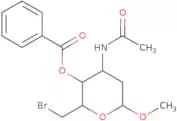
CAS:<p>Methyl 3-acetamido-4-O-benzoyl-6-bromo-2,3,6-trideoxy--aDribohexopyranoside is a Custom synthesis that is classified as an Oligosaccharide. It has a molecular weight of 576.07 and a purity of >99%. The chemical formula for this compound is C22H30BrNO8. Methyl 3-acetamido-4-O-benzoyl-6-bromo-2,3,6--trideoxy--aDribohexopyranoside is used in the modification of saccharides with the purpose of synthesizing polysaccharides. This compound has been shown to be effective for the synthesis of glycosylations and methylations.<br>Methyl 3 acetamido 4 O benzoyl 6 bromo 2,3,6 trideoxy - a D rib</p>Formula:C16H20BrNO5Purity:Min. 95%Molecular weight:386.25 g/mol6-(4-Azido-2-hydroxybenzamido)-6-deoxy-D-glucopyranose
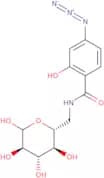
CAS:<p>6-(4-Azido-2-hydroxybenzamido)-6-deoxy-D-glucopyranose (AGB) is a potential photoaffinity label that can be used to identify and characterize the transporter. The photoaffinity label is synthesized by reacting 2,4-dinitrophenylhydrazine with 6-(4-azido-2-hydroxybenzamido)-6-deoxy-D-glucopyranose in the presence of sodium bicarbonate or potassium carbonate. The photolysis of AGB produces an azide radical cation that reacts with amino acid residues on the protein surface, forming a covalent bond. This labeling process is irreversible.</p>Formula:C13H16N4O7Purity:Min. 95%Molecular weight:340.29 g/moltrans-Resveratrol 4'-O-b-D-glucuronide
CAS:<p>Trans-resveratrol 4'-O-b-D-glucuronide is a natural compound that is found in red wine and other foods. It has been shown to inhibit the growth of cancer cells through the activation of adenosine receptors, which are found on cancer cells and are responsible for apoptosis. Trans-resveratrol 4'-O-b-D-glucuronide has been shown to be an agonist of the adenosine a3 receptor, with high concentrations leading to apoptosis in human colon cancer cells. This compound also inhibits colon carcinogenesis by inhibiting cell proliferation and inducing apoptosis.</p>Formula:C20H20O9Purity:Min. 95%Molecular weight:404.37 g/mol3-Methylflavone-8-carboxylic acid acyl-b-D-glucuronide
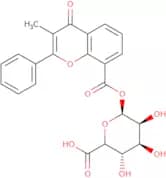
CAS:<p>3-Methylflavone-8-carboxylic acid acyl-b-D-glucuronide is a fluorinated synthetic compound that has been custom synthesized with a high purity. It is an oligosaccharide, monosaccharide, and complex carbohydrate. This chemical can be used for glycosylation, methylation, or click modification. The product is stable at room temperature and does not require any special storage conditions.</p>Formula:C23H20O10Purity:Min. 95%Molecular weight:456.4 g/molrac N,O-didesmethyl venlafaxine b-D-glucuronide hydrochloride
CAS:<p>RacN,O-didesmethylvenlafaxine b-D-glucuronide hydrochloride is a synthetic glycosylated active metabolite of venlafaxine. It is an N-desmethyl derivative of racemic venlafaxine, which has been modified by oxygenation and fluorination of the methyl group at the nitrogen atom. RacN,O-didesmethylvenlafaxine b-D-glucuronide hydrochloride is a complex carbohydrate with high purity. It is also a saccharide that can be modified with click chemistry for desired modifications. The CAS No. for this compound is 1021933-99-2.</p>Formula:C21H32ClNO8Purity:Min. 95%Molecular weight:461.93 g/mol2,3,4-Tri-O-benzoyl-L-fucopyranosyl bromide
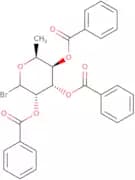
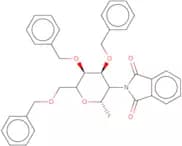
CAS:<p>2,3,4-Tri-O-benzoyl-L-fucopyranosyl bromide is a synthetic compound that is used as a reagent in the synthesis of complex carbohydrates. It is also an intermediate in the synthesis of oligosaccharides and polysaccharides. This product can be modified by methylation, glycosylation and fluorination to generate desired products. The CAS number for this product is 855662-12-3.</p>Formula:C27H23BrO7Purity:Min. 95%Molecular weight:539.37 g/mol3,4,6-Tri-O-benzyl-2-deoxy-2-phthalimdo-b-D-glucopyranosyl fluoride
<p>3,4,6-Tri-O-benzyl-2-deoxy-2-phthalimdo-b-D-glucopyranosyl fluoride is a modified sugar that is synthesized by the addition of a benzyl group to the 3' hydroxyl group. It's a white powder that is soluble in water and ethanol. This product has been shown to be stable in acid environments and can be used in glycosylation reactions.</p>Formula:C35H32FNO6Purity:Min. 95%Molecular weight:581.63 g/mol4-Methylphenyl 2-O-acetyl-3-O-benzyl-b-D-thioglucuronide methyl ester
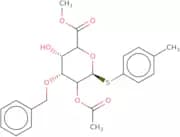
CAS:<p>4-Methylphenyl 2-O-acetyl-3-O-benzyl-b-D-thioglucuronide methyl ester is a custom synthesis of an oligosaccharide. It has been modified with fluorination and methylation, which are chemical reactions that alter the structure of the substance. Click modification is also a type of chemical reaction involving this substance.</p>Formula:C23H26O7SPurity:Min. 95%Molecular weight:446.51 g/mol2,3-O-Cyclohexylidene-b-D-ribofuranose
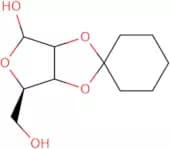
CAS:<p>2,3-O-Cyclohexylidene-b-D-ribofuranose is a monosaccharide that is used in the synthesis of complex carbohydrates. This compound possesses a cyclic structure that contains an oxygen atom at the 2 position and a hydroxyl group at the 3 position. It has been modified by fluorination, methylation, glycosylation, and click chemistry. The chemical name for this compound is 2,3-O-Cyclohexylideneb-D-ribofuranose.</p>Formula:C11H18O5Purity:Min. 95%Molecular weight:230.26 g/mol2-(L-Arabino-tetrahydroxybutyl)-4(R)-1,3-thiazolidine-4-carboxylic acid
CAS:<p>2-(L-Arabino-tetrahydroxybutyl)-4(R)-1,3-thiazolidine-4-carboxylic acid is a synthetic compound that has been modified to include sugar groups. It can be used for the synthesis of oligosaccharides and monosaccharides. The carbohydrate group has been modified with fluorination, glycosylation, and methylation. This modification can be useful in the production of complex carbohydrates.</p>Formula:C8H15NO6SPurity:Min. 95%Molecular weight:253.27 g/mol2-Acetamido-1,3,4,6-tetra-O-acetyl-2-deoxy-D-gluconhydroximo-1,5-lactone
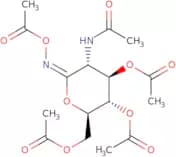
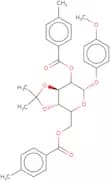
CAS:<p>2-Acetamido-1,3,4,6-tetra-O-acetyl-2-deoxy-D-gluconhydroximo-1,5-lactone is a custom synthesis. It is a modification of natural sugars. It has fluorination and methylation to make the product more stable. The product is an oligosaccharide that is a saccharide with two monosaccharides attached together. It is made up of complex carbohydrates.</p>Formula:C16H22N2O10Purity:Min. 95%Molecular weight:402.35 g/mol4-Methoxyphenyl 3,4-O-isopropylidene-2,6-di-O-toluoyl-b-D-galactopyranoside
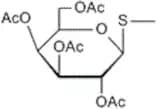
<p>4-Methoxyphenyl 3,4-O-isopropylidene-2,6-di-O-toluoyl-b-D-galactopyranoside is a custom synthesis that is a complex carbohydrate. It is an oligosaccharide that has been modified with methylation and glycosylation. It also has been fluorinated and has undergone a click modification reaction. This product is of high purity and has been synthesized from saccharides and sugars.</p>Formula:C32H34O9Purity:Min. 95%Molecular weight:562.62 g/molMethyl 2,3,4,6-tetra-O-acetyl-b-D-thiogalactopyranoside
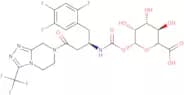
CAS:<p>Methyl 2,3,4,6-tetra-O-acetyl-b-D-thiogalactopyranoside is a synthetic carbohydrate with the CAS number 55722-48-0. Methyl 2,3,4,6-tetra-O-acetyl-b-D-thiogalactopyranoside is used in the synthesis of oligosaccharides and monosaccharides. This product can be custom synthesized to meet your specifications. Methyl 2,3,4,6-tetra-O-acetyl-b -D -thiogalactopyranoside has been fluorinated and glycosylated for the synthesis of complex carbohydrates and saccharides. This product has high purity and can be customized to meet your specifications.</p>Formula:C15H22O9SPurity:Min. 95%Molecular weight:378.4 g/molSitagliptin carbamoyl b-D-glucuronide
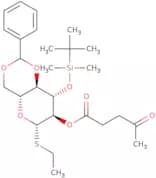
CAS:<p>Sitagliptin carbamoyl b-D-glucuronide is a synthetic drug that has been modified to be sitagliptin, which is an oral antihyperglycemic agent. Sitagliptin carbamoyl b-D-glucuronide has been synthesized through the methylation of a polysaccharide. It is a complex carbohydrate and is soluble in water. This product can be used as an additive to many food items because it does not affect their taste or texture. The CAS number for this product is 940002-59-5. This product is synthesized by the modification of natural saccharides with fluorine gas and it has a high purity level. It can be used as an intermediate in other organic synthesis reactions and its primary use is as a sugar substitute that is not metabolized by human enzymes.</p>Formula:C23H23F6N5O9Purity:Min. 95%Molecular weight:627.45 g/molEthyl 4,6-O-benzylidene-3-O-tert-butyldimethylsilyl-2-O-levulinoyl-b-D-thioglucopyranoside
CAS:<p>Ethyl 4,6-O-benzylidene-3-O-tert-butyldimethylsilyl-2-O-levulinoyl-b-D-thioglucopyranoside is a synthetic oligosaccharide that can be used for methylation. It is a fluorinated, complex carbohydrate that has been modified to have a high purity and low toxicity. This product has been custom synthesized for Click modification and oligosaccharides.</p>Formula:C26H40O7SSiPurity:Min. 95%Molecular weight:524.74 g/mol2-Acetamido-6-azido-2,6-dideoxy-D-galactopyranose
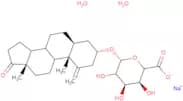
CAS:<p>2-Acetamido-6-azido-2,6-dideoxy-D-galactopyranose is a synthetic, unnatural monosaccharide bearing an azido biorthogonal reaction group. This compound can enter the cell and is processed by biosynthetic enzymes, in a manner similar to the natural O-linked N-acetyl-β-D-glucosamine. The glycans produced bear the azido functional group which can be chemically tagged with fluorescent dyes or biotin for visualisation or affinity.</p>Formula:C8H14N4O5Purity:Min. 95%Molecular weight:246.22 g/mol1-Methylene-5-a-androstan-3-a-ol-17-one glucuronide
<p>1-Methylene-5-a-androstan-3-a-ol-17-one glucuronide is a synthetic, modified sugar that is used for the synthesis of complex carbohydrates. It is available in high purity and can be custom synthesized according to customer specifications. 1 Methylene 5 a androstan 3 a ol 17 one glucuronide can be fluorinated, glycosylated, or methylated to meet the needs of different customers. This product has CAS No. 9002-00-6 and is available on request.</p>Formula:C26H37O8·Na·2H2OPurity:Min. 95%Molecular weight:536.59 g/molMethyl 4,6-O-benzylidene-2-O-p-toluenesulfonyl-a-D-glucopyranoside
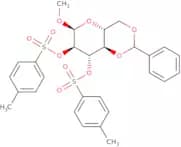
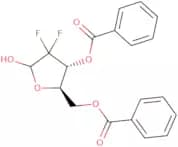
CAS:<p>Methyl 4,6-O-benzylidene-2-O-p-toluenesulfonyl-a-D-glucopyranoside is a modification of the natural carbohydrate, alpha-D-(1→4)-glucose. It is an oligosaccharide that is synthesized by the methylation of a natural sugar and subsequent glycosylation with a saccharide. This compound has been shown to inhibit the activity of bacterial RNA polymerase and DNA gyrase enzymes. The synthesis of this compound has been described in detail in the literature.<br>Methyl 4,6-O-benzylidene-2-O-(p-toluenesulfonyl)a D glucopyranoside <br>This compound is a modification of the natural carbohydrate, alpha D (1 ->4) glucose. It is an oligosaccharide that is synthesized by methylation of a natural</p>Formula:C21H24O8SPurity:Min. 95%Molecular weight:436.48 g/mol3,5-Di-O-benzoyl-2-deoxy-2,2-difluoro-α-D-ribofuranose
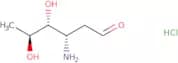
CAS:<p>3,5-Di-O-benzoyl-2-deoxy-2,2-difluoro-D-ribofuranose is a synthetic monosaccharide with a fluorine atom at the 2 position. It has been used to synthesize saccharides and oligosaccharides with methylation, click modification, and fluoroination. This chemical is soluble in water and has a molecular weight of 184.12 g/mol. 3,5-Di-O-benzoyl-2,2'-difluoro D ribofuranose is used as an ingredient in polysaccharide or oligosaccharide synthesis where it can be modified at the C3 or C5 positions by addition of a methyl group or fluorine atom. The compound can also be used as a substrate for the enzyme alpha amylase to produce maltose.</p>Formula:C19H16F2O6Purity:Min. 95%Color and Shape:PowderMolecular weight:378.32 g/mol3-Amino-2,3,6-trideoxy-L-arabino-hexose hydrochloride
CAS:<p>3-Amino-2,3,6-trideoxy-L-arabino-hexose hydrochloride is a fluorinated sugar. It is synthesized by the fluorination of arabinose. This compound has a high degree of substitution and can be used for glycosylation reactions or modification reactions. 3-Amino-2,3,6-trideoxy-L-arabino-hexose hydrochloride has CAS number 56501-70-3 and is soluble in water.</p>Formula:C6H14ClNO3Purity:Min. 95%Color and Shape:SolidMolecular weight:183.63 g/molα-Methyl-γ-hydroxy-1,N2-propano-2’-deoxyguanosine
CAS:<p>α-Methyl-γ-hydroxy-1,N2-propano-2’-deoxyguanosine is a chemical that inhibits the production of reactive oxygen species (ROS) and prevents oxidative DNA damage. It has been shown to inhibit skin cancer in animal studies and to have an inhibitory effect on cancer gene therapy in human cell cultures. α-Methyl-γ-hydroxy-1,N2-propano-2’-deoxyguanosine has also been found to be genotoxic in humans, which may be due to its ability to induce repair genes.<br>α -Methyl -γ -hydroxy -1,N2 -propano -2 ‘deoxyguanosine is a carcinogen that has been shown to cause cancer in animals. It damages DNA by forming covalent bonds with it and alters the genetic information stored in the DNA. When this happens, cells cannot divide normally and grow out of</p>Formula:C14H19N5O5Purity:Min. 95%Molecular weight:337.33 g/molMethyl 3-acetamido-4,6-O-benzylidene-2,3-dideoxy-a-D-arabino-hexopyranoside
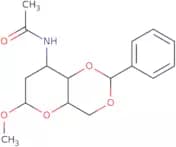
CAS:<p>Methyl 3-acetamido-4,6-O-benzylidene-2,3-dideoxy-a-D-arabino-hexopyranoside is a custom synthesis of an oligosaccharide with a complex carbohydrate structure. It is a high purity compound with methylation and glycosylation modifications. This compound has a fluoroination modification that makes it resistant to hydrolysis by esterases and glucuronidases. It can be used in the synthesis of saccharides and polysaccharides.</p>Formula:C16H21NO5Purity:Min. 95%Molecular weight:307.35 g/mol(2S,5S)-Bishydroxymethyl-(3R,4R)-bishydroxypyrrolidine
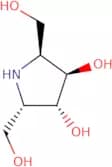
CAS:<p>(2S,5S)-Bishydroxymethyl-(3R,4R)-bishydroxypyrrolidine is a cytotoxic agent that can be used as a reagent to hydrogenolyze chloride. It is also a nucleophilic anion that can react with cisplatin to form the corresponding platinum complex. This anion has been shown to be cytotoxic against Mcf-7 cells in vitro and can inhibit DNA synthesis. (2S,5S)-Bishydroxymethyl-(3R,4R)-bishydroxypyrrolidine may also inhibit protein synthesis by reacting with anthraquinone or benzylidenation products of azasugar. The synthesis of the latter product is catalyzed by the enzyme benzylidene-pyridine dioxygenase which activates carbonyls and azasugars to form benzylic hydrazones. These reactions are sequential and have been shown to occur in</p>Formula:C6H13NO4Purity:Min. 95%Molecular weight:163.17 g/mol2,3,4,6-Tetra-O-pivaloyl-a-D-mannopyranosyl bromide
CAS:<p>2,3,4,6-Tetra-O-pivaloyl-a-D-mannopyranosyl bromide is a synthetic glycosylation reagent that is used in the synthesis of oligosaccharides and polysaccharides. It has been fluorinated to give 2,3,4,6-Tetra-O-pivaloyl-a-D-(2'-fluoroethyl)mannopyranosyl bromide (CAS No. 1360879-08). This compound can be methylated to give 2,3,4,6-Tetra-O-(2'-methoxy)pivaloylmannopyranosyl bromide (CAS No. 1360879-09). It is also a click modification agent for complex carbohydrates. This chemical has high purity and can be modified with other groups.</p>Formula:C26H43BrO9Purity:Min. 95%Molecular weight:579.52 g/mol3-O-Acetyl-1,2-O-isopropylidine-6-O-trityl-a-D-galactofuranose
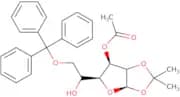
CAS:<p>3-O-Acetyl-1,2-O-isopropylidine-6-O-trityl-a-D-galactofuranose is a synthetic compound with a molecular weight of 514.5. It is an oligosaccharide with a glycosylation modification and fluorination. The compound can be used as a research tool in the study of glycosylation, methylation, click modification, polysaccharide synthesis, fluorination, saccharide modifications and sugar modifications. 3-O-Acetyl-1,2-O-isopropylidine-6-[trityl]-a-[D]galactofuranose can also be used for custom synthesis; this product is available in high purity.</p>Formula:C30H32O7Purity:Min. 95%Molecular weight:504.57 g/mol3,2',3',4'-Tetra-O-acetyl-6,6'-di-O-tert-butyldimethylsilyl-lactal
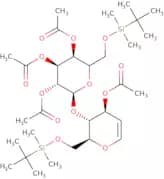
CAS:<p>3,2',3',4'-Tetra-O-acetyl-6,6'-di-O-tert-butyldimethylsilyl-lactal is a glycosylation agent that can be used in the synthesis of oligosaccharides and polysaccharides. It can be fluorinated to create a reactive site for methylation and click modification. 3,2',3',4'-Tetra-O-acetyl-6,6'-di-O-tert-butyldimethylsilyl-lactal is an acetylated lactal with a silyl ether protecting group. This product has been custom synthesized and is available in high purity.</p>Purity:Min. 95%1-a-Methylaminotrityl-2-deoxy-3,5-di-O-toluoyl-D-ribose
<p>1-a-Methylaminotrityl-2-deoxy-3,5-di-O-toluoyl-D-ribose is a custom synthesis of an oligosaccharide. The compound has a CAS number and is a polysaccharide with glycosylation and methylation. It is fluorinated at the 1 position on the ribose ring and modified with a click chemistry reaction to link two sugars together. This modification allows for high purity of this compound.</p>Purity:Min. 95%





![5,7-Bis-(benzyloxy)-a-(4-(benzyloxy)phenyl)-3-[3,4-di-O-acetyl-a-O-acetyl-a-L-rhamnopyranosyloxyl]…](/_next/image/?url=https%3A%2Fstatic.cymitquimica.com%2Fproducts%2F3D%2Fthumb-webp%2FMB16635.webp&w=3840&q=75)