Food Industry Standards
Food industry standards are critical reference materials used to ensure the safety, quality, and consistency of food products. These standards are employed in the analysis and testing of foodstuffs, including contaminants, additives, and nutritional components. At CymitQuimica, we provide high-quality food industry standards to support compliance with food safety regulations and quality control measures.
Subcategories of "Food Industry Standards"
- Beverage Standards(7 products)
- Dairy Standards(39 products)
- Food Contact Materials(1,075 products)
- Wine Standards(47 products)
Found 7936 products of "Food Industry Standards"
Sort by
Purity (%)
0
100
|
0
|
50
|
90
|
95
|
100
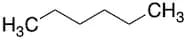
n-Hexane
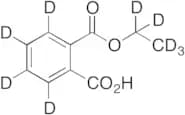
CAS:Controlled Product<p>Stability Volatile<br>Applications n-Hexane is an industrial chemical and also found in natural gas, crude oil and gasoline. It is used as an organic solvent for extraction.<br> Not a dangerous good if item is equal to or less than 1g/ml and there is less than 100g/ml in the package<br>References Laily, N., et al.: Pharmacogn J. 9, 280 (2017); Nyaba, L., et al.: J. Mol. Liq. 231, 154 (2017)<br></p>Formula:C6H14Color and Shape:NeatMolecular weight:86.18Monoethyl Phthalate-d9
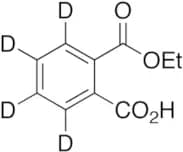
CAS:Controlled Product<p>Applications Monoethyl-d5 Phthalate-d4 is an isotope labeled analog of Monoethyl Phthalate, which is a Phthalate metabolite.<br>References Engel, S., et al.: NeuroToxicol., 30, 522 (2009), Aylward, L., et al.: Reg. Toxicol. Pharmacol., 55, 259 (2009), Blair, J., et al.: Environ., Sci. Technol., 43, 6262 (2009),<br></p>Formula:C10HD9O4Color and Shape:Colourless OilyMolecular weight:203.244-[2,2-Dichloro-1-(4-hydroxyphenyl)ethenyl]phenol
CAS:Controlled Product<p>Applications 4-[2,2-dichloro-1-(4-hydroxyphenyl)ethenyl]phenol (cas# 14868-03-2) is a useful research chemical.<br></p>Formula:C14H10Cl2O2Color and Shape:NeatMolecular weight:281.1343,4-Dihydroxybenzoic Acid
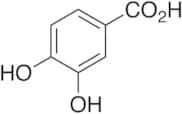
CAS:Controlled Product<p>Applications 3,4-Dihydroxybenzoic Acid is a metabolite of polyphenols such as Phloretin (P339000) and Quercetin (Q509500). It may protect skin against blue light and other environmental assaults.<br>References Vaidyanathan, J., et al.: Drug Metab. Dispos., 30, 897 (2002), Wolfe, K., et al.: J. Agric. Food Chem., 51, 609 (2003), Marks, S., et al.: J. Agric Food. Chem., 55, 8723 (2007); Chem. and Eng. News p.28 , May 14, 2018<br></p>Formula:C7H6O4Color and Shape:NeatMolecular weight:154.12Xylitol
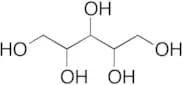
CAS:Controlled Product<p>Applications Xylitol, is a lower-calorie alternative to table sugar. Studies have shown xylitol chewing gum can help prevent acute otitis media. Xylitol is categorized by the U.S. Food and Drug Administration as a food additive.<br>References Code of Federal Regulations Title 21, US., FDA (2012); Azarparzhooh, A., et al.,: Cochrane data. Sys. Revi. (online) (11), (2011);<br></p>Formula:C5H12O5Color and Shape:NeatMolecular weight:152.15D-Ribose
CAS:Controlled Product<p>Applications D-Ribose is produced by microorganism fermentation of glucose in a fermentation culture medium without adding calcium carbonate.<br>References Ostrowski, S., et al.: Science, 305, 71 (2004), Vavilin, D., et al.: Biochim. Biophys. Acta, 1708, 91 (2005), Fletcher, J., et al.: Anal. Chem., 79, 2199 (2007), Weissleder, R., et al.: Nature, 452, 580 (2008),<br></p>Formula:C5H10O5Color and Shape:NeatMolecular weight:150.131,1-Dichloroethene (stabilized with MEHQ)
CAS:<p>Stability Light Sensitive<br>Applications 1,1-DCE is mainly used as a comonomer in the polymerization of vinyl chloride, acrylonitrile, and acrylates. It is also used in semiconductor device fabrication for growing high purity silicon dioxide films.<br> E3<br>References Otsu, T., et al.: J. Polym. Sci. A Polym. Chem., 30, 1559 (1992); Jenkins, A., et al.: Macromol. Symposia, 111, 159 (1996); Eur. Polym. J., 10, 481 (1974)<br></p>Formula:C2H2Cl2Color and Shape:NeatMolecular weight:96.94Trichloroethylene
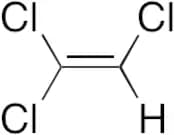
CAS:<p>Applications Trichloroethylene is a common industrial solvent that is used in dry cleaning and metal degreasing. Trichloroethylene is also a suspected carcinogen to humans, and is a common groundwater contaminant.<br> Not a dangerous good if item is equal to or less than 1g/ml and there is less than 100g/ml in the package<br>References Little, D., et al., Appl. Env. Microb., 54, 951 (1988); Vogel, T. & McCarty, P.: Appl. Environ. Microb., 49, 1080 (1985); Wartenberg, D., et al.: Environ. Health Persp., 108, 161 (2000)<br></p>Formula:C2HCl3Color and Shape:ColourlessMolecular weight:131.39Diisononyl Adipate (mixture of isomers)
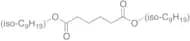
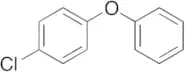
CAS:Controlled Product<p>Applications Diisononyl Adipate is a an additive used in the preparation of polyurethane-based plastic bonded explosives.<br>References Yilmaz, G. et al.: J. App. Polym., 131, 40907 (2014);<br></p>Formula:C24H46O4Color and Shape:ColourlessMolecular weight:398.624-Chlorodiphenyl Ether
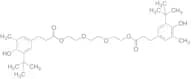
CAS:Controlled Product<p>Applications 4-Chlorodiphenyl Ether is a standard for environmental testing and research. Biodegradability studies with organic priority pollutant compounds.<br>References Tabak, H. H., et al.: J. Water Pollut. Control Fed., 53, 1503 (1981)<br></p>Formula:C12H9ClOColor and Shape:NeatMolecular weight:204.65Triethylene glycol Bis(3-tert-butyl-4-hydroxy-5-methylphenyl)propionate
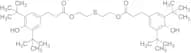
CAS:Controlled Product<p>Applications Triethylene Glycol Bis(3-tert-butyl-4-hydroxy-5-methylphenyl)propionate is used as a polymer antioxidant stabilizer in adhesives and polymers for food contact. Generally functions as an antioxidant in the chemistry of plastics.<br>References United States Food and Drug Administration.: Federal Register, 50, 63 (1985); Liang, H., et al.: Acta Endocrinol., 128, 451 (1993);<br></p>Formula:C34H50O8Color and Shape:White To Off-WhiteMolecular weight:586.76Mecobalamin
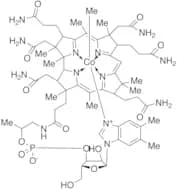
CAS:<p>Stability Light Sensitie<br>Applications One of the biologically active forms of vitamin B12; differing only by the substitution of a methyl for the cyano group. Coenzyme required in the biosynthesis of methionine. Vitamin (hematopoietic).<br>References Kisliuk, R.L., Biochem. J., 75, 467 (1960), Guest, J.R., et al.: Nature, 195, 340 (1962), Dolphin, D., et al.: Methods Enzymol., 18, 34 (1971), Beck, W.S., et al.: Am. J. Hematol., 34, 83 (1990),<br></p>Formula:C63H91CoN13O14PColor and Shape:NeatMolecular weight:1344.381,2-Pentanediol
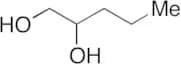
CAS:Controlled Product<p>Applications 1,2-Pentanediol is used in synthesizing quinoxalines from biomass-derived glycols. Also used in the synthesis of propiconazole (P770100) a fungicide as well as other antifungals.<br>References Climent, M. et al.: J. Catal., 292, 118 (2012); Zhou, Y. et al.: Carbo. Res., 344, 1289 (2009);<br></p>Formula:C5H12O2Color and Shape:ColourlessMolecular weight:104.152,3,4,7,8-Pentachlorodibenzofuran (~90%)
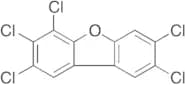
CAS:<p>Applications 2,3,4,7,8-Pentachlorodibenzofuran, is a toxic polychlorinated dibenzofurans (PCDD/F), detected in domestic meat and poultry. It can be used as purified standards for analytical, toxic, and biological studies of these environmental contaminants.<br> Not a dangerous good if item is equal to or less than 1g/ml and there is less than 100g/ml in the package<br>References Huwe, J., et al.: Food Addit. Contam., 21, 182 (2004), Llobet, J., et al.: Toxicol. Lett., 178, 117 (2008); Feil, V., et al.: J. Agric. Food Chem., 48, 6163 (2000); Safe, S. H., et al.: J. Agric. Food Chem., 32, 68 (1984);<br></p>Formula:C12H3Cl5OPurity:~90%Color and Shape:NeatMolecular weight:340.42Bisphenol TMC
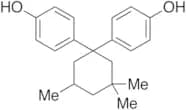
CAS:Controlled Product<p>Applications Bisphenol TMC is a bisphenol derivative used in the preparation of polycarbonate, polyester and epoxy resins.<br>References Freitag, D. et al.: Makromol. Chem. Rap. Comm., 12, 95 (1991); Masse, C.E. et al.: J. Appl. Polym. Sci., 60, 513 (1996); Turner, S.R. et al.: HIgh Perform. Polym., 17, 361 (2005);<br></p>Formula:C21H26O2Color and Shape:NeatMolecular weight:310.43Bisphenol F Bis(2,3-dihydroxypropyl) Ether
CAS:Controlled Product<p>Applications Bisphenol F Bis(2,3-dihydroxypropyl)ether is a derivative of Bisphenol F Diglycidyl Ether (B438750). Bisphenol F Bis(2,3-dihydroxypropyl)ether is used as a standard for determining toxic monomers released from polymers of the inner coating of cans.<br>References Philo, M., et al.: Food Addit. Contam., 14, 75 (1997), Biles, J., et al.: J. Agric. Food Chem., 1999, 47, 1965 (1999), Hammarling, L., et al.: Food Addit. Contam., 17, 937 (2000),<br></p>Formula:C19H24O6Color and Shape:Off-WhiteMolecular weight:348.394-Mercapto-4-methyl-2-pentanone
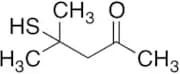
CAS:Controlled Product<p>Stability Hygroscopic<br>Applications 4-Mercapto-4-methyl-2-pentanone is an odor-active compound of white wine.<br> Not a dangerous good if item is equal to or less than 1g/ml and there is less than 100g/ml in the package<br>References Guth, H., et al.: J. Agric. Food Chem., 45, 3027 (1997); Tominaga, T., et al.: J. Agric. Food Chem., 46, 1044 (1998)<br></p>Formula:C6H12SOColor and Shape:NeatMolecular weight:132.22ε-Caprolactam
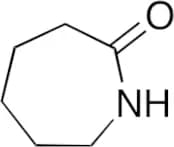
CAS:Controlled Product<p>Applications ε-Caprolactam is a synthetic precursor of Nylon-6 and other synthetic polymers. This compound also inhibits the growth of several Bacillus and Rhizobium species, but Arthrobacter species grow normally in the presence of this compound.<br>References Bomfim, Marcus V.J., et al.: Braz. J. Pharm. Sci., 45(1), 21-35 (2009); Kalinova, Jana P., et al.: Food Chem., 157, 380-384 (2014)<br></p>Formula:C6H11NOColor and Shape:White To Off-WhiteMolecular weight:113.16n-Heptyl 4-Hydroxybenzoate
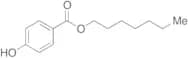
CAS:<p>Applications n-Heptyl 4-Hydroxybenzoate is used as a reagent in the synthesis of sulfonylbenzoic acid esters as potential inhibitors of oestrone sulphatase with antitumor activities.<br>References Owen, C., et al.: J. Pharm. Pharmacol., 55, 85 (2002)<br></p>Formula:C14H20O3Color and Shape:NeatMolecular weight:236.31Ammelide
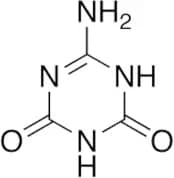
CAS:<p>Applications Ammelide, is a metabolite of Melamine (1) (M208700), which acts as a non-protein nitrogen food additive (2). Also present in pet foods as well (3).Drinking water contaminant candidate list 3 (CCL 3) compound as per United States Environmental Protection Agency (EPA). Environmental contaminants; Food contaminants.<br>References 1. Mast R. et al.: Food Chem Toxicol. 1983 Dec;21(6):807-10. 2. Ehling S. et al.: Food Addit. Contam. 2007 Dec;24(12):1319-25. 3. Vail T. et al.: J Anal Toxicol. 2007 Jul-Aug;31(6):304-12.<br></p>Formula:C3H4N4O2Color and Shape:ColourlessMolecular weight:128.09Pyridoxal 5'-Phosphate
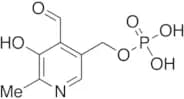
CAS:<p>Stability Hygroscopic<br>Applications Vitamin (enzyme co-factor).<br>References Lichstein, et al.: J. Biol. Chem., 161, 311 (1945), McPhalen, C., et al.: J. Mol. Biol., 225, 495 (1992), Fenn, T., et al.: Biochemistry, 44, 5317 (2005),<br></p>Formula:C8H10NO6PColor and Shape:Light YellowMolecular weight:247.142-Pentylfuran-d11
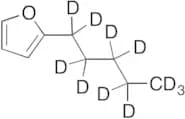
CAS:Controlled Product<p>Stability Volatile<br>Applications 2-Pentylfuran-d11 is the labeled analogue of 2-Pentylfuran (P284953), a volatile compound that is detected in meat smoke aerosol, rice aroma and tomato paste volatiles.<br> Not a dangerous good if item is equal to or less than 1g/ml and there is less than 100g/ml in the package<br>References Rogge, W., et al.: Environ. Sci. Technol., 25, 1112 (1991); Buttery, R., et al.: J. Agric. Food Chem., 36, 1006 (1988); Buttery, R., et al.: J. Agric. Food Chem., 38, 336 (1990);<br></p>Formula:C92H11H3OColor and Shape:Light YellowMolecular weight:149.27Perindopril
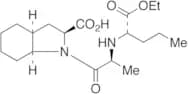
CAS:Controlled Product<p>Applications An angiotensin-converting enzyme (ACE) inhibitor. Antihypertensive. Neuroprotective & Neuroresearch Product.<br>References Lees, K.R., et al.: Brit. J. Clin. Pharmacol., 23, 159 (1987), Morgan, T., et al.: J. Cardiovasc. Pharmacol., 10, Supp. 7, S116, (1987)<br></p>Formula:C19H32N2O5Color and Shape:Off-WhiteMolecular weight:368.47Aucubine
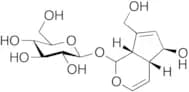
CAS:Controlled Product<p>Stability Hygroscopic<br>Applications Aucubine shows antioxidant and protective effects for the liver and kidney organs, shown in mice with induced diabetes.<br>References Jin, L. et al.: Eur. J. Pharm, 582, 162 (2006); Ho, J. et al.: Biol. Pharm. Bull., 28, 1244 (2005);<br></p>Formula:C15H22O9Color and Shape:WhiteMolecular weight:346.33Mono(3-carboxypropyl) Phthalate
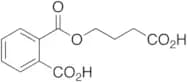
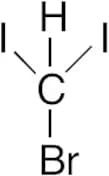
CAS:Controlled Product<p>Applications Urinary Phthalate metabolite<br>References Engel, S., et al.: NeuroToxicol., 30, 522 (2009), Samandar, E., et al.: Environ. Res., 109, 641 (2009), Berman, T., et al.: Environ. Int., 35, 353 (2009),<br></p>Formula:C12H12O6Color and Shape:White To Off-WhiteMolecular weight:252.22Bromodiiodomethane (>85%)
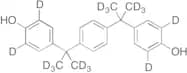
CAS:Controlled Product<p>Stability Light Sensitive<br>Applications Bromodiiodomethane, is a Iodinated trihalomethanes (ITHMs),which can be used for several medicinal or pharmaceutical taste and odor events in drinking water.<br>References Cancho, B. et al.: Wat. Res,, 34. No. 13, 3380 (2000);<br></p>Formula:CHBrI2Purity:>85%Color and Shape:YellowMolecular weight:346.73Bisphenol P-d16
CAS:Controlled Product<p>Applications Bisphenol P-d16 is the isotope labelled analog of Bisphenol P. Bisphenol P is a derivative of Bisphenol A (B519495) which is a monomer used for policarbonate and epoxy resins.<br> Not a dangerous good if item is equal to or less than 1g/ml and there is less than 100g/ml in the package<br>References Krishnan, A.V., et al.: Endocrinology, 132, 2279 (1993); Steinmetz, R., et al.: Trends Endocrinol. Metab., 9, 124 (1998); Petersen, H., et al.: Eur. Food Res. Technol., 216, 355 (2003)<br></p>Formula:C24H10D16O2Color and Shape:Off-WhiteMolecular weight:362.56Methyl Acetate
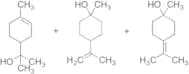
CAS:Controlled Product<p>Stability Volatile<br>Applications Methyl Acetate is used as an organic chemical solvent for a multitude of organic processes. Also used in the production of biodiesel.<br> Not a dangerous good if item is equal to or less than 1g/ml and there is less than 100g/ml in the package<br>References Xu, Y. et al.: J. mol. Cat., 32, 241 (2005); Ogino, H. et al.: J. Biosci. Bioeng., 89, 451 (2000);<br></p>Formula:C3H6O2Color and Shape:NeatMolecular weight:74.08Terpineol (>90%)
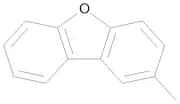
CAS:<p>Applications Terpineol is a monoterpene alcohol with potential antifungal, antioxidant and antiproliferative activities. This product is a mixture of isomers.<br>References Ramage, G., et al.: Front Microbiol. 3, 220 (2012); Miguel, M. G., et al.: Evid Based Complement Alternat Med. 2015, 851721 (2015)<br></p>Formula:C10H18OPurity:>90%Color and Shape:NeatMolecular weight:154.252-Methyldibenzofuran
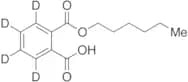
CAS:Controlled Product<p>Applications 2-Methyldibenzofuranis used in volatile composition of biomass tars used for liquid engine fuels with properties similar to gasoline and diesel fuels.<br>References Soltes, E. J., et al.: Biomass Convers. 5, 1 (1984)<br></p>Formula:C13H10OColor and Shape:White To Off-WhiteMolecular weight:182.22Monohexyl Phthalate-d4
CAS:Controlled Product<p>Applications Labelled Monohexyl Phthalate is a phthalate ester that was used to characterize human salivary esterase in enzymatic hydrolysis.<br>References Niino, T., et al.: J. Health. Sci., 49, 76 (2003); Moss, E.J., et al.: Toxicol. Lett., 40, 77 (1988);<br></p>Formula:C14H14D4O4Color and Shape:Off White SolidMolecular weight:254.31Gallic Acid-d2
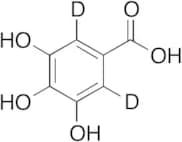
CAS:Controlled Product<p>Applications Gallic Acid-d2 is the labelled analogue of Gallic acid (G188978) which is a phenolic acid with antioxidant activity. Gallic acid was found to protect human cells against oxidative damage and showed cytotoxicity against cancer cells. Gallic Acid and its esters also show antiviral and antifungal activities.<br>References Yen, G. et al.: Food Chem., 79, 307 (2002); Chen, C. et al.: Mol. Nutrit. Food Res., 51, 962 (2007); Kratz, J. et al.: Mem. Inst. Oswaldo Cruz, 103, 437 (2008); Osborne, L. et al.: Infect. Immun., 33, 769 (1981);<br></p>Formula:C72H2H4O5Color and Shape:NeatMolecular weight:172.13Syringic Acid
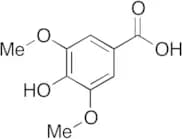
CAS:Controlled Product<p>Applications Syringic Acid is used in biological studies for electron transfer from plant phenolates to carotenoid radical cations with antioxidant interaction entering the Marcus theory inverted region.<br>References Cheng, H., et al.: J. Agric. Food Chem., 62, 942 (2014)<br></p>Formula:C9H10O5Color and Shape:Off-WhiteMolecular weight:198.17Ethyl Vanillin
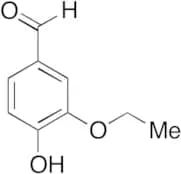
CAS:<p>Applications Ethyl Vanillin, is used as a flavorant, which is about three times as potent as vanillin (V097500) and can be utilized in the production of chocolate. It has also shown to have antioxidant properties.<br>References Akihiro, T., et al.: Biosci. Biotech. Biochem., 75, 2346 (2011); Yang, X., et al.: Biores. Technol., 102, 3498 (2011);<br></p>Formula:C9H10O3Color and Shape:White To Off-WhiteMolecular weight:166.17Quercetin
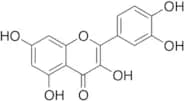
CAS:Controlled ProductFormula:C15H10O7Color and Shape:Yellow Crystalline PowderMolecular weight:302.243-Sulfanylhexyl Acetate
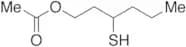
CAS:Controlled Product<p>Stability Hygroscopic<br>Applications 3-Sulfanylhexyl Acetate is a precursor of 3-mercaptohexan-1-ol (M225270) found in grape juice.<br>References Harsch, M.J., et al.: J. Agri. Food. Chem., 61, 3703 (2013); Makhotkina, O., et al.: Food. Chem., 135, 486 (2012);<br></p>Formula:C8H16O2SColor and Shape:NeatMolecular weight:176.28Acetoin
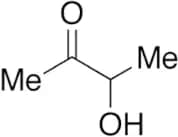
CAS:Controlled Product<p>Stability Hygroscopic<br>Applications Acetoin is a produced via fermentation of wines, dairy products and sugars by fermentive bacteria. Acetoin is used in food flavoring and fragrances and is also found in some fruits and vegetables.<br> Not a dangerous good if item is equal to or less than 1g/ml and there is less than 100g/ml in the package<br>References Mayo, B. et al.: Biotechnol. Lact. Acid Bact., 3 (2010); Oberman, H. et al.: Nahrung, 26, 615 (1982); Dutta, S.M. et al.: Ind. J. Dairy Sci., 24, 107 (1971);<br></p>Formula:C4H8O2Color and Shape:NeatMolecular weight:88.11Apigenin
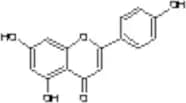
CAS:Controlled Product<p>Applications Induces the reversion of transformed phenotypes of v-H-ras-transformed NIH 3T3 cells at low concentration (12.5 uM) by inhibiting MAP kinase activity. Also inhibits the proliferation of malignant tumor cells by G2/M arrest and induces morphological differentiation. Apigenin has also been reported to enhance the gap juntion intracellular communication in liver cells.uv(max)ethanol: 269, 340 nm (e= 18,800, 20,900) moderately sol. in hot alcohol<br>References Chaumontet, C., et al.: Carcinogenesis, 15, 2325 (1994); Sato, F., et al.: Biochem. Biophys. Res. Commun., 204, 578 (1994); Kuo, M.L. et al.: Biochem. Biophys. Res. Commun., 212, 767 (1995);<br></p>Formula:C15H10O5Color and Shape:Yellow To BrownMolecular weight:270.24Monoethyl Phthalate-d4
CAS:Controlled Product<p>Applications Labelled Phthalate metabolite.<br>References Engel, S., et al.: NeuroToxicol., 30, 522 (2009), Aylward, L., et al.: Reg. Toxicol. Pharmacol., 55, 259 (2009), Blair, J., et al.: Environ., Sci. Technol., 43, 6262 (2009),<br></p>Formula:C102H4H6O4Color and Shape:White To YellowMolecular weight:198.21Butanoic Acid
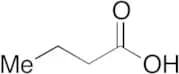
CAS:Controlled Product<p>Applications Butanoic Acid, is found in milk, especially goat, sheep and buffalo milk. It can be used for the preparation of various esters, such as methyl butyrate, which has pleasant aromas or tastes and thus can be used as food and perfume additives.<br> Not a dangerous good if item is equal to or less than 1g/ml and there is less than 100g/ml in the package<br>References Lupton, J. R., et al.: J. Nutrition, 134 (2), 479 (2004); Grummer, R. R., et al.: J Dairy. Sci., 74 (9),3244 (1991);<br></p>Formula:C4H8O2Color and Shape:ColourlessMolecular weight:88.11Vitamin D3
CAS:<p>Stability Temperature Sensitive<br>Applications Vitamin D3 is the vitamin that mediates intestinal calcium absorbtion, bone calcium metabolism and probably, muscle activity. It occurs in and is isolated from fish liver oils. Vitamin D acts through a receptor that is a member of the ligand-dependent transcription factor superfamily. It modulates the proliferation and differentiation of both normal and cancer cells. It also has antiproliferative and antimetastatic effects on breast, colon, and prostate cancer cells. Activated vitamin D receptors in intestine and bone maintain calcium absorbance and homeostasis.<br> Not a dangerous good if item is equal to or less than 1g/ml and there is less than 100g/ml in the package<br>References Haussler, R., et al.: J. Biol. Chem., 247, 2328 (1972); Holick, M.F., Rec. Res. Canc. Res., 164, 3 (2003); Palmer, H.G., et al.: Cancer Res., 63, 7799 (2003); Welsh, J., et al.: J. Nutr., 133, 2425S (2003)<br></p>Formula:C27H44OColor and Shape:WhiteMolecular weight:384.64Di(a-tocopherol) Phosphate (>85%)
CAS:<p>Applications Di(α-tocopherol) Phosphate is used as a vitamin E supplement.<br>References Libinaki, R., et al.: Food Chem. Toxicol., 44, 916 (2006)<br></p>Formula:C58H99O6PPurity:>85%Color and Shape:NeatMolecular weight:923.389,9-Bis(methoxymethyl)-9H-fluorene
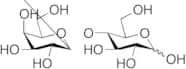
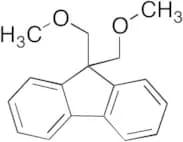
CAS:Controlled Product<p>Applications 9,9-Bis(methoxymethyl)-9H-fluorene is a compound involved in the preparation of polypropylene by heterogeneous Ziegler-Natta catalyst.<br>References Luo, Z., et al.: Ind. Eng. Chem. Res., 54, 11247-11250 (2015)<br></p>Formula:C17H18O2Color and Shape:White SolidMolecular weight:254.32DL-Malic Acid
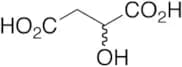
CAS:<p>Applications The naturally occuring isomer is the L-form which has been found in apples and many other fruits and plants. Selective α-amino protecting reagent for amino acid derivatives. Versatile synthon for the preparation of chiral compounds including κ-opioid receptor agonists, 1α,25-dihydroxyvitamin D3 analogue, and phoslactomycin B.<br>References Rindi, G., et al.: Biochem. J., 80, 214 (1961), Wolfgang, M., et al.: J. Biol. Chem., 281, 37265 (2006), Navarro, D., et al.: Metab. Brain Dis., 23, 115 (2008),<br></p>Formula:C4H6O5Color and Shape:WhiteMolecular weight:134.09(+)-trans Taxifolin
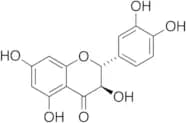
CAS:Controlled Product<p>Applications An antioxidant flavenoid.<br>References Dixon, D., et al.: J. Biol. Chem., 285, 36322 (2010), Sheu, M., et al.: Chem. Pharm. Bull., 58, 1187 (2010),<br></p>Formula:C15H12O7Color and Shape:NeatMolecular weight:304.25Bis(2-ethoxyethyl) Phthalate (>90%)
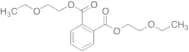
CAS:Controlled Product<p>Applications Bis(2-ethoxyethyl) Phthalate is a synthetic organic contaminant, and an endocrine disrupting chemical that has threatened seawater quality in marine environments.<br>References Tiwari, M., et al.: J. Environ. Sci. Health, A. Tox Hazard Subst Environ Eng., 54, 328 (2019); Zhang, X., et al.: Sepu, 36, 634 (2018)<br></p>Formula:C16H22O6Purity:>90%Color and Shape:ColourlessMolecular weight:310.34Diallyl Phthalate
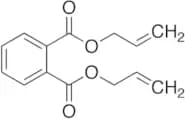
CAS:Controlled Product<p>Applications Diallyl Phthalate is used as a reagent in ring-closing ruthenium based reactions.<br> Not a dangerous good if item is equal to or less than 1g/ml and there is less than 100g/ml in the package<br>References De Clercq, B. et al.: Tetra. Lett., 42, 8959 (2001); De Clercq, B. et al.: Tetrahedron Lett., 43, 9101 (2002);<br></p>Formula:C14H14O4Color and Shape:Light YellowMolecular weight:246.26Methyl cis-11-Eicosenoate
CAS:<p>Applications Methyl cis-11-Eicosenoate is used as a reagent in the synthesis of unsaturated acyl glycerols for in-meso crystallization of membrane proteins. Also used as a reagent in the synthesis of (Z)-9-tricosene (muscalure) which is an insect pheromone used as a pesticide.<br>References Fu, Y., et al.: Synlett, 6, 809 (2011); Dhillon, R.S., et al.: Indian J. Chem. B, 34B, 718 (1995)<br></p>Formula:C21H40O2Color and Shape:NeatMolecular weight:324.54Monopropyl Phthalate-d4
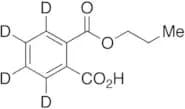
CAS:Controlled Product<p>Applications Labelled analogue of a phthalate ester metabolite used to study the role of peroxisome proliferator-activated receptor (PPAR) in the mediating effects of phthalates and metabolites in the liver. Studies suggest that it may possess testicular toxicity.<br>References Lapinskas, P.J. et al.: Toxicology, 207, 149 (2005); Watanabe, N. et al.: J. Health Sci., 48, 527 (2002);<br></p>Formula:C11D4H8O4Color and Shape:NeatMolecular weight:212.24(-)-Isopulegol
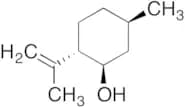
CAS:Controlled Product<p>Applications (-)-Isopulegol, is a naturally occuring monoterpene having antiplasmodial and antifungal activity. It is present in the essential oil of various plants, and can be used as a fragrance ingredient, and as a flavor additive.<br>References Olagnier, D., et al.: Bioorg. Med. Chem. Lett., 17(22), 6075 (2007);<br></p>Formula:C10H18OColor and Shape:ColourlessMolecular weight:154.251,2-Dichloroethane-D4
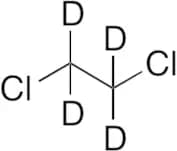
CAS:Controlled Product<p>Stability Volatile<br>Applications 1,2-Dichloroethane-D4 is a labelled analogue of 1,2-Dichloroethane (D434325). 1,2-Dichloroethane is one of the major waste products of the Vinyl Chloride industries, and has also been classified as a potential human carcinogen.<br> Not a dangerous good if item is equal to or less than 1g/ml and there is less than 100g/ml in the package<br>References Hung, W., et al.: Appl. Surf. Sci., 255, 2205 (2008); Rannug, U., et al.: Chem.-Biol. Int., 20, 1 (1978)<br></p>Formula:C22H4Cl2Color and Shape:ColourlessMolecular weight:102.98Dimethyl Trisulphide
CAS:Controlled Product<p>Applications Dimethyl trisulphide (CAS# 3658-80-8) is a useful research chemical compound.<br></p>Formula:C2H6S3Color and Shape:ColourlessMolecular weight:126.26all-trans-Retinyl Palmitate
CAS:<p>Stability Light Sensitive<br>Applications all-trans-Retinyl Palmitate is an ester derivative of Retinol (R252000). all-trans-Retinyl Palmitate is used as a vitamin supplement in the treatment of Vitamin A deficiency. all-trans-Retinyl Palmitate is used as an antioxidant and a source of vitamin A added to low fat milk and other dairy products. all-trans-Retinyl Palmitate is also a constituent of some topically applied skin care products<br>References Wang, S.Q. et al.: J. A. Acad. Dermatol., 63, 903 (2010); Matuk, Y. et al.: Exp. Eye Res., 24, 217 (1977); Reifen, R. et al.: J. Nutrit., 132, 2743 (2002):<br></p>Formula:C36H60O2Color and Shape:YellowMolecular weight:524.86Tangeretin
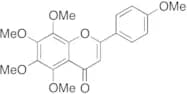
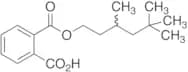
CAS:Controlled Product<p>Applications Tangaretin is a polymethoxylated flavone with potential anti-fungal and inhibitory action against bacteria and fungi in the food industry.<br> Not a dangerous good if item is equal to or less than 1g/ml and there is less than 100g/ml in the package<br>References Wu, T. et al.: Food Control., 35, 354 (2014); Xu, J. et al.: J. Agri. Foos. Che,., 62, 2182 (2014);<br></p>Formula:C20H20O7Color and Shape:NeatMolecular weight:372.37rac Mono(3,5,5-trimethylhexyl) Phthalate
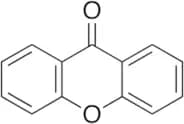
CAS:<p>Applications Phthalate metabolite.<br>References Larsen, S., et al.: Toxicol., 169, 37 (2001), Silva, M., et al.: J. Anal. Toxicol., 29, 819 (2005), Silva, M., et al.: Arch. Toxicol., 79, 647 (2005),<br></p>Formula:C17H24O4Color and Shape:White To Off-WhiteMolecular weight:292.37Xanthone
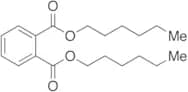
CAS:Controlled Product<p>Applications Acts as an inhibitor of human cancer cell lines.<br>References Pedro, M. et al.: Bioorg. Med. Chem., 10, 3725 (2002);<br></p>Formula:C13H8O2Color and Shape:BrownMolecular weight:196.20Di-n-hexyl Phthalate
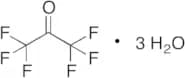
CAS:Controlled Product<p>Applications Di-n-hexyl Phthalate is a Phthalate derivative and an organic extract contaminant found in drinking water, which was shown to activate Nrf-2-Mediated Antioxidant response in human cell line.<br>References Wang, S., et al.: Environ. Sci. Technol., 47, 4768 (2013);<br></p>Formula:C20H30O4Color and Shape:NeatMolecular weight:334.45Hexafluoroacetone Trihydrate
CAS:Controlled ProductFormula:C3F6O·3H2OColor and Shape:NeatMolecular weight:220.07Monomethyl Phthalate
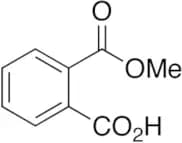
CAS:Controlled Product<p>Applications Phthalate Ester metabolite, linked to precocious puberty.<br>References Engel, S., et al.: NeuroToxicol., 30, 522 (2009), Blair, J., et al.: Environ., Sci., Technol., 43, 6262 (2009), Xu, Z., et al.: Environ. Sci. Technol., 44, 3130 (2010), Clewell, R., et al.: Toxicol. in Vitro, 24, 327 (2010),<br></p>Formula:C9H8O4Color and Shape:Colourless CrystallineMolecular weight:180.16β-Tocopherol
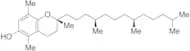
CAS:Controlled Product<p>Applications One of the naturally occurring forms of Vitamin E. Is biologically less active than α-Tocopherol.<br>References Bianchi, G., et al.: Eur. J. Lipid Sci. Technology, 105, 229 (2003), Sakouhi, F., et al.: Food Chem., 108, 833 (2008),<br></p>Formula:C28H48O2Color and Shape:Colourless To BeigeMolecular weight:416.68(R,S)-N-Nitroso Anatabine
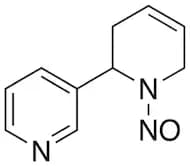
CAS:Controlled Product<p>Applications (R,S)-N-Nitroso Anatabine is a metabolite of tobacco, a specific N-nitrosamines. (R,S)-N-Nitroso Anatabine shows mutagenic effects.<br> Not a dangerous good if item is equal to or less than 1g/ml and there is less than 100g/ml in the package<br>References Hoffmann, D., et al.: Cancer Res., 39, 2505 (1979), Hecht, S., et al.: Chem. Res. Toxicol., 11, 559 (1998), Hecht, S., et al.: Mutation. Res., 424, 127 (1999), Wang, M., et al.: Chem. Res. Toxicol., 16, 616 (2003),<br></p>Formula:C10H11N3OColor and Shape:Light Yellow To Dark OrangeMolecular weight:189.212-Furoic Acid
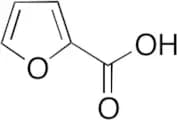
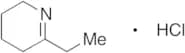
CAS:Controlled Product<p>Applications 2-Furoic Acid is an heterocyclic carboxylic acid that is widely used in food products as a preservative and flavouring agent.<br>References Hall, I.H., et al.: Arch, Pharm., 326, 15 (1993);<br></p>Formula:C5H4O3Color and Shape:Orange To BrownMolecular weight:112.082-Ethyl-3,4,5,6-tetrahydropyridine Hydrochloride
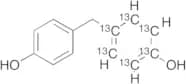
CAS:Controlled Product<p>Stability Very Hygroscopic<br>Applications 2-Ethyl-3,4,5,6-tetrahydropyridine Hydrochloride is produced by lactic acid bacteria (LAB) and can cause mousy off-flavor in wines.<br>References Snowdon, E.M., et al.: J. Agr. Food Chem., 54, 6465 (2006); Costello, P.J., et al.: J. Agr. Food Chem., 50, 7079 (2002); Craig, J.T., et al.: Am. J. Enol. Viticult., 35, 46 (1984)<br></p>Formula:C7H14ClNColor and Shape:Off White SolidMolecular weight:147.65Bisphenol F-13C6
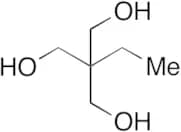
CAS:<p>Stability Hygroscopic<br>Applications Bisphenol F-13C6 is an isotope labelled analog of Bisphenol F. Bisphenol F is a bisphenol derivative with antioxidant activities. Bisphenol F has been reported to exhibit estrogen agonistic properties.<br>References Higashihara, N. et al.: Arch. Toxicol., 81, 825 (2007); Kanai, H. et al.: Int. J. Cancer, 93, 20 (2001); Pospisil, J. et al.: Kinet. Mech. Polyreacti.Int. Symp. Macromol. Chem. Prepr.,5, 383 (1969);<br></p>Formula:C6C7H12O2Color and Shape:Off-WhiteMolecular weight:206.191,1,1-Tris(hydroxymethyl)propane
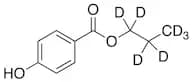
CAS:Controlled Product<p>Applications 1,1,1-Tris(hydroxymethyl)propane is a building block often used to make polymers. 1,1,1-Tris(hydroxymethyl)propane has been used as a precursor to prepatre alkyd resins for linseed oil based paint.<br>References Wang, X., et. al.: J. Polym. Res., 18, 721 (2011); Isiri-Caglar, D., et. al.: Rog. Org. Coat., 77, 81 (2014); Heiskanen,N., et. al.: J. Appl. Polym. Sci., 119, 209 (2011)<br></p>Formula:C6H14O3Color and Shape:White CrystallineMolecular weight:134.17Propyl-d7 Paraben
CAS:Controlled Product<p>Applications Labelled Propylparaben. An antimicrobial agent used in cosmetic products.<br>References Gilliland, D., et al.: J. Appl. Bacteriol., 72, 258 (1992), Routledge, E., et al.: Toxicol. Appl. Pharmacol., 153, 12 (1998), Miller, C., et al.: J. Biol. Chem., 272, 32824 (1997), Nakagawa, Y., et al.: Biochem. Pharmacol., 55, 1907 (1998),<br></p>Formula:C102H7H5O3Color and Shape:Off-WhiteMolecular weight:187.244(-)-Ethyl L-Lactate
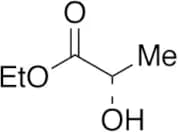
CAS:Controlled Product<p>Applications (-)-Ethyl L-Lactate is a naturally occuring chemical compound that is often used as an industrial solvent in chemical reactions.<br> Not a dangerous good if item is equal to or less than 1g/ml and there is less than 100g/ml in the package<br>References Paul, S. et al.: Tetra. Lett., 53, 2206 (2012); Santiago, A. et al.: Green Chem., 11, 65 (2009);<br></p>Formula:C5H10O3Color and Shape:ColourlessMolecular weight:118.131Caffeic Acid Phenethyl Ester
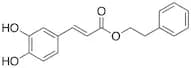
CAS:<p>Applications Cytotoxic agent against cancer cell lines. Inhibitor of ornithine decarboxylase and protein tyrosine kinase. Found to be a specific inhibitor of the nuclear transcription factor, NF-kB. It has also been shown to significantly suppress the lipoxygenase pathway of arachidonic acid metabolism during inflammation.<br>References Grunberger, D., et al.: Experientia, 44, 230 (1988), Fesen, M.R., et al.: Biochem. Pharmacol., 48, 595 (1994), Su, Z.Z., et al.: Cancer Res., 54, 1865 (1994), Zheng, Z.S., et al.: Oncol. Res., 7, 445 (1995), Mirzoeva, O.K. and Calder, P.C.: Essent. Fatty Acids, 55, 441 (1996)<br></p>Formula:C17H16O4Color and Shape:NeatMolecular weight:284.316-Hydroxy Monopropylheptylphthalate (Mixture of Diastereomers)
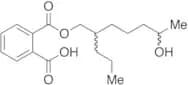
CAS:<p>Applications 6-OH-Monopropylheptylphthalate is a phthalate metabolite originating from a DPHP (B523500) used in plasticizers to improve chemical and physical properties.<br>References Kasper-Sonnenberg, M. et al.: Int. J. Hyg. Env. Health, 215, 373 (2012); Koch, H. et al.: Int. J. Hyg. Env. Health, 214, 188 (2011);<br></p>Formula:C18H26O5Color and Shape:Colourless To Light BrownMolecular weight:322.4Erucic Acid Methyl Ester
CAS:Controlled ProductFormula:C23H44O2Color and Shape:NeatMolecular weight:352.59Methyl Decanoate(Methyl Caprate)
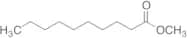
CAS:<p>Applications Methyl Caprate, is an unsaturated biodiesel fuel surrogate. It can also be used as flavor and fragrance ingredients.<br>References Wang, W., et al.: Energy & Fuels, 27, 5527 (2013);<br></p>Formula:C11H22O2Color and Shape:ColourlessMolecular weight:186.29Hexadecanamide
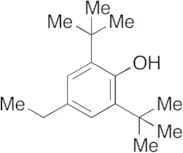
CAS:Controlled Product<p>Applications Hexadecanamide (cas# 629-54-9) is a useful research chemical.<br></p>Formula:C16H33NOColor and Shape:NeatMolecular weight:255.452,6-Di-tert-butyl-4-ethylphenol
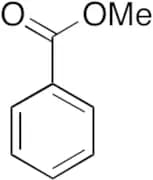
CAS:Controlled Product<p>Applications 2,6-Di-tert-butyl-4-ethylphenol is used as a catalyst for the synthesis of aromatic carboxamides.<br>References Wang, X., et al.: Org. Biomol. Chem., 14, 7028-37 (2016);<br></p>Formula:C16H26OColor and Shape:Off-WhiteMolecular weight:234.38Benzoic Acid Methyl Ester
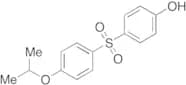
CAS:Controlled Product<p>Applications Benzoic Acid Methyl Ester, has a pleasant smell, and thus can be used in perfumery industry. It is also used as a solvent and as a pesticide used to attract insects such as orchid bees.<br>References Mcmurry, J., et al.: Phytochemistry, 69 (4), 1018 (2008); Schiestl, F. P., et al.: J. Chem. Ecology, 29 (2004);<br></p>Formula:C8H8O2Color and Shape:ColourlessMolecular weight:136.154-Hydroxyphenyl 4-Isopropoxyphenyl Sulfone
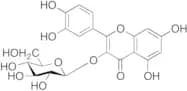
CAS:Controlled ProductFormula:C15H16O4SColor and Shape:NeatMolecular weight:292.35Quercetin 3-O-b-D Glucoside
CAS:<p>Stability Hygroscopic<br>Applications Quercetin 3-O-β-D Glucoside is a metabolite of Quercetin (Q509500), a flavonoid with anticancer activity. It is a mitochondrial ATPase and phosphodiesterase inhibitor.<br>References Graziani, Y. et al.: J. Biochem., 135, 583 (1983); Levy, J. et al.: Biochem. Biophys. Res. Comm., 123, 1227 (1984); Wei, Y.Q. et al.: Cancer Res., 54, 4952 (1994);<br></p>Formula:C21H20O12Color and Shape:NeatMolecular weight:464.38Monodecyl Phthalate-d4
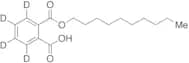
CAS:Controlled ProductFormula:C18D4H22O4Color and Shape:NeatMolecular weight:310.4212-Methylfuran
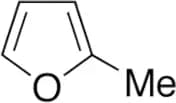
CAS:Controlled Product<p>Applications 2-Methylfuran is a volatile organic compound (VOCs) used as a potential non-intrusive tool for screening of lung cancer.<br> Not a dangerous good if item is equal to or less than 1g/ml and there is less than 100g/ml in the package<br>References McWilliams, et al.: Curr. Oncol. Rep., 4, 487 (2002), Buszewski, B., et al.: Biomed. Chromatogr., 21, 553 (2007), Ligor, T., et al.: J. Breath. Res., 1, 1 (2007),<br></p>Formula:C5H6OColor and Shape:ColourlessMolecular weight:82.102,2-Bis[4-(2-hydroxy-2-methylethoxy)phenyl]Propane
CAS:Formula:C21H28O4Color and Shape:White To Off-WhiteMolecular weight:344.44Biotin
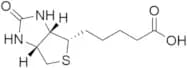
CAS:<p>Applications Biotin is a growth factor present in minute amounts in every living cell. Plays an indispensable role in numerous naturally occurring carboxylation reactions. Occurs mainly bound to proteins or polypeptides. The richest sources are liver, kidney, pancreas, yeast, and milk. The biotin content of cancerous tumors is higher than that of normal tissue.<br>References du Vigneaud, et al.: J. Biol. Chem., 146, 475 (1942); Traub, et al.: Nature, 178, 649 (1956); Siegel, H., et al.: Experienta, 37, 789 (1981); Vesely, D.L., Science, 216, 1329 (1982); Hugues, M., et al.: Biochemistry, 31, 12 (1992);<br></p>Formula:C10H16N2O3SColor and Shape:WhiteMolecular weight:244.31(Hydroxypropyl)methyl Cellulose Phthalate
CAS:Controlled Product<p>Applications (Hydroxypropyl)methyl cellulose phthalate (cas# 9050-31-1) is a useful research chemical.<br></p>Formula:C6H14N2Color and Shape:NeatMolecular weight:240.312-Methyl-3-(p-isopropylphenyl)propionaldehyde(Cyclamal)
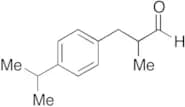
CAS:Controlled Product<p>Stability Hygroscopic<br>Applications Cyclamal, is an ingredient in perfume. It can also be used in the synthesis of Cyclamen Alcohol (C987655).<br>References Borowiecka, J. et al.: Bromatologia i Chemia Toksykologiczna,43, 445 (2010); Opdyke, D. L. J., Food and Cosmetics Toxicology, 17, 267 (1979);<br></p>Formula:C13H18OColor and Shape:NeatMolecular weight:190.28Diisodecyl Phthalate-d4
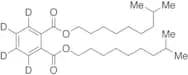
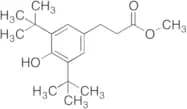
CAS:Controlled Product<p>Applications A labelled phtalate ester found in plastic gasket used in food packaging. Used in environmental toxicology studies as a present contaminant.<br> Not a dangerous good if item is equal to or less than 1g/ml and there is less than 100g/ml in the package<br>References Novak, J. et al.: Env. Toxicol. Chem., 26, 1591 (2007); Yu, Y. et al.: Ship. Gong. Keji, 29, 243 (2008);<br></p>Formula:C282H4H42O4Color and Shape:Colourless To Light YellowMolecular weight:450.69Methyl 3-(3,5-di-tert-butyl-4-hydroxyphenyl)propionate
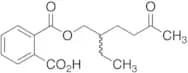
CAS:Controlled Product<p>Applications Methyl 3-(3,5-di-tert-butyl-4-hydroxyphenyl)propionate is an antioxidant that is used in polyethylene.<br> Not a dangerous good if item is equal to or less than 1g/ml and there is less than 100g/ml in the package<br>References Blazquez-Blazquez, Enrique. et al., ACS Omega. 16, 9055-9063(2020);<br></p>Formula:C18H28O3Color and Shape:NeatMolecular weight:292.41rac Mono(2-ethyl-5-oxohexyl) Phthalate
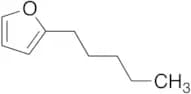
CAS:<p>Applications Phthalate metabolite.<br>References Ye, X., et al.: Environ. Res., 108, 260 (2008), Engel, S., et al.: NeuroToxicol., 30, 522 (2009), Samandar, E., et al.: Environ. Res., 109, 641 (2009),<br></p>Formula:C16H20O5Color and Shape:Yellow To BrownMolecular weight:292.332-Pentylfuran
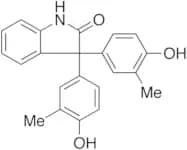
CAS:Controlled Product<p>Stability Volatile<br>Applications 2-Pentylfuran is a volatile compound that is detected in meat smoke aerosol, rice aroma and tomato paste volatiles.<br> Not a dangerous good if item is equal to or less than 1g/ml and there is less than 100g/ml in the package<br>References Rogge, W., et al.; Environ. Sci. Technol., 25, 1112 (1991); Buttery, R., et al.: J. Agric. Food Chem., 36, 1006 (1988); Buttery, R., et al.: J. Agric. Food Chem., 38, 336 (1990);<br></p>Formula:C9H14OColor and Shape:Colourless To Light YellowMolecular weight:138.21Isatin Bis-cresol
CAS:Controlled ProductFormula:C22H19NO3Color and Shape:Off White SolidMolecular weight:345.39Cholesterol
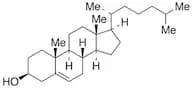
CAS:<p>Applications Cholesterol is a major component of all biological membranes; ~25% of total brain lipid is Cholesterol. Cholesterol is the principal sterol of the higher animals. Cholesterol was found in all body tissues, especial in the brain, spinal cord, and in animal fats or oils. Cholesterol is the main constituent of gallstones. This compound is a contaminant of emerging concern (CECs).<br>References Rosin, Z., et al.: Physiol. Chem., 124, 282 (1923), Schoenheimer, et al.: J. Biol. Chem., 105, 355 (1934), Gemant, et al.: Life Sci., 1, 233 (1962), Johnson, K., et al.: 4, 457 (1964),<br></p>Formula:C27H46OColor and Shape:WhiteMolecular weight:386.65Hexylene Glycol
CAS:<p>Applications Hexylene Glycol is used as a reagent in the synthesis of functionalized boronic esters. Also used in the preparation of vinylboronates.<br>References Demory, E. et al: Org. Proc. Res. Dev., 15, 710 (2011); PraveenGanesh, N. et al.: J. Org. Chem., 72 4510 (2007);<br></p>Formula:C6H14O2Color and Shape:ColourlessMolecular weight:118.17a-Tocopheryl Succinate
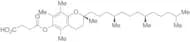
CAS:Controlled Product<p>Applications A potent novel antineoplastic agent with high selectivity and cooperativity with tumor necrosis factor-related apoptosis-inducing ligand (Apo2 ligand). It inhibits proliferation of mesothelioma cells by selective down-regulation of fibroblast growth factor receptors. Furthermore, it has been shown to enhance the anti-tumor effect of dendritic cell vaccines.<br>References Weber, T. et al.: Clin. Can Res., 8, 863 (2002);Staphelberg, M. et al.: Biochem. Biophys. Res. Comm., 318, 636 (2004); Ramathapuram, L.V. et al.: Cancer Immunol. Immununother., 55, 166 (2005);<br></p>Formula:C33H54O5Color and Shape:NeatMolecular weight:530.78dl-α-Tocopherol Acetate
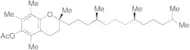
CAS:Controlled Product<p>Stability Light Sensitive<br>Applications dl-α-Tocopherol Acetate is the racemic analog of α-Tocopherol Acetate (T526155), one of the most bioactive of the naturally occurring forms of Vitamin E. Richest sources are green vegetables, grains, and oils, particularly palm, safflower and sunflower oils.<br>References Bianchi, G., et al.: Eur. J. Lipid Sci. Technology, 105, 229 (2003), Sakouhi, F., et al.: Food Chem., 108, 833 (2008),<br></p>Formula:C31H52O3Color and Shape:NeatMolecular weight:472.74(9E,12E)-Octadeca-9,12-dienoic Acid
CAS:Controlled Product<p>Applications (9E,12E)-octadeca-9,12-dienoic acid (cas# 506-21-8) is a useful research chemical.<br></p>Formula:C18H32O2Color and Shape:White To Off-WhiteMolecular weight:280.453-Aminopropyltriethoxysilane
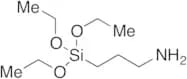
CAS:Controlled Product<p>Applications 3-Aminopropyltriethoxysilane is a reagent in the preparation of ultrastable organic dye nanoparticles in living cells.Also used in the preparation of monoclonal antibody-functionalized mesoporous silica nanaoparticles packaged with Mifepristone (M343975), a progesterone receptor antagonist with partial agonist activity. Abortifacient.<br> Not a dangerous good if item is equal to or less than 1g/ml and there is less than 100g/ml in the package<br>References Xu, R. et al.: Biomat., 93, 38 (2016);<br></p>Formula:C9H23NO3SiColor and Shape:NeatMolecular weight:221.37Azelaic Acid
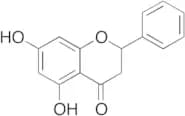
CAS:Controlled Product<p>Applications Azelaic acid occurs in rancid oleic acid. Azelaic acid is an antiacne agent.<br>References Bladon, P.T., et al.: Br. J. Dermatol., 114, 493 (1986),<br></p>Formula:C9H16O4Color and Shape:White To Off-WhiteMolecular weight:188.22rac-Pinocembrin
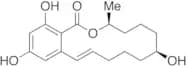
CAS:Controlled Product<p>Applications Pinocembrin is a flavanoid with antioxidant activity found in damiana, honey, and propolis. Recent studies show that Pinocembrin maybe be a therapeutic option in reducing cerebral ischemia/reperfusion injury as a result of its anti-oxidative and anti-apoptotic effects. Pinocembrin displayed neuroprotective effects in glutamate injury model partly by inhibiting p53 expression causing a lower Bax-Bcl-2 ratio and by inhibiting the release of cytochrome c.<br>References Zhao, J. et al.: J. Ethnopharmacol., 120, 387 (2008); Liu, R. et al.: Brain Res., 1216, 104 (2008); Gao, M. et al.: Eur. J. Pharmacol., 591, 73 (2008);<br></p>Formula:C15H12O4Color and Shape:Off-WhiteMolecular weight:256.25β-Zearalenol
CAS:Controlled Product<p>Applications The more active Zearalenone (Z270500) metabolite.<br> Not a dangerous good if item is equal to or less than 1g/ml and there is less than 100g/ml in the package<br>References Olsen, M., et al.: Acta Pharmacol. Toxicol., 48, 15 (1981), Chang, W., et al.: Food Chem. Toxicol., 22, 887 (1984), El Golli, E., et al.: Toxicol Lett., 166, 122 (2006), Hassen, W., et al.: Toxicology, 232, 294 (2007), Benzoni, E., et al.: Reprod. Toxicol., 25, 461 (2008),<br></p>Formula:C18H24O5Color and Shape:White To BeigeMolecular weight:320.38Docosahexaenoic Acid
CAS:Controlled Product<p>Stability Air Sensitive, Light Sensitive<br>Applications Omega-3 fatty acid found in marine fish oils and in many phospholipids. Major structural component of excitable membranes of the retina and brain; synthesized in the liver from α-linolenic acid. Nutritional supplement.<br>References Whitcutt, J.M., et al.: Biochem. J., et al.: 67, 60 (1957), Bazan, N.G., et al.: J. Ocul. Pharmacol., 10, 591 (1994), Makrides, M., et al.: Lipids, 31, 115 (1996),<br></p>Formula:C22H32O2Color and Shape:NeatMolecular weight:328.49

![4-[2,2-Dichloro-1-(4-hydroxyphenyl)ethenyl]phenol](/_next/image/?url=https%3A%2Fstatic.cymitquimica.com%2Fproducts%2FTR%2Fthumb-webp%2FD438908.webp&w=3840&q=75)












![2,2-Bis[4-(2-hydroxy-2-methylethoxy)phenyl]Propane](/_next/image/?url=https%3A%2Fstatic.cymitquimica.com%2Fproducts%2FTR%2Fthumb-webp%2FB016472.webp&w=3840&q=75)