Apoptosis
Apoptosis inhibitors are compounds that prevent or delay the process of programmed cell death, known as apoptosis. These inhibitors are vital in studying cell survival mechanisms and are used to investigate diseases where apoptosis is dysregulated, such as cancer, neurodegenerative disorders, and autoimmune diseases. By modulating apoptosis, these inhibitors can help in the development of therapies aimed at controlling cell death. At CymitQuimica, we provide a comprehensive selection of high-quality apoptosis inhibitors to support your research in cell biology, oncology, and related fields.
Subcategories of "Apoptosis"
- ASK(9 products)
- BCL(11 products)
- Caspase(144 products)
- FOXO1(3 products)
- IAP(67 products)
- Mdm2(12 products)
- PD-1/PD-L1(139 products)
- PDK(9 products)
- PERK(26 products)
- Serine/threonin kinase(19 products)
- Survivin(14 products)
- TNF(91 products)
- c-RET(61 products)
- p53(63 products)
Show 6 more subcategories
Found 6038 products of "Apoptosis"
Sort by
Purity (%)
0
100
|
0
|
50
|
90
|
95
|
100
HDAC-IN-37
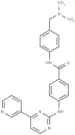
HDAC-IN-37 inhibits HDACs 1, 3, 8, & 6, induces histone acetylation, halts G1 to S phase, and triggers early apoptosis.Formula:C23H24ClN7OColor and Shape:SolidMolecular weight:449.94Topo I/COX-2-IN-1
Topo I/COX-2-IN-1: potent dual inhibitor; IC50 0.24μM (COX-2), 4.42μM (Topo I); anti-cancer; induces apoptosis, halts migration.Formula:C21H18ClFN2O3Color and Shape:SolidMolecular weight:400.83RIP3 activator 1
CAS:RIP3 Activator 1 (compound C8) is an effective RIP3 activator that inhibits cell growth and induces necroptotic cell death (necroptosis) and autophagy through the RIP3/p62/Keap1 signaling pathway. Additionally, this compound enhances the expression of p-MLKL and promotes the accumulation of LC3-II and p62 proteins.Formula:C26H50N4O3Color and Shape:SolidMolecular weight:466.7FKBP51-Hsp90-IN-2
CAS:FKBP51-Hsp90-IN-2 (Compound E08) functions as a selective inhibitor for the FKBP51 - Hsp90 protein-protein interaction, exhibiting IC 50 values of 0.4 µM for FKBP51 and 5 µM for FKBP52. Beyond its inhibitory actions, FKBP51-Hsp90-IN-2 enhances cellular energy metabolism and promotes neurite growth. This compound is utilized in the study of neurodegenerative diseases and cancer [1].Formula:C25H27N3O2SMolecular weight:433.57DWP-05195
CAS:DWP-05195 is a TRPV1 antagonist capable of inhibiting pain signal transduction. Additionally, it induces ER stress-dependent apoptosis in human ovarian cancer cells via the ROS-p38-CHOP pathway.Formula:C18H10BrF3N4Color and Shape:SolidMolecular weight:419.2MP-010
CAS:<p>MP-010 is an FKBP12 ligand that regulates cytosolic calcium by stabilizing RyR channel activity. It facilitates functional improvement in SOD1G93A mice with amyotrophic lateral sclerosis (ALS), evidenced by enhanced motor coordination, increased integrity of neuromuscular junctions, and significantly higher spinal motor neuron survival rates. MP-010 is applicable for research in the field of neurological disorders.</p>Formula:C14H20N4O2SColor and Shape:SolidMolecular weight:308.399PD-L1/HDAC-IN-1
CAS:PD-L1/HDAC-IN-1 (Compound 14) is an inhibitor of PD-L1 and HDAC, effectively blocking PD-1/PD-L1 interaction as well as HDAC2 and HDAC3 with IC50 values of 88.10, 27.98, and 14.47 nM, respectively. It exhibits mild cytotoxicity in MCF-7 cells (IC50=19.34 μM) and enhances the expression of PD-L1 and CXCL10, promoting antitumor immune responses by recruiting T cell infiltration into the tumor microenvironment (TME).Formula:C42H46ClN3O7Color and Shape:SolidMolecular weight:740.284c-Met/HDAC-IN-2
CAS:Potent dual c-Met/HDAC inhibitor, IC50: HDAC1 5.4 nM, c-Met 18.49 nM; anti-cancer, induces apoptosis, G2/M arrest in HCT-116.Formula:C34H33N5O7Color and Shape:SolidMolecular weight:623.66Autophagy inducer 7
CAS:<p>Autophagyinducer 7 (Compound SSA) serves as an inducer of autophagy (Autophagy) and apoptosis (Apoptosis). It stimulates autophagy by inhibiting Akt/mTOR signaling and the expression of downstream proteins. Additionally, Autophagyinducer 7 suppresses DNA synthesis and causes G0-G1 cell cycle arrest, ultimately inhibiting the growth of tumor cells.</p>Formula:C24H27FN2OSColor and Shape:SolidMolecular weight:410.547YW3-56 (hydrochloride) (technical grade)
CAS:YW3-56: PAD2 & PAD4 inhibitor (IC50 = 0.5-5 μM), halts U2OS cell growth (IC50 ~2.5 μM), reduces S-180 & MDA-MB-231 tumor growth in mice.Formula:C27H33Cl2N5O2Color and Shape:SolidMolecular weight:530.49EGFR-IN-134
EGFR-IN-134 (compound 3f) is a triazolo[3,4-a]quinoline derivative and functions as a potent EGFR inhibitor with an IC50 of 0.023 µM. It induces apoptosis and necrosis in cells, and causes cell cycle arrest in the G2/M and pre-G1 phases. EGFR-IN-134 modulates the expression of apoptosis-regulating proteins by downregulating anti-apoptotic protein Bcl2 and upregulating pro-apoptotic proteins p53, Bax, and caspases 3, 8, and 9, demonstrating significant antiproliferative and anticancer activities.Formula:C36H30N6O5Color and Shape:SolidMolecular weight:626.663′-Hydroxyflavanone
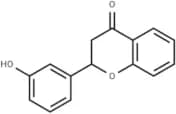
CAS:3′-Hydroxyflavanone is a cyclized flavonoid with anti-tumor properties that induces apoptosis in HeLa cells.Formula:C15H12O3Color and Shape:SolidMolecular weight:240.25Antibacterial agent 254
CAS:Antibacterialagent 254 (Compound 2) is an antimicrobial agent capable of eradicating 7-day-old P. aeruginosa biofilms at a concentration of 50 μM without affecting bacterial growth. Additionally, Antibacterialagent 254 enhances the efficacy of Ciprofloxacin against P. aeruginosa and upregulates the expression of the matrix-degrading enzyme genes pelA, pslG, and eddA.Formula:C13H15NO4Molecular weight:249.26CRI9
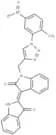
CRI9 effectively inhibits the c-MET/PI3K/Akt/mTOR axis, suppressing the proliferation of hepatocellular carcinoma (HCC) cells. This compound exhibits potent cytotoxicity against HCC cells and induces apoptosis.Formula:C26H18N6O4Color and Shape:SolidMolecular weight:478.46Enpp-1-IN-25
CAS:Enpp-1-IN-25 (Compound 30) is an ENPP1 inhibitor with an IC50 of 8.05 nM and exhibits low oral bioavailability. By inhibiting cGAMP degradation, it effectively activates the intracellular STING pathway. Enpp-1-IN-25 can enhance immune cell infiltration and type I interferon response in the tumor microenvironment, thereby increasing the antitumor efficacy of anti-PD-L1 antibodies. It is applicable for research in cancer immunotherapy.Formula:C15H21N5O4SColor and Shape:SolidMolecular weight:367.423MJC13
CAS:<p>MJC13 is an FKBP52-targeting agent with antitumor activity, suitable for prostate cancer research.</p>Formula:C13H15Cl2NOColor and Shape:SolidMolecular weight:272.17Antiangiogenic agent 7
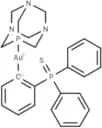
CAS:Antiangiogenic agent 7 (Compound 1) induces apoptosis, elevates Reactive Oxygen Species (Reactive Oxygen Species), and inhibits the intracellular enzyme thioredoxin reductase. It exhibits anticancer activity with IC50 values ranging from 0.08 to 3.5 μM against cervical cancer cells (HeLa), prostate cancer cells (PC-3), and non-small cell lung cancer cells (A549). Additionally, Antiangiogenic agent 7 suppresses tumor growth in a mouse xenograft model.Formula:C24H26AuN3P2SColor and Shape:SolidMolecular weight:647.46SMO-IN-5
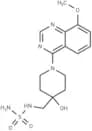
SMO-IN-5 (Compound 25(B31)) is an effective inhibitor of smoothened (SMO), which suppresses the Hedgehog (Hh) signaling pathway. This compound inhibits cellular proliferation and induces apoptosis, demonstrating antitumor activity.Formula:C25H24N6OColor and Shape:SolidMolecular weight:424.5SM-433 hydrochloride
SM-433 hydrochloride, a Smac mimetic & IAP inhibitor, binds XIAP BIR3; potent IC50 <1 μM. (Patent WO2008128171A2)Formula:C32H44ClN5O4Color and Shape:SolidMolecular weight:598.18CB-184
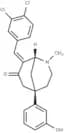
CAS:CB-184 is a selective ligand for sigma-2 (σ2) receptors, with Ki values of 7436 nM for sigma-1 (σ1) and 13.4 nM for sigma-2 (σ2), and it promotes apoptosis with antitumor activity.Formula:C22H21Cl2NO2Color and Shape:SolidMolecular weight:402.31