Stem Cell and Derivatives
Stem cell inhibitors are compounds that specifically target signaling pathways and proteins involved in the maintenance, differentiation, and proliferation of stem cells. These inhibitors are crucial for understanding stem cell biology and for developing strategies to manipulate stem cells for therapeutic purposes, such as regenerative medicine and cancer treatment. By controlling stem cell fate, these inhibitors can help guide stem cell differentiation into specific cell types or prevent unwanted cell growth. At CymitQuimica, we offer a selection of high-quality stem cell inhibitors to support your research in stem cell biology, developmental biology, and regenerative medicine.
Subcategories of "Stem Cell and Derivatives"
- Gamma-secretase(59 products)
- Hedgehog/Smoothened(44 products)
- Hippo pathway(6 products)
- JAK(245 products)
- Porcupine(9 products)
- ROCK(69 products)
- STAT(98 products)
- Stem Cells(484 products)
- TGF-beta/Smad(58 products)
- Wnt/beta-catenin(66 products)
Show 2 more subcategories
Found 693 products of "Stem Cell and Derivatives"
Sort by
Purity (%)
0
100
|
0
|
50
|
90
|
95
|
100
VT107
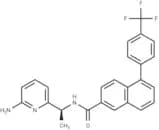
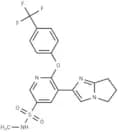
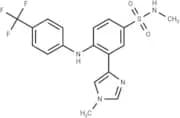
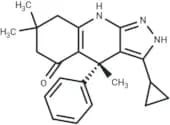
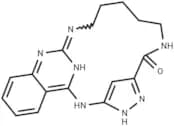
CAS:<p>VT107 is a potent pan-TEAD autopalmitoylation inhibitor. VT-107 can be used in cancer therapy research.Cost-effective and quality-assured.</p>Formula:C25H20F3N3OPurity:99.72% - 99.92%Color and Shape:SolidMolecular weight:435.44RO7185876
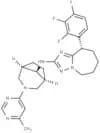
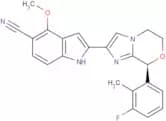
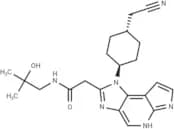
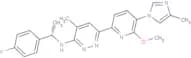
CAS:<p>RO7185876 is a selective gamma secretase modulator, which can be used in the study of Alzheimer's disease.</p>Formula:C25H28F3N7Purity:99.50%Color and Shape:SolidMolecular weight:483.532Simian OC/BGP(Osteocalcin) ELISA Kit
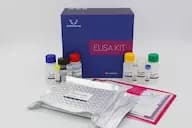
<p>The test principle applied in this kit is Sandwich enzyme immunoassay. The microtiter plate provided in this kit has been pre-coated with an antibody specific to Simian OC/BGP. Standards or samples are added to the appropriate microtiter plate wells then with a biotin-conjugated antibody specific to Simian OC/BGP. Next, Avidin conjugated to Horseradish Peroxidase (HRP) is added to each microplate well and incubated. After TMB substrate solution is added, only those wells that contain Simian OC/BGP, biotin-conjugated antibody and enzyme-conjugated Avidin will exhibit a change in color. The enzyme-substrate reaction is terminated by the addition of sulphuric acid solution and the color change is measured spectrophotometrically at a wavelength of 450nm ± 10nm. The concentration of Simian OC/BGP in the samples is then determined by comparing the OD of the samples to the standard curve.</p>Color and Shape:Colourless TransparentliquidRat GDF10(GrowthDifferentiation Factor 10) ELISA Kit
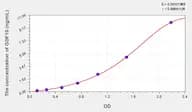
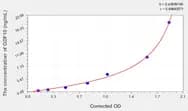
<p>The test principle applied in this kit is Sandwich enzyme immunoassay. The microtiter plate provided in this kit has been pre-coated with an antibody specific to Rat GDF10. Standards or samples are added to the appropriate microtiter plate wells then with a biotin-conjugated antibody specific to Rat GDF10. Next, Avidin conjugated to Horseradish Peroxidase (HRP) is added to each microplate well and incubated. After TMB substrate solution is added, only those wells that contain Rat GDF10, biotin-conjugated antibody and enzyme-conjugated Avidin will exhibit a change in color. The enzyme-substrate reaction is terminated by the addition of sulphuric acid solution and the color change is measured spectrophotometrically at a wavelength of 450nm ± 10nm. The concentration of Rat GDF10 in the samples is then determined by comparing the OD of the samples to the standard curve.</p>Color and Shape:Colourless TransparentliquidMouse sCD14(SolubleCluster of Differentiation 14) ELISA Kit
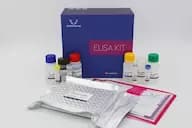
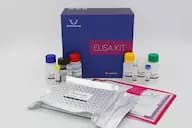
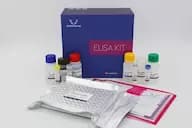
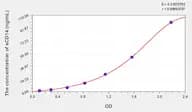
<p>The test principle applied in this kit is Sandwich enzyme immunoassay. The microtiter plate provided in this kit has been pre-coated with an antibody specific to Mouse sCD14. Standards or samples are added to the appropriate microtiter plate wells then with a biotin-conjugated antibody specific to Mouse sCD14. Next, Avidin conjugated to Horseradish Peroxidase (HRP) is added to each microplate well and incubated. After TMB substrate solution is added, only those wells that contain Mouse sCD14, biotin-conjugated antibody and enzyme-conjugated Avidin will exhibit a change in color. The enzyme-substrate reaction is terminated by the addition of sulphuric acid solution and the color change is measured spectrophotometrically at a wavelength of 450nm ± 10nm. The concentration of Mouse sCD14 in the samples is then determined by comparing the OD of the samples to the standard curve.</p>Color and Shape:Colourless TransparentliquidHuman ASPP1(Apoptosis-stimulating of p53 protein 1) ELISA Kit
<p>The test principle applied in this kit is Sandwich enzyme immunoassay. The microtiter plate provided in this kit has been pre-coated with an antibody specific to Human ASPP1. Standards or samples are added to the appropriate microtiter plate wells then with a biotin-conjugated antibody specific to Human ASPP1. Next, Avidin conjugated to Horseradish Peroxidase (HRP) is added to each microplate well and incubated. After TMB substrate solution is added, only those wells that contain Human ASPP1, biotin-conjugated antibody and enzyme-conjugated Avidin will exhibit a change in color. The enzyme-substrate reaction is terminated by the addition of sulphuric acid solution and the color change is measured spectrophotometrically at a wavelength of 450nm ± 10nm. The concentration of Human ASPP1 in the samples is then determined by comparing the OD of the samples to the standard curve.</p>Color and Shape:Colourless TransparentliquidDog sCD14(SolubleCluster of Differentiation 14) ELISA Kit
<p>The test principle applied in this kit is Sandwich enzyme immunoassay. The microtiter plate provided in this kit has been pre-coated with an antibody specific to Dog sCD14. Standards or samples are added to the appropriate microtiter plate wells then with a biotin-conjugated antibody specific to Dog sCD14. Next, Avidin conjugated to Horseradish Peroxidase (HRP) is added to each microplate well and incubated. After TMB substrate solution is added, only those wells that contain Dog sCD14, biotin-conjugated antibody and enzyme-conjugated Avidin will exhibit a change in color. The enzyme-substrate reaction is terminated by the addition of sulphuric acid solution and the color change is measured spectrophotometrically at a wavelength of 450nm ± 10nm. The concentration of Dog sCD14 in the samples is then determined by comparing the OD of the samples to the standard curve.</p>Color and Shape:Colourless TransparentliquidMouse CC17(Clara Cell Protein) ELISA Kit
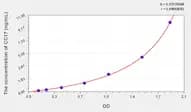
<p>The test principle applied in this kit is Sandwich enzyme immunoassay. The microtiter plate provided in this kit has been pre-coated with an antibody specific to Mouse CC17. Standards or samples are added to the appropriate microtiter plate wells then with a biotin-conjugated antibody specific to Mouse CC17. Next, Avidin conjugated to Horseradish Peroxidase (HRP) is added to each microplate well and incubated. After TMB substrate solution is added, only those wells that contain Mouse CC17, biotin-conjugated antibody and enzyme-conjugated Avidin will exhibit a change in color. The enzyme-substrate reaction is terminated by the addition of sulphuric acid solution and the color change is measured spectrophotometrically at a wavelength of 450nm ± 10nm. The concentration of Mouse CC17 in the samples is then determined by comparing the OD of the samples to the standard curve.</p>Color and Shape:Colourless TransparentliquidRat sCD14(SolubleCluster of Differentiation 14) ELISA Kit
<p>The test principle applied in this kit is Sandwich enzyme immunoassay. The microtiter plate provided in this kit has been pre-coated with an antibody specific to Rat sCD14. Standards or samples are added to the appropriate microtiter plate wells then with a biotin-conjugated antibody specific to Rat sCD14. Next, Avidin conjugated to Horseradish Peroxidase (HRP) is added to each microplate well and incubated. After TMB substrate solution is added, only those wells that contain Rat sCD14, biotin-conjugated antibody and enzyme-conjugated Avidin will exhibit a change in color. The enzyme-substrate reaction is terminated by the addition of sulphuric acid solution and the color change is measured spectrophotometrically at a wavelength of 450nm ± 10nm. The concentration of Rat sCD14 in the samples is then determined by comparing the OD of the samples to the standard curve.</p>Mouse sCD14(SolubleCluster of Differentiation 14) Microsample ELISA Kit
<p>The test principle applied in this kit is Sandwich enzyme immunoassay. The microtiter plate provided in this kit has been pre-coated with an antibody specific to Mouse sCD14. Standards or samples are added to the appropriate microtiter plate wells then with a biotin-conjugated antibody specific to Mouse sCD14. Next, Avidin conjugated to Horseradish Peroxidase (HRP) is added to each microplate well and incubated. After TMB substrate solution is added, only those wells that contain Mouse sCD14, biotin-conjugated antibody and enzyme-conjugated Avidin will exhibit a change in color. The enzyme-substrate reaction is terminated by the addition of sulphuric acid solution and the color change is measured spectrophotometrically at a wavelength of 450nm ± 10nm. The concentration of Mouse sCD14 in the samples is then determined by comparing the OD of the samples to the standard curve.</p>Mouse GDF10(GrowthDifferentiation Factor 10) ELISA Kit
<p>The test principle applied in this kit is Sandwich enzyme immunoassay. The microtiter plate provided in this kit has been pre-coated with an antibody specific to Mouse GDF10. Standards or samples are added to the appropriate microtiter plate wells then with a biotin-conjugated antibody specific to Mouse GDF10. Next, Avidin conjugated to Horseradish Peroxidase (HRP) is added to each microplate well and incubated. After TMB substrate solution is added, only those wells that contain Mouse GDF10, biotin-conjugated antibody and enzyme-conjugated Avidin will exhibit a change in color. The enzyme-substrate reaction is terminated by the addition of sulphuric acid solution and the color change is measured spectrophotometrically at a wavelength of 450nm ± 10nm. The concentration of Mouse GDF10 in the samples is then determined by comparing the OD of the samples to the standard curve.</p>Color and Shape:Colourless TransparentliquidMouse GDF10(GrowthDifferentiation Factor 10) Microsample ELISA Kit
<p>The test principle applied in this kit is Sandwich enzyme immunoassay. The microtiter plate provided in this kit has been pre-coated with an antibody specific to Mouse GDF10. Standards or samples are added to the appropriate microtiter plate wells then with a biotin-conjugated antibody specific to Mouse GDF10. Next, Avidin conjugated to Horseradish Peroxidase (HRP) is added to each microplate well and incubated. After TMB substrate solution is added, only those wells that contain Mouse GDF10, biotin-conjugated antibody and enzyme-conjugated Avidin will exhibit a change in color. The enzyme-substrate reaction is terminated by the addition of sulphuric acid solution and the color change is measured spectrophotometrically at a wavelength of 450nm ± 10nm. The concentration of Mouse GDF10 in the samples is then determined by comparing the OD of the samples to the standard curve.</p>Mouse TNC(Tenascin C) ELISA Kit
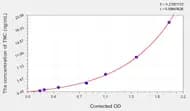
<p>The test principle applied in this kit is Sandwich enzyme immunoassay. The microtiter plate provided in this kit has been pre-coated with an antibody specific to Mouse TNC. Standards or samples are added to the appropriate microtiter plate wells then with a biotin-conjugated antibody specific to Mouse TNC. Next, Avidin conjugated to Horseradish Peroxidase (HRP) is added to each microplate well and incubated. After TMB substrate solution is added, only those wells that contain Mouse TNC, biotin-conjugated antibody and enzyme-conjugated Avidin will exhibit a change in color. The enzyme-substrate reaction is terminated by the addition of sulphuric acid solution and the color change is measured spectrophotometrically at a wavelength of 450nm ± 10nm. The concentration of Mouse TNC in the samples is then determined by comparing the OD of the samples to the standard curve.</p>Color and Shape:Colourless TransparentliquidRat Cys-C(Cystatin C) ELISA Kit
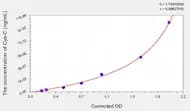
<p>The test principle applied in this kit is Sandwich enzyme immunoassay. The microtiter plate provided in this kit has been pre-coated with an antibody specific to Rat Cys-C. Standards or samples are added to the appropriate microtiter plate wells then with a biotin-conjugated antibody specific to Rat Cys-C. Next, Avidin conjugated to Horseradish Peroxidase (HRP) is added to each microplate well and incubated. After TMB substrate solution is added, only those wells that contain Rat Cys-C, biotin-conjugated antibody and enzyme-conjugated Avidin will exhibit a change in color. The enzyme-substrate reaction is terminated by the addition of sulphuric acid solution and the color change is measured spectrophotometrically at a wavelength of 450nm ± 10nm. The concentration of Rat Cys-C in the samples is then determined by comparing the OD of the samples to the standard curve.</p>Color and Shape:Colourless TransparentliquidMouse CC17(Clara Cell Protein) Microsample ELISA Kit
<p>The test principle applied in this kit is Sandwich enzyme immunoassay. The microtiter plate provided in this kit has been pre-coated with an antibody specific to Mouse CC17. Standards or samples are added to the appropriate microtiter plate wells then with a biotin-conjugated antibody specific to Mouse CC17. Next, Avidin conjugated to Horseradish Peroxidase (HRP) is added to each microplate well and incubated. After TMB substrate solution is added, only those wells that contain Mouse CC17, biotin-conjugated antibody and enzyme-conjugated Avidin will exhibit a change in color. The enzyme-substrate reaction is terminated by the addition of sulphuric acid solution and the color change is measured spectrophotometrically at a wavelength of 450nm ± 10nm. The concentration of Mouse CC17 in the samples is then determined by comparing the OD of the samples to the standard curve.</p>Rat GDF10(GrowthDifferentiation Factor 10) Microsample ELISA Kit
<p>The test principle applied in this kit is Sandwich enzyme immunoassay. The microtiter plate provided in this kit has been pre-coated with an antibody specific to Rat GDF10. Standards or samples are added to the appropriate microtiter plate wells then with a biotin-conjugated antibody specific to Rat GDF10. Next, Avidin conjugated to Horseradish Peroxidase (HRP) is added to each microplate well and incubated. After TMB substrate solution is added, only those wells that contain Rat GDF10, biotin-conjugated antibody and enzyme-conjugated Avidin will exhibit a change in color. The enzyme-substrate reaction is terminated by the addition of sulphuric acid solution and the color change is measured spectrophotometrically at a wavelength of 450nm ± 10nm. The concentration of Rat GDF10 in the samples is then determined by comparing the OD of the samples to the standard curve.</p>NVP-BSK805
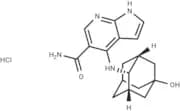
CAS:NVP-BSK805 (BSK 805) is an ATP-competitive JAK2 inhibitor.Formula:C27H28F2N6OPurity:98%Color and Shape:SolidMolecular weight:490.55Metelimumab
CAS:<p>Metelimumab (CAT-192) is a humanised monoclonal antibody targeting TGFβ1, which can be used to study diffuse systemic sclerosis (d-SSc).</p>Purity:95%Color and Shape:LiquidDilpacimab
CAS:<p>Dilpacimab (ABT165) is a dual-variable antibody that targets DLL4 and VEGF pathways, showing potential in cancer research by blocking angiogenesis and Notch.</p>Purity:95% - 95%Color and Shape:LiquidLivmoniplimab
CAS:<p>Livmoniplimab (ABBV-151; ARGX-115) is a humanised monoclonal antibody targeting LRRC32 (GARP)/TGFβ1, which blocks TGFβ1 release mediated by LRRC32</p>Purity:95%Color and Shape:LiquidTarlatamab
CAS:<p>"Tarlatamab (AMG-757), a BiTE antibody, targets DLL3, prevalent in SCLC tumors with scant normal tissue expression, and shows promise for SCLC research."</p>Color and Shape:LiquidSolrikitug
CAS:<p>Solrikitug,Anti-CRLF2 humanized IgG1κ monoclonal antibody.</p>Purity:95%Color and Shape:LiquidTrevogrumab
CAS:<p>Trevogrumab is a human monoclonal antibody that inhibits myostatin (GDF8) to promote muscle growth, and is under research for treating age-related muscle loss (sarcopenia).</p>Purity:95% - 95%Color and Shape:LiquidNisevokitug
CAS:<p>Nisevokitug (anti-TGF-β mAb) neutralizes TGF-β and is being studied for its ability to modulate the immunosuppressive tumor microenvironment.</p>Purity:95%Color and Shape:LiquidTarextumab
CAS:<p>Tarextumab is an anti-Notch2/3 mAb, a promising candidate for breast, lung, ovarian, and pancreatic cancers.</p>Purity:95%Color and Shape:LiquidZM39923
CAS:<p>ZM39923 is a JAK3 inhibitor (pIC50: 7.1). ZM39923 also effectively inhibits tissue transglutaminase (IC50: 10 nM).</p>Formula:C23H25NOPurity:98%Color and Shape:SolidMolecular weight:331.451-Azakenpaullone
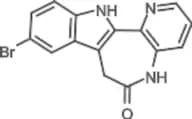
CAS:<p>1-Azakenpaullone (azakenpaullone) is a potent and selective GSK-3β inhibitor with IC50 of 18 nM, >100-fold selectivity over CDK1/cyclin B and CDK5/p25.</p>Formula:C15H10BrN3OPurity:99.73%Color and Shape:Tan SolidMolecular weight:328.16(3S,4S)-Tofacitinib
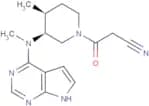
CAS:<p>(3S,4S)-Tofacitinib, a less active enantiomer of tofacitinib, is a Janus kinases inhibitor.</p>Formula:C16H20N6OPurity:98%Color and Shape:SolidMolecular weight:312.37γ-secretase modulator 1
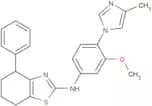
CAS:<p>gamma-secretase modulator 1 is a modulator of γ secretase and can be used in studies about the treatment of Alzheimer's disease.</p>Formula:C24H24N4OSPurity:99.75% - 99.96%Color and Shape:SolidMolecular weight:416.54β-catenin/CBP-IN-1
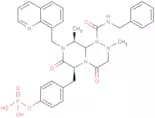
CAS:<p>β-catenin/CBP-IN-1 is a potent and selective inhibitor of CBP/β-catenin</p>Formula:C33H35N6O7PPurity:98%Color and Shape:SolidMolecular weight:658.64JAK3-IN-9
CAS:<p>JAK3-IN-9, potent JAK3 inhibitor, IC50 of 1.7 nM, highly selective, low toxicity, orally bioavailable, shows anti-arthritis activity.</p>Formula:C17H23N5O4SColor and Shape:SolidMolecular weight:393.46INCB16562
CAS:<p>INCB16562: oral JAK1/2 inhibitor, halts IL-6/STAT3 in myeloma cells, boosts drug efficacy, stunts myeloma in mice.</p>Formula:C19H11Cl2N5Color and Shape:SolidMolecular weight:380.231,2,3,4,5,6-Hexabromocyclohexane
CAS:<p>Inhibits JAK2 autophosphorylation; non-cytotoxic at 100μM; 1μM reduces activity by 50%, 50μM nearly abolishes it.</p>Formula:C6H6Br6Purity:98%Color and Shape:SolidMolecular weight:557.54SD-1029
CAS:<p>SD-1029 is a JAK2 inhibitor and a novel Stat3 activation inhibitor that inhibits Stat3 phosphorylation and JAK-STAT signaling.</p>Formula:C25H32Br2Cl2N2O3Color and Shape:SolidMolecular weight:639.25MS-1020
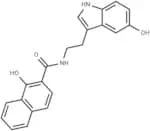
CAS:<p>MS-1020 inhibits JAK3/STAT3, blocks active JAK3, suppresses JAK3/STAT5 signaling, and targets STAT3 in certain cells.</p>Formula:C21H18N2O3Purity:98%Color and Shape:SolidMolecular weight:346.383F8
CAS:<p>3F8 is a selective GSK-3β inhibitor that can be used as a new tool and potential therapeutic candidate compound for GSK3-related diseases, and can be used in</p>Formula:C15H14N2O4Purity:98.14% - 98.25%Color and Shape:SolidMolecular weight:286.28Jaspamycin
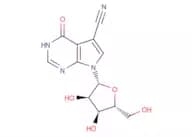
CAS:<p>Jaspamycin (7-CN-7-C-Ino) does not bind with purified human PKARIα.</p>Formula:C12H12N4O5Color and Shape:SolidMolecular weight:292.25(Rac)-SIS3 free base
CAS:<p>SIS3 free base is a potent and selective Smad3 phosphorylation inhibitor. SIS3 free base inhibits the myofibroblast differentiation of fibroblasts by TGF-β1.</p>Formula:C28H27N3O3Purity:98%Color and Shape:SolidMolecular weight:453.53Tyk2-IN-7
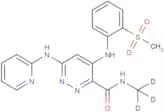
CAS:<p>Tyk2-IN-7 is an inhibitor of TYK2 JH2, binds to the TYK2 JH2 domain (IC50: 0.00053 μM; Ki.app: 0.00007 μM).</p>Formula:C18H15D3N6O3SPurity:98%Color and Shape:SolidMolecular weight:401.46JAK-IN-10
CAS:<p>JAK-IN-10 is a JAK inhibitor. JAK-IN-10 can be used for the research of dry eye disorders.</p>Formula:C20H18FN5O3SPurity:99.53%Color and Shape:SolidMolecular weight:427.45CJJ300
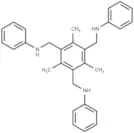
CAS:<p>CJJ300 is a TGF-β inhibitor disrupting TGF-β-TβR complex formation, with an IC50 of 5.3 μM, and halts cell migration.</p>Formula:C30H33N3Purity:99.80%Color and Shape:SolidMolecular weight:435.6EP009
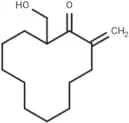
CAS:<p>EP009, a novel, selective, and orally active inhibitor of JAK3, induces therapeutic response in T-cell malignancies.</p>Formula:C14H24O2Color and Shape:SolidMolecular weight:224.34OICR-0547
CAS:<p>OICR-0547 is an inactive derivative of OICR-9429 and is commonly used as a negative control for OICR-9429.</p>Formula:C28H29F3N4O4Purity:98%Color and Shape:SolidMolecular weight:542.55CK2α-IN-1
CAS:<p>CK2α-IN-1 is a selective non-ATP-competitive CK2α inhibitor with an IC50 of 7.0 µM and a Ki of 1.6 µM.CK2α-IN-1 exhibits potential anticancer activity and can</p>Formula:C16H11N3O4SPurity:98%Color and Shape:SolidMolecular weight:341.34CK2-IN-4
CAS:<p>CK2-IN-4 is a protein kinase (CK2) inhibitor with an IC50 value of 8.6 µM.</p>Formula:C18H11N3O4SPurity:99.72%Color and Shape:SolidMolecular weight:365.36JAK3/BTK-IN-1
CAS:<p>JAK3/ BTk-in-1 is a dual JAK3/BTK inhibitor that specifically targets and inhibits Janus kinase 3 (JAK3) and Bruton's tyrosine kinase (BTK), two important</p>Formula:C25H28N8OPurity:97.89%Color and Shape:SolidMolecular weight:456.54inS3-54-A26
CAS:<p>inS3-54-A26 is an inhibitor of the DNA-binding domain of STAT3. inS3-54-A26 suppresses tumor growth, metastasis and the gene expression of STAT3.</p>Formula:C25H19ClN2O2Purity:99.57%Color and Shape:SolidMolecular weight:414.88JAK-IN-14
CAS:<p>JAK-IN-14 (compound 16) is a specific JAK1 inhibitor. It prevents JAK1 phosphorylation by binding to the active site of JAK in immune, inflammation and cancer.</p>Formula:C19H15FN4OPurity:98.27%Color and Shape:SolidMolecular weight:334.35Tyk2-IN-5
CAS:<p>Tyk2-IN-5 is a selective and orally active inhibitor of Tyk2 JH2 (Ki: 0.086 nM for Tyk2 JH2; IC50: 25 nM for IFNα).</p>Formula:C21H19FN8O2Purity:98%Color and Shape:SolidMolecular weight:434.43H-1152
CAS:<p>H-1152 is a potent, specific, ATP-competitive, and cell permeable ROCK inhibitor (Ki = 1.6 nM).</p>Formula:C16H21N3O2SPurity:98%Color and Shape:SolidMolecular weight:319.42TEAD-IN-2
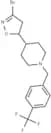
CAS:<p>TEAD-IN-2 is a potent and bifunctional TEAD inhibitor to induce TEAD protein degradation via the ubiquitination pathway, with anticancer potential.</p>Formula:C16H18BrF3N2OColor and Shape:SolidMolecular weight:391.23CAY10746
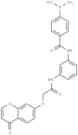
CAS:<p>CAY10746 selectively inhibits ROCK I/II with IC50s: 0.014/0.003 μM, useful for diabetic retinopathy research.</p>Formula:C26H23N3O5Purity:99.04%Color and Shape:SolidMolecular weight:457.48ELN318463
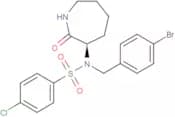
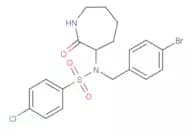
CAS:<p>ELN 318463 selectively inhibits γ-secretase; EC50: 12 nM (PS1), 656 nM (PS2); 51x more selective for PS1; targets APP.</p>Formula:C19H20BrClN2O3SPurity:98%Color and Shape:SolidMolecular weight:471.8JAK3-IN-12
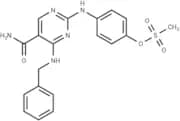
CAS:<p>JAK3-IN-12 (compound 15k) is a potent inhibitor of JAK3 (IC50: 9.5 nM) and can be used in the study of rheumatoid arthritis.</p>Formula:C19H19N5O4SColor and Shape:SolidMolecular weight:413.45GSK-3β inhibitor 12
CAS:<p>GSK-3β inhibitor 12 is a selective GSK-3β inhibitor.GSK-3β inhibitor 12 inhibits 49.11% of 25 μM GSK-3β activity and 37.11% of 50 μM GSK-3β activity.GSK-3β</p>Formula:C14H13N3OSPurity:98.58%Color and Shape:SolidMolecular weight:271.34SR-1277
CAS:<p>SR-1277 is a potent, highly selective and ATP-competitive CK1δ/ε inhibitor, regulating Wee1 activity at the G2/M cell-cycle interface, and antiproliferative.</p>Formula:C21H19N9O3SColor and Shape:SolidMolecular weight:477.5JAK-IN-11
CAS:<p>JAK-IN-11 (R-348) is a potent and selective inhibitor of JAK, has the potential for the skin disorders treatment.</p>Formula:C23H22FN5O4SPurity:99.75%Color and Shape:SolidMolecular weight:483.52LY-411575 isomer 1
CAS:<p>LY-411575 isomer 1 is a potent γ-secretase inhibitor. LY-411575 isomer 1 is an isomer of LY411575.</p>Formula:C26H23F2N3O4Purity:98%Color and Shape:SolidMolecular weight:479.48AF-2112
<p>AF-2112, a TEAD inhibitor derived from Flufenamic acid, significantly diminishes the expression of CTGF, Cyr61, Axl, and NF2.</p>Formula:C21H18FNO3Purity:98%Color and Shape:SolidMolecular weight:351.37TEAD-IN-6
CAS:<p>TEAD-IN-6 (Example 11-1) is a TEAD modulator that inhibits the YAP1/TAZ-TEAD interaction, and has applications in cancer research [1].</p>Formula:C19H17F3N4O3SPurity:98%Color and Shape:SolidMolecular weight:438.42JAK-IN-18
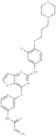
CAS:<p>"JAK-IN-18: potent JAK inhibitor for eye, skin, respiratory disease research (WO2018204238A1, comp 1)."</p>Formula:C27H28F2N6O3Color and Shape:SolidMolecular weight:522.55JAK-IN-28
CAS:<p>JAK-IN-28 (Compound 111) is a Janus kinase (JAK) inhibitor potentially applicable in the research of cancer and inflammatory diseases [1].</p>Formula:C20H18ClN7OPurity:98%Color and Shape:SolidMolecular weight:407.86JAK-IN-30
CAS:<p>JAK-IN-30 (compound 31) is a water-soluble inhibitor of Janus kinases (JAKs), demonstrating inhibitory potency with half-maximal inhibitory concentration (IC50</p>Formula:C19H26N8SPurity:98%Color and Shape:SolidMolecular weight:398.53PIMPC
CAS:<p>PIMPC, a compound endowed with antioxidant and metal-chelating properties, acts as a novel inhibitor of glycogen synthase kinase 3 (GSK-3), and exhibits</p>Formula:C21H19N5OPurity:98%Color and Shape:SolidMolecular weight:357.41Aβ42-IN-2
CAS:<p>Aβ42-IN-2 is a γ-secretase modulator. Aβ42-IN-2 has an IC 50 of 6.5 nM for Αβ 42. Aβ42-IN-2 can be used for the Alzheimer's disease research[1].</p>Formula:C24H26N6O2Purity:98.09% - 99.87%Color and Shape:SolidMolecular weight:430.5γ-secretase modulator 2
CAS:<p>Gamma-secretase modulator 2 selectively targets Alzheimer's by reducing Aβ(1-42), aiding in prevention and treatment.</p>Formula:C25H22F4N6O2Purity:98%Color and Shape:SolidMolecular weight:514.47tCFA15
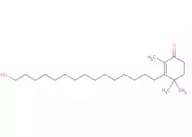
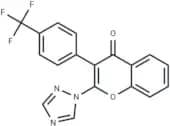
CAS:<p>tCFA15: A trimethylated long-chain fatty alcohol with a 15-carbon side chain; may regulate Notch signaling and neuron differentiation.</p>Formula:C24H44O2Purity:98%Color and Shape:SolidMolecular weight:364.61Chromenone 1
CAS:<p>Chromenone 1 is a potent potentiator of osteogenic bone morphogenetic protein (BMP).</p>Formula:C18H10F3N3O2Purity:99.83% - 99.93%Color and Shape:SolidMolecular weight:357.29γ-Secretase modulator 4
CAS:<p>γ-Secretase modulator 4 is a potent γ-secretase modulator, reduces the Aβ42 level with IC50s of 0.017 μM and 0.014 μM in mouse and human, respectively.</p>Formula:C23H19FN4O2Purity:98%Color and Shape:SolidMolecular weight:402.42TK4g
CAS:<p>TK4g, a potent JAK inhibitor, has IC50s of 12.61 nM (JAK2) & 15.80 nM (JAK3); promising for lymphoid diseases & leukemia research.</p>Formula:C19H19N3O4SColor and Shape:SolidMolecular weight:385.44JAK1-IN-4
CAS:<p>JAK1-IN-4 selectively blocks JAK1 (IC50 = 85 nM) over JAK2/JAK3 and halts STAT3 phosphorylation in NCI-H 1975 cells (IC50 = 227 nM).</p>Formula:C26H32FN9O2Purity:98%Color and Shape:SolidMolecular weight:521.59TyK2-IN-2
CAS:<p>TyK2-IN-2 is a selective inhibitor of TYK2 (IC50s: 7 nM, 0.1 μM, and 0.05 μM for TYK2 JH2, IL-23, and IFNα).</p>Formula:C16H18N6OPurity:98%Color and Shape:SolidMolecular weight:310.35GSK3-IN-2
CAS:<p>GSK3-IN-2 is a potent GSK3 inhibitor for the treatment of diabetes and neurodegenerative diseases.</p>Formula:C17H19N3OSPurity:98.8%Color and Shape:SolidMolecular weight:313.42JAK3/BTK-IN-2
CAS:<p>JAK3/ BTk-in-2 is a potent JAK3/BTK inhibitor.</p>Formula:C25H32N8O2Purity:99.64% - 99.87%Color and Shape:SolidMolecular weight:476.57Aloisine B
CAS:<p>Aloisine B (AloisineB) inhibited cyclin-dependent kinase and glycogen synthase kinase with IC50 values of 0.85 µM and 0.75 µM, respectively.</p>Formula:C15H14ClN3Purity:95.15%Color and Shape:SolidMolecular weight:271.74VT103
CAS:<p>VT103, an oral TEAD1 palmitoylation inhibitor, shows promise against various cancers by disrupting YAP/TAZ-TEAD interactions.</p>Formula:C18H17F3N4O2SPurity:99.58%Color and Shape:SolidMolecular weight:410.41Lorpucitinib
CAS:<p>Lorpucitinib (JNJ-64251330) is a JAK kinase inhibitor used in the study of inflammatory and gastrointestinal diseases.</p>Formula:C22H28N6O2Purity:99.72%Color and Shape:SolidMolecular weight:408.5(2R,5S)-Ritlecitinib
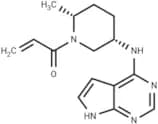
CAS:<p>(2R,5S)-Ritlecitinib ((2R,5S)-PF-06651600) is a potent and selective inhibitor of JAK3 with IC 50 of 144.8 nM[1].</p>Formula:C15H19N5OColor and Shape:SolidMolecular weight:285.34Povorcitinib
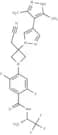
CAS:<p>Povorcitinib is a highly potent and selective JAK1 inhibitor with significant potential for the investigation of cutaneous lupus erythematosus (CLE) and Lichen planus (LP).</p>Formula:C23H22F5N7OColor and Shape:SolidMolecular weight:507.469TYK2-IN-11
CAS:<p>TYK2-IN-11 (5B) selectively inhibits TYK2 (IC50: 0.016 nM) and JAK1 (IC50: 0.31 nM), aiding autoimmune and inflammatory disease research.</p>Formula:C18H17N5O3SColor and Shape:SolidMolecular weight:383.42GDC-4379
CAS:<p>GDC-4379 is a JAK1 inhibitor that can be used to study asthma.</p>Formula:C21H18ClF2N7O3Color and Shape:SolidMolecular weight:489.86CP-690550A
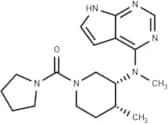
CAS:<p>Cp-690550a is a novel JAK3 inhibitor, which is used to treat rheumatoid arthritis, graft rejection, psoriasis, and other immune-mediated diseases.</p>Formula:C15H21N5O2Color and Shape:SolidMolecular weight:303.36Yhhu-3792
CAS:<p>Yhhu-3792 activates Notch, boosts Hes3/Hes5, enhances NSC renewal, expands NSC pool, and may improve memory.</p>Formula:C24H24N4O2Color and Shape:SolidMolecular weight:400.47Thi-DPPY
CAS:<p>Thi-DPPY: Potent JAK3/BTK inhibitor (IC50: 1.38/62.4 nM), anti-proliferative, anti-inflammatory, potential in IPF research.</p>Formula:C28H28ClN5O4SColor and Shape:SolidMolecular weight:566.07Peficitinib hydrobromide
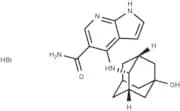
CAS:<p>Peficitinib hydrobromide is used in the treatment of Psoriasis and Rheumatoid Arthritis.</p>Formula:C18H23BrN4O2Color and Shape:SolidMolecular weight:407.312PF-00956980
CAS:<p>PF-00956980: reversible JAK inhibitor, IC50: JAK1 (2.2μM), JAK2 (23.1μM), JAK3 (59.9μM), for lung/skin inflammation research.</p>Formula:C18H26N6OColor and Shape:SolidMolecular weight:342.44γ-Secretase modulator 11
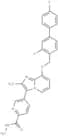
CAS:<p>5-{8-[(3,4'-Difluoro[1,1'-biphenyl]-4-yl)methoxy]-2-methylimidazo[1,2-a]pyridin-3-yl}-N-methylpyridine-2-carboxamide (1o) exhibited high in vitro potency and</p>Formula:C28H22F2N4O2Color and Shape:SolidMolecular weight:484.5SYK/JAK-IN-1
CAS:<p>SYK/JAK-IN-1 is a dual SYK/JAK inhibitor with IC50 values of less than 5 nM for both SYK and JAK2.</p>Formula:C24H26N8O3Color and Shape:SolidMolecular weight:474.52TUL01101
CAS:<p>TUL01101, a selective oral JAK1 inhibitor (IC50: 3 nM), also targets JAK2, JAK3, TYK2; for rheumatoid arthritis research.</p>Formula:C22H25F2N5O2Color and Shape:SolidMolecular weight:429.46JAK3i
CAS:<p>JAK3i selectively inhibits JAK3 kinase, targeting the second, vital wave of STAT5 phosphorylation for T cell growth.</p>Formula:C18H15FN4O3Purity:98.61% - 99.81%Color and Shape:SolidMolecular weight:354.34TK4b
CAS:<p>TK4b, a JAK inhibitor, targets leukemia/lymphoid diseases, with IC50s: 18.42 nM (JAK3) & 19.40 nM (JAK2).</p>Formula:C21H22N2O2Color and Shape:SolidMolecular weight:334.41BRD0209
CAS:<p>BRD0209 is a highly selective and potent GSK3 inhibitor.</p>Formula:C22H25N3OPurity:99.92%Color and Shape:SolidMolecular weight:347.45JA310
CAS:<p>JA310 is a highly selective inhibitor of the MST3 kinase, demonstrating significant cellular potency with an EC50 value of 106 nM [1].</p>Formula:C17H19N7OColor and Shape:SolidMolecular weight:337.38RR-11a
CAS:<p>RR-11a is a synthetic enzyme Legumain inhibitor.</p>Formula:C24H28N6O10Purity:98%Color and Shape:SolidMolecular weight:560.51BPN-15606
CAS:<p>BPN-15606, an oral γ-secretase modulator, reduces Aβ42/Aβ40 with IC50 of 7/17 nM; promising PK/PD, lowers Aβ in rodent CNS.</p>Formula:C23H23FN6OColor and Shape:SolidMolecular weight:418.47Peficitinib hydrochloride
CAS:<p>Peficitinib HCl (ASP015K) is an oral JAK inhibitor with IC50s: JAK1 (3.9 nM), JAK2 (5.0 nM), JAK3 (0.7 nM), Tyk2 (4.8 nM).</p>Formula:C18H23ClN4O2Color and Shape:SolidMolecular weight:362.86JAK-2/3-IN-2
CAS:<p>JAK-2/3-IN-2 (Compound 3h) is a potent JAK2 & JAK3 inhibitor with IC50s of 23.85 nM (JAK2) & 18.9 nM (JAK3).</p>Formula:C19H19ClN2OSColor and Shape:SolidMolecular weight:358.89Aβ42-IN-1 free base
CAS:<p>Aβ42-IN-1 free base (compound 1v), an orally active γ-secretase modulator with high brain exposure, effectively lowers Aβ42 levels, exhibiting an IC 50 of 0.091</p>Formula:C29H26N4O2Purity:98%Color and Shape:SolidMolecular weight:462.54JAK-IN-20
CAS:<p>JAK-IN-20: potent oral JAK1,2,3 inhibitor with IC50s 7, 5, 14 nM respectively, good pharmacokinetics, anti-inflammatory in vivo.</p>Formula:C28H30FN7O2Color and Shape:SolidMolecular weight:515.58ELN318463 racemate
CAS:<p>ELN318463 racemate (ELN 318463 racemate) is the racemate of ELN318463 which is an amyloid precursor protein (APP) selective γ-secretase inhibitor.</p>Formula:C19H20BrClN2O3SPurity:99.69%Color and Shape:SolidMolecular weight:471.8