Oligosaccharides
Subcategories of "Oligosaccharides"
- Aminoethyl Glycosides, Aminopropyl Glycosides(14 products)
- Asn Binding Glycans(33 products)
- Biotinated Oligosaccharides(13 products)
- Blood Groups and Lewis Antigens(11 products)
- Blood Type Oligosaccharides(13 products)
- Cellooligosaccharides(1 products)
- Cyclodextrins(183 products)
- Disaccharides(190 products)
- Epitope Oligosaccharides(19 products)
- Fructooligosaccharides(2 products)
- Functional Oligosaccharides(556 products)
- Functionalised Oligosaccharides(1 products)
- Galactosamine(41 products)
- Galactose(261 products)
- Galb(1-3)GalNAc(21 products)
- Ganglio-series(11 products)
- Globo- and Isoglobo-series(17 products)
- Glucosamine(128 products)
- Glucuronic Acids(52 products)
- Glycoproteins, Glycopeptides(59 products)
- Glycosaminoglycan(26 products)
- Human Milk Oligosaccharides(22 products)
- Labeled O-Glycans(9 products)
- Labeled Oligosaccharides(36 products)
- LacNAc(53 products)
- Lacto- and Neolacto-series(14 products)
- Lacto-N-biose(10 products)
- Lactooligosaccharides(7 products)
- Linker Attached Oligosaccharides(19 products)
- Maltooligosaccharides(6 products)
- Milk Oligosaccharides(31 products)
- N-Glycans(149 products)
- Natural Glycosides(177 products)
- Natural Oligosaccharides(103 products)
- O-Glycan(18 products)
- Oligosaccharide Building Blocks(7 products)
- Oligosaccharide Replacement(2 products)
- Oligosaccharides by Component Sugar(225 products)
- Oligoses(24 products)
- Other Oligosaccharides(14 products)
- PEG Oligomers(33 products)
- Phosphated Sugars(17 products)
- Protected Sugars(526 products)
- Reagents for Oligosaccharide Synthesis(254 products)
- Ser, Thr Binding Glycans(9 products)
- Sialylated Oligosaccharides(3 products)
- Sphingoglycolipids(42 products)
- Sugar Amino Acids, Sugar Peptides(20 products)
- Sugar Antigens(31 products)
- Sugar Building Blocks by Target Oligosaccharides(225 products)
- Sugar Conjugates(100 products)
- Sulfated Sugars(16 products)
- Tetrasaccharides(34 products)
- Trisaccharides and Above(95 products)
- Xylooligosaccharides(5 products)
Found 2306 products of "Oligosaccharides"
Neu5Ac(a2-6)Gal(b1-4)GalNAc
CAS:Neu5Ac(a2-6)Gal(b1-4)GalNAc is a synthetic, fluorinated monosaccharide. It is an oligosaccharide that has been custom synthesized and glycosylated. It is a complex carbohydrate that has been modified with methylation and click chemistry. Neu5Ac(a2-6)Gal(b1-4)GalNAc has CAS number 383365-43-3. This product is available in high purity and can be used in the synthesis of polysaccharides.Formula:C25H42N2O19Purity:Min. 95%Molecular weight:674.6 g/molβ-D-Galactopyranosyl-(1-4)-β-D-galactopyranosyl-(1-4)-D-galactose
CAS:b-D-Galactopyranosyl-(1-4)-b-D-galactopyranosyl-(1-4)-D-galactose is a fluorinated saccharide that contains three fluorine atoms. The chemical formula for this product is C8H12F3O11. It is a white powder and the molecular weight of the compound is 514.06 g/mol. b-D-Galactopyranosyl-(1-4)-b-D-galactopyranosyl-(1-4)-D-galactose can be custom synthesized to meet your desired specifications, such as modification, purity, and other criteria. This product has been shown to be useful in glycosylation reactions and click chemistry applications.
Formula:C18H32O16Purity:Min. 95%Molecular weight:504.44 g/molMaltohexaose spacer fluorescein
Fluorescent diagnostic reagent used for tumor diagnosisPurity:Min. 95%2-Acetamido-6-O-(2-acetamido-2-deoxy-b-D-galactopyranosyl)-2-deoxy-3-O-(b-D-galactopyranosyl)-D-glucopyranose
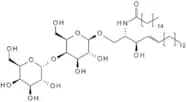
A GalNAc trisaccharidePurity:Min. 95%Digalactosylceramide
CAS:Digalactosylceramide is a bioactive glycosphingolipid, which is derived from the cellular membranes of certain bacteria and plants. This compound plays a significant role in modulating immune responses through its interaction with the immune system. Its mode of action involves binding to specific receptors on immune cells, influencing cell signaling pathways that are crucial for the regulation of the immune response, including the modulation of cytokine production and immune cell activation.Formula:C46H87NO13Purity:Min. 95%Color and Shape:PowderMolecular weight:862.18 g/mol6-α-D-Glucopyranosyl maltotriose-13C6
CAS:Please enquire for more information about 6-α-D-Glucopyranosyl maltotriose-13C6 including the price, delivery time and more detailed product information at the technical inquiry form on this pageFormula:C6C18H42O21Purity:Min. 95%Molecular weight:672.53 g/molBlood Group A trisaccharide, spacer-biotin conjugate
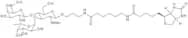
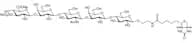
CAS:Blood group A antigen conjugated to spacer arm and biotinFormula:C39H67N5O18SPurity:Min. 95 Area-%Color and Shape:PowderMolecular weight:926.04 g/molBlood Group B trisaccharide, spacer-biotin conjugate
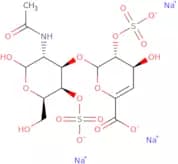
CAS:Blood group B antigen conjugated to spacer arm and biotinFormula:C37H64N4O18SPurity:Min. 95%Color and Shape:PowderMolecular weight:884.99 g/molChondroitin disaccharide di-diSB trisodium salt
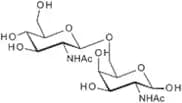
CAS:Chondroitin disaccharide di-diSB trisodium salt is a chondroitin sulfate binding agent that can be used in the diagnosis of subcutaneous tumors. It binds to the chondroitin sulfate component of proteoglycans and stains these proteins under light microscopy. This agent can also be used to detect monoclonal antibodies that bind to the chondroitin sulfate component of proteoglycans. The detection of this agent may be done by enzyme-linked immunosorbent assay or fluorescence microscopy.Formula:C14H18NNa3O17S2Purity:Min. 95%Color and Shape:PowderMolecular weight:605.39 g/mol2-Acetamido-6-O-(2-acetamido-2-deoxy-b-D-glucopyranosyl)-2-deoxy-D-galactopyranose
CAS:2-Acetamido-6-O-(2-acetamido-2-deoxy-β-D-glucopyranosyl)-2,3,4,6-tetraacetamido-2,3,4,6,-tetra deoxygalactose is an acetylated disaccharide that is used in the synthesis of 6 fluoro 3 indoxyl beta D galactopyranoside. It is a residue of polysaccharides and proteins. 2 Acetamido 6 O 2 acetamido 2 deoxy β D glucopyranosyl 2 deoxy D galactopyranose is a disaccharide that can be found as a component of many polysaccharides and proteins.Formula:C16H28N2O11Purity:Min. 95%Molecular weight:424.4 g/molNGA5B N-Glycan
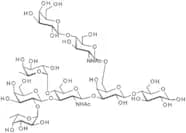
CAS:NGA5B N-Glycan is a custom synthesis that can be modified by fluorination, methylation, and monosaccharide. It is synthesized from natural and synthetic substances. This N-glycan is a modification of glycans that have been shown to have anti-cancer effects. The glycosylation of the saccharide has been shown to have anti-inflammatory properties.Formula:C82H136N8O56Purity:Min. 95%Color and Shape:PowderMolecular weight:2,129.98 g/molSodium alginate, viscosity 100 - 150 mPa.s
CAS:Sodium alginate is a soluble fiber that is extracted from brown seaweed. It is a natural carbohydrate that can be modified to create a variety of sugar-based derivatives, such as Oligosaccharides, Monosaccharides, and Custom Synthesis. Sodium alginate has been modified with Fluorination, Methylation, Glycosylation, and Click Modification to create high-purity products for various applications.Purity:90.8 To 106.0%Color and Shape:PowderCellooctaose
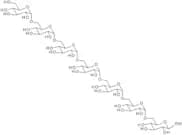
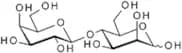
CAS:Cellooctaose is a synthetic, water-soluble oligosaccharide with a molecular weight of 1,000 daltons. It is produced by the reaction of propionate and intramolecular hydrogen with a water molecule to form glycosidic bonds. Cellooctaose can be used as a coating for pharmaceutical tablets and capsules to prevent dissolution in gastric acid. Cellooctaose is homologous to cellulose and has been used in recombinant protein production for the purpose of modifying viscosity. Cellooctaose has also been shown to inhibit the growth of cancer cells via lysosomal membrane permeability enhancement. This may be due to its ability to bind to fatty acids on the surface of cancer cells, which then leads to increased cell death.Formula:C48H82O41Purity:Min. 95%Color and Shape:PowderMolecular weight:1,315.14 g/mol4-O-(b-D-Galactopyranosyl)-D-mannopyranose
CAS:Inhibitor of conversion of primary bile acids to secondary bile acids
Formula:C12H22O11Purity:Min. 95%Color and Shape:White PowderMolecular weight:342.3 g/molDifucosyllacto-N-hexaose (c)
CAS:Difucosyllacto-N-hexaose (c) is an oligosaccharide that can be found in human breast milk. It has been shown to have an anti-inflammatory effect on the ileum, which may be due to its ability to stimulate the production of short-chain fatty acids in the large intestine and inhibit the release of proinflammatory cytokines.Formula:C52H88N2O39Purity:Min. 95%Molecular weight:1,365.25 g/molSialyl Lewis X cholesterol
Sialyl Lewis X Cholesterol is a synthetically modified sugar
Purity:Min. 95%Chondroitin disaccharide di-triS tetrasodium salt
Chondroitin disaccharide di-triS tetrasodium salt is a synthetic, custom synthesis, and a glycosylation of chondroitin disaccharide. It is an oligosaccharide that has been modified with fluorination, monosaccharide, methylation, and click modification. The CAS No. for this compound isFormula:C14H17NNa4O20S3Purity:Min. 95%Color and Shape:PowderMolecular weight:707.44 g/molChondroitin disaccharide di-UA2S disodium salt
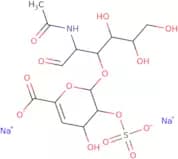
CAS:Chondroitin disaccharide di-UA2S disodium salt is a high purity, custom synthesis, sugar, click modification, fluorination, glycosylation, synthetic oligosaccharide. It is a complex carbohydrate of the monosaccharide and saccharides which are composed of glucose and glucuronic acid. The molecular weight is 721.00 g/mol with a CAS number of 149368-04-7. This product has been modified to include methyl groups on N-6 and N-2 positions in the side chains of both uronic acids. Chondroitin disaccharide di-UA2S disodium salt is an oligosaccharide that has been synthesized from chondroitin sulfate with a molecular weight of 5400.00 g/mol.
Formula:C14H19NNa2O14SPurity:Min. 90 Area-%Color and Shape:PowderMolecular weight:503.34 g/molLewis X trisaccharide-sp-biotin
Lewis X trisaccharide-sp-biotin is a synthetic compound with fluorination, monosaccharide, and oligosaccharide. The sugar is a complex carbohydrate. It is synthesized by glycosylation and polysaccharide modification. The product has high purity and is custom synthesis for research purposes only. This product does not have CAS number because it is a custom synthesis.Formula:C39H67N5O18SPurity:Min. 95 Area-%Color and Shape:White Off-White PowderMolecular weight:926.04 g/molHNK-1 Biotin
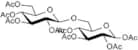
Formula:C44H70N4Na2O32S2Purity:min. 95.0 area%(HPLC)Color and Shape:SolidMolecular weight:1,277.14α-D-Cellobiose octaacetate
CAS:Fully acetylated cellohexoses, part of a polymer homologous series of oligosaccharides isolated from cellulose by acetolysis followed by chromatography.
Formula:C28H38O19Purity:Min. 98 Area-%Molecular weight:678.60 g/molbeta-Gentiobiose octaacetate
CAS:Beta-gentiobiose octaacetate is a macrocyclic structure that is glycosidated with an antigen. It has a neutralizing effect on the biological properties of the antigen. Beta-gentiobiose octaacetate has shown antitumour activity in animals, which may be due to its ability to inhibit tumor cell proliferation. Beta-gentiobiose octaacetate also has high fluidity and can be used as an oligosaccharide antigen in biological research. The molecule has a constant molecular weight of 400 Da and is conjugated with proton, which makes it useful for electron microscopy.
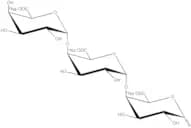
Formula:C28H38O19Purity:Min. 95%Color and Shape:White PowderMolecular weight:678.59 g/molGalacturonan DP3 sodium salt
Sodium Trigalacturonate (α-1,4 sodium galacturonotriose) is derived from pectin or pectic acid, by enzymatic or partial acid hydrolysis (Combo, 2012). It is used inâ¯galacturonic acidâ¯metabolism research as a substrate to identify, differentiate, and characterize endo- and exopolygalacturonase(s), and gluconase(s) (Jayani, 2005). The addition of very short fragments of homogalacturonan, tri-galacturonate, and tetra-galacturonate oligosaccharides, restore development in dark-grown, de-etiolated seedling mutants, suggesting that they are unable to generate de-methylesterified pectin fragments. A model of spatiotemporally separated photoreceptive and signal-responsive cell types has been proposed, that contains overlapping subsets of the regulatory network of light-dependent seedling development (Sinclair, 2017).
Purity:Min. 75 Area-%Color and Shape:PowderRef: 3D-OG46560
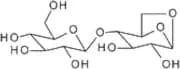
Discontinued product1,6-Anhydro-b-D-cellobiose
CAS:Produced by the fast pyrolysis of cellulose
Formula:C12H20O10Purity:Min. 95 Area-%Color and Shape:White PowderMolecular weight:324.28 g/molGM1b-Oligosaccharide
GM1b pentasaccharide (sodium salt) has a core tetrasaccharide structure (Galβ1,3GalNAcβ1,4Galβ1,4Glc) with a single sialic acid residue linked α2,3 to the terminal galactose residue (Ledeen, 2009). GM1b oligosaccaharide is the carbohydrate moiety in GM1b ganglioside, which is a minor component of human brain monosialoganglioside fraction. GM1b ganglioside and especially anti-GM1b IgG antibodies are associated with axonal Guillain-Barré syndrome, which develops followingâ¯C. jejuniâ¯infection (Yuki, 1999).
Formula:C37H61N2O29NaPurity:Min. 90 Area-%Color and Shape:PowderMolecular weight:1,020.87 g/molRef: 3D-OO46230
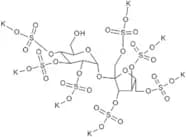
Discontinued productSucrose octasulfate sodium salt
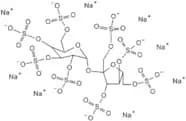
CAS:This compound is generally known as sucralfates and are medications primarily taken to treat active duodenal ulcers. They are also used for the treatment of gastroesophageal reflux disease (GERD) and stress ulcers. Sucralfate is a sucrose sulfate-aluminium complex that binds to the ulcer, creating a physical barrier that protects the gastrointestinal tract from stomach acid and prevents the degradation of mucus. It also promotes bicarbonate production and acts like an acid buffer with cytoprotective properties.
Formula:C12H14Na8O35S8Purity:Min. 98 Area-%Color and Shape:White PowderMolecular weight:1,158.66 g/molRef: 3D-OS07386
Discontinued productHeparin derived dp8 saccharide ammonium salt
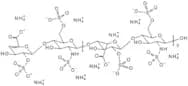
Heparin is a glycosaminoglycan which is a complex carbohydrate that contains repeating disaccharide units of glucosamine and N-acetylglucosamine. Heparin has been shown to inhibit the activity of bacterial enzymes involved in fibrinolysis, such as plasminogen activator inhibitor 1 (PAI-1), and may act as an anticoagulant. Heparin is often used as an anticoagulant in patients with thrombotic disorders, including deep vein thrombosis, pulmonary embolism, or heart attack. Heparin also acts as a cofactor for the activation of clotting factors II (thrombin), VII, IX, X, XI and XII. In addition, it inhibits the activation of factor XIII by preventing its conversion from its inactive form into active factor XIIIa. The molecular weight of heparin is approximately 10 kilodaltons (kDa) and it has a molecular formula
Purity:Min. 95%Color and Shape:PowderMolecular weight:~2400 (Average)Ref: 3D-OH06086
Discontinued product6-Amino-6-deoxy-D-lactosylamine
6-Amino-6-deoxy-D-lactosylamine is a modified sugar that is used to synthesize glycosides. It is also used as a reagent for the methylation of saccharides and polysaccharides. This product can be custom synthesized or ordered from our catalog. We offer high purity 6-amino-6-deoxy-D-lactosylamine, which has been chemically modified with fluorine and has a CAS number of 7092-12-3. It is available in different quantities and can be ordered with other custom modifications, such as Click chemistry.
Purity:Min. 95%Disialyl-TF
CAS:Disialyl-TF is a monoclonal antibody that binds to the CD33 antigen on the surface of all types of cancer cells, including breast cancer cells. Disialyl-TF has been shown to reduce the growth and spread of prostate cancer cells in mice, reducing tumor size and weight. Disialyl-TF is also active against infectious diseases such as HIV, which may be due to its ability to inhibit the expression of glycan receptors. The mechanism by which it works is not yet known. Disialyl-TF has been shown to bind with high affinity to erythrocytes bearing A or B blood group antigens, making it an excellent diagnostic tool for detecting these antigens in patients with acute myeloid leukemia or other cancers.
Formula:C36H59N3O27Purity:Min. 95%Molecular weight:965.86 g/mol6'-Galactosyllactose
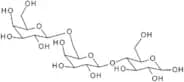
CAS:Galactosyllactose attenuated NF-κB inflammatory signaling in human intestinal epithelial cells and in human immature intestine. Thus, galactosyllactoses are strong anti-inflammatory agents in human colostrum and early milk, contributing to innate immune modulation. The potential clinical utility of galactosyllactose warrants investigation.
Formula:C18H32O16Purity:Min. 95 Area-%Color and Shape:White PowderMolecular weight:504.43 g/molRef: 3D-OG15070
Discontinued productLewis X trisaccharide
CAS:Milk oligosaccharide; antigen; expressed on gastric mucosa and cancer cells
Formula:C20H35NO15Purity:Min. 90 Area-%Color and Shape:PowderMolecular weight:529.49 g/molRef: 3D-OL06490
Discontinued productGangliosides
Sialic acid-containing glycosphingolipids-important component of neuronal cells
Purity:Min. 95 Area-%Color and Shape:PowderGlycyl-Oligosaccharidesmannose 3(a)
Glycyl-Oligosaccharidesmannose 3(a) (GL3(a)) is a complex carbohydrate that is composed of mannose and glycyl chains. It has been modified with methyl, click, fluorination, and saccharide modifications. GL3(a) has been synthesized using custom synthesis methods that yield high purity.
Formula:C36H62N4O26Purity:Min. 95%Molecular weight:966.89 g/molD-Panose
CAS:Used to determine composition and sequence of glucan-containing mixed linkages
Formula:C18H32O16Purity:(%) Min. 95%Color and Shape:White PowderMolecular weight:504.44 g/molRef: 3D-OP06685
Discontinued productFleetamine
Fleetamine is a piperidine compound that has been shown to be an inhibitor of the enzyme glycosylation. Inhibitors of glycosylation are useful for treating diseases such as diabetes and Alzheimer's disease. It is thought that Fleetamine may inhibit human glycosylating enzymes, such as glucosyl transferase, which catalyzes the addition of a glucose molecule to a protein. This inhibition prevents the formation of oligosaccharides and glycoconjugates, which are necessary for proper functioning of cells.
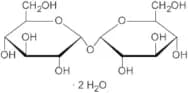
Purity:Min. 95%D-Maltose monohydrate
CAS:Please enquire for more information about D-Maltose monohydrate including the price, delivery time and more detailed product information at the technical inquiry form on this page
Formula:C12H24O12Purity:Min. 98 Area-%Molecular weight:360.31 g/mol1,1,1,1-Kestohexose
CAS:Non-reducing sucrose analog containing glucose and fructose
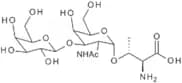
Formula:C36H62O31Purity:Min. 90%Color and Shape:White PowderMolecular weight:990.86 g/mol2-Acetamido-2-deoxy-3-O-(β-D-galactopyranosyl)-α-D-galactopyranosyl-1-O-L-threonine
CAS:2-Acetamido-2-deoxy-3-O-(b-D-galactopyranosyl)-a-D-galactopyranosyl-1-O-L-threonine is a fluorinated monosaccharide that is used as a building block for the synthesis of complex carbohydrates. This compound can be used to synthesize glycoproteins, glycolipids, and other glycoconjugates. 2-Acetamido-2-deoxy -3 -O-(b -D -galactopyranosyl) -a -D -galactopyranosyl 1 O L threonine has been modified with methylation and click chemistry reactions.
Formula:C18H32N2O13Purity:Min. 95%Color and Shape:White to light yellow solid.Molecular weight:484.45 g/molRef: 3D-OA07377
Discontinued productMaltohexaose eicosaacetate
CAS:CO2-philic compound; used in pharmaceuticals and CO2-based processes
Formula:C76H102O51Purity:Min. 90.0 Area-%Color and Shape:White PowderMolecular weight:1,831.59 g/molRef: 3D-OM06944
Discontinued product4-O-[(2-Azidoethoxyimino)-6-deoxy-β-D-galactopyranosyl]-2-deoxy-α-D-glucopyranose-2,1-oxazoline
CAS:Please enquire for more information about 4-O-[(2-Azidoethoxyimino)-6-deoxy-β-D-galactopyranosyl]-2-deoxy-α-D-glucopyranose-2,1-oxazoline including the price, delivery time and more detailed product information at the technical inquiry form on this page
Formula:C16H25N5O10Purity:Min. 95%Molecular weight:447.4 g/mol1,2-a-1,2-a-L-Rhamnotriose
1,2-a-1,2-a-L-Rhamnotriose is a carbohydrate that can be modified to suit your needs. It has a CAS number of 57749-83-5. This oligosaccharide is a sugar made up of two monosaccharides joined by an alpha 1,2 glycosidic bond. The product can be custom synthesized and its purity is high. It can be fluorinated or methylated and it can also be glycosylated. Click modification is also possible with this product.
Formula:C18H32O13Purity:Min. 95%Color and Shape:White PowderMolecular weight:456.44 g/mol2-Acetamido-2-deoxy-4-O-(b-D-galactopyranosyl)-D-glucopyranose
CAS:2-Acetamido-2-deoxy-4-O-(b-D-galactopyranosyl)-D-glucopyranose LacNAc isomer. This compound has been shown to inhibit pro-inflammatory cytokines in human bronchial epithelial cell lines, which may be helpful in treating inflammatory conditions. The compound can be analyzed using high-performance liquid chromatography (HPLC), which separates molecules based on their chemical properties. The acid residues present in the molecule make it an ideal target for antibodies and polymer-based drug delivery systems. In host cells, this compound is involved in various biological processes related to cell adhesion and signaling.
Formula:C14H25NO11Purity:Min. 95%Color and Shape:PowderMolecular weight:383.35 g/molIsomaltoheptaose
CAS:Produced from high maltose syrup by treatment with transglucosidase
Formula:C42H72O36Purity:Min. 90 Area-%Color and Shape:White PowderMolecular weight:1,153 g/molRef: 3D-OI15393
Discontinued productBlood Group A trisaccharide, N-aminoethyl nonanamide
CAS:Blood group antigen derivative for biochemical researchFormula:C31H57N3O16Purity:Min. 95 Area-%Color and Shape:PowderMolecular weight:727.79 g/molRef: 3D-OB07522
Discontinued productSucrose heptasulfate potassium
CAS:Used to treat duodenal ulcers, GERD, stress ulcers; acid buffer; cytoprotectiveFormula:C12H15K7O32S7Purity:Min 80%Color and Shape:White PowderMolecular weight:1,169.38 g/molD-Trehalose dihydrate
CAS:Trehalose is a naturally occurring disaccharide found in many organisms.Its role in nature is as versatile as its applications in the laboratory. Trehalose is synthesized by cells in response to stress and helps retaining the cellular integrity under tough conditions: An important function of Trehalose is to stabilize protein structures and to prevent proteins from their degradation. Researchers use Trehalosefor instance as a carbon source in selective microbiological media, as desiccation protectant and for cryoprotection.
Formula:C12H26O13Purity:Min. 98.0 Area-%Molecular weight:378.33 g/molHepta-O-acetylrutinose
CAS:Hepta-O-acetylrutinose is a synthetic monosaccharide that is fluorinated. It can be used in the synthesis of oligosaccharides, polysaccharides, and glycosylations. Hepta-O-acetylrutinose has been shown to be useful in click chemistry and other modifications due to its reactive groups. The CAS number for this compound is 29202-64-0.
Formula:C26H36O17Purity:(%) Min. 95%Color and Shape:White PowderMolecular weight:620.57 g/molRef: 3D-OH07500
Discontinued productIsomaltotetraose
CAS:Produced from high maltose syrup by treatment with transglucosidase
Formula:C24H42O21Purity:Min. 95%Color and Shape:White PowderMolecular weight:666.58 g/molRef: 3D-OI15392
Discontinued productGlobo-H hexaose
CAS:Cancer-associated carbohydrate antigen
Formula:C38H65NO30Purity:Min. 90%Color and Shape:White PowderMolecular weight:1,015.91 g/molRef: 3D-OG10692
Discontinued producta-Maltotetraosyl-a,a-trehalose
CAS:a-Maltotetraosyl-a,a-trehalose is a carbohydrate that is modified with fluorine. It is a complex carbohydrate with four maltotriose units linked by alpha,alpha-trehalose units. This compound can be custom synthesized and has high purity. It can also be methylated and glycosylated. Click modification can be done to the sugar in order to modify its properties.
Formula:C36H62O31Purity:Min. 95%Molecular weight:990.86 g/mol














![4-O-[(2-Azidoethoxyimino)-6-deoxy-β-D-galactopyranosyl]-2-deoxy-α-D-glucopyranose-2,1-oxazoline](/_next/image/?url=https%3A%2Fstatic.cymitquimica.com%2Fproducts%2F3D%2Fthumb-webp%2FOA183930.webp&w=3840&q=75)