Antibiotics
Antibiotics are compounds designed to destroy or inhibit the growth of various microorganisms, playing a crucial role in treating infections and preventing the spread of diseases. This category offers a diverse range of active ingredients specifically for research in the biochemical field. These compounds are essential tools in studying bacterial mechanisms, resistance patterns, and the development of new therapeutic agents. Researchers can explore a wide variety of antibiotics to understand their effects, optimize their use, and develop novel treatments to combat emerging microbial threats. The availability of such a broad spectrum of antibiotics supports advanced research and innovation in microbiology and pharmaceutical sciences.
Subcategories of "Antibiotics"
- Macrolide Antibiotics(26 products)
- Steroidal Antibiotics(31 products)
- Tetracycline Antibiotics(20 products)
- β-Lactam Antibiotics(11 products)
Found 4102 products of "Antibiotics"
Sort by
Purity (%)
0
100
|
0
|
50
|
90
|
95
|
100
Nisin
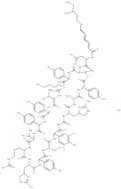
CAS:Nisin A: a lantibiotic peptide made by L. lactis, contains unique amino acids like lanthionine, and fights bacteria.Formula:C143H230N42O37S7Purity:98%Color and Shape:SolidMolecular weight:3354.07Neomycin sulfate
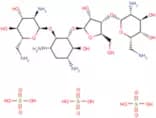
CAS:Neomycin sulfate (Framycin sulfate) is a broad-spectrum aminoglycoside antibiotic that blocks the synthesis of bacterial proteins in order to exertFormula:C23H46N6O13·3H2SO4Purity:99.4% - 99.88%Color and Shape:Tan PowderMolecular weight:908.87Telocinobufogenin
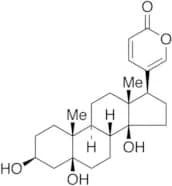
CAS:Controlled Product<p>Applications Telocinobufagin is isolated as a major component from skin secretion of the toad Bufo rubescens. Telocinobufogenin is a novel antibiotic cardiotonic.<br>References Akizawa, T., et al.: Chem. Pharm. Bull., 42, 754 (1994); Hancock, R., et al.: Antimicrob. Agents Chemother., 43, 1317 (1999); Jing, Y., et al.: J. Cancer Res., 85, 645 (1994); Kamano, Y., et al.: J. Med. Chem., 45, 5440 (2002); Schoner, W., et al.: Eur. J. Biochem., 269, 2440 (2002); Cunha Filho, G., et al.: Toxicon, 45, 777 (2005)<br></p>Formula:C24H34O5Color and Shape:NeatMolecular weight:402.52Polyoxin B
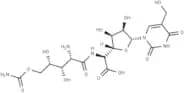
CAS:Polyoxin B is an antifungal peptidyl nucleoside antibiotic that inhibits fungal cell wall biosynthesis.Formula:C17H25N5O13Purity:79.94%Color and Shape:SolidMolecular weight:507.41Ceftazidime Pentahydrate
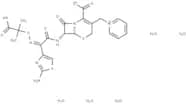
CAS:Ceftazidime Pentahydrate is a cephalosporin antibiotic with activity against gram-negative bacilli and may be used to study infectious diseases.Formula:C22H32N6O12S2Purity:99.39%Color and Shape:White To Cream-Colored Crystalline PowderMolecular weight:636.65Tirilazad mesylate
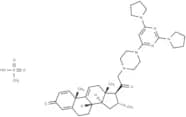
CAS:Tirilazad mesylate (U 74006F) is a lipid peroxidation inhibitor with antiviral activity.Tirilazad mesylate is used in the study of neurological disorders.Formula:C39H56N6O5SPurity:99.65% - 99.75%Color and Shape:SolidMolecular weight:720.964-Hydroxychlorpropham Sulfate Sodium Salt
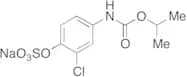
CAS:Controlled Product<p>Stability Hygroscopic<br>Applications 4-Hydroxychlorpropham Sulfate Sodium Salt, is a chemical herbicide used in the protection of crops. It also maintains the ability to induce mitochondrial dysfunction in rat hepatocytes.<br>References EPA.: Fed. Reg., 72, 37646 (2007); Nakagawa, Y. et al.: Toxicol., 200, 123 (2004);<br></p>Formula:C10H11ClNNaO6SColor and Shape:NeatMolecular weight:331.705Streptidine Sulfate Salt
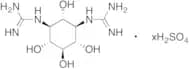
CAS:Controlled Product<p>Applications Streptidine, is a metabolite derivative of Streptomycin (S687500), an antibiotic (antimycobacterial) drug, used for patients suffering from tuberculosis or other infectious diseases.<br>References Granados, O., et al.: Histology and Histopathology, 20(2), 357 (2005);<br></p>Formula:C8H18N6O4xH2SO4Color and Shape:White To Off-WhiteMolecular weight:262.27Sulfaquinoxaline
CAS:Sulfaquinoxaline (Sulfabenzpyrazine) is an antiprotozoal agent.Formula:C14H12N4O2SPurity:99.38% - 99.81%Color and Shape:Crystalline SolidMolecular weight:300.34Imipenem, Monohydrate
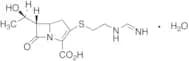
CAS:Controlled ProductFormula:C12H17N3O4S·H2OColor and Shape:White To Light YellowMolecular weight:317.36Leucomycin A3
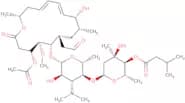
CAS:<p>Leucomycin A3 is a macrolide antibiotic with a mode of action that inhibits bacterial protein synthesis by binding to the 50S ribosomal subunit. It is used for treating bacterial infections and has shown potential antiviral activity.</p>Formula:C42H69NO15Purity:Min. 95%Color and Shape:White PowderMolecular weight:828 g/molTetracycline - Bio-X ™
CAS:Tetracycline is a broad-spectrum antibiotic that is effective against a variety of bacterial infections. It is a polyketide antibiotic that inhibits protein synthesis by binding to ribosomes and preventing the attachment of amino acids to tRNA molecules thus inhibiting bacterial growth.Formula:C22H24N2O8Purity:Min. 95%Color and Shape:PowderMolecular weight:444.43 g/molFlucloxacillin sodium
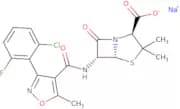
CAS:<p>Flucloxacillin sodium is a beta-lactam antibiotic with action on bacterial cell wall synthesis and is used for treating skin, bone, and respiratory infections.</p>Formula:C19H16ClFN3NaO5SPurity:Min. 95%Color and Shape:White PowderMolecular weight:475.85 g/molRetapamulin
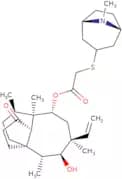
CAS:Antibiotic; binds bacterial ribosomes to inhibit protein synthesisFormula:C30H47NO4SPurity:Min. 95%Color and Shape:PowderMolecular weight:517.76 g/molBleomycin A5 hydrochloride, copper complex
CAS:<p>Bleomycin A5 inhibits DNA replication and repair. It also cleaves RNA in vitro and in vivo, and exhibits anticancer activity. It is used for various types of cancer such as squamous cell cancers, melanoma, sarcoma, testicular and ovarian cancer, Hodgkin's and non-Hodgkin's lymphoma.</p>Formula:C57H89CuN19O21S2•(HCl)3Purity:Min. 95%Color and Shape:White PowderMolecular weight:1,613.49 g/molRifaximin
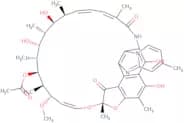
CAS:<p>Rifaximin is a rifamycin antibiotic with action on bacterial RNA polymerase to inhibit transcription and is used for treating travelers' diarrhea, irritable bowel syndrome, and hepatic encephalopathy.</p>Formula:C43H51N3O11Purity:Min. 98 Area-%Color and Shape:Red PowderMolecular weight:785.88 g/molAmphotericin B
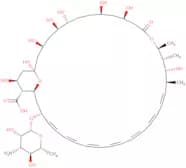
CAS:<p>Amphotericin B is a macrocycle antibiotic first isolated from Streptomyces nodosus. Its antifungal activity is exerted by interacting with the fungal membrane, mainly ergosterol, and inducing pore formation. The increase in membrane permeability causes loss of ions and cell death. The C-2 hydroxyl residue of the mycosamine carbohydrate moiety in the structure seems to have a major role in binding to ergosterol. It is used in cell culture to prevent growth of microbial contaminants, such as yeast and fungi. It is recommended by the WHO and CDC as an antifungal component for VTM at a concentration of 250ug/ml.</p>Formula:C47H73NO17Color and Shape:Yellow PowderMolecular weight:924.08 g/molNalidixic acid
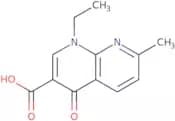
CAS:<p>Nalidixic acid is a quinolone antibiotic with action on bacterial DNA gyrase to inhibit DNA replication and is used for treating urinary tract infections caused by gram-negative bacteria.</p>Formula:C12H12N2O3Color and Shape:White Slightly Brown PowderMolecular weight:232.24 g/molNitrofurantoin - Bio-X ™
CAS:Nitrofurantoin is an antibiotic that binds to the bacterial ribosome and inhibits protein synthesis. It is used to treat a wide range of infections, including urinary tract infections and its common causes such as E. coli, Citrobacter and Enterococcus.Formula:C8H6N4O5Purity:Min. 95%Color and Shape:PowderMolecular weight:238.16 g/molTeicoplanin
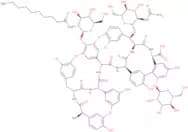
CAS:<p>Teicoplanin is related to vancomycin and has similar effects against gram-positive bacteria and anaerobes, and usually requires less frequent administration than vancomycin, but it is less efficient against S. haemolyticus. Due its size and polarity, teicoplanin cant pass through the membrane of gram-negative bacteria thus it is not active against them. It is used to treat severe infections such as septicemia, endocarditis, bone and joint infections.</p>Formula:C89H99Cl2N9O29Purity:Min. 900 Ug/MgColor and Shape:White PowderMolecular weight:1827.59257Cefoxitin EP impurity F
Cefoxitin EP Impurity F is a pharmaceutical reference impurity, which is a derivative of the cefoxitin antibiotic. This impurity arises from the degradation or synthesis processes related to cefoxitin, a semi-synthetic, beta-lactam antibiotic of the cephamycin group. The mode of action of cefoxitin involves interfering with bacterial cell wall synthesis by binding to penicillin-binding proteins, ultimately leading to cell lysis and death.Formula:C17H19N3O8S2Purity:Min. 95%Molecular weight:457.48 g/molCapastat sulfate
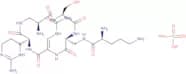
CAS:<p>Capastat sulfate is an antibiotic with action against Mycobacterium tuberculosis by inhibiting protein synthesis and is used for treating tuberculosis.</p>Formula:C24H42N14O8·H2O4SPurity:Min. 95%Color and Shape:PowderMolecular weight:752.76 g/molCyclosporin A
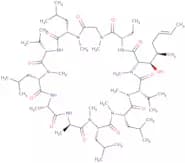
CAS:<p>Binds cyclophilin D and inhibits calcineurin; immunosuppressant</p>Formula:C62H111N11O12Purity:Min. 98.5 Area-%Color and Shape:White PowderMolecular weight:1,202.61 g/molNetilmicin sulfate
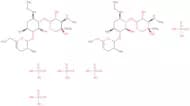
CAS:<p>Netilmicin sulfate is an aminoglycoside antibiotic with action on bacterial protein synthesis by binding to the 30S ribosomal subunit and is used for treating severe bacterial infections.</p>Formula:C42H92N10O34S5Purity:Min. 595 Ug/MgColor and Shape:PowderMolecular weight:1,441.56 g/molGentamycin sulfate, Antibiotic for Culture Media Use Only
CAS:Gentamycin sulphate is the salt form of the broad-spectrum antibiotic gentamycin (a.k.a. gentamicin). Gentamycin is active against clinically relevant bacteria, such as: Pseudomonas aeruginosa, Klebsiella pneumoniae, Escherichia coli, Serratia marcescens, and is used to fight infections from Staphylococcus, Citrobacter and Enterobacteriaceae species. Gentamycin is a natural mixture of four congeners, one of which is gentamicin C2a. Gentamycin has been included in biomedical implantable materials, such as, bone grafts, to reduce the risk of infection.Formula:C21H45N5O11SMolecular weight:575.67 g/molRef: 3D-G-2420
1gTo inquire1kgTo inquire250gTo inquire500gTo inquire2500gTo inquire-Unit-ggTo inquireTebuconazole
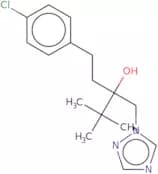
CAS:Tebuconazole is a triazole fungicide with action on fungal cell membranes by inhibiting ergosterol biosynthesis and is used for controlling fungal diseases in crops like cereals and vegetables.Formula:C16H22ClN3OPurity:Min. 97 Area-%Color and Shape:White PowderMolecular weight:307.82 g/molTigecycline Impurity 8
Tigecycline Impurity 8 is a chemical impurity associated with Tigecycline, which is a glycylcycline antibiotic. This impurity is typically synthesized or isolated as a part of pharmaceutical development and quality control processes. Its source is inherently linked to the chemical synthesis of Tigecycline, where it may arise as a byproduct or degradation product.Formula:C29H37N5O8Purity:Min. 95%Molecular weight:583.65 g/molEthambutol
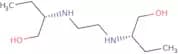
CAS:<p>Ethambutol is an antimicrobial compound, specifically an antitubercular agent, which is a synthetic derivative of ethylenediamine. It is classified as a bacteriostatic agent that primarily targets Mycobacterium tuberculosis. The mode of action of Ethambutol involves the inhibition of arabinosyl transferases, enzymes essential for the polymerization of arabinogalactan, a critical component of the mycobacterial cell wall. By disrupting cell wall biosynthesis, Ethambutol effectively hampers the growth and proliferation of the bacteria.</p>Formula:C10H24N2O2Purity:Min. 95%Molecular weight:204.31 g/molNeospiramycin I
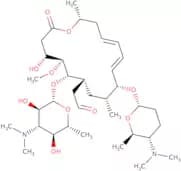
CAS:<p>Neospiramycin I is a macrolide antibiotic with action on bacterial ribosomes to inhibit protein synthesis and is used for treating bacterial infections in research applications.</p>Formula:C36H62N2O11Purity:Min. 95 Area-%Color and Shape:PowderMolecular weight:698.88 g/molErythromycin
CAS:<p>A broad-spectrum antibiotic of macrolide class, which targets 50S ribosomal subunit and inhibits protein synthesis. Erythromycin is widely used in molecular biology and biotechnology as a selection marker. Erythromycin is also an agonist of the motilin receptor, and it has prokinetic activity on the gut.</p>Formula:C37H67NO13Purity:Min. 95%Color and Shape:PowderMolecular weight:733.93 g/molEnoxacin
CAS:<p>Enoxacin is a fluoroquinolone antibiotic with action on bacterial DNA gyrase and topoisomerase IV and is used for treating urinary tract infections and gonorrhea.</p>Formula:C15H17FN4O3Purity:Min. 95%Molecular weight:320.32 g/molDihydrostreptomycin sesquisulfate, EP
CAS:<p>Dihydrostreptomycin sesquisulfate, EP is an aminoglycoside antibiotic, structurally derived from Streptomyces griseus. This compound originates from microbial biosynthesis, a method which harnesses the natural antibiotic-producing capabilities of microbial cultures. The mode of action of dihydrostreptomycin sesquisulfate involves binding to the 30S subunit of bacterial ribosomes, which interrupts the process of protein synthesis, ultimately leading to bacterial cell death.</p>Formula:C21H41N7O12•(H2SO4)1Purity:(Hplc) 94.0 To 102.0%Color and Shape:PowderMolecular weight:1,461.42 g/molDactinomycin
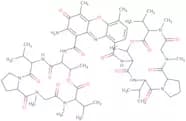
CAS:Actinomycin D is an antibiotic commonly used in chemotherapy for cancer treatment, such as sarcomas, and pediatric solid tumors, Wilms tumor, testicular cancer, and choriocarcinoma; it is generally not very useful in antibiotic therapy. It acts as a transcription inhibitor, binding to DNA duplexes at the transcription initiation complex and preventing RNA polymerase elongation.Formula:C62H86N12O16Purity:Min. 95%Color and Shape:Red PowderMolecular weight:1,255.42 g/molAnhydrooxytetracycline hydrochloride
CAS:<p>Anhydrooxytetracycline hydrochloride is a useful research chemical. Buy Anhydrooxytetracycline hydrochloride from Cymit Quimica for a variety of research applications.</p>Formula:C22H22N2O8HClMolecular weight:478.88 g/molStreptomycin sulfate, Antibiotic for Culture Media Use Only
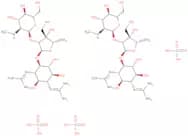
CAS:Streptomycin sulfate is an antibiotic that inhibits the growth of bacteria by binding to the ribosomal subunit and interfering with protein synthesis. It is used in culture media for the production of human antibodies as well as in drug therapy for methicillin-resistant staphylococcus. Streptomycin sulfate has a high specific activity and low sensitivity, but it also has a low solubility in water. The active form of streptomycin sulfate is streptomycin A, which is produced by the addition of a phenyl ring to neomycin sulfate. In plant roots, streptomycin sulfate inhibits cyanogenic glycosides from being hydrolyzed into hydrogen cyanide (HCN) and benzaldehyde.Formula:C42H84N14O36S3Molecular weight:1,457.40 g/molRef: 3D-S-8500
25gTo inquire50gTo inquire100gTo inquire250gTo inquire500gTo inquire-Unit-kgkgTo inquireGentamicin C1a pentaacetate
CAS:<p>Gentamicin C1a pentaacetate is an aminoglycoside antibiotic derivative, which is synthesized through the acetylation of the hydroxyl groups in gentamicin C1a. This compound is derived from the fermentation products of Micromonospora species, a genus of actinobacteria. Its mode of action is similar to that of standard aminoglycosides, primarily involving the binding to bacterial 30S ribosomal subunits. This binding interferes with protein synthesis by causing misreading of mRNA, ultimately leading to the inhibition of protein production and bacterial cell death.</p>Formula:C29H59N5O17Purity:Min. 95%Color and Shape:Off-White PowderMolecular weight:749.8 g/mol4'-Epidaunorubicin hydrochloride
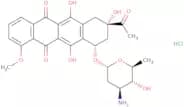
CAS:<p>4'-Epidaunorubicin hydrochloride is an anthracycline antibiotic derivative, which is synthesized from modifications of natural products. It functions as a topoisomerase II inhibitor, which intercalates into DNA strands and disrupts replication and transcription, thereby inhibiting cancer cell proliferation. This compound is primarily utilized in the field of oncology for its potent anti-tumor activities. By forming stable complexes with DNA and topoisomerase II, 4'-Epidaunorubicin hydrochloride induces breaks in the DNA strands, leading to apoptosis of cancer cells. It is often used in treatment protocols for various malignancies, including leukemia and solid tumors. While highly effective, its administration is carefully managed to mitigate potential cardiotoxicity, a common attribute of anthracycline drugs. Research continues to explore its full potential and optimize delivery methods to enhance its therapeutic index.</p>Formula:C27H30ClNO10Purity:Min. 95%Molecular weight:563.98 g/molCinoxacin
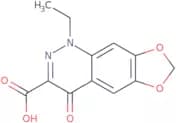
CAS:<p>Cinoxacin is a quinolone antibiotic with action on bacterial DNA synthesis inhibition and is used for treating urinary tract infections.</p>Formula:C12H10N2O5Purity:Min. 98 Area-%Color and Shape:PowderMolecular weight:262.22 g/molDaunorubicin HCl - Bio-X ™
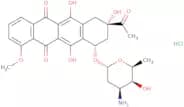
CAS:<p>Daunorubicin is an anthracycline antibiotic and antineoplastic agent that is used in the treatment of a variety of cancers such as nonlymphocytic leukemia and acute lymphocytic leukemia. The drug binds to DNA and inhibits transcription by intercalating between DNA base pairs and affecting the activity of the topoisomerase II enzyme and thus the gene expression. This results in apoptosis, mitochondrial injury, and finally cell death.</p>Formula:C27H29NO10•HClPurity:Min. 95%Color and Shape:PowderMolecular weight:563.98 g/molValinomycin
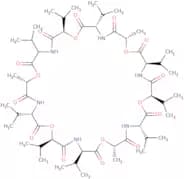
CAS:<p>Valinomycin is an ionophore antibiotic with action on potassium ion transport across cell membranes and is used for research on ion transport and as an antimicrobial agent.</p>Formula:C54H90N6O18Purity:Min. 90 Area-%Color and Shape:White PowderMolecular weight:1,111.32 g/molAmpicillin
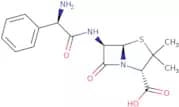
CAS:<p>Antibiotic of penicillin class; inhibits bacterial cell wall biogenesis</p>Formula:C16H19N3O4SPurity:Min. 98%Color and Shape:PowderMolecular weight:349.41 g/molErythromycin stearate
CAS:<p>Erythromycin stearate is a macrolide antibiotic with action on bacterial protein synthesis inhibition and is used for treating respiratory tract infections, skin infections, and sexually transmitted infections.</p>Formula:C55H103NO15Purity:79 To 102%Color and Shape:PowderMolecular weight:1,018.4 g/molCiprofloxacin dihydrochloride
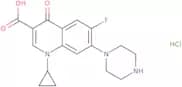
CAS:<p>A fluoroquinolone antibiotic which inhibits nucleic acid synthesis by targeting the DNA gyrase and topoisomerase IV. This second-generation fluoroquinolone has a broad spectrum of action and is more effective against Gram-negative bacteria.</p>Formula:C17H20Cl2FN3O3Purity:Min. 95%Molecular weight:404.26 g/molEnduracidin hydrochloride
CAS:<p>Enduracidin hydrochloride is an antimicrobial compound, which is a lipopeptide antibiotic derived from the genus Streptomyces, specifically Streptomyces fungicidicus or Streptomyces roseosporus. The compound exerts its antimicrobial activity by inhibiting the synthesis of bacterial cell walls, primarily targeting the lipid II cycle, a critical precursor in the peptidoglycan synthesis pathway. This inhibition disrupts the construction of peptidoglycan layers, ultimately leading to bacterial cell lysis and death.</p>Formula:C107H138Cl2N26O31HClPurity:Min. 95%Molecular weight:2,391.76 g/molChloramphenicol D5
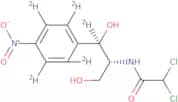
CAS:Controlled ProductLabeled analogue of Chloramphenicol; interferes with protein synthesisFormula:C11H7Cl2D5N2O5Purity:Min. 95%Color and Shape:White To Off-White SolidMolecular weight:328.16 g/molTorezolid
CAS:<p>Torezolid (Tedizolid) is an oxazolidinone antibiotic with action on bacterial protein synthesis by binding to the 50S ribosomal subunit and is used for treating acute bacterial skin and skin structure infections.</p>Formula:C17H15FN6O3Purity:Min. 95.0 Area-%Color and Shape:PowderMolecular weight:370.34 g/molFosfomycin disodium salt, Antibiotic for Culture Media Use Only
CAS:Broad-spectrum antibiotic; bacterial cell wall biogenesis inhibitorFormula:C3H5Na2O4PMolecular weight:182.02 g/molMezlocillin
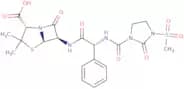
CAS:Mezlocillin is a ureidopenicillin antibiotic with action on bacterial cell wall synthesis and is used for treating gram-negative and anaerobic bacterial infections.Formula:C21H25N5O8S2Purity:Min. 95%Molecular weight:539.58 g/molCefpodoxime proxetil
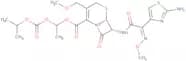
CAS:<p>Cefpodoxime proxetil is a prodrug of cefpodoxime with action on bacterial cell wall synthesis and is used for treating bacterial infections such as pneumonia, bronchitis, and gonorrhea.</p>Formula:C21H27N5O9S2Purity:Min. 95%Color and Shape:White PowderMolecular weight:557.6 g/molChlorotetracycline monohydrochloride, Antibiotic for Culture Media Use Only
CAS:<p>Chlorotetracycline monohydrochloride is an antibiotic compound specifically designed for culture media use. It is derived from a naturally occurring tetracycline produced by the bacterium *Streptomyces aureofaciens*. As a broad-spectrum antibiotic, chlorotetracycline functions by inhibiting protein synthesis in susceptible bacteria. It binds to the 30S subunit of the bacterial ribosome, blocking the attachment of aminoacyl-tRNA to the ribosomal acceptor site, which effectively halts translational elongation.</p>Formula:C22H24Cl2N2O8Purity:(Chlortetracycline Hcl) Min. 89.5%Color and Shape:Yellow PowderMolecular weight:515.34 g/mol