Nucleotides
Subcategories of "Nucleotides"
Found 2637 products of "Nucleotides"
2'-O-Methylguanosine-5'-triphosphate sodium salt - 100mM aqueous solution
CAS:2'-O-Methylguanosine-5'-triphosphate sodium salt is a nucleotide that is synthesized by the phosphorylation of guanosine at the 5' position. It has been shown to have significant activation of cardiac protein synthesis and translation. This nucleotide has also been shown to stabilize RNA in vitro, which may be due to its ability to activate adenylate cyclase activity. 2'-O-Methylguanosine-5'-triphosphate sodium salt is a potent inhibitor of hepatitis B virus replication, but does not inhibit the replication of other viruses.Formula:C10H18N3O14P3·NaPurity:Min. 95%Color and Shape:Clear LiquidMolecular weight:520.17 g/molS-(4-Nitrobenzyl)-6-thioinosine
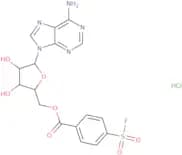
CAS:S-(4-Nitrobenzyl)-6-thioinosine (SBT) is a nucleoside with biochemical properties that are similar to those of adenosine. SBT is an equilibrative nucleoside, which means that it can bind to both DNA and RNA. It has been shown to be effective in inhibiting the growth of cancer cells in vitro by binding to DNA. SBT binds to the purine nucleotide transporter and prevents the uptake of uridine, adenosine, and other nucleosides into the cell. This process leads to a decrease in intracellular concentrations of these nucleosides. SBT also binds to divalent metal ions such as copper or zinc, which may affect its activity on cancer cells.Formula:C17H17N5O6SPurity:Min. 98 Area-%Color and Shape:White Off-White PowderMolecular weight:419.41 g/mol5'-(4-Fluorosulfonylbenzoyl)adenosine HCI
CAS:5'-(4-Fluorosulfonylbenzoyl)adenosine HCI is an inhibitor of adenosine deaminase. It has been used as a tool in the diagnosis of autoimmune diseases. 5'-(4-Fluorosulfonylbenzoyl)adenosine HCI binds to the α subunit of mitochondrial ATPase and inhibits its function, leading to a drop in mitochondrial membrane potential. This can be measured by electron paramagnetic resonance spectroscopy, which can detect changes in redox potentials and the presence of disulfide bonds. 5'-(4-Fluorosulfonylbenzoyl)adenosine HCI also binds to DNA synthetase and metal chelate, inhibiting protein synthesis.
5'-(4-Fluorosulfonylbenzoyl)adenosine HCI has been shown to inhibit various enzymes such as phosphofructokinase, glycogen phosphFormula:C17H17ClFN5O7SPurity:Min. 97.0 Area-%Molecular weight:489.86 g/molRef: 3D-W-203807
1gTo inquire100mgTo inquire250mgTo inquire500mgTo inquire2500mgTo inquire-Unit-ggTo inquire5'-Deoxyuridine
CAS:5'-Deoxyuridine is an inorganic, phosphite, and isomeric compound. It can be used as a chromatographic analog to purify uridylic acid. The epimerization reaction of 5'-deoxyuridine with galactose can be catalyzed by dehydrogenase or ion-exchange resin. In addition, 5'-deoxyuridine has the same chemical formula as uridine (C5H5N3O3) but has a different structure: in place of the hydroxyl group on carbon number 5, it has a hydrogen atom. 5'-Deoxyuridine has two isomers: one with the hydroxyl group on carbon number 4 and another with the hydroxyl group on carbon number 2.Formula:C9H12N2O5Purity:Min. 95%Color and Shape:White PowderMolecular weight:228.21 g/mol5-Formylcytidine
CAS:5-Formylcytidine is a nucleoside that belongs to the group of pyrimidine nucleosides. It is structurally similar to cytidine, but with a formyl group in place of the hydroxymethyl group on the C5 position. 5-Formylcytidine has been shown to have an inhibitory effect on mitochondrial protein synthesis and cellular functions in mammalian cells.Formula:C10H13N3O6Purity:Min. 97 Area-%Color and Shape:White Off-White PowderMolecular weight:271.23 g/moltrans-Zeatin Riboside
CAS:Cytokinins are plant hormones involved in developmental processes and in the modulation of plant immune system. Zeatin was identified as the first naturally occurring cytokinin from the endosperm of corn (latin: Zea mays). Water-soluble trans-Zeatin Riboside is a major long-distance signaling molecule in xylem vessels and its action depends on metabolic conversion in proximity to the site of action. Trans-Zeatin Riboside is a powerful agent used in horticulture to improve shoot growth or to induce callus formation (e.g. in tomato). It is used for plant regeneration from leaf explants (e.g. in potato) and for the direct initiation of shoot cultures from bract axils of many plant species.Formula:C15H21N5O5Molecular weight:351.37 g/molRef: 3D-Z-3000
1gTo inquire50mgTo inquire250mgTo inquire500mgTo inquire2500mgTo inquire-Unit-ggTo inquire2'-Deoxy-2'-fluorocytidine-5'-triphosphate sodium, 100mM aqueous solution
2'-Deoxy-2'-fluorocytidine-5'-triphosphate sodium, 100mM aqueous solution is a nucleoside analog that is modified at both the 2' position of the sugar (deoxyribose) with a fluoro group and the 5' position with a triphosphate group. This compound is an important tool in biochemistry, molecular biology, and drug development, particularly for studying nucleic acid synthesis and genetic processes.Formula:C9H15FN3O13P3•NaxPurity:Min. 95%Molecular weight:485.15 g/mol3'-Deoxy-3'-iodothymidine
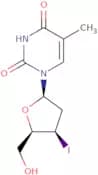
CAS:3'-Deoxy-3'-iodothymidine is a nucleoside that is found in DNA. It has a constant of -1.5 and can be protonated to form the anion. The molecule has a reactive radical anion, which is stabilized by electron delocalization with the aromatic rings. 3'-Deoxy-3'-iodothymidine has been studied for use as a medicine for cancer treatment, but it also has applications in biology and chemistry. This compound can be used in conductometry and electron spectroscopy, as well as other chemical experiments that require ionic compounds or radiation.
Formula:C10H13IN2O4Purity:Min. 95%Color and Shape:PowderMolecular weight:352.13 g/mol2'-Deoxy-2'-fluoroguanosine-5'-triphosphate tetralithium salt
CAS:2'-Deoxy-2'-fluoroguanosine-5'-triphosphate tetralithium salt is a chemically modified nucleotide used in molecular biology and pharmaceutical research. It is a guanosine analog featuring both a 2'-fluoro substitution on the sugar and a 5'-triphosphate group, with tetralithium as the counterion to improve solubility and stability.Formula:C10H15FN5O13P3·xLiPurity:Min. 95 Area-%Color and Shape:PowderMolecular weight:525.17 g/mol[1',2',3',4',5'-¹³C5]-Kinetin riboside
[1',2',3',4',5'-13C5]-Kinetin riboside is an adenine derivative linked to a ribose sugar moiety. It has also been labeled with ¹³C, a stable isotope of carbon.Formula:C5C10H17N5O5Purity:Min. 95%Color and Shape:White Clear LiquidMolecular weight:352.29 g/mol2'-Deoxy-5-methylcytidine-5'-triphosphate sodium salt - 10 mM aqueous solution
CAS:2'-Deoxy-5-methylcytidine-5'-triphosphate sodium salt - 10 mM aqueous solution is an inhibitor of the methyl transferase domain that is found in all DNA methyltransferases. It has been shown to inhibit transcriptional regulation and cellular transformation, as well as to induce DNA damage. The optimum pH for this compound is 7.4 and it hydrolyzes at pH levels lower than 5.0.Formula:C10H18N3O13P3Purity:Min. 95%Color and Shape:PowderMolecular weight:481.18 g/mol2'-C-Methylguanosine 5'-monophosphate triethyl ammonium salt - Aqueous solution
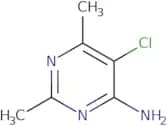
2'-C-Methylguanosine 5'-monophosphate triethyl ammonium salt - Aqueous solution is a synthetic nucleotide analog for use in researchFormula:C11H16N5O8P·C12H32N2Purity:Min. 95%Color and Shape:Clear liquid.Molecular weight:581.64 g/mol4-Amino-5-chloro-2,6-dimethylpyrimidine
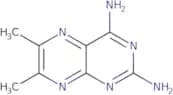
CAS:4-Amino-5-chloro-2,6-dimethylpyrimidine is a supramolecular complex that is characterized by the coordination geometry of its metal ion and the donor atoms. It has been proposed as a potential drug for the treatment of bacterial infections, such as tuberculosis. The 4-Amino-5-chloro-2,6,dimethylpyrimidine is structurally similar to nucleobases and may be able to form hydrogen bonds with water molecules. This molecule also has a high melting point and is not soluble in water. It can be protonated at different pH values and forms complexes with hydroxyl groups found in nucleic acids.Formula:C6H8ClN3Purity:Min. 95%Color and Shape:PowderMolecular weight:157.6 g/mol2,4-Diamino-6,7-dimethylpteridine
CAS:2,4-Diamino-6,7-dimethylpteridine is a ligand that can bind to an orphan cytosine opposite an abasic site in RNA duplexes
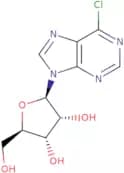
Formula:C8H10N6Purity:Min. 95%Color and Shape:PowderMolecular weight:190.21 g/mol6-Chloro-9-(b-D-ribofuranosyl)purine
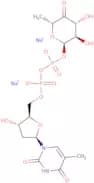
CAS:6-Chloro-9-(b-D-ribofuranosyl)purine is a purine analog that inhibits the synthesis of DNA, RNA, and protein. It has been shown to have physiological effects in cells, and it has been used as a positive control for enzyme activity studies. 6-Chloro-9-(b-D-ribofuranosyl)purine binds to an enzyme called hydroxymethylbilane synthase (HMBS), which inhibits the production of a molecule called tetrahydrobiopterin (THB). THB is essential for the synthesis of nitric oxide (NO), an important neurotransmitter that regulates neuronal death. 6-Chloro-9-(b-D-ribofuranosyl)purine also has significant cytotoxicity against melanoma cells in vitro.Formula:C10H11ClN4O4Purity:Min. 96 Area-%Color and Shape:PowderMolecular weight:286.68 g/molThymidine-5'-diphosphate-4-keto-6-deoxy-D-glucose disodium salt
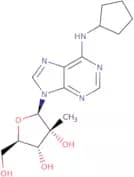
CAS:Thymidine-5'-diphosphate-4-keto-6-deoxy-D-glucose disodium salt is a precursor in the synthesis of nucleoside sugars in pathways such as rhamnose biosynthesis.Formula:C16H22N2O15P2Na2Purity:Min. 85 Area-%Color and Shape:White PowderMolecular weight:590.28 g/molN6-Cyclopentyl-2'-C-methyl-adenosine
CAS:N6-Cyclopentyl-2'-C-methyl-adenosine is an antiviral agent that inhibits the synthesis of DNA by preventing the formation of RNA from DNA. It has been shown to be effective against HIV and other retroviruses. N6-Cyclopentyl-2'-C-methyl-adenosine is a synthetic nucleoside that is activated by phosphorylation in cells, which leads to the synthesis of monophosphate (5'-AMP). This compound is used for the treatment of cancer and HIV infection.Formula:C16H23N5O4Purity:Min. 95%Color and Shape:PowderMolecular weight:349.39 g/mol2,6-Diamino-9-[3',5'-O-(1,1,3,3-tetraisopropyl-1,3-disiloxanediyl)-β-D-ribofuranosyl]purine
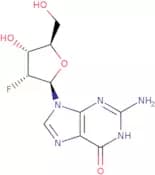
CAS:2,6-Diamino-9-[3',5'-O-(1,1,3,3-tetraisopropyl-1,3-disiloxanediyl)-β-D-ribofuranosyl]purine is a protected nucleoside derivative that can potentially be used as an intermediate in the chemical synthesis of nucleoside analogs, especially for RNA or DNA oligonucleotides. This compounds has a 2,6-Diaminopurine – a purine analog structurally similar to adenine but with an additional amino group at the 2-position and a β-D-ribofuranosyl. The 3′ and 5′ hydroxyl groups of the ribose are protected with a bulky 1,1,3,3-tetraisopropyl-1,3-disiloxanediyl (TIPDS) group. This is a silyl protecting group often used to block reactivity during nucleoside synthesis.Formula:C22H40N6O5Si2Purity:Min. 95%Color and Shape:White To Off-White SolidMolecular weight:524.77 g/mol2'-Deoxy-2'-fluoroguanosine
CAS:2'-Deoxy-2'-fluoroguanosine is a modified nucleoside analog where the base is guanine, the sugar is deoxyribose, and a fluoro group is attached to the 2' position of the sugar ring. This modification potnetially enhances the stability and nuclease resistance of the nucleoside, making it a useful tool in molecular biology and drug development.
Formula:C10H12FN5O4Purity:Min. 98 Area-%Color and Shape:White PowderMolecular weight:285.23 g/molDeoxyribonucleic acid low molecular weight from salmon sperm
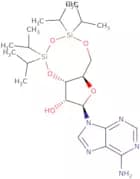
CAS:This low molecular DNA (deoxyribonucleic acid) from salmon sperm is a fragment that is an effective indicator of the presence of guanine in urine samples, and can be used to detect lipoperoxidation in animal hemocytes. It has also been shown to be a sublethal oxidative stress agent for human urine, which induces irreversible oxidation in the enzyme activities of signal detection. According to some recent research studies, this product is being investigated as an environmental pollutant indicator and could be used as an effective wastewater treatment method.Color and Shape:Powder3',5'-O-(1,1,3,3-Tetraisopropyl-1,3-disiloxanediyl)adenosine
CAS:Used as a protected adenosine nucleoside in RNA synthesis. The 1,1,3,3-tetraisopropyl-1,3-disiloxanediyl (TIPDS or TBDPSi2) group is a bulky, acid-labile protecting group specifically designed to protect the 3' and 5' hydroxyl groups of ribonucleosides during RNA oligonucleotide synthesis.Formula:C22H39N5O5Si2Purity:Min. 95%Color and Shape:PowderMolecular weight:509.76 g/mol2'-C-Methylcytidine 5'-triphosphate triethylammonium salt - aqueous solution
CAS:2'-C-Methylcytidine 5'-triphosphate triethylammonium salt - aqueous solution, is a synthetic nucleotide analog. It has potential application in antiviral research, particularly for studying RNA-dependent RNA polymerase (RdRP) activity in RNA viruses. It mimics the natural cytidine triphosphate (CTP) but includes a 2'-C-methyl modification on the ribose sugar.Formula:C10H18N3O14P3·4C6H15NPurity:Min. 95 Area-%Color and Shape:PowderMolecular weight:901.94 g/mol2'-Deoxy-5'-O-DMT-N6-isobutyryladenosine
CAS:2'-Deoxy-5'-O-DMT-N6-isobutyryladenosine is a modified ribonucleoside that has antiviral and anticancer activity. It is synthesized by modifying the 5' hydroxyl group of the natural nucleoside, 2'-deoxyadenosine, with a 6-aminohexanoic acid to give 2'-deoxy-5'-O-(2,4,6-trimethoxybenzoyl)adenosine. This modification increases the affinity for viral DNA polymerases, leading to higher antiviral activity. The drug also has antitumor effects against human leukemia cells in culture.Formula:C35H37N5O6Purity:Min. 95%Color and Shape:Off-White To Light (Or Pale) Yellow SolidMolecular weight:623.72 g/mol5'-O-DMT-2'-O-(2-methoxyethyl)-5-methyluridine
CAS:5'-O-DMT-2'-O-(2-methoxyethyl)-5-methyluridine is a novel, synthetic nucleoside with antiviral and antitumor activity. It is an analogue of 5'-O-DMT-2'-O-(2-methoxyethyl)uridine, which has been shown to be active against herpes simplex virus type 1 (HSV1) in vitro. The phosphoramidites of 5'-O-DMT-2'-O-(2-methoxyethyl)-5-methyluridine are modified at the 2' position with a methyl group and at the 5' position with a methoxyethyl group. These modifications make it more resistant to degradation by intracellular enzymes. The anticancer activity of 5'-O-DMT-2'-O-(2-methoxyethyl)-5-methyluridine was demonstrated in preclinical studies using human tumor cell lines.Formula:C34H38N2O9Purity:Min. 95%Color and Shape:Off-White PowderMolecular weight:618.67 g/mol9-(2',3',5'-Tri-O-benzyl-β-D-arabinofuranosyl)adenine
CAS:9-(2',3',5'-Tri-O-benzyl-b-D-arabinofuranosyl)adenine is a nucleoside that has shown anticancer and antiviral properties. It inhibits replication of DNA and RNA in cells, which may be due to its ability to inhibit the synthesis of deoxyribonucleotides and ribonucleotides. This compound is synthetically produced from 2',3',5'-tri-O-benzyl b-D-arabinofuranosyl chloride and adenine monophosphate (AMP). 9-(2',3',5'-Tri-O-benzyl-b-D-arabinofuranosyl)adenine is also known as arabinoside A.Formula:C31H31N5O4Purity:Min. 95%Molecular weight:537.61 g/mol5'-Deoxythymidine
CAS:5'-Deoxythymidine is a nucleoside analog with low-energy electrons. This drug inhibits the synthesis of DNA by binding to the ribonucleotide reductase enzyme and preventing the conversion of ribonucleotides to deoxyribonucleotides. 5'-Deoxythymidine has been shown to inhibit cell growth in tumor cell lines, which may be due to its ability to interfere with mirna-mediated gene expression. This drug also has a kinetic effect on regulatory proteins, such as cyclin-dependent kinases, that are involved in the regulation of cell cycle progression.
Formula:C10H14N2O4Purity:Min. 95%Color and Shape:PowderMolecular weight:226.23 g/molβ-Nicotinamide adenine dinucleotide
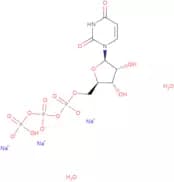
CAS:Nicotinamide adenine dinucleotide (NAD), is a very important and essential coenzyme formed by the union of two nucleotides covalently bond to each other by their phosphates group. NAD is present in cells either in its oxidative form or in its reduced form, NAD+ and NADH respectively. They take part in many redox reactions, carrying electrons from one molecule to another.Formula:C21H27N7O14P2Purity:Min. 95 Area-%Color and Shape:White PowderMolecular weight:663.43 g/molUridine 5'-triphosphate dihydrate trisodium salt
CAS:Uridine 5'-triphosphate dihydrate trisodium salt is a nucleotide that is involved in the synthesis of RNA. This product has been used as a supplement to promote healthy eyes and skin, as well as to treat Alzheimer's disease. It has been shown to be an efficient method for the detection of active substances by hydrophilic interaction chromatography (HILIC). The HILIC method involves separating molecules based on their hydrophobic or hydrophilic properties, which are determined by the ionic strength of the solution. Uridine 5'-triphosphate dihydrate trisodium salt binds with chloride ions, which prevents it from binding with other organic compounds. The chloride ions then serve as an end point that can be detected using ultraviolet light.Formula:C9H12N2O15P3·3Na·2H2OPurity:Min. 95 Area-%Color and Shape:White PowderMolecular weight:586.12 g/molN6,3'-O-Dibenzoyl-2'-deoxyadenosine
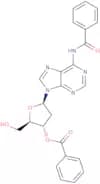
CAS:N6,3'-O-Dibenzoyl-2'-deoxyadenosine is a nucleoside that is used as a biochemical reagent in molecular biology. N6,3'-O-Dibenzoyl-2'-deoxyadenosine has been shown to be an inhibitor of the enzyme phosphodiesterase and also binds to DNA. This compound has been shown to have antibacterial activity against Gram-positive bacteria, such as Staphylococcus aureus and Clostridium perfringens. The lipophilicity of this compound allows it to cross the cell membrane and cleave DNA at the site of replication. N6,3'-O-Dibenzoyl-2'-deoxyadenosine is an analog of 6,4’-dihydroxybenzophenone (DBP) and can be synthesized from DBP by reacting with dibenzoyl chloride in chloroform
Formula:C24H21N5O5Purity:Min. 98 Area-%Color and Shape:PowderMolecular weight:459.47 g/molN4-Benzoyl-2'-deoxycytidine
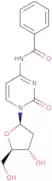
CAS:N4-Benzoyl-2'-deoxycytidine is a fluorescent nucleoside that has been used to study the molecular interactions between sugar residues and the phosphate groups of nucleic acids. It is used as a reagent for glycosidation, which involves the formation of a glycosidic linkage between an alcohol group in a saccharide or oligosaccharide and the hydroxyl group in an aromatic acid. N4-Benzoyl-2'-deoxycytidine has also been synthesized by solid-phase techniques. This synthetic method is based on phosphoramidite chemistry and uses an automated DNA synthesizer to produce oligonucleotides with specific sequences. The synthesis of this nucleoside relies on the use of fluorescent dyes such as fluorescein, rhodamine, and coumarin to monitor progress during synthesis.Formula:C16H17N3O5Purity:Min. 95%Color and Shape:White PowderMolecular weight:331.33 g/mol2-Aminoperimidine hydrochloride
CAS:2-Aminoperimidine hydrochloride is the hydrochloride salt of 2-aminoperimidine, a polycyclic aromatic heterocycle featuring a fused naphthalene–pyrimidine ring system with an amino group at the 2-position. The protonated amino group forms a stable crystalline salt with hydrochloric acid, enhancing aqueous solubility and facilitating handling in laboratory applications.Formula:C11H9N3•(HCl)xPurity:Min. 95%Color and Shape:PowderMolecular weight:219.67 g/mol1-(2'-Deoxy-3',5'-di-O-toluoyl-a-D-ribofuranosyl)-4-amino-1,2-dihydro-2-oxo-1,3,5-triazine
CAS:1-(2'-Deoxy-3',5'-di-O-toluoyl-a-D-ribofuranosyl)-4-amino-1,2-dihydro-2-oxo-1,3,5-triazine is a nucleoside derivative that features a modified pyrimidinone (triazine) base attached to a protected deoxyribose sugar. This molecule can be used in research.Formula:C24H24N4O6Purity:Min. 95%Color and Shape:White To Off-White SolidMolecular weight:464.48 g/molN4-Benzoyl-5'-O-DMT-2'-O-(2-methoxyethyl)-5-methylcytidine
CAS:N4-Benzoyl-5'-O-DMT-2'-O-(2-methoxyethyl)-5-methylcytidine is a new nucleoside analogue that is a phosphoramidite. It has been synthesized as an anticancer agent and antiviral drug. N4-Benzoyl-5'-O-DMT-2'-O-(2-methoxyethyl)-5-methylcytidine has been shown to inhibit the growth of human tumor cells in vitro, suggesting that it may have anticancer activity. This compound also inhibits viral replication by inhibiting DNA synthesis and RNA transcription in infected cells.Formula:C41H43N3O9Purity:Min. 97 Area-%Color and Shape:PowderMolecular weight:721.79 g/molN4-Benzoyl-2'-deoxy-2'-fluorocytidine
CAS:N4-Benzoyl-2'-deoxy-2'-fluorocytidine is a novel, synthetic nucleoside that has been shown to inhibit the growth of cancer cells and is being investigated as a potential anticancer drug. N4-Benzoyl-2'-deoxy-2'-fluorocytidine has also been found to be active against HIV, Herpes simplex virus type 1 (HSV-1) and 2 (HSV-2), and influenza A virus. It prevents the replication of viruses by inhibiting DNA synthesis in the host cell.Formula:C16H16FN3O5Purity:Min. 95%Color and Shape:PowderMolecular weight:349.31 g/molCyclic adenosine 5'-diphosphate ribose ammonium salt
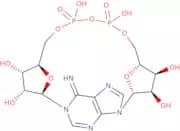
CAS:Cyclic Adenosine 5'-diphosphate ribose ammonium salt (CADPRAM) is a potent inhibitor of cyclic nucleotide phosphodiesterases (PDEs). CADPRAM reversibly inhibits PDEs and prevents the hydrolysis of cAMP. This inhibition can lead to an increase in cytosolic Ca2+. CADPRAM also inhibits polymerase chain reaction, which is why it cannot be used for the treatment of infectious diseases. CADPRAM has been shown to inhibit the activity of enzymes that are known to play a role in clinical pathology, such as adenylate cyclase and phosphodiesterase type 3.Formula:C15H21N5O13P2·NH3Purity:Min. 95%Color and Shape:White solid.Molecular weight:558.33 g/molBiotin-5-cytidine-5'-triphosphate lithium salt - 1 mM aqueous solution
CAS:Biotin-5-cytidine-5'-triphosphate lithium salt - 1 mM aqueous solution is a novel, synthetic and highly purified ribonucleoside phosphoramidite. It is used as an activator of nucleic acid synthesis in the preparation of DNA and RNA. Biotin-5-cytidine-5'-triphosphate lithium salt - 1 mM aqueous solution has been shown to be effective against various types of cancer cells, including leukemic cells and breast cancer cells. The drug also inhibits the replication of human immunodeficiency virus (HIV) and herpes simplex virus type 2 (HSV-2).Formula:C22H35N6O16P3S·xLiPurity:Min. 95%Color and Shape:PowderMolecular weight:764.53 g/mol3'-O-Allylguanosine
3'-O-Allylguanosine is a antiviral agent that belongs to the group of synthetic nucleosides. It is a monophosphate analog of guanosine and an activator of ribonucleotide reductase. 3'-O-Allylguanosine has been shown to be effective against cancer cells in vitro. It has also been shown to inhibit DNA synthesis and promote DNA degradation in human leukemia cells, suggesting its potential use for the treatment of leukemia.
Formula:C13H17N5O5Purity:Min. 95%Molecular weight:323.3 g/mol2'-Deoxyadenosine-5'-triphosphate disodium salt
CAS:2'-Deoxyadenosine-5'-triphosphate disodium salt is a nucleotide that is formed from adenosine triphosphate (ATP) and deoxyadenosine monophosphate (dAMP). It is an intermediate in the biosynthesis of fatty acids, which are important components of cell membranes. This nucleotide can be used to measure the light exposure of bacteria. 2'-Deoxyadenosine-5'-triphosphate disodium salt has been shown to have antibacterial activity against some Gram-positive bacteria, such as Staphylococcus aureus. The effective dose for these bacteria is 5 µg/mL with a linear model. The biological properties of this nucleotide are still not fully understood, but it is thought to play a role in blood pressure regulation through its effects on fatty acid synthesis.Formula:C10H14N5O12P3Na2Purity:Min. 95%Color and Shape:White PowderMolecular weight:535.15 g/molCoenzyme A sodium salt hydrate
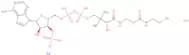
CAS:Coenzyme A is a biochemical that is required for the synthesis of fat molecules. It also plays an important role in the activation of fatty acids, as well as in the production of collagen and growth factor-β1. Coenzyme A sodium salt hydrate (CAS) is a cofactor that participates in various metabolic processes, including process optimization and conjugation reactions. It has been shown to increase the transcription of insulin-sensitive genes, which may be due to its ability to inhibit the activity of nonsteroidal anti-inflammatory drugs. This product can be used in transfection experiments and fluorescence assays for cervical cancer or insulin sensitivity.Formula:C21H36N7O16P3SNaPurity:Min. 95%Color and Shape:PowderMolecular weight:790.53 g/molN4-Benzoyl-5-methylcytidine
CAS:N4-Benzoyl-5-methylcytidine is a labile chemical that can be uniquely prepared using biochimie. It has been shown to have anticodon activity in assays and is synthesized chemically. The nucleoside is phosphoramidite, which is methylated and reproducible. N4-Benzoyl-5-methylcytidine has been shown to inhibit the growth of cells by blocking the synthesis of purines and pyrimidines. It may also have biophysical properties that are related to its ability to bind to DNA.Formula:C17H19N3O6Purity:Min. 95%Color and Shape:PowderMolecular weight:361.35 g/molN4-Benzoyl-2'-deoxy-5'-O-DMT-cytidine
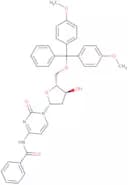
CAS:N4-Benzoyl-2'-deoxy-5'-O-DMT-cytidine is a pesticide that is used as an acaricide, insecticide, and nematicide. It has been shown to be effective in controlling the growth of E. coli and insects by binding to their membranes and inhibiting lipid synthesis. N4-Benzoyl-2'-deoxy-5'-O-DMT-cytidine binds to the polypeptides in the bacterial cell membrane and inhibits their function, leading to cell death. This drug also has a low toxicity for mammals.Formula:C37H35N3O7Purity:Min. 98 Area-%Color and Shape:White Off-White PowderMolecular weight:633.69 g/mol2'-Deoxy-2',2'-difluoro-5-methyluridine
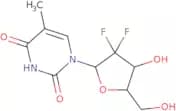
CAS:2'-Deoxy-2',2'-difluoro-5-methyluridine is a synthetic nucleoside analog for use in researchFormula:C10H12F2N2O5Purity:Min. 95%Molecular weight:278.21 g/mol2'-O-Methyladenosine 5'-triphosphate lithium - 100 mM aqueous solution
CAS:2'-O-Methyladenosine 5'-triphosphate lithium is a novel nucleotide that has been synthesized to act as an antiviral and anticancer agent. It can be used in the production of ribonucleosides, deoxyribonucleosides, and modified DNA. It is also a high quality phosphoramidite that can be used in the synthesis of DNA and RNA. 2'-O-Methyladenosine 5'-triphosphate lithium has been shown to inhibit the replication of HIV-1 and other viruses by inhibiting viral transcription. It is also active against cancer cells, with an IC50 value of 0.2 μM for HL-60 cells.
Formula:C11H18N5O13P3•Li3Purity:Min. 95%Molecular weight:542 g/mol7-Deazaguanosine
CAS:7-Deazaguanosine is a low energy analog of guanosine that has been shown to be activated by trifluoroacetic acid, which is a chemical reagent that can be used for the activation of nucleosides. 7-Deazaguanosine is used in the treatment of human serum and urine viruses such as hepatitis B virus, herpes simplex virus, and cytomegalovirus. The compound has also been shown to have receptor agonism activity on toll-like receptors. 7-Deazaguanosine has been shown to have antiviral effects against HIV and influenza A (H1N1). 7-Deazaguanosine binds at the viral receptor site and blocks the entry process into cells. This drug also stimulates macrophages to produce cytokines, which are proteins that regulate immune responses.Formula:C11H14N4O5Purity:Min. 95%Color and Shape:Off-White PowderMolecular weight:282.26 g/molN4-Benzoyl-2'-deoxy-5'-O-DMT-5-methylcytidine
CAS:N4-Benzoyl-2'-deoxy-5'-O-DMT-5-methylcytidine is a connector that is used in optical devices. It is a ligand that binds to the constant region of the antibody, which is part of the molecule that protects against bacteria and viruses. The residue has been shown to have variable conformation in tetrahydrofuran and ethyl group. This molecule can be injected into dimethylformamide with an anion chloride or pyrrolidine ring.Formula:C38H37N3O7Purity:Min. 95%Color and Shape:White PowderMolecular weight:647.72 g/mol2′-O-2-Methoxy-2-oxoethyl-5-methyl-cytidine
2′-O-2-Methoxy-2-oxoethyl-5-methylcytidine (2′OMeC) is a synthetic ribonucleoside that is used in DNA synthesis. 2′OMeC is a nucleotide analog that inhibits DNA and RNA synthesis by competitively inhibiting the enzyme activity of DNA polymerase, RNA polymerase, and other enzymes involved in the process. This drug has been shown to inhibit the replication of human immunodeficiency virus type 1 (HIV-1) and hepatitis C virus (HCV). It also has anticancer properties through its ability to inhibit protein synthesis. The novel structure of this drug gives it high quality and purity.Formula:C13H19N3O7Purity:Min. 95%Molecular weight:329.31 g/mol2,4-Diamino-6-hydroxy-5-nitrosopyrimidine
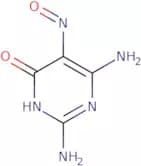
CAS:2,4-Diamino-6-hydroxy-5-nitrosopyrimidine is a nucleoside for use in research applicationsFormula:C4H5N5O2Purity:Min. 95%Color and Shape:PowderMolecular weight:155.12 g/mol2′-O-[2-(Methylamino)-2-oxoethyl]guanosine
CAS:2′-O-[2-(Methylamino)-2-oxoethyl]guanosine is a monophosphate nucleoside with anticancer properties. It has been shown to activate the transcription of genes that regulate cell growth and differentiation, and to induce apoptosis in tumor cells. This compound is an analog of guanosine, which is not modified at the 2′ position. It has been used to synthesize phosphoramidites for oligonucleotide synthesis, and may be useful as a novel therapeutic agent for cancer treatment.Formula:C13H18N6O6Purity:Min. 95%Molecular weight:354.32 g/molUridine 5'-diphosphate disodium salt
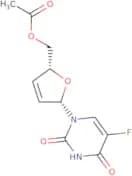
CAS:Agonist of P2Y6 purinoceptor; antagonist of P2Y14Formula:C9H12N2O12P2Na2Purity:Min. 95%Color and Shape:White PowderMolecular weight:448.12 g/mol1-(5-O-Acetyl-2,3-dideoxy-ß-L-glycero-pent-2-enofuranosyl)-5-fluorouracil
CAS:1-(5-O-Acetyl-2,3-dideoxy-ß-L-glycero-pent-2-enofuranosyl)-5-fluorouracil is a modified nucleoside analog with structural alterations that enhance its biological properties and stability. The compound features 5-fluorouracil as the nucleobase, a fluorinated pyrimidine often used in chemotherapy due to its ability to interfere with DNA replication. The sugar component is 2,3-dideoxy-β-L-glycero-pent-2-enofuranose and has a specific glycerol and enol configuration, which alters its interactions with enzymes involved in nucleic acid metabolism. The compound includes a 5-O-acetyl protecting group at the 5'-position, which shields the hydroxyl group during synthesis.
Formula:C11H11FN2O5Purity:Min. 95%Molecular weight:270.21 g/mol





![[1',2',3',4',5'-¹³C5]-Kinetin riboside](/_next/image/?url=https%3A%2Fstatic.cymitquimica.com%2Fproducts%2F3D%2Fthumb-webp%2FNK161877.webp&w=3840&q=75)


![2,6-Diamino-9-[3',5'-O-(1,1,3,3-tetraisopropyl-1,3-disiloxanediyl)-β-D-ribofuranosyl]purine](/_next/image/?url=https%3A%2Fstatic.cymitquimica.com%2Fproducts%2F3D%2Fthumb-webp%2FND08565.webp&w=3840&q=75)











![2′-O-[2-(Methylamino)-2-oxoethyl]guanosine](/_next/image/?url=https%3A%2Fstatic.cymitquimica.com%2Fproducts%2F3D%2Fthumb-webp%2FNM182884.webp&w=3840&q=75)