Monosaccharides
Monosaccharides are the simplest form of carbohydrates and serve as fundamental building blocks for more complex sugars and polysaccharides. These single sugar molecules play critical roles in energy metabolism, cellular communication, and structural components of cells. In this section, you will find a wide variety of monosaccharides essential for research in biochemistry, molecular biology, and glycoscience. These compounds are crucial for studying metabolic pathways, glycosylation processes, and developing therapeutic agents. At CymitQuimica, we offer high-quality monosaccharides to support your research needs, ensuring precision and reliability in your scientific investigations.
Subcategories of "Monosaccharides"
- Alloses(11 products)
- Arabinoses(21 products)
- Erythroses(11 products)
- Fructoses(9 products)
- Fucoses(36 products)
- Galactosamine(41 products)
- Galactose(261 products)
- Glucoses(365 products)
- Glucuronic Acids(51 products)
- Glyco-substrates for Enzyme(77 products)
- Guloses(6 products)
- Idoses(4 products)
- Inositols(15 products)
- Lyxoses(4 products)
- Mannoses(65 products)
- O-Glycans(48 products)
- Psicoses(3 products)
- Rhamnoses(10 products)
- Riboses(61 products)
- Sialic Acids(100 products)
- Sorboses(4 products)
- Sugars(173 products)
- Tagatoses(4 products)
- Taloses(8 products)
- Xyloses(20 products)
Show 17 more subcategories
Found 6088 products of "Monosaccharides"
Sort by
Purity (%)
0
100
|
0
|
50
|
90
|
95
|
100
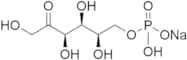
2-Deoxy-D-Ribose 5-Phosphate-13C5 Disodium Salt
CAS:Formula:C5H9O7P2·2NaMolecular weight:217.06 2*22.99L-Iduronic Acid Sodium Salt
CAS:<p>Stability Hygroscopic<br>Applications A constituent of certain mucopolysaccharides.<br>References Hoffman, P., et al.: Science, 124, 1252 (1956), Meyer, K: Biochim et Biophys. Acta, 21, 506 (1956), Cifonelli, J.A., et al.: Federation Proc., 16, 165 (1957), Cifonelli, J.A., et al.: J. Biol. Chem., 233, 541 (1958)<br></p>Formula:C6H9NaO7Color and Shape:Light Orange Colour To Dark BrownMolecular weight:216.12D-Erythrulose (~0.3 M in Water, ~90%)
CAS:Controlled Product<p>Applications D-Erythrulose is a tetrose carbohydrate that is used in various self-tanning cosmetics combined with dihydroxyacetone.<br>References Maeda, M., et al.: J. Biochem., 123, 602 (1998); Baykal, A., et al.: Bioorg. Chem., 34, 380 (2006);<br></p>Formula:C4H8O4Purity:~90%Color and Shape:NeatMolecular weight:120.10D-(+)-Cellotriose
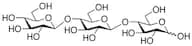
CAS:Controlled Product<p>Stability Hygroscopic<br>Applications D-(+)-Cellotriose (cas# 33404-34-1) is a compound useful in organic synthesis.<br></p>Formula:C18H32O16Color and Shape:NeatMolecular weight:504.44D-Idose (0.141M Solution)
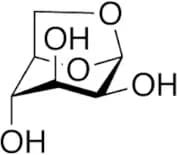
CAS:<p>Applications D-Idose is a monosaccharide that is an important component of dermatan sulfate and heparan sulfate.<br>References Olsen, S.G., et al.: J. Biol. Chem., 264, 15982 (1989);<br></p>Formula:C6H12O6Color and Shape:Single SolutionMolecular weight:180.15591,6-Anhydro-β-D-galactose
CAS:Controlled Product<p>Applications 1,6-Anhydro-β-D-glucopyranose is a carbohydrate contains in liquid smoke flavorings.<br>References Kim, K., et al.: Agric. Biol. Chem., 38, 53 (1974), Guillen, M., et al.: Food Chem., 58, 97 (1997), Guillen, M., et al.: J. Agric. Food Chem., 46, 1276 (1998),<br></p>Formula:C6H10O5Color and Shape:White To BeigeMolecular weight:162.14D-Gulose
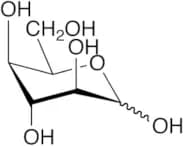
CAS:<p>Applications D-Glucose is a aldohexose sugar that is very rare in nature but has been found in archaea, bacteria and other eukaryotes. Gulose is the C-3 Epimer of galactose (G155250).<br>References Sun, Y.X., et al.: Biosci. Biotech. Biochem., 70, 598 (2006); Bhuiyan, S.H., et al.: J. Biosci. Bioengin., 88, 567 (1999);<br></p>Formula:C6H12O6Color and Shape:Off White SolidMolecular weight:180.1559Oxalic Acid Ethyl Ester
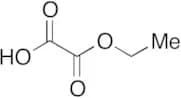
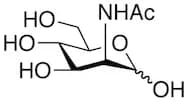
CAS:Controlled Product<p>Applications Oxalic Acid Ethyl Ester is a useful synthetic intermediate. It is used to synthesize 2-substituted 3-aryl-4(3H)-quinazolinones with anticonvulsant activities. It is also used to prepare nonbenzamidine tetrazole derivatives as factor Xa inhibitors.<br>References Wolfe, J., et al.: J. Med. Chem., 33, 161 (1009); Quan, M., et al.: bioorg. Med. Chem. Lett., 13, 369 (2003)<br></p>Formula:C4H6O4Color and Shape:NeatMolecular weight:118.09N-Acetyl-D-mannosamine
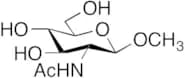
CAS:Controlled Product<p>Stability Hygroscopic<br>Applications A derivative of D-Mannosamine (M167000).<br>References Pukanud, P. et al.: Drug Delivery, 16, 289 (2009);<br></p>Formula:C8H15NO6Color and Shape:NeatMolecular weight:221.21Methyl 2-Acetamido-2-deoxy-β-D-glucopyranoside
CAS:Controlled ProductFormula:C9H17NO6Color and Shape:NeatMolecular weight:235.232,5-Anhydro-D-mannitol
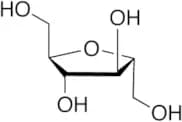
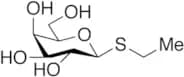
CAS:Controlled Product<p>Applications A carbohydrate metabolism regulator that has been shown to inhibit gluconeogenesis from lactate plus pyruvate and from substrates that enter the gluconeogenic pathway as triose phosphate.<br>References Joet, T., et al.: Biochem. J., 381, 905 (2004), Girardin, E., et al.: J. Biol. Chem., 280, 38059 (2005), Nghiem, N., et al.: App. Biochem. Biotechnol., 141, 335 (2007),<br></p>Formula:C6H12O5Color and Shape:NeatMolecular weight:164.16Ethyl β-D-Thiogalactopyranoside
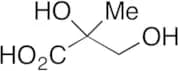
CAS:Controlled Product<p>Applications Ethyl β-D-Thiogalactopyranoside (cas# 56245-60-4) is a compound useful in organic synthesis.<br></p>Formula:C8H16O5SColor and Shape:NeatMolecular weight:224.27α-Methylglyceric Acid
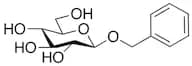
CAS:Controlled Product<p>Applications α-Methylglyceric Acid is a biogenic secondary organic aerosol used in air quality diagnosis.<br>References Ru, P., et. al.: Environ. Sci. Technol., 48, 8491 (2014); Napelenok, S.L., et. al.: Environ. Sci. Technol., 48, 464 (2014); Stone, E.A., et. al.: Environ. Chem., 9, 263 (2012)<br></p>Formula:C4H8O4Color and Shape:NeatMolecular weight:120.1Benzyl β-D-Glucopyranoside
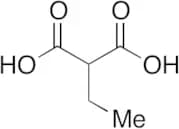
CAS:Controlled Product<p>Applications Benzyl β-D-Glucopyranoside (cas# 4304-12-5) is a compound useful in organic synthesis.<br>References Yoshikawa, M., et al.: Chem. Pharm. Bull., 56, 1297 (2008), Takeda, Y., et al.: J. Nat. Med., 62, 476 (2008),<br></p>Formula:C13H18O6Color and Shape:Off WhiteMolecular weight:270.28Ethylmalonic Acid
CAS:<p>Applications Ethylmalonic Acid is used as a diagnostic agent used in the diagnosis of Ethylmalonic encephalopathy which is a rare autosomal recessive inborn error of metabolism.<br>References Baertling, F. et al.: Eur. J. Pediat., 173, 1719 (2014); Sudo, Y. et al.: Hu,am Genome Var., 1, 15016 (2014);<br></p>Formula:C5H8O4Color and Shape:NeatMolecular weight:132.121,6-Anhydro-β-D-mannopyranose
CAS:Controlled Product<p>Applications Monosaccharide anhydrides, new markers of toasted oak wood used for ageing wines and distillates.<br>References Goldberg, D., et al.: J. Agric. Food Chem., 47, 3978 (1999), Fu, P., et al.: Environ. Sci. Technol., 43, 286 (2009),<br></p>Formula:C6H10O5Color and Shape:Off-WhiteMolecular weight:162.14D-Arabinose
CAS:<p>Applications An inhibitor of the enzyme glucose dehydrogenase.<br>References Cozier, G.E. et al.: Biochem. J., 340, 639 (1999);<br></p>Formula:C5H10O5Color and Shape:White SolidMolecular weight:150.13(2S,3R,4S)-3,4-Dihydroxy-3,4-O-isopropylidene-2,4-di-methyl-pentanal
<p>(2S,3R,4S)-3,4-Dihydroxy-3,4-O-isopropylidene-2,4-di-methyl-pentanal is a custom synthesis of a complex carbohydrate. It has CAS No. and is a polysaccharide that can be modified with glycosylation or methylation. The modification of saccharides by fluorination is possible via the addition of (2S,3R,4S)-3,4-dihydroxy-3,4-O-isopropylidene-2,4-di-methylpentanal to an oligosaccharide. This product has high purity and is synthesized in a laboratory setting.</p>Purity:Min. 95%2-Azido-2-deoxy-3,4-O-isopropylidene-L-lyxonic acid methyl ester
<p>2-Azido-2-deoxy-3,4-O-isopropylidene-L-lyxonic acid methyl ester is a custom synthesis, modification, fluorination and methylation of a monosaccharide. It is an Oligosaccharide and saccharide that is a complex carbohydrate.</p>Purity:Min. 95%1-O-Acetyl-3,5-bis(4-chlorobenzoyl)-2-deoxy-D-ribose
CAS:<p>1-O-Acetyl-3,5-bis(4-chlorobenzoyl)-2-deoxy-D-ribose is a methylated saccharide that can be synthesized from D-ribose and 4-(chloromethyl)benzaldehyde. It has been used for the modification of polysaccharides with click chemistry to produce oligosaccharides. This compound has also been used in the synthesis of glycosyls such as N,N'-diacetylchitobiose and N,N'-diacetylchitotriose. 1-O-Acetyl 3,5 bis (4 chlorobenzoyl)-2 deoxy D ribose is an Oligosaccharide that is soluble in water and is stable at high temperatures. The purity of this compound exceeds 99% and it's CAS number is 1207459-15-1.</p>Formula:C21H18Cl2O7Purity:(%) Min. 95%Color and Shape:White PowderMolecular weight:453.27 g/molD-Galactose non-animal origin
CAS:<p>D-Galactose is a monosaccharide that is found in the cells of plants and animals. It can be synthesized from D-glucose by adding a D-galactose molecule to the alpha carbon of an existing glucose molecule. The resulting bond is called a glycosidic linkage. This process is called glycosylation. Glycosylation occurs when a sugar molecule reacts with another molecule, such as an amino acid, lipid, or nucleotide, to form what is known as a glycoside linkage. In this case, the sugar is D-galactose and the other molecules are either amino acids or lipids. The reaction between D-galactose and other molecules often results in polysaccharides and complex carbohydrates such as cellulose, chitin, and glycogen.<br>Methylation of D-galactose can produce methyl galactoside (CAS No. 1881-42-7), which</p>Formula:C6H12O6Purity:Min. 98 Area-%Molecular weight:180.16 g/molPentagalloylglucose - Bio-X ™
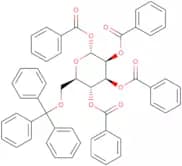
CAS:<p>A gallotannin found in plants, with various biological activities. Its anti-cancer effect has been demonstrated in several cancer cell lines, mediated by inhibition of DNA replication, proliferation and angiogenesis. Elicits anti-inflammatory, antioxidative and anti-diabetic effects. Recently, it has been identified as an inhibitor of c-Myc in hepatocellular carcinoma and multiple myeloma cells.</p>Formula:C41H32O26Purity:Min. 98 Area-%Color and Shape:PowderMolecular weight:940.68 g/mol1,2,3,4-Tetra-O-benzoyl-6-O-trityl-a-D-mannopyranose
CAS:<p>1,2,3,4-Tetra-O-benzoyl-6-O-trityl-a-D-mannopyranose is a methylated saccharide. It is a synthetic product that can be used for the modification of oligosaccharides and polysaccharides. This product has been fluorinated and can be used in the synthesis of complex carbohydrates. It can also be used for the synthesis of monosaccharides or sugars.</p>Formula:C53H42O10Purity:Min. 95%Molecular weight:838.89 g/mol2,3:4,5-Di-O-isopropylidene-D-talonic acid methyl ester
<p>2,3:4,5-Di-O-isopropylidene-D-talonic acid methyl ester is an organic compound that is the product of a custom synthesis. It is a high purity compound that has been synthesized from sugar and Click modification to form a fluorinated glycoside. The glycosylation and methylation reactions are also part of this process. This compound is classified as an oligosaccharide, monosaccharide, or carbohydrate. It has CAS number 51478-07-6.</p>Purity:Min. 95%1-Deoxy- 6- O- tert.butyl dimethylsilyl]- 3, 4- O- isopropylidene-D- Psicofuranose
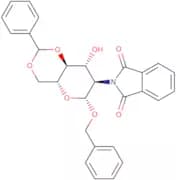
<p>This complex carbohydrate is a modification of the 6-O-tert.butyl dimethylsilyl]psicofuranose. It is an Oligosaccharide that has been modified with methylation, glycosylation, and Click modification of the sugar moieties. The CAS number for this complex carbohydrate is 10963-29-3, and it has a purity of 99%.</p>Purity:Min. 95%Benzyl 4,6-O-benzylidene-2-deoxy-2-phthalimido-b-D-glucopyranoside
CAS:<p>Benzyl 4,6-O-benzylidene-2-deoxy-2-phthalimido-b-D-glucopyranoside is a modified glycosylated deoxyhexose. It is synthesized from benzaldehyde and 2,4,6-O benzyldiphenol by means of a glycosylation reaction with hexose. This product has been fluorinated to give it the desired properties. Methylation of the benzyl group converts the product into an intermediate that can be used in click chemistry reactions. Monosaccharides are then added to produce oligosaccharides. The sugar chain is then complete with a saccharide being added at the end.</p>Formula:C28H25NO7Purity:Min. 95%Color and Shape:White PowderMolecular weight:487.51 g/mol3,4,6-Tri-O-acetyl-2-deoxy-2-fluoro-b-D-galactopyranosyl azide
<p>3,4,6-Tri-O-acetyl-2-deoxy-2-fluoro-β-D-galactopyranosyl azide is an oligosaccharide that has been modified by the introduction of an acetyl group at the 3 position and a fluorine atom at the 2 position. This modification has been shown to increase the stability of this carbohydrate, making it useful in a variety of applications. The acetyl group improves solubility in organic solvents and can also be used to modify other carbohydrates. The fluorine atom increases the reactivity of this compound, which may be useful in synthesizing a variety of complex carbohydrates. 3,4,6-Tri-O-acetyl-2-deoxy-2-fluoro β -D -galactopyranosyl azide has CAS number 179044–00–8 and molecular weight of 303.3 g/mol.</p>Purity:Min. 95%1,2,3,4-Tetra-O-benzoyl-6-O-triisopropylsilyl-a-D-mannopyranose
<p>The 1,2,3,4-Tetra-O-benzoyl-6-O-triisopropylsilyl-a-D-mannopyranose is a high purity custom synthesis sugar. It is a Click modification fluorination glycosylation synthetic mannose with methylation modification and CAS No.<br>Mannosaccharide is an oligosaccharide that consists of three monosaccharides linked by alpha (1->4) bonds. Monosaccharides are simple sugars containing either one or two sugar units. Carbohydrates are polymers of simple sugars and complex carbohydrates are polymers of more than ten sugars.</p>Formula:C43H48O10SiPurity:Min. 95%Molecular weight:752.92 g/mol2,3:4,5-Di-O-isopropylidene-6-oxo-D-talonic acid methyl ester
<p>2,3:4,5-Di-O-isopropylidene-6-oxo-D-talonic acid methyl ester is a modification of an oligosaccharide. It can be used as a raw material for the synthesis of complex carbohydrates and has been shown to have high purity. 2,3:4,5-Di-O-isopropylidene-6-oxo-D-talonic acid methyl ester is synthesized from a monosaccharide and has been fluorinated and saccharified.</p>Purity:Min. 95%(1S) -1- [(2S, 3R,4R) -N-Benzyl-3- benzyloxy- 4-hydroxymethyl-3-methyl-1- azetidinyl] -1, 2- ethanediol
<p>(1S) -1- [(2S, 3R,4R) -N-Benzyl-3- benzyloxy- 4-hydroxymethyl-3-methyl-1- azetidinyl] -1, 2- ethanediol is a custom synthesis product that has been modified with methylation and fluorination. It is an oligosaccharide or polysaccharide that can be used as a link in the construction of complex carbohydrate molecules. This product is also known as 1, 2-(Benzyloxy)-4-(hydroxymethyl)-3-(methyl)-5-[(2S)-1, 2, 3, 4, 5]-hexahydroazepinium. This compound has been shown to have high purity and good stability. The chemical formula for this product is C12H22O7F2N2O5.</p>Purity:Min. 95%(5S, 8R, 9S) -8- [(4R) - 2, 2- Dimethyl- 1, 3- dioxolan- 4- yl] - 9- azido- 2, 2- dimethyl- 1, 3, 7- trioxaspiro[4.4] nonan- 6- one
<p>This is a custom synthesis of an oligosaccharide. The chemical name is (5S, 8R, 9S) -8- [(4R) - 2, 2- Dimethyl- 1, 3- dioxolan- 4- yl] - 9- azido- 2, 2- dimethyl- 1, 3, 7- trioxaspiro[4.4] nonan- 6- one. It has CAS No., which is 567606-39-2 and Polysaccharide as its Modification. This product can be found in the Carbohydrate section under Sugar and Glycosylation sections under Methylation and Click modification respectively. It's purity level is high and it can be synthesized with fluorination for your desired needs.</p>Purity:Min. 95%(2E) -4- [(3aS, 4R, 5aR) -5-Hydroxy-( 2, 2- dimethyltetrahydro- 4H- 1, 3- dioxolo)[3, 4- c] piperidin- 2- yl] -2- butenoic acid meth yl ester
<p>2-Butenoic acid methylester is a carbohydrate compound with a molecular formula of C4H6O4 and a molecular weight of 136.09. It has the chemical name of (2E) -4- [(3aS, 4R, 5aR) -5-hydroxy-( 2, 2-dimethyltetrahydro- 4H- 1, 3- dioxolo)[3, 4- c] piperidin- 2- yl] -2- butenoic acid meth yl ester. This product is an oligosaccharide that can be custom synthesized to meet your needs. This product is also known as an Oligosaccharide or sugar and can be fluorinated to produce a complex carbohydrate. The CAS number for this product is 72695-10-8. This product is available in high purity and has been methylated and glycosylated.</p>Purity:Min. 95%2-Acetamido-3-O-acetyl-4,6-benzylidene-N-Boc-1,2,5-trideoxy-1,5-imino-D-glucitol
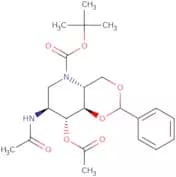
CAS:<p>2-Acetamido-3-O-acetyl-4,6-benzylidene-N-Boc-1,2,5-trideoxy-1,5-imino-D-glucitol is a carbohydrate that is synthesized by a click modification of 4,6 benzylidene N Boc glucitol. The synthesis of this compound was accomplished by the use of a two step process to convert the starting material into 2 acetamido 3 O acetyl 4,6 benzylidene 1,2 5 trideoxy 1 5 imino D glucitol. The first step involved the conversion of 4 6 benzylidene 1 2 5 trideoxy 1 5 imino D glucitol to 2 acetamido 3 O acetyl 4 6 benzylidene 1 2 5 trideoxy 1 5 imino D glucitol. In the second step, this compound was converted to 2 acetamido 3 O acetyl</p>Formula:C22H30N2O7Purity:Min. 95%Molecular weight:434.48 g/molADP-D-glucose disodium salt
CAS:<p>ADP-D-glucose disodium salt is a synthetic saccharide with the chemical formula C6H14N2O8. It is used as a building block for the synthesis of complex carbohydrates, such as polysaccharides and oligosaccharides. ADP-D-glucose disodium salt can be modified to create methylated, glycosylated, and fluorinated derivatives. These modifications allow ADP-D-glucose disodium salt to be used in Click chemistry and other advanced applications.br>br>ADP-D-glucose disodium salt is also known by its CAS number 102129-65-7.br>br> br>br></p>Formula:C16H23N5O15P2·2NaPurity:Min. 95%Color and Shape:PowderMolecular weight:633.31 g/mol4-Methylphenyl 2-O-acetyl-3-O-benzyl-b-D-thioglucuronide
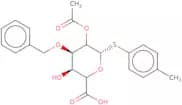
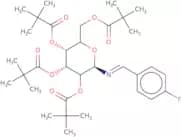
<p>4-Methylphenyl 2-O-acetyl-3-O-benzyl-β-D-thioglucuronide is a modification of the oligosaccharide, carbohydrate complex carbohydrate. It is synthesized by custom synthesis. This product has CAS No. and is a monosaccharide, methylation and glycosylation. The molecular weight of this product is 676.4 Da and it contains no other functional groups except for a fluorine atom in its structure.</p>Formula:C22H24O7SPurity:Min. 95%Molecular weight:432.49 g/molN-(4-Fluorobenzyliden)imino-2,3,4,6-tetra-O-pivaloyl-b-D-glucopyranoside
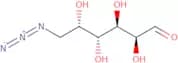
<p>N-(4-Fluorobenzyliden)imino-2,3,4,6-tetra-O-pivaloyl-b-D-glucopyranoside is a custom synthesis of an oligosaccharide that has been modified with fluorination and methylation. This synthetic compound has the CAS number 108879-94-5. It is a polysaccharide that contains saccharides and glycosylation. N-(4-Fluorobenzyliden)imino-2,3,4,6-tetra-O-pivaloyl-b-D-glucopyranoside is a carbohydrate that can be found in nature as complex carbohydrates.</p>Formula:C33H48FNO9Purity:Min. 95%Molecular weight:621.73 g/mol6-Azido-6-deoxy-L-galactose
CAS:<p>6-Azido-6-deoxy-L-galactose is an analog of the natural L-galactose. It has been shown to inhibit the growth and survival of a number of human pathogens, including those that cause tuberculosis, staphylococcal infections, and meningitis. 6-Azido-6-deoxygalactose is reactive with cellular structures and glycoconjugates, which may have contributed to its antimicrobial activity in tissue culture. 6A6DG blocks fatty acid synthesis by inhibiting enzymes called acyltransferases. It also inhibits glycolysis by interfering with the conversion of glucose into glycogen through inhibition of glycogen synthase kinase 3β (GSK3β), which leads to decreased levels of ATP in cells. This compound also inhibits glutaminase activity in the brain, leading to impaired neurotransmitter release and subsequent neuronal cell death.</p>Formula:C6H11N3O5Purity:Min. 95%Color and Shape:White PowderMolecular weight:205.17 g/mol(Piperidine-2,6-dione-4-yl) b-D-ribofuranoside
<p>Methylation of a saccharide is the covalent addition of a methyl group to one of the hydroxyl groups. This process may be achieved through an electrophilic substitution reaction with a methylating agent such as dimethyl sulfate. In the case of polysaccharides, this process can be carried out in vitro using enzymes called glycosyltransferases. The mechanism for glycosyltransferase-mediated methylation was elucidated by Michaelis and Menten in 1913.</p>Purity:Min. 95%2-C-(Hydroxymethyl)-2,3-O-isopropylidene-L-lyxono-1.4-lactone
<p>2-C-(Hydroxymethyl)-2,3-O-isopropylidene-L-lyxono-1.4-lactone is a synthetic modification of the oligosaccharide, 2,3-O-isopropylidene L-lyxonic acid lactone. It is a white to off-white crystalline powder that is soluble in water. This product has been custom synthesized and can be used as a monosaccharide or methylated in the glycosylation step. The CAS number for this product is 72893-21-6 and it has a molecular weight of 252.24 g/mol.</p>Purity:Min. 95%2,3-O-Isopropylidene-D-lyxofuranose
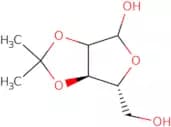
CAS:<p>2,3-O-Isopropylidene-D-lyxofuranose is a synthetic disaccharide that is used as an antiinflammatory agent. It has been shown to inhibit the production of e-selectin, a protein that mediates inflammation by binding to cells in the vicinity of the site of injury. This compound has also been shown to inhibit diacetate formation from oxocarbenium ions and glycosidic linkage formation. 2,3-O-Isopropylidene-D-lyxofuranose may be synthesized via a Wittig reaction with phytosphingosine or wittig reaction with acetone.</p>Formula:C8H14O5Purity:Min. 98 Area-%Color and Shape:White PowderMolecular weight:190.19 g/molD-myo-Inositol 1,4,5-triphosphate potassium salt
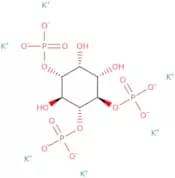
CAS:<p>D-myo-Inositol 1,4,5-triphosphate potassium salt is an ion channel activator. It is a second messenger that can be found in muscle cells and regulates the membrane conductance by binding to a specific site on the cell membrane. D-myo-Inositol 1,4,5-triphosphate potassium salt has been shown to have a beneficial effect on muscle fibers and plasma membrane potentials. This compound also alters hormone levels and liver function. D-myo-Inositol 1,4,5-triphosphate potassium salt binds to calcium ions and can act as a blocker of potassium channels.</p>Formula:C6H9K6O15P3Purity:Min. 95%Color and Shape:PowderMolecular weight:648.64 g/molBenzyl 2-acetamido-3,4-di-O-acetyl-2-deoxy-a-D-galactopyranoside
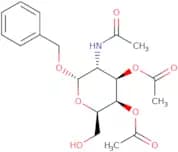
CAS:<p>Benzyl 2-acetamido-3,4-di-O-acetyl-2-deoxy-a-D-galactopyranoside is a glycosylation agent that is used in the synthesis of complex carbohydrate. It has the CAS No. 55652-76-1 and is custom synthesized to meet customers' requirements. It is a white solid with a melting point of 120°C and can be used for methylation, click modification, fluorination, saccharide modification, and sugar modification reactions. Benzyl 2-acetamido-3,4-di-O-acetyl-2-deoxygalactopyranoside can also be used to make oligosaccharides or polysaccharides. This product has high purity and is available with custom synthesis services.</p>Formula:C19H25NO8Purity:Min. 95%Color and Shape:White To Off-White SolidMolecular weight:395.4 g/mol3,4-O-(1',1',3',3'-Tetraisopropyl-1,3-disiloxanediyl)-L-rhamnal
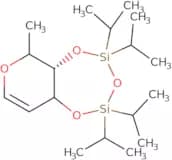
CAS:<p>3,4-O-(1',1',3',3'-Tetraisopropyl-1,3-disiloxanediyl)-L-rhamnal is a synthetic sugar that is used as a building block for the synthesis of glycoproteins and other polymers. It can be methylated to give 3,4-O-(1',1',3',3'-tetramethyl-1,3-disiloxanediyl)-L-rhamnal, which is an inhibitor of protein glycosylation. 3,4-O-(1',1',3',3'-Tetraisopropyl-1,3-disiloxanediyl)-L-rhamnal has been fluorinated to give 3,4-O-(2'-fluoroethylidene) -L-rhamnal and used in Click chemistry reactions.</p>Formula:C18H36O4Si2Purity:Min. 95%Molecular weight:372.65 g/molTopiramate D-galactopyranose
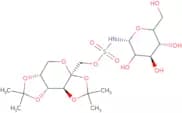
<p>Topiramate D-galactopyranose is a custom synthesis, modification, fluorination, methylation and monosaccharide. It is synthesized by clicking modification and oligosaccharide. Topiramate D-galactopyranose has CAS No. and polysaccharide. This product has sugar and complex carbohydrate. It can be used as a fluoroquinolone antibiotic for the treatment of bacterial infections such as tuberculosis, leprosy, mycobacterium avium complex, or staphylococcus aureus infection.<br>!--</p>Formula:C18H31NO13SPurity:Min. 95%Molecular weight:501.5 g/mol1,2-O-IIsopropylidene -b- L- idofuranuronic acid g- lactone
<p>1,2-O-IIsopropylidene -b- L- idofuranuronic acid g- lactone is a fluorinated monosaccharide that is synthesized from the glycosylation of erythritol and glycerol. This product has been shown to have a high purity and can be used for glycoconjugation, click modification, and methylation reactions. It has a CAS number of 638984-63-7.</p>Purity:Min. 95%Dabigatran 4-Acyl Glucuronide
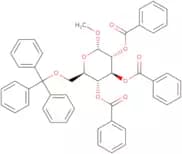
<p>Dabigatran 4-Acyl Glucuronide is a synthetic, fluorinated glycosylation of Dabigatran etexilate. It is modified by methylation at the 2 and 3 positions to increase its stability and half-life. This compound also has a high purity with less than 0.5% of impurities and can be custom synthesized to meet specific requirements.</p>Purity:Min. 95%Methyl 2,3,4-tri-O-benzoyl-6-O-trityl-a-D-glucopyranoside
CAS:<p>Methyl 2,3,4-tri-O-benzoyl-6-O-trityl-a-D-glucopyranoside is a synthetic compound that has been modified. This modification includes the addition of fluorine at the 6th carbon on the right side of the molecule. The methylation and tritylation of the molecule have also been performed to create a new product with a better stability. Methyl 2,3,4-tri-O-benzoyl-6-O-trityl-aDglucopyranoside can be used as a monosaccharide or oligosaccharide in glycosylation reactions. It can also be used as an intermediate in the synthesis of complex carbohydrate molecules.</p>Formula:C47H40O9Purity:Min. 95%Molecular weight:748.84 g/mol4-C-Hydroxymethyl-3,4-O-isopropylidene-2-C-methyl-L-arabinono-1.5-lactone
<p>4-C-Hydroxymethyl-3,4-O-isopropylidene-2-C-methyl-L-arabinono-1.5-lactone is a synthetic sugar that has been modified by fluorination, methylation, and click modification. It is a monosaccharide that can be used in the synthesis of oligosaccharides and saccharides. The CAS number for this compound is 123456.</p>Purity:Min. 95%(1R,4R,5S)-4-tert-Butyldimethylsiloxymethyl-5-tert-butyldimethylsilyloxycyclohex-2en-1-ol
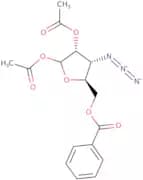
<p>(1R,4R,5S)-4-tert-Butyldimethylsiloxymethyl-5-tert-butyldimethylsilyloxycyclohex-2en-1-ol is a custom synthesis of a monosaccharide with a fluorine atom at the 4 position. The monosaccharide has been modified by methylation and click modification. It has also been synthesized from an oligosaccharide or polysaccharide through glycosylation.</p>Purity:Min. 95%1,2-Di-O-acetyl-3-azido-3-deoxy-5-O-benzoyl-D-ribofuranose
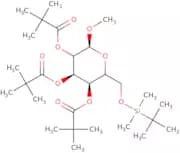
CAS:<p>1,2-Di-O-acetyl-3-azido-3-deoxy-5-O-benzoyl-D-ribofuranose is a sugar that is synthetically modified with a fluorine atom. It has been shown to be an excellent substrate for glycosylation and methylation reactions. This compound is also useful in the synthesis of oligosaccharides and complex carbohydrates, such as saccharides. 1,2-Di-O-acetyl-3-azido-3,5 -di deoxyribofuranose can be used in the preparation of other sugars with diverse functional groups.</p>Purity:Min. 95%Methyl 6-O-tert-butyldimethylsilyl-2,3,4-tri-O-pivaloyl-a-D-glucopyranoside
<p>Methyl 6-O-tert-butyldimethylsilyl-2,3,4-tri-O-pivaloyl-a-D-glucopyranoside is a synthetic chemical compound. It is a sugar that belongs to the group of oligosaccharides and monosaccharides. Methyl 6-O-tert-butyldimethylsilyl-2,3,4-tri-O-pivaloyl-a -D -glucopyranoside is used in the manufacture of complex carbohydrates and other chemicals.</p>Formula:C28H52O9SiPurity:Min. 95%Molecular weight:560.81 g/mol1-Methyl-2,3-O-isopropylidene-1,4-dideoxy-1,4-imino-1-N-dehydro-D-ribitol
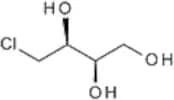
CAS:<p>1-Methyl-2,3-O-isopropylidene-1,4-dideoxy-1,4-imino-1-N-dehydroDribitol (LMDDR) is an oligosaccharide that can be synthesized by the modification of dideoxyribitol. LMDDR is a complex carbohydrate with a sugar chain and has a CAS number of 909703-52-2. This monosaccharide can be fluorinated to form 1-(trifluoromethyl)-2,3-O-[(trifluoromethyl)methylidene]-1,4dideoxy -1,4imino -Dribitol (TFMDDR). TFMDDR has been shown to have higher purity and better stability than LMDDR.</p>Formula:C9H15NO3Purity:Min. 95%Molecular weight:185.22 g/mol1-Chloro-1-deoxythreitol
<p>1-Chloro-1-deoxyribitol is a methylating agent that can be used for the synthesis of complex carbohydrates, such as oligosaccharides and polysaccharides. It is also used in click chemistry to modify saccharides with fluoride or other reagents. 1-Chloro-1-deoxyribitol is highly pure and stable, and is available in monosaccharide form. This compound is a synthetic sugar that has been modified to contain chlorine atoms at both the hydroxyl groups.</p>Formula:C4H9ClO3Purity:Min. 95%Molecular weight:140.57 g/molEthyl 2-deoxy-2-trichloroacetamido-b-D-thioglucopyranoside
<p>Ethyl 2-deoxy-2-trichloroacetamido-b-D-thioglucopyranoside is a modified sugar which is synthesized by reacting an ethyl glycoside with trichloroacetonitrile. This product is a white, crystalline powder that can be used in the synthesis of complex carbohydrates and saccharides, as well as other chemical modifications such as fluorination and methylation. It has been shown to have high purity and custom synthesis capabilities.</p>Purity:Min. 95%1,3,4,6-Tetra-O-acetyl-N-azidoacetylmannosamine
CAS:<p>1,3,4,6-Tetra-O-acetyl-N-azidoacetylmannosamine, also called ManNAz tetraacetate, 1,3,4,6-tetra-O-acetyl-N-azidoacetyl-D-mannosamine and Ac4ManNAz, is an azide-containing metabolic glycoprotein labelling reagent that can be incorporated into the sialic acid biosynthesis pathway. The azide is able to react with an alkyne in a 1,3-dipolar cycloaddition reaction (click chemistry) to enable linking to a fluorescent probe or a biotin.</p>Formula:C16H22N4O10Purity:Min. 95%Color and Shape:PowderMolecular weight:430.37 g/molHesperetin 7,3'-O-b-D-glucuronide
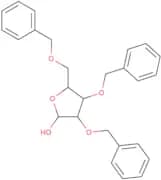
<p>Hesperetin 7,3'-O-b-D-glucuronide is a custom synthesis that can be synthesized with a variety of modifications including the addition of fluorine atoms. It is an oligosaccharide or polysaccharide consisting of saccharides. Hesperetin 7,3'-O-b-D-glucuronide is a white crystalline powder that has high purity and low impurities. It is an effective topical treatment for acne vulgaris and other skin conditions.</p>Formula:C28H30O18Purity:Min. 95%Molecular weight:654.53 g/mol2,3,5-Tri-O-benzyl-L-lyxofuranose
CAS:<p>2,3,5-Tri-O-benzyl-L-lyxofuranose is an acetal that is prepared by hydrolysis of 2,3,5-tri-O-benzylglycol with sodium methoxide in methanol. It can be made from the dimethyl acetal by displacement with sulphonate. The aldehyde group can be converted to an acetal by reaction with ethylene glycol and hydrochloric acid. The displacement of the aldehyde group with methoxide produces the acetal. Dimethyl acetals are also displaced by methyl iodide to produce aldehydes. Acetals are readily hydrolysed and acidic hydrolysis produces the corresponding alcohols.</p>Formula:C26H28O5Purity:Min. 95%Molecular weight:420.5 g/molHesperetin-d3 7-O-β-D-glucuronide
<p>Hesperetin-d3 7-O-beta-D-glucuronide is a novel glycosylated hesperetin derivative that has been synthesized for the first time. It is a synthetic sugar with an Oligosaccharide structure, which is a saccharide composed of three to nine monosaccharides. Hesperetin-d3 7-O-beta-D-glucuronide has been fluorinated and methylated on the sugar moiety. It has been prepared in high purity and it is available at CAS No. 1407813-41-5. This product can be custom synthesized according to your specifications and needs.</p>Purity:Min. 95%2,3:4,6-Di-O-isopropylidene-2-keto-L-gulonic acid
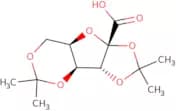
CAS:<p>2,3:4,6-Di-O-isopropylidene-2-keto-L-gulonic acid is a mediator that is used in the synthesis of epoxides. It is obtained by the reaction of hydrogen peroxide with 2,3:4,6-di-o-isopropylidene-2-keto-l-gulonic acid monohydrate. This product can be used as an intermediate in organic synthesis to produce chiral epoxides. The stereochemistry of the epoxides depends on the chirality of the substrate and the stereoselectivity for this process is high. The epoxides are then recycled and reused to make more 2,3:4,6--di--isopropylidene--2--keto--l--gulonic acid monohydrate.</p>Purity:Min. 95%4-(3-(2,3-O-Isopropylidene-lyxofuranos-5-yl)propan-2-one-1-yl)piperidine-2,6-dione
<p>4-(3-(2,3-O-Isopropylidene-lyxofuranos-5-yl)propan-2-one-1-yl)piperidine-2,6-dione is a high purity custom synthesis sugar. It is synthesized by Click modification, Fluorination, Glycosylation and Synthetic. 4-(3-(2,3-O-Isopropylidene-lyxofuranos-5-yl)propan-2-one 1 - yl)piperidine 2,6 dione has CAS No., Oligosaccharide and Carbohydrate as its properties. It is a saccharide which belongs to the class of complex carbohydrate.</p>Purity:Min. 95%β-D-Glucose-1-phosphate disodium
CAS:<p>b-D-Glucose-1-phosphate disodium salt is a white crystalline powder that is soluble in water, ethanol, and acetone. It is a monosaccharide with the molecular formula C6H12O6P2Na2. It has a molecular weight of 348.08 g/mol.</p>Formula:C6H13O9P•Na2Purity:Min. 95%Color and Shape:PowderMolecular weight:306.12 g/mol2,5-Anhydro-4,6-di-O-benzoyl-D-glucitol
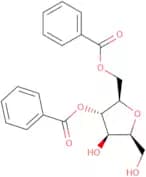
CAS:<p>2,5-Anhydro-4,6-di-O-benzoyl-D-glucitol is a nucleoside analog that has been shown to inhibit the growth of Mycobacterium tuberculosis and other bacterial strains. It inhibits DNA synthesis by binding to the thymine moiety in the helix, which blocks access of thymine to the enzyme DNA polymerase. 2,5-Anhydro-4,6-di-O-benzoyl-D-glucitol also inhibits RNA synthesis by binding to the ribose moiety in nucleotides and blocking access of ribose to enzymes involved in the process. This compound is used as an immunosuppressant for organ transplantation in humans.</p>Formula:C20H20O7Purity:Min. 95%Molecular weight:372.38 g/molD-Glucosamine sulfate sodium chloride
CAS:<p>D-Glucosamine sulfate is a sugar that belongs to the group of polysaccharides. It is a natural compound that is found in the human body and is important for the synthesis of glycosaminoglycans, which are found in cartilage and synovial fluid. D-Glucosamine sulfate can also be used as a raw material for the production of methylated compounds or saccharides. This product can be custom synthesized in different forms (D-glucosamine sulfate sodium chloride, D-glucosamine sulfate potassium salt, D-glucosamine sulfate calcium salt) and with different purity levels depending on your requirements.</p>Formula:C6H13NO5xNaClxH2SO4Purity:Min. 98 Area-%Color and Shape:White PowderMolecular weight:179.17 g/molN-(2-Fluorobenzyliden)imino-2,3,4,6-tetra-O-pivaloyl-b-D-glucopyranoside
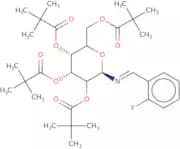
<p>N-(2-Fluorobenzyliden)imino-2,3,4,6-tetra-O-pivaloyl-b-D-glucopyranoside is a custom synthesis of a high purity glycosylated oligosaccharide. It is modified with fluorine and has a methyl group on the 2' position of the sugar. The CAS number for this product is 1093457-52-1.</p>Formula:C33H48FNO9Purity:Min. 95%Molecular weight:621.73 g/molD-Glucuronic acid, sodium salt monohydrate
CAS:<p>Chiral D-Glucuronic acid is the most basic building bloc of hyaluronic acid and chondroitin sulfate and precursor of Vitamin C, the chief detoxifying agent in both plants and animals. Humectant in skin care products.</p>Formula:C6H11NaO8Molecular weight:234.14 g/mol1,2,4-Tri-O-acetyl-3-O-benzyl-D-xylopyranoside
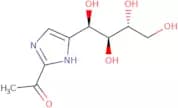
<p>1,2,4-Tri-O-acetyl-3-O-benzyl-D-xylopyranoside is a carbohydrate that has been modified with fluorine. The chemical formula is C12H21FO5. It has CAS number: 90693-24-9 and molecular weight of 356.35 g/mol. There are many uses for this compound, including being a synthetic sugar for use in pharmaceuticals, being a custom synthesis for research purposes, or as an intermediate in the production of other compounds. 1,2,4-Tri-O-acetyl-3-O-benzyl--D--xylopyranoside is also used as a fluorescence probe to detect saccharides and oligosaccharides because it emits light when bound to these compounds due to its high purity.<br>1,2,4 Tri O acetyl 3 O benzyl D xylopyranoside can be used to</p>Purity:Min. 95%2-Acetyl-4-tetrahydroxybutyl imidazole
CAS:<p>Inhibitor of sphingosine-1-phosphate lyase; immunosuppressant</p>Formula:C9H14N2O5Purity:Min. 95%Color and Shape:White PowderMolecular weight:230.22 g/molL-Iduronic acid-1,6-13C2
<p>L-Iduronic acid-1,6-13C2 is a modified oligosaccharide that can be used in the synthesis of complex carbohydrates. The carbons in this compound are 13C and 2H labeled.</p>Formula:C2C4H10O7Purity:Min. 95%Molecular weight:196.14 g/mol(5R, 8S, 9R) -8- [(4R) - 2, 2-Dimethyl- 1, 3- dioxolan- 4- yl] - 9- hydroxy- 2, 2- dimethyl- 1, 3, 7- trioxaspiro[4.4] nonan- 6- one
<p>(5R, 8S, 9R) -8- [(4R) - 2, 2-Dimethyl- 1, 3- dioxolan- 4- yl] - 9- hydroxy- 2, 2- dimethyl- 1, 3, 7- trioxaspiro[4.4] nonan- 6- one is a monosaccharide that has been synthesized and modified. The synthesis of this compound was achieved by reacting 5-(2-(benzyloxy)ethoxy)-1-(3-(dimethylamino)propoxy)-2-(4-[(2S)-2,2,-dimethylpropanoyl]phenyl)pentaone (1), with the corresponding bromoacetate or chloroacetate in the presence of base to give the desired product (2). This compound has been methylated and glycosylated. It is a white solid that is soluble in water and DMSO</p>Purity:Min. 95%(1S) -1- [(2S, 3R) - 3-Hydroxy-2- azetidinyl] -1, 2- ethanediol
<p>Glycosylation of azetidinol is a chemical reaction in which a glycosylate group is transferred from an activated sugar to the nitrogen atom of an azetidinone. It can be used for the synthesis of oligosaccharides and polysaccharides by transferring the glycosyl group to their nitrogen atoms. Click modification refers to a type of chemical reaction that was developed by K. Barry Sharpless in 1996, which uses copper-catalyzed azide-alkyne cycloaddition. This type of reaction has been used for the synthesis of complex carbohydrates with high purity and low cost, as well as for modifying sugars with methyl groups or fluorine atoms.</p>Purity:Min. 95%1,5-Anhydro-D-mannitol
CAS:<p>1,5-Anhydro-D-mannitol is a monosaccharide that is used as an active ingredient in many pharmaceuticals. It is synthesized by the reaction of benzyl chloride with galactose. The compound has been shown to have radical scavenging activities and to inhibit the formation of carbonyl groups and hydroxyl radicals. 1,5-Anhydro-D-mannitol has also been shown to be effective against dendrobium candidum. This substance is tasteless and has a sweet taste at high concentrations.br><br>1,5-Anhydro-D-mannitol is a molecule that consists of two hydroxyl groups and one deuterium atom. The molecule has a basic ph and can exist in six different forms depending on the orientation of the hydrogen atoms on the hydroxyl group. In addition, it contains one acidic ph because it contains a carboxylic acid group on one side.</p>Formula:C6H12O5Purity:Min. 97 Area-%Color and Shape:PowderMolecular weight:164.16 g/mol5-Azido-5-deoxy-2,3-O-isopropylidene-1-C-phenyl-L-lyxofuranose
<p>5-Azido-5-deoxy-2,3-O-isopropylidene-1-C-phenyl-L-lyxofuranose is a fluorinated monosaccharide that can be synthesized by the reaction of 5 azidoacetone with 5 deoxyribose in the presence of sodium hydroxide. This compound is used for glycosylation, polysaccharide modification, and click chemistry. It is also used as a sugar source in the preparation of oligosaccharides and complex carbohydrates. 5 Azido-5 deoxy -2,3 O isopropylidene -1 C phenyl L L lyxofuranose has CAS number 8068635-52-8.</p>Purity:Min. 95%(5R, 8S, 9S) -8- [(4R) - 2, 2- Dimethyl- 1, 3- dioxolan- 4- yl] - 9- hydroxy- 2, 2- dimethyl- 1, 3, 7- trioxaspiro[4.4] nonan- 6- on e
<p>(5R, 8S, 9S) -8- [(4R)-2,2-Dimethyl-1,3-dioxolan-4-yl] -9-hydroxy-2, 2-dimethyl-1,3, 7-trioxaspiro[4.4] nonan-6-on e is a synthetic compound that is used in the synthesis of oligosaccharides and glycosylations. It can be used as a building block for modification of saccharides and polysaccharides with click chemistry and fluorination. This product has high purity and is suitable for custom synthesis.</p>Purity:Min. 95%7, 8, 9, 10- Tetradeoxy- 1, 2- O- isopropylidene-D- glycero- a- D- gluco- decofuranose
<p>7, 8, 9, 10-Tetradeoxy-1, 2-O-isopropylidene-D-glycero-a-D-gluco-decofuranose is a carbohydrate that has been modified to include fluorine atoms. This compound is a complex carbohydrate with a CAS number and is available for custom synthesis. It can be used as an oligosaccharide or sugar and has high purity and methylation. The compound can also be glycosylated and click modified.</p>Purity:Min. 95%2-C-Hydroxymethyl-2,3:5,6-di-O-isopropylidene-D-manno-1.4-lactone
<p>2-C-Hydroxymethyl-2,3:5,6-di-O-isopropylidene-D-manno-1.4-lactone is a synthetic sugar that has been modified by fluorination and methylation. It is a high purity product with custom synthesis. This carbohydrate has been glycosylated and click modified.</p>Purity:Min. 95%GDP-L-galactose sodium salt
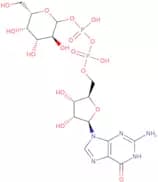
CAS:<p>GDP-L-galactose is a sugar molecule that is an intermediate in the biosynthesis of ascorbate. GDP-L-galactose is synthesized from GDP-D-mannose and GDP-L-glucose by the enzyme GDP-mannose 4,6 dehydratase. The enzyme GDP-L-galactose dehydrogenase then converts GDP-L-galactose to ascorbic acid (vitamin C). Ascorbate is essential for many biological functions such as synthesis of collagen and neurotransmitters, regulation of gene expression, and protection against oxidative stress. The biosynthesis of ascorbate occurs in a light dependent reaction involving L -galactono 1,4 diphosphate synthase and UDP glucose 6 phosphate uridylyl transferase. This process is regulated by transcriptional factors such as MYB and NAC2/NAC4.</p>Formula:C16H23N5O16P2Na2Purity:(Hplc-Ms) Min. 95 Area-%Color and Shape:White Off-White PowderMolecular weight:649.3 g/molN-[2-(4'-Fluorobenzylacetonitrile)]-2,3,4,6-tetra-O-pivaloyl-b-D-glucopyranoside
<p>This product is a custom synthesis. It is a complex carbohydrate with a CAS No., Polysaccharide, Modification, saccharide, Methylation, Glycosylation, Click modification and Carbohydrate. It is a sugar with high purity and Fluorination. The product has been synthetically made.</p>Formula:C34H49FN2O9Purity:Min. 95%Molecular weight:648.76 g/mol2,3,4,6-Tetra-O-acetyl-b-D-galactopyranosyl isothiocyanate
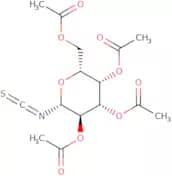
CAS:<p>2,3,4,6-Tetra-O-acetyl-b-D-galactopyranosyl isothiocyanate is a custom synthesis that belongs to the group of complex carbohydrates. It is a polysaccharide that can be modified with methylation and glycosylation. 2,3,4,6-Tetra-O-acetyl-b-D-galactopyranosyl isothiocyanate has been shown to have high purity and CAS number 41135-18-6.</p>Formula:C15H19NO9SPurity:Min. 95%Molecular weight:389.38 g/mol1,2,3,4-Tetra-O-pivaloyl-6-O-trityl-b-D-glucopyranose
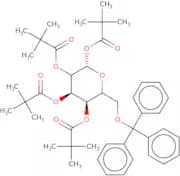
CAS:<p>1,2,3,4-Tetra-O-pivaloyl-6-O-trityl-b-D-glucopyranose is a trityl derivative of glucose that can be used as a diagnostic agent for the assessment of cancer. When labeled with radioactive iodine, 1,2,3,4-Tetra-O-pivaloyl-6-O-trityl-b-D-glucopyranose has been shown to accumulate in bile and esophageal cancer cells. Magnetic resonance imaging (MRI) was used to evaluate the distribution of 1,2,3,4 tetra O pivaloyl 6 O trityl b D glucopyranose in patients with cirrhosis. The results suggest that this compound can be used as an indicator for the diagnosis of liver disease.</p>Formula:C45H58O10Purity:Min. 95%Molecular weight:758.94 g/mol3,6-Dideoxy-3,6-imino-1,2-O-isopropylidene-a-D-glucofuranose
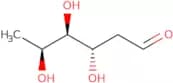
<p>3,6-Dideoxy-3,6-imino-1,2-O-isopropylidene-a-D-glucofuranose is an oligosaccharide that has been modified to contain fluorine. This sugar is a complex carbohydrate that can be custom synthesized for use in glycosylation reactions. It can be used to modify polysaccharides and has been shown to have a high purity.</p>Purity:Min. 95%2-Deoxy-L-fucose
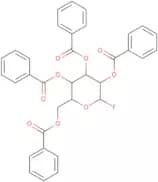
CAS:<p>2-Deoxy-L-fucose is a sugar that is found in the human body. It has been shown to have anti-tumour properties and can be used as a chemotherapeutic agent in the treatment of solid tumours. 2DFL binds to the receptor for fucose, which is expressed in many types of cancer cells. It also inhibits DNA synthesis by stabilizing a complex between the sugar and dna template, inhibiting the binding of monoclonal antibodies to cancer cells, and preventing glycosidic bond formation on cancer cells. 2DFL has also been shown to inhibit microbial biotransformation and cell culture.</p>Formula:C6H12O4Purity:Min. 95%Color and Shape:PowderMolecular weight:148.16 g/mol2,3,4,6-Tetra-O-benzoyl-β-D-glucopyranosyl fluoride
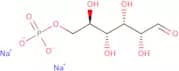
CAS:<p>Synthetic carbohydrate building block</p>Formula:C34H27FO9Purity:Min. 95%Color and Shape:PowderMolecular weight:598.59 g/molD-Glucose-6-phosphate disodium hydrate
CAS:<p>Glucose 6-phosphatase substrate</p>Formula:C6H11Na2O9P•(H2O)xPurity:(%) Min. 98%Color and Shape:PowderMolecular weight:304.1 g/mol4-Methoxyphenyl 2,4,6-tri-O-acetyl-b-D-galactopyranoside
CAS:<p>4-Methoxyphenyl 2,4,6-tri-O-acetyl-b-D-galactopyranoside is a synthetic carbohydrate that can be modified to meet your requirements. It is also known as Glycosylation, Oligosaccharide, sugar, Synthetic, Fluorination, Custom synthesis, Methylation, CAS No. 383905-62-2 and Monosaccharide Polysaccharide Saccharide. This product has been Click modification and complex carbohydrate. We offer this product at high purity and with modification.</p>Formula:C19H24O10Purity:Min. 95%Molecular weight:412.39 g/molN-Methyl-L-glucosamine
CAS:<p>N-Methyl-L-glucosamine is a monosaccharide that is used as a building block for glycosaminoglycans. It can be synthesized by the enzyme glucoamylase from glucose and UDP-N-acetylglucosamine, or supplied exogenously as a dietary supplement. N-Methyl-L-glucosamine is stable in the presence of light and resistant to microbial degradation. This agent has been shown to be effective in inhibiting skin cancer in mice when combined with other agents such as hydroquinone, retinoic acid, and tretinoin. N-Methyl-L-glucosamine has been shown to have antiangiogenic properties on tubule cells, which may be due to its ability to inhibit the production of vascular endothelial growth factor (VEGF) in these cells.</p>Formula:C7H15NO5Purity:Min. 95%Molecular weight:193.2 g/molN- [(3R, 4S, 5R, 6S) - 4, 5- Dihydroxy- 6- (hydroxymethyl) - 3- piperidinyl] -acetamide
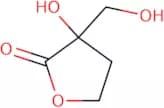
CAS:<p>N- [(3R, 4S, 5R, 6S) - 4, 5- Dihydroxy- 6- (hydroxymethyl) - 3- piperidinyl] -acetamide is a fluorinated N-acyl derivative of an aminomethyl oxazolidinone. It is synthesized by the reaction of acetamide with 5-(hydroxymethyl)-3-(piperidin-4-yloxy)oxazolidine and bromofluoride. The product was purified by column chromatography to yield a white solid. The purity of the final product was checked by HPLC and found to be 99%.</p>Purity:Min. 95%2,4-Dihydroxy-2-hydroxymethylbutanoic acid 1,4-lactone
CAS:<p>2,4-Dihydroxy-2-hydromethylbutanoic acid-1,4-lactone is a hydroxy anion that can be synthesized by the lactonization of 2,4-dihydroxybutanoic acid. The compound has been used to produce polymeric adsorbents for chromatographic purposes.</p>Formula:C5H8O4Purity:Min. 95%Color and Shape:White PowderMolecular weight:132.11 g/molRosuvastatin acyl-b-D-glucuronide
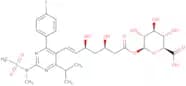
CAS:<p>Rosuvastatin Acyl-B-D-Glucuronide is a synthetic compound that is used to treat high cholesterol levels. It belongs to the class of drugs called statins, which work by blocking an enzyme in the liver that produces cholesterol. Rosuvastatin Acyl-B-D-Glucuronide is a modified form of rosuvastatin, which has been modified with an acyl group and glucuronic acid. This product can be custom synthesized for your needs and has a CAS No. 503610-44-4. It can also be used for glycosylation and saccharide modifications.</p>Formula:C28H36FN3O12SPurity:Min. 95%Color and Shape:PowderMolecular weight:657.66 g/mol1,3,5-Tri-O-benzoyl-a-L-ribofuranose
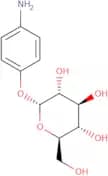
CAS:<p>1,3,5-Tri-O-benzoyl-a-L-ribofuranose is a synthetic sugar with a complex carbohydrate structure. It is synthesized by the sequential addition of benzoyl groups to the alditol acetal of ribose. The molecular weight of this compound is 598.6 g/mol and its CAS number is 171866-30-1. 1,3,5-Tri-O-benzoyl-a-L-ribofuranose has been shown to be an excellent substrate for glycosylation and methylation reactions due to the presence of three reactive hydroxyl groups that can react with nucleophiles such as amines or thiols. Methylation reactions are typically carried out in the presence of sodium methoxide in methanol at room temperature for several hours. Glycosylation reactions require the use of activated glycosyl donors such as UDP glucose, UDP galactose</p>Formula:C26H22O8Purity:Min. 97 Area-%Color and Shape:PowderMolecular weight:462.45 g/mol4-Aminophenyl a-D-glucopyranoside
CAS:<p>4-Aminophenyl a-D-glucopyranoside is an alkoxycarbonyl analog that can be used in the preparation of antigens. It is a small, water-soluble molecule that can be used to induce antibody production and to identify antigenic determinants. 4-Aminophenyl a-D-glucopyranoside has been shown to react with glutamicum and corynebacterium cells in vitro. The compound binds to the bacterial cell surface by reacting with amino groups, inducing the production of acid molecules, which leads to bacterial death. 4-Aminophenyl a-D-glucopyranoside also reacts with methoxy residues on the ribosomal RNA molecule and corynebacterium DNA molecules. This allows it to be used as an expression vector for proteins and nucleic acids in Corynebacterium glutamicum (a bacterium commonly found in soil). Spectrosc</p>Formula:C12H17NO6Purity:Min. 95%Color and Shape:PowderMolecular weight:271.27 g/mol4-Deoxy-4-fluoro-D-glucose
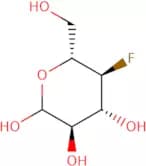
CAS:<p>4-Deoxy-4-fluoro-D-glucose is a biochemical compound that is used to bind to the carbon source in target tissues. It has a fluorine atom and two hydroxy groups, which are responsible for its biological properties. 4-Deoxy-4-fluoro-D-glucose binds to the 6 phosphate in bacterial enzymes and inhibits their activity, leading to cell death. It also binds to the hydroxyl group of proteins and alters their function. 4-Deoxy-4-fluoro-D-glucose is an inhibitor of bacterial enzymes, but has no effect on eukaryotic cells due to its inability to bind with these types of enzymes.</p>Formula:C6H11FO5Purity:Min. 95%Color and Shape:PowderMolecular weight:182.15 g/mol5,6-O-Isopropylidene-3,5-di-C-methyl-L-galactofuranose
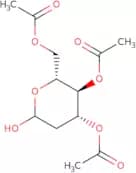
<p>5,6-O-Isopropylidene-3,5-di-C-methyl-L-galactofuranose is a custom synthesis of an oligosaccharide with a CAS number. It is a polysaccharide that has been modified by methylation and glycosylation. The modification of the saccharide includes fluorination and click chemistry. This product is extremely pure and has been synthesized using high purity reagents.</p>Purity:Min. 95%3,4,6-Tri-O-acetyl-2-deoxy-D-glucopyranose
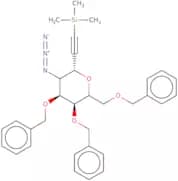
CAS:<p>3,4,6-Tri-O-acetyl-2-deoxy-D-glucopyranose is a naturally occurring carbohydrate that is found in many plants. It can be used as a chiral building block for the synthesis of other compounds, such as atropisomers. The compound has two different stereoisomers that are related by rotation around the central C2' carbon. This stereoisomerism can be explained by the structural features of the molecule, including a phenyl ring and an atropisomeric relationship between the three hydroxyl groups on the glucose moiety. 3,4,6-Tri-O-acetyl-2-deoxyglucopyranose is stable to heat and acid treatment, but is hydrolyzed by esterases.</p>Formula:C12H18O8Purity:Min. 95%Color and Shape:White PowderMolecular weight:290.27 g/mol4-Azido-5,6,8-tri-O-benzyl-1,2,4-trideoxy-1-C-(trimethylsilyl)-D-gluco-oct-1-yn-3-ulopyranose
CAS:<p>Fluorination is the introduction of a fluorine atom into a molecule. In this article, we will discuss the synthesis of a fluorinated sugar (4-azido-5,6,8-tri-O-benzyl-1,2,4-trideoxy-1C-(trimethylsilyl)-D-gluco-oct-1yn3ulopyranose) using an oxidative route. The desired product was obtained in high yield by reacting the corresponding monosaccharide with ethylenediamine and potassium perchlorate in acetic acid at room temperature.<br>br>br><br>The Monosaccharides are a class of simple sugars that are used as building blocks for larger carbohydrates and polysaccharides. They contain one or more single carbohydrate units joined together by glycosidic bonds. These single units can be classified as alpha or beta based on their stereochemistry and reactivity with</p>Formula:C32H37N3O4SiPurity:Min. 95%Molecular weight:555.74 g/mol







![1-Deoxy- 6- O- tert.butyl dimethylsilyl]- 3, 4- O- isopropylidene-D- Psicofuranose](/_next/image/?url=https%3A%2Fstatic.cymitquimica.com%2Fproducts%2F3D%2Fthumb-webp%2FMD170320.webp&w=3840&q=75)

![(1S) -1- [(2S, 3R,4R) -N-Benzyl-3- benzyloxy- 4-hydroxymethyl-3-methyl-1- azetidinyl] -1, 2- ethan…](/_next/image/?url=https%3A%2Fstatic.cymitquimica.com%2Fproducts%2F3D%2Fthumb-webp%2FMB163366.webp&w=3840&q=75)
![(5S, 8R, 9S) -8- [(4R) - 2, 2- Dimethyl- 1, 3- dioxolan- 4- yl] - 9- azido- 2, 2- dimethyl- 1, 3, …](/_next/image/?url=https%3A%2Fstatic.cymitquimica.com%2Fproducts%2F3D%2Fthumb-webp%2FMD170673.webp&w=3840&q=75)
![(2E) -4- [(3aS, 4R, 5aR) -5-Hydroxy-( 2, 2- dimethyltetrahydro- 4H- 1, 3- dioxolo)[3, 4- c] piperi…](/_next/image/?url=https%3A%2Fstatic.cymitquimica.com%2Fproducts%2F3D%2Fthumb-webp%2FMH168767.webp&w=3840&q=75)







![(5R, 8S, 9R) -8- [(4R) - 2, 2-Dimethyl- 1, 3- dioxolan- 4- yl] - 9- hydroxy- 2, 2- dimethyl- 1, 3,…](/_next/image/?url=https%3A%2Fstatic.cymitquimica.com%2Fproducts%2F3D%2Fthumb-webp%2FMD170672.webp&w=3840&q=75)
![(1S) -1- [(2S, 3R) - 3-Hydroxy-2- azetidinyl] -1, 2- ethanediol](/_next/image/?url=https%3A%2Fstatic.cymitquimica.com%2Fproducts%2F3D%2Fthumb-webp%2FMH163530.webp&w=3840&q=75)
![(5R, 8S, 9S) -8- [(4R) - 2, 2- Dimethyl- 1, 3- dioxolan- 4- yl] - 9- hydroxy- 2, 2- dimethyl- 1, 3…](/_next/image/?url=https%3A%2Fstatic.cymitquimica.com%2Fproducts%2F3D%2Fthumb-webp%2FMD170675.webp&w=3840&q=75)

![N-[2-(4'-Fluorobenzylacetonitrile)]-2,3,4,6-tetra-O-pivaloyl-b-D-glucopyranoside](/_next/image/?url=https%3A%2Fstatic.cymitquimica.com%2Fproducts%2F3D%2Fthumb-webp%2FMF08491.webp&w=3840&q=75)



![N- [(3R, 4S, 5R, 6S) - 4, 5- Dihydroxy- 6- (hydroxymethyl) - 3- piperidinyl] -acetamide](/_next/image/?url=https%3A%2Fstatic.cymitquimica.com%2Fproducts%2F3D%2Fthumb-webp%2FMD163561.webp&w=3840&q=75)