Peptides
Subcategories of "Peptides"
Found 29633 products of "Peptides"
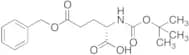
Boc-Glu(OBzl)-OH
CAS:Controlled ProductApplications Boc-Glu(OBzl)-OH, is an amino acid building block used in peptide synthesis. With a growing peptide drug market the fast, reliable synthesis of peptides is of great importance.
Formula:C17H23NO6Color and Shape:NeatMolecular weight:337.37n-Hexyltrioxyethylene
CAS:Controlled ProductFormula:C12H26O4Color and Shape:NeatMolecular weight:234.332Epsilon Dipeptide
CAS:Controlled ProductFormula:C31H53N5O11Color and Shape:NeatMolecular weight:671.779o-Aminobenzoylglycyl-p-nitro-L-phenylalanyl-L-proline
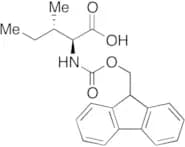
CAS:Controlled ProductFormula:C23H25N5O7Color and Shape:NeatMolecular weight:483.474N-Fmoc-L-isoleucine
CAS:Controlled ProductApplications N-Fmoc-L-isoleucine is a N-Fmoc-protected form of L-Isoleucine (I820175). L-Isoleucine is classified as an essential amino acid, and is also a tumour promoter of bladder cancer in rats.
References Hatch, T., et al.: Infect. Immun., 12, 211 (1975); Nishio, Y., et al.: Science, 231, 843 (1986)Formula:C21H23NO4Color and Shape:NeatMolecular weight:353.41Met-enkephalin
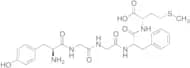
CAS:Stability Unstable in alkaline solution
Applications Met-enkephalin is an endogenous opioid peptide that increases expression levels of δ, μ and κ-opioid receptors, inhibits growth, apoptosis and proliferation in human melanoma A375 cells. Antitumor effect via regulating dendritic cells. Regulation of the immune system, therapy effects of antitumor, autoimmune diseases, AIDS, and other immune-related diseases.
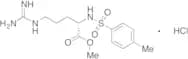
References Wang, D., et al.: Mol. Med. Rep., 14, 5521 (2016); Feng, P., et al.: Weishengwuxue Zazhi, 35, 100 (2015); Meng, Y., et al.: Int. Immunopharmacol., 44, 61 (2017)Formula:C27H35N5O7SColor and Shape:NeatMolecular weight:573.66N-4-Tosyl-L-arginine Methyl Ester Hydrochloride
CAS:Applications N-4-Tosyl-L-arginine Methyl Ester Hydrochloride acts as a synthetic substrate of serine proteases and thus is used to determine serine proteases from diverse organic sources.
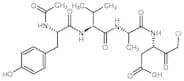
References Hummel, B. et al.: Can. J. Biochem. Physiol., 37, 1393 (1959); Matsuda, Y. et al.: J. Biochem. 80, 671 (1976);Formula:C14H23ClN4O4SColor and Shape:NeatMolecular weight:378.87Caspase-1 Inhibitor I
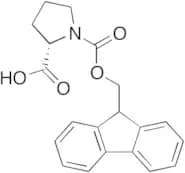
CAS:Controlled ProductFormula:C23H32N4O8Color and Shape:NeatMolecular weight:492.522L-Proline-N-Fmoc
CAS:Controlled ProductApplications L-Proline-N-Fmoc is N-Fmoc protected L-Proline (P755995) which is an amino acid and precursor (with vitamin C) for collagen, the building block of the structure of tendons, ligaments, arteries, veins and muscles. It is important in wound healing.
References Bondarenko, L.B., et al.: Int. J. Peptides., 2, 1687 (2012); Rimer, T., et al.: Biomacromolecules, 13, 2110 (2012);Formula:C20H19NO4Color and Shape:NeatMolecular weight:337.37N-Boc-glycine
CAS:Controlled ProductApplications Used in the composition of drugs containing Ketoprofen, and Sodium hyaluronate as antiinflammatory agents.
References Bajusz, S., et al.: J. Med. Chem., 33, 1729 (1990), Dahlgren, A., et al.: Bioorg. Med. Chem., 10, 1829 (2002),Formula:C7H13NO4Color and Shape:NeatMolecular weight:175.18Caspase-1 Inhibitor II
CAS:Controlled ProductApplications Caspase-1 Inhibitor II is an inhibitor of caspase-1, caspase-4, and caspase-5.
Formula:C24H33ClN4O8Color and Shape:NeatMolecular weight:540.992,3,4,6-Tetra-O-acetyl-α-D-mannopyranosyl-Fmoc Serine
CAS:Controlled ProductFormula:C32H35NO14Color and Shape:NeatMolecular weight:657.619β-Aspartylalanine
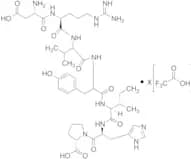
CAS:Controlled ProductFormula:C7H12N2O5Color and Shape:NeatMolecular weight:204.181Angiotensin (1-7) xTFA salt
CAS:Controlled ProductApplications Angiotensin (1-7) can be used in biological study and engineering or chemical process of mechanisms of peptide oxidation by hydroxyl radicals.
References Verlackt, C., et al.: J Phys Chem C, 121, 5787 (2017)Formula:C41H62N12O11·xTFAColor and Shape:NeatMolecular weight:899.00 + x(114.02)H-D-Ala-Gln-octadecyl Ester Hydrochloride
CAS:Controlled ProductFormula:C26H51N3O4•HClColor and Shape:NeatN6-[(1,1-Dimethylethoxy)carbonyl]-N2-[(9H-fluoren-9-ylmethoxy)carbonyl]-D-lysine
CAS:Controlled ProductApplications Derivative of N6-[(1,1-Dimethylethoxy)carbonyl]-N2-[(9H-fluoren-9-ylmethoxy)carbonyl]-D-lysine is a hetero-bifunctional traceless linker for temporarily attaching highly solubilizing peptide sequences onto insoluble peptides.
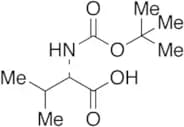
References Jacobsen, M., et al.: J. Am. Chem. Soc., 138, 11775-11782 (2016)Formula:C26H32N2O6Color and Shape:NeatMolecular weight:468.54Boc-L-Valine
CAS:Controlled ProductApplications Boc-L-Valine is used in amino acid conjugates as proteasome inhibitors.
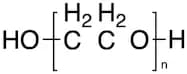
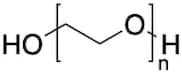
References Wan, S. et al.: Int. J. Mol. Med., 26, 447 (2010);Formula:C10H19NO4Color and Shape:NeatMolecular weight:217.26Poly(ethylene Glycol) ~20000
CAS:Controlled ProductStability Hygroscopic
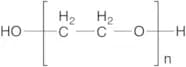
Applications Poly(ethylene Glycol) molecules of an average molecular mass of 20000. Poly(ethylene Glycol) is used in various applications from industrial chemistry to biological chemistry. Recent research has shown PEG maintains the ability to aid the spinal cord injury recovery process, helping the nerve impulse conduction process in animals. In rats, it has been shown to aid in the repair of severed sciatic axons, helping with nerve damage recovery. It is industrially produced as a lubricating substance for various surfaces to reduce friction. PEG is also used in the preparation of vesicle transport systems in with application towards diagnostic procedures or drug delivery methods.
References Borgens, R. et al.: J. Neurosci. Res., 66, 1179 (2001); Stavisky, R. et al.: Neurosci. Lett., 376, 98 (2005); Nalam, P. et al.: Tribiol. Lett., 37, 541 (2010); Steinmetz, N. et al.: J. Am. Chem. Soc., 131, 17093 (2009); Li, X. et al.: J. Am. Chem. Soc., 133, 11147 (2011); Li, L. et al.: Int. J. Pharm., 447, 192 (2013);Formula:H2O(C2H4O)nColor and Shape:Off-WhiteMolecular weight:62.07Saralasin
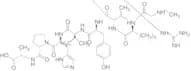
CAS:Controlled ProductApplications Saralasin are angiotensin II receptor agonists.
References Guimond, M., et al.: J. Med. Chem. Lett., 5, 1129 (2014)Formula:C42H65N13O10Color and Shape:NeatMolecular weight:912.047Boc-β-Ala-OH
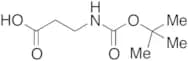
CAS:Controlled ProductApplications Boc-β-Ala-OH is a reagent used in the synthesis of quinazolines as platelet aggregation inhibitors and ligands of integrin.
References Krysko, A. et al.: Bioorg. Med. Chem. Lett., 26, 1839 (2016);Formula:C8H15NO4Color and Shape:NeatMolecular weight:189.21Azido-PEG7-amine
CAS:Controlled ProductApplications AZIDO-PEG7-AMINE (cas# 1333154-77-0) is a useful research chemical.
Formula:C16H34N4O7Color and Shape:NeatMolecular weight:394.461-[[7-(Dimethylamino)-3-oxo-3H-phenoxazin-1-yl]methyl]-1H-pyrrole-2,5-dione
CAS:Controlled ProductFormula:C19H15N3O4Color and Shape:NeatMolecular weight:349.34N-Acetyl-L-arginine Methyl Ester Hydrochloride
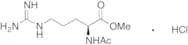
CAS:Controlled ProductApplications N-Acetyl-L-arginine Methyl Ester is used in the synthetic route to biologically important L-arginine peptides.
References Levison, P.R., et al.: Synthetic Communic., 13, 167 (1983),Formula:C9H18N4O3·ClHColor and Shape:NeatMolecular weight:266.725Poly(ethylene Glycol) ~30,000
CAS:Controlled ProductApplications Poly(ethylene Glycol) molecules of an average molecular mass of 30,000. Poly(ethylene Glycol) is used in various applications from industrial chemistry to biological chemistry. Recent research has shown PEG maintains the ability to aid the spinal cord injury recovery process, helping the nerve impulse conduction process in animals. In rats, it has been shown to aid in the repair of severed sciatic axons, helping with nerve damage recovery. It is industrially produced as a lubricating substance for various surfaces to reduce friction. PEG is also used in the preparation of vesicle transport systems in with application towards diagnostic procedures or drug delivery methods.
References Borgens, R. et al.: J. Neurosci. Res., 66, 1179 (2001); Stavisky, R. et al.: Neurosci. Lett., 376, 98 (2005); Nalam, P. et al.: Tribiol. Lett., 37, 541 (2010); Steinmetz, N. et al.: J. Am. Chem. Soc., 131, 17093 (2009); Li, X. et al.: J. Am. Chem. Soc., 133, 11147 (2011); Li, L. et al.: Int. J. Pharm., 447, 192 (2013);Formula:H2O(C2H4O)nColor and Shape:White To Off-WhiteMolecular weight:62.071-Boc-amino-3,6,9-trioxaundecanyl-11-ol
CAS:Controlled ProductApplications 1-Boc-amino-3,6,9-trioxaundecanyl-11-ol (cas# 106984-09-2) is a compound useful in organic synthesis.
Formula:C13H27NO6Color and Shape:NeatMolecular weight:293.363,6-Diamino-9-[2-carboxy-4-[(2-propyn-1-ylamino)carbonyl]phenyl]-4,5-disulfoxanthylium Inner Salt (Mixture of regioisomers)
CAS:Controlled ProductFormula:C24H17N3O10S2Color and Shape:NeatMolecular weight:571.536N-Formyl-Met-Leu-Phe
CAS:Controlled ProductApplications N-Formyl-Met-Leu-Phe is an inducer of superoxide release and agonist for FPR1.
Formula:C21H31N3O5SColor and Shape:NeatMolecular weight:437.55PEG4-azide
CAS:Controlled ProductApplications 1-Azido-3,6,9-trioxaundecane-11-ol (cas# 86770-67-4) is a compound useful in organic synthesis.
References Hatch, D., et al.: ChemBioChem., 9, 2433 (2008),Formula:C8H17N3O4Color and Shape:NeatMolecular weight:219.24Amino-PEG4-alcohol
CAS:Controlled ProductApplications 1-Amino-3,6,9-trioxaundecanyl-11-ol (cas# 86770-74-3) is a compound useful in organic synthesis.
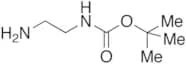
Formula:C8H19NO4Color and Shape:NeatMolecular weight:193.24NH2-C2-NH-Boc
CAS:Controlled ProductApplications N-Boc-ethylenediamine is used in the synthesis of Thyronamine derivatives and analogs.
Not a dangerous good if item is equal to or less than 1g/ml and there is less than 100g/ml in the package
References Anon., et al.: J. Pharmacol., 58, 53 (1936), Boissier, J., et al.: Eur. J. Pharmacol., 22, 141 (1973), Nillne, E., et al.: J. Biol. Chem., 277, 48587 (2002),Formula:C7H16N2O2Color and Shape:NeatMolecular weight:160.21Spaglumic Acid
CAS:Controlled ProductApplications Spaglumic Acid is a marker of neuronal integrity and was used in the detection of therapeutic values of antidrepressant treatments.
References Taylor, M.J., et al.: Int. J. Neuropharmacol., 15, 1541 (2012); Shi, D.X., et al.: J. Neurochem., 123, 971 (2012); Sun,W., et al.: Science., 339, 197 (2013);Formula:C11H16N2O8Color and Shape:NeatMolecular weight:304.25(+)-Biotin-ONP
CAS:Controlled ProductApplications D-Biotin 4-Ntrophenyl Ester, can be used in the preparation of biotin tagged ARC (adenosine-oligoarginine conjugate) derivative during cellular protein uptake studies.
References Chia-Ho Chu et. al; Scientific reports, 7(1), undefined (2017-7-14);Formula:C16H19N3O5SColor and Shape:NeatMolecular weight:365.4Azido-peg8-nhs Ester (~90%)
CAS:Controlled ProductApplications Azido-PEG8-NHS ester series of products contain an azide function on one end of a single molecular weight dPEG® spacer and a reactive group on the other end of the spacer. The dPEG® spacer is hydrophilic and non-immunogenic and improves the water solubility of the target molecule while reducing the immunogenicity and increasing the hydrodynamic volume of the target.
Formula:C23H40N4O12Purity:~90%Color and Shape:NeatMolecular weight:564.583Azido-PEG35 Amine
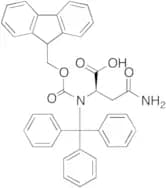
CAS:Controlled ProductFormula:C72H146N4O35Color and Shape:NeatMolecular weight:1627.935Fmoc-d-asn(trt)-oh
CAS:Controlled ProductApplications Fmoc-d-asn(trt)-oh, is an amino acid building block used in peptide synthesis. With a growing peptide drug market the fast, reliable synthesis of peptides is of great importance.
Formula:C38H32N2O5Color and Shape:NeatMolecular weight:596.68Boc-Gln-Ala-Arg-7-amido-4-methylcoumarin
CAS:Controlled ProductFormula:C29H42N8O8Color and Shape:NeatMolecular weight:630.693Z-Phe-Tyr-aldehyde
CAS:Controlled ProductFormula:C26H26N2O5Color and Shape:NeatMolecular weight:446.495(3S,8aS)-Hexahydro-3-[(1R)-1-hydroxyethyl]pyrrolo[1,2-a]pyrazine-1,4-dione
CAS:Controlled ProductFormula:C9H14N2O3Color and Shape:NeatMolecular weight:198.219(E)-2,3,3-Trimethyl-4-nonene
CAS:Controlled ProductFormula:C12H24Color and Shape:NeatMolecular weight:168.319N-tert-Boc-D-alanine
CAS:Controlled ProductApplications N-tert-Boc-D-alanine is an N-Boc-protected form of D-Alanine (A480995). D-Alanine is an amino acid that is commonly found in bacteria, such as Streptococcus faecalis. It is essential for the biosynthesis of peptidoglycan crosslinking sub-units that are used for bacterial cell walls. D-Alanine is also known to cause cytotoxic oxidative stress in brain tumour cells.
References Ellsworth, B., et al.: Chem. Biol., 3, 37 (1996); Ferrari, E. et al.: Nat. Biotech., 3, 1003 (1985); Stegman, L., et al.: Human Gene Ther., 9, 185 (1998); Wood, W. & Gunsalus, I.: J. Biol. Chem., 190, 403 (1951)Formula:C8H15NO4Color and Shape:NeatMolecular weight:189.21Amino-PEG3-C2-Azido
CAS:Controlled ProductStability Light Sensitive
Applications A PEG derivative, which contains a free amine that can be conjugated to biological molecules directly by an amide linkage (or via the corresponding isothiocyanate) and an azide that can be reduced to an amine for conjugation to other molecules. PEG derivatives are water soluble. Bifunctional water soluble compounds with flexible dimensions allow for conjugation of small molecules to proteins or molecular probes. 1-amino-11-azido-3,6,9-trioxaundecane can be reacted with small organic molecules for the synthesis of heterobifunctional compounds. It has been used to synthesize a mannose-fluorescein conjugate for the study of cell-surface mannose-specific lectins.
Not a dangerous good if item is equal to or less than 1g/ml and there is less than 100g/ml in the package
References Aslan, K., et al.: J. Fluoresc., 14, 391 (2004), Gole, A., et al.: Langmuir, 20, 7117 (2004), Cavalcante, A., et al.: Biochem. Eng. J., 29, 258 (2006),Formula:C8H18N4O3Color and Shape:NeatMolecular weight:218.25Z-VAL-MET-OH
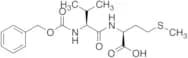
CAS:Controlled ProductApplications Z-VAL-MET-OH (cas# 108543-82-4) is a useful research chemical.
Formula:C18H26N2O5SColor and Shape:White To Off-WhiteMolecular weight:382.474Poly(ethylene Glycol) ~200
CAS:Controlled ProductApplications Poly(ethylene Glycol) molecules of an average molecular mass of 200. Poly(ethylene Glycol) is used in various applications from industrial chemistry to biological chemistry. Recent research has shown PEG maintains the ability to aid the spinal cord injury recovery process, helping the nerve impulse conduction process in animals. In rats, it has been shown to aid in the repair of severed sciatic axons, helping with nerve damage recovery. It is industrially produced as a lubricating substance for various surfaces to reduce friction. PEG is also used in the preparation of vesicle transport systems in with application towards diagnostic procedures or drug delivery methods.
References Borgens, R. et al.: J. Neurosci. Res., 66, 1179 (2001); Stavisky, R. et al.: Neurosci. Lett., 376, 98 (2005); Nalam, P. et al.: Tribiol. Lett., 37, 541 (2010); Steinmetz, N. et al.: J. Am. Chem. Soc., 131, 17093 (2009); Li, X. et al.: J. Am. Chem. Soc., 133, 11147 (2011); Li, L. et al.: Int. J. Pharm., 447, 192 (2013);Formula:H2O(C2H4O)nColor and Shape:ColourlessMolecular weight:62.07MG 132
CAS:Stability Hygroscopic
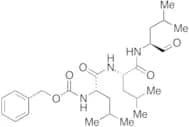
Applications MG 132 is a potent, membrane-permeable proteasome inhibitor. It induces neurite outgrowth in PC12 cells. Neuroprotective product.
References Lee, D., et al.: Trends in Cell Biol., 8, 397 (1998); Tsubuki, S., et al.: J. Biochem., 119., 572 (1996); Grimm, L., et al.: EMBO J., 15, 3835 (1996)Formula:C26H41N3O5Color and Shape:NeatMolecular weight:475.62(3S,4R,5R,6S)-6-Ethynyltetrahydro-2H-pyran-2,3,4,5-tetrayl Tetraacetate
CAS:Controlled ProductFormula:C15H18O9Color and Shape:NeatMolecular weight:342.298Poly(ethylene Glycol) ~40,000
CAS:Applications Poly(ethylene Glycol) molecules of an average molecular mass of 40,000. Poly(ethylene Glycol) is used in various applications from industrial chemistry to biological chemistry. Recent research has shown PEG maintains the ability to aid the spinal cord injury recovery process, helping the nerve impulse conduction process in animals. In rats, it has been shown to aid in the repair of severed sciatic axons, helping with nerve damage recovery. It is industrially produced as a lubricating substance for various surfaces to reduce friction. PEG is also used in the preparation of vesicle transport systems in with application towards diagnostic procedures or drug delivery methods.
References Borgens, R. et al.: J. Neurosci. Res., 66, 1179 (2001); Stavisky, R. et al.: Neurosci. Lett., 376, 98 (2005); Nalam, P. et al.: Tribiol. Lett., 37, 541 (2010); Steinmetz, N. et al.: J. Am. Chem. Soc., 131, 17093 (2009); Li, X. et al.: J. Am. Chem. Soc., 133, 11147 (2011); Li, L. et al.: Int. J. Pharm., 447, 192 (2013);Formula:H2O(C2H4O)nColor and Shape:White To Off-WhiteMolecular weight:62.07n-Octyl-oligo-oxyethylene
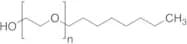
CAS:Controlled ProductApplications n-Octyl-oligo-oxyethylene is a detergent for useful solubilization, purification and crystallization of proteins.
Not a dangerous good if item is equal to or less than 1g/ml and there is less than 100g/ml in the packageFormula:(C2H4O)nC8H18OColor and Shape:NeatMolecular weight:174.28









![N6-[(1,1-Dimethylethoxy)carbonyl]-N2-[(9H-fluoren-9-ylmethoxy)carbonyl]-D-lysine](/_next/image/?url=https%3A%2Fstatic.cymitquimica.com%2Fproducts%2FTR%2Fthumb-webp%2FD447255.webp&w=3840&q=75)

![1-[[7-(Dimethylamino)-3-oxo-3H-phenoxazin-1-yl]methyl]-1H-pyrrole-2,5-dione](/_next/image/?url=https%3A%2Fstatic.cymitquimica.com%2Fproducts%2FTR%2Fthumb-webp%2FD474191.webp&w=3840&q=75)

![3,6-Diamino-9-[2-carboxy-4-[(2-propyn-1-ylamino)carbonyl]phenyl]-4,5-disulfoxanthy…](/_next/image/?url=https%3A%2Fstatic.cymitquimica.com%2Fproducts%2FTR%2Fthumb-webp%2FA357490.webp&w=3840&q=75)









![(3S,8aS)-Hexahydro-3-[(1R)-1-hydroxyethyl]pyrrolo[1,2-a]pyrazine-1,4-dione](/_next/image/?url=https%3A%2Fstatic.cymitquimica.com%2Fproducts%2FTR%2Fthumb-webp%2FC272100.webp&w=3840&q=75)