Neurociência
Os inibidores de neurociência são compostos projetados para modular a atividade de proteínas, enzimas ou receptores específicos no sistema nervoso. Esses inibidores são cruciais para estudar os mecanismos moleculares subjacentes à função neural, transmissão sináptica e doenças neurodegenerativas. Ao direcionar receptores de neurotransmissores, canais iônicos e vias de sinalização, os inibidores de neurociência ajudam na exploração da função cerebral e no desenvolvimento de estratégias terapêuticas para distúrbios neurológicos como Alzheimer, Parkinson e epilepsia. Na CymitQuimica, oferecemos uma ampla gama de inibidores de neurociência de alta qualidade para apoiar sua pesquisa em neurobiologia, neurofarmacologia e ciências cognitivas.
Subcategorias de "Neurociência"
- Receptor 5-HT(1.020 produtos)
- ACK(1 produtos)
- AChR(619 produtos)
- ATP Citrato Liase(17 produtos)
- Receptor adrenérgico(3.022 produtos)
- BACE(36 produtos)
- Beta Amilóide(222 produtos)
- CaMK(72 produtos)
- COX(599 produtos)
- Receptor de Dopamina(442 produtos)
- Receptor GABA(365 produtos)
- Gama-secretase(62 produtos)
- GluR(262 produtos)
- GlyT(26 produtos)
- Receptor de Histamina(385 produtos)
- LRRK2(42 produtos)
- Receptor de Melatonina(26 produtos)
- NMDAR(13 produtos)
- Receptor OX(41 produtos)
- Receptor opioide(322 produtos)
Exibir 12 mais subcategorias
Foram encontrados 5557 produtos de "Neurociência"
Ordenar por
Pureza (%)
0
100
|
0
|
50
|
90
|
95
|
100
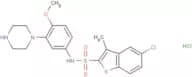
SB 271046 hydrochloride
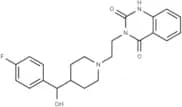
CAS:SB 271046 hydrochloride (SB 271046A) is selective, orally active 5-HT6 antagonist and is > 200-fold selective over 55 other receptors, enzymes and ion channels.Fórmula:C20H22ClN3O3S2·HClPureza:99.77%Cor e Forma:SolidPeso molecular:488.45Ketanserinol
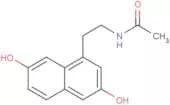
CAS:<p>Ketanserinol is a metabolite of the antihypertensive drug ketanserin, which blocks 5-HT2 receptors to treat protamine-induced pulmonary hypertension.</p>Fórmula:C22H24FN3O3Cor e Forma:SolidPeso molecular:397.447-Desmethyl-3-hydroxyagomelatine
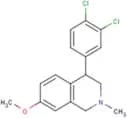
CAS:7-Desmethyl-3-hydroxyagomelatine, less active than parent drug Agomelatine, is a melatonergic agonist and 5-HT2C antagonist.Fórmula:C14H15NO3Pureza:98%Cor e Forma:SolidPeso molecular:245.27Diclofensine
CAS:Diclofensine (Ro 8-4650) inhibits the uptake of serotonin, noradrenaline and dopamine.Fórmula:C17H17Cl2NOPureza:97.01% - 98.13%Cor e Forma:SolidPeso molecular:322.23Aprofene
CAS:Aprofene blocks acetylcholine receptors, used for peptic ulcers, endarteritis, cholecystitis, and colitis.Fórmula:C21H27NO2Cor e Forma:SolidPeso molecular:325.44Biperiden lactate
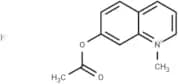
CAS:<p>Biperiden lactate is a biochemical.</p>Fórmula:C24H35NO4Cor e Forma:SolidPeso molecular:401.547-Acetoxy-1-methylquinolinium iodide
CAS:7-Acetoxy-1-methylquinolinium iodide (AMQI) is a cholinesterase substrate for inhibitor detection with 320 nm Ex and 410 nm Em.Fórmula:C12H12INO2Cor e Forma:SolidPeso molecular:329.13AN317
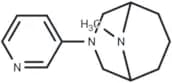
CAS:AN317 is a selective agonist for the nicotinic acetylcholine receptor (nAChR) containing α6β2, with dissociation constants (Ki) of 6.2 nM and 4.1 nM for the α6/α3β2β3 and α4β2 receptor subtypes, respectively. It induces dopamine release in rat striatal synaptosomes, enhances the activity of dopaminergic neurons in the substantia nigra, and exhibits protective effects against the dopaminergic neurotoxin MPP+ in rat neurons. AN317 also demonstrates favorable pharmacokinetic properties in rats and permeability across the blood-brain barrier (BB).Fórmula:C13H19N3Cor e Forma:SolidPeso molecular:217.31Dianicline dihydrochloride
CAS:Dianicline dihydrochloride is a partial agonist of α4β2 nicotinic acetylcholine receptor. It increases cessation rates in a dose-dependent manner.Fórmula:C13H16N2OPureza:98%Cor e Forma:SolidPeso molecular:216.28Eprodisate
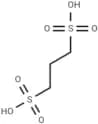
CAS:Eprodisate disrupts protein-glycosaminoglycan binding, halting amyloid fibril formation, potentially delaying AA amyloidosis progression.Fórmula:C3H8O6S2Cor e Forma:SolidPeso molecular:204.22Pardoprunox
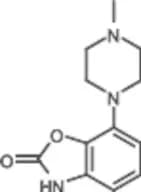
CAS:Pardoprunox (SLV-308) is a partial dopamine D2 agonist and noradrenergic agonist with serotonin 5-HT1A agonist properties.Fórmula:C12H15N3O2Pureza:98%Cor e Forma:SolidPeso molecular:233.27VU0029767
CAS:<p>VU0029767 is an allosteric enhancer of the M1 muscarinic receptor, capable of modulating the receptor's activity. This compound enhances M1 receptor activity by increasing agonist affinity. However, VU0029767 demonstrates distinct characteristics from other compounds, particularly under varying experimental conditions such as its interaction with mutated M1 receptors and its effects on downstream signaling pathways.</p>Fórmula:C21H21N3O3Cor e Forma:SolidPeso molecular:363.414-(6-Bromo-2-benzothiazolyl)-N-methylbenzenamine
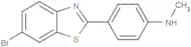
CAS:4-(6-Bromo-2-benzothiazolyl)-N-methylbenzenamine is a potent amyloid imaging agent that binds to Amyloid-β (1-40) (KD: 1.7 nM).Fórmula:C14H11BrN2SPureza:98%Cor e Forma:SolidPeso molecular:319.22VU0477886
CAS:VU0477886: Potent mGlu4 PAM, effective in preclinical Parkinson's model HIC.Fórmula:C20H13ClN4O3Pureza:98%Cor e Forma:SolidPeso molecular:392.80Aβ1-42 aggregation inhibitor 1
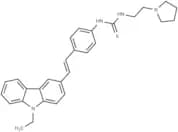
CAS:Aβ1-42 aggregation inhibitor 1 effectively inhibits acetylcholinesterase (AChE) and butyrylcholinesterase (BuChE), demonstrating IC50 values of 2.64 μM and 1.29Fórmula:C29H32N4SCor e Forma:SolidPeso molecular:468.666-hydroxy Buspirone
CAS:6-Hydroxy Buspirone, an active metabolite of the anxiolytic compound buspirone, is produced via the cytochrome P450 (CYP) isoform CYP3A4.Fórmula:C21H31N5O3Peso molecular:401.50Nicardipine pyridine metabolite II
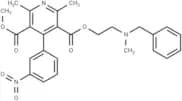
CAS:Nicardipine pyridine metabolite II is a biaoctive chemical.Fórmula:C26H27N3O6Cor e Forma:SolidPeso molecular:477.515-Methyltryptamine hydrochloride
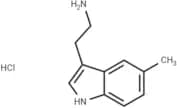
CAS:5-Methyltryptamine hydrochloride is a high-affinity 5-HT1C receptor ligand and a partial agonist of 5-HT. 5-Methyltryptamine hydrochloride protects mice subjected to burn, tourniquet and endotoxin shock.Fórmula:C11H15ClN2Pureza:99.45%Cor e Forma:SolidPeso molecular:210.703N-Biotinyl p-aminophenyl arsenic acid
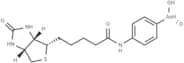
CAS:N-Biotinyl p-aminophenyl arsenic acid is a bifunctional reagent that binds to streptavidin and disulfide compounds. It diminishes the binding sites of rbungarotoxin on reduced nicotinic receptors with an IC50 ranging from 10-300 nM, thus shielding the receptors from irreversible alkylation by bromoacetylcholine.Fórmula:C16H22AsN3O4SCor e Forma:SolidPeso molecular:427.35Catestatin
CAS:Non-competitive inhibitor of nicotinic receptors; blocks cationic signalling and catecholamine release; stimulates histamine release. IC50 ~200-250nM.Fórmula:C107H173N37O26SPureza:98%Cor e Forma:SolidPeso molecular:2425.84