Apoptosis
Subcategories of "Apoptosis"
- ASK(9 products)
- BCL(1 products)
- Caspase(154 products)
- FOXO1(2 products)
- IAP(67 products)
- Mdm2(12 products)
- PD-1/PD-L1(126 products)
- PDK(9 products)
- PERK(23 products)
- Serine/threonin kinase(17 products)
- Survivin(14 products)
- TNF(91 products)
- c-RET(61 products)
- p53(63 products)
Found 6170 products of "Apoptosis"
NLRP3-IN-62
CAS:NLRP3-IN-62 (Compound 1) is an inhibitor of NLRP3. It effectively inhibits pyroptosis in THP-1 cells with an IC50 of 0.7 nM and suppresses IL-β release with an IC50 of 108.5 nM.Formula:C21H15F3N4O3Molecular weight:428.36N-Stearoyltyrosine
CAS:N-Stearoyltyrosine (N-(1-Oxooctadecyl)-L-tyrosine) is an analog of Anandamide. It exhibits neuroprotective effects by safeguarding the CA1 region of the hippocampus in a gerbil ischemia-reperfusion model. Additionally, N-Stearoyltyrosine inhibits free radical generation, enhances antioxidant capacity, and reduces IR-induced apoptosis (cell apoptosis).Formula:C27H45NO4Color and Shape:SolidMolecular weight:447.65BM-962
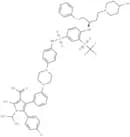
CAS:BM-962 (Compound 31) is a potent small-molecule inhibitor with an IC50 value of 4 nM (Ki=0.8 nM) for Bcl-2 and an IC50 of 3.9 nM (Ki<1 nM) for Bcl-xL. It inhibits H1417 and H146 cell lines with IC50 values of 9 and 13 nM, respectively, and shows potential for use in cancer research.Formula:C53H58ClF3N6O7S3Color and Shape:SolidMolecular weight:1079.71HLDA-212
CAS:HLDA-212 (Compound 43) is a bifunctional small molecule designed to target HaloTag-tagged protein (target protein, TP) and Aurora kinase A/B (AURKA/B, effector protein, EP). By binding TP and EP, it forms a stable ternary complex (TP:RIPTAC:EP) that inhibits the cell survival functions of EP, inducing apoptosis in cancer cells expressing TP. In 293_HFL cells, HLDA-212 demonstrates antiproliferative activity with a GI50 of 0.011 μM. This compound holds promise for treating cancers with high TP expression, such as prostate cancer and hematological malignancies.Formula:C70H90BrFN8O19SColor and Shape:SolidMolecular weight:1478.4784-B10
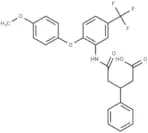
CAS:84-B10 provides protection in cisplatin-induced acute kidney injury, reversing lipid peroxidation accumulation and downregulation of key ferroptosis inhibitors.Formula:C25H22F3NO5Purity:99.76%Color and Shape:SolidMolecular weight:473.44Ref: TM-T75268
1mg47.00€5mg92.00€10mg152.00€25mg289.00€50mg447.00€100mg670.00€200mg888.00€1mL*10mM (DMSO)92.00€2-Methylbiphenyl-oxadiazole-NH-Ph-NH-PEG3-C2-NH-Boc
2-Methylbiphenyl-oxadiazole-NH-Ph-NH-PEG3-C2-NH-Boc is the PD-L1 ligand-linker polymer of AUTACPD-L1degrader-3. It can be utilized in the synthesis of AUTAC.Formula:C35H45N5O6Color and Shape:SolidMolecular weight:631.765-HT1AR agonist 2
5-HT1AR Agonist 2 (Compound 4f) is a potent agonist of the 5-HT1A receptor with a Ki value of 10.0 nM. It also binds to SERT, D2, and 5-HT6 receptors with Ki values of 2.8 nM, 23 nM, and 192 nM, respectively. Furthermore, this compound demonstrates stability in microsomes and induces hypothermia in mice.Formula:C31H31N5O3Color and Shape:SolidMolecular weight:521.61Biguanidinium-porphyrin free TFA
Biguanidinium-porphyrin free TFA is a mitochondrial-targeting photosensitiser exhibiting low dark toxicity towards human hepatocellular carcinoma HEp2 cells.Formula:C48H36F3N9O2Purity:98.69%Color and Shape:SolidMolecular weight:827.85NFh-NMe-2
NFh-NMe-2 is a photosensitizer that interacts with nitroreductase (nitroreductase) to generate singlet oxygen in tumor cells, exhibiting cytotoxicity in cancer cells and inducing apoptosis (apoptosis). In mouse models, NFh-NMe-2 demonstrates antitumor activity.
Formula:C32H33IN2OColor and Shape:SolidMolecular weight:588.522Human membrane-bound PD-L1 polypeptide
CAS:Human membrane-bound PD-L1 polypeptide serves as an antigen for inducing the production of PD-L1 antibodies [1].Formula:C85H140N26O36SPurity:98%Color and Shape:SolidMolecular weight:2134.24MDM2 ligand 4
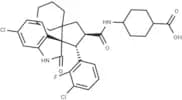
MDM2ligand 4 is a ligand of MDM2 and can be used in the synthesis of the PROTAC degrader [KT-253].Formula:C31H33Cl2FN2O4Color and Shape:SolidMolecular weight:587.509EGFR-IN-143
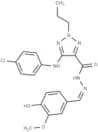
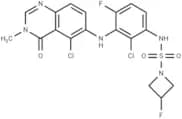
EGFR-IN-143 (Compound 5f) is a potent EGFR inhibitor with an IC50 value of 0.15 μM. It induces apoptosis by arresting the cell cycle at the G2/M phase and exhibits antitumor activity.Formula:C20H21ClN6O3Color and Shape:SolidMolecular weight:428.872Claturafenib
CAS:Claturafenib is a brain-permeable, selective, all-mutant BRAF inhibitor.PF-07799933 has shown antitumor activity, used in combination with MEK inhibitors.Formula:C18H15Cl2F2N5O3SPurity:98.68% - 99.85%Color and Shape:SolidMolecular weight:490.31PZ703b
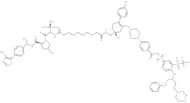
CAS:PZ703b is a novel BCL-XL PROTAC degrader with enhanced BCL-2 inhibition.Formula:C80H102ClF3N10O11S4Color and Shape:SolidMolecular weight:1600.44PROTAC LZK-IN-1
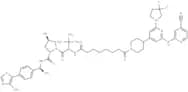
CAS:PROTAC LZK-IN-1 (Compound 21A) is a PROTAC molecule that targets the degradation of LZK (leucine zipper kinase, encoded by MAP3K13). At a concentration of 10 μM, PROTAC LZK-IN-1 facilitates the degradation of LZK and inhibits the expression of p53 and c-MYC, leading to reduced viability of global head and neck squamous cell carcinoma (HNSCC) cell lines. This compound is applicable in anticancer research.
Formula:C51H64F2N10O5SColor and Shape:SolidMolecular weight:967.18Echitamine chloride
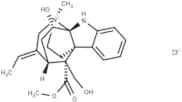
CAS:Echitamine chloride, an alkaloid in Alstonia scholaris, has anti-cancer properties and inhibits pancreatic lipase (IC50: 10.92 µM).Formula:C22H29ClN2O4Color and Shape:SolidMolecular weight:420.93Oxythiamine
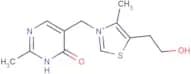
CAS:Oxythiamine (Hydroxythiamin) is a TK inhibitor that inhibits cancer cell proliferation, induces cell cycle arrest, and induces apoptosis.
Formula:C12H16N3O2SPurity:96.14% - 99.51%Color and Shape:SolidMolecular weight:266.34TRF2-IN-1
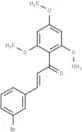
TRF2-IN-1 (compound F2) is a potent inhibitor of telomere repeat-binding factor 2 (TRF2). It exhibits antiproliferative activity and induces apoptosis. TRF2-IN-1 binds directly to the TRF2TRFH domain, selectively inhibiting TRF2 protein expression and telomere localization. Additionally, TRF2-IN-1 possesses anticancer properties and shows potential for osteosarcoma research.Formula:C18H17BrO4Color and Shape:SolidMolecular weight:377.229Tubulin-IN-53
Tubulin-IN-53 is a potent inhibitor of microtubulin (Tubulin) with an IC50 of 6.06 μM. By targeting the colchicine binding site on tubulin, Tubulin-IN-53 hinders tubulin polymerization, disrupting the microtubule network. It induces cell cycle arrest at the G2/M phase and apoptosis (apoptosis) in MCF-7 cells, while inhibiting cell migration. This compound also leads to a reduction in mitochondrial membrane potential and an increase in reactive oxygen species (ROS) accumulation. Additionally, Tubulin-IN-53 disrupts angiogenesis in human umbilical vein endothelial cells and is applicable in research on cancers such as breast and lung cancer.Color and Shape:Odour SolidTAT-GluN2BCTM
CAS:TAT-GluN2BCTM is a membrane-permeable peptide that selectively targets active DAPK1 (Death-associated protein kinase 1) for lysosomal degradation, therebyFormula:C224H374N86O54Purity:98%Color and Shape:SolidMolecular weight:5135.91