Oligosaccharides
Oligosaccharides are carbohydrates composed of a small number of monosaccharide units linked by glycosidic bonds. These molecules play significant roles in various biological processes, including cell recognition, signaling, and immune responses. In this section, you will find a comprehensive selection of oligosaccharides essential for research in glycoscience, biochemistry, and molecular biology. These compounds are vital for studying complex carbohydrate structures, their functions, and their interactions with other biomolecules. At CymitQuimica, we provide high-quality oligosaccharides to support your research and development needs, ensuring accurate and reliable results in your experiments.
Subcategories of "Oligosaccharides"
- Aminoethyl Glycosides, Aminopropyl Glycosides(14 products)
- Asn Binding Glycans(33 products)
- Biotinated Oligosaccharides(13 products)
- Blood Groups and Lewis Antigens(11 products)
- Blood Type Oligosaccharides(13 products)
- Cellooligosaccharides(1 products)
- Cyclodextrins(183 products)
- Disaccharides(192 products)
- Epitope Oligosaccharides(19 products)
- Fructooligosaccharides(2 products)
- Functional Oligosaccharides(554 products)
- Functionalised Oligosaccharides(1 products)
- Galactosamine(41 products)
- Galactose(260 products)
- Galb(1-3)GalNAc(21 products)
- Ganglio-series(11 products)
- Globo- and Isoglobo-series(17 products)
- Glucosamine(128 products)
- Glucuronic Acids(51 products)
- Glycoproteins, Glycopeptides(59 products)
- Glycosaminoglycan(26 products)
- Human Milk Oligosaccharides(19 products)
- Labeled O-Glycans(9 products)
- Labeled Oligosaccharides(36 products)
- LacNAc(53 products)
- Lacto- and Neolacto-series(14 products)
- Lacto-N-biose(10 products)
- Lactooligosaccharides(7 products)
- Linker Attached Oligosaccharides(19 products)
- Maltooligosaccharides(6 products)
- Milk Oligosaccharides(31 products)
- N-Glycans(149 products)
- Natural Glycosides(177 products)
- Natural Oligosaccharides(103 products)
- O-Glycan(18 products)
- Oligosaccharide Building Blocks(7 products)
- Oligosaccharide Replacement(2 products)
- Oligosaccharides by Component Sugar(225 products)
- Oligoses(24 products)
- Other Oligosaccharides(14 products)
- PEG Oligomers(33 products)
- Phosphated Sugars(17 products)
- Protected Sugars(526 products)
- Reagents for Oligosaccharide Synthesis(254 products)
- Ser, Thr Binding Glycans(9 products)
- Sialylated Oligosaccharides(3 products)
- Sphingoglycolipids(42 products)
- Sugar Amino Acids, Sugar Peptides(20 products)
- Sugar Antigens(31 products)
- Sugar Building Blocks by Target Oligosaccharides(225 products)
- Sugar Conjugates(100 products)
- Sulfated Sugars(16 products)
- Tetrasaccharides(34 products)
- Trisaccharides and Above(95 products)
- Xylooligosaccharides(5 products)
Show 47 more subcategories
Found 2278 products of "Oligosaccharides"
Sort by
Purity (%)
0
100
|
0
|
50
|
90
|
95
|
100
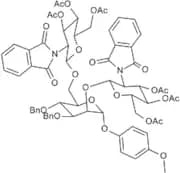
4-Methoxyphenyl 3,4-di-O-benzyl-2,6-di-O-(3,4,6-tri-O-acetyl-2-deoxy-2-phthalimido-β-D-glucopyranosyl)-α-D-mannopyranoside
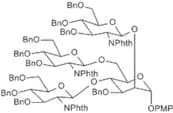
<p>4-Methoxyphenyl 3,4-di-O-benzyl-2,6-di-O-(3,4,6-tri-O-acetyl-2-deoxy-2-phthalimido-b-D-glucopyranosyl)-a-D -mannopyranoside is a synthetic glycoside that can be custom synthesized to order. It is considered to be of high purity with a CAS number 58314−10−1. This product has been fluorinated and glycosylated and is synthetically produced. 4MPBP has the following modifications: methylation, modification, and glycosylation. 4MPBP is an oligosaccharide that is composed of saccharides and a complex carbohydrate.</p>Formula:C67H68N2O25Purity:Min. 95%Molecular weight:1,301.26 g/mol4-Methoxyphenyl 2,4,6-tri-O-(3,4,6-tri-O-benzyl-2-deoxy-2-phthalimido-β-D-glucopyranosyl)-3-O-benzyl-α-D-mannopyranoside
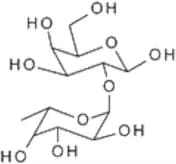
<p>4-Methoxyphenyl 2,4,6-tri-O-(3,4,6-tri-O-benzyl-2-deoxy-2-phthalimido-b-D-glucopyranosyl)-3-O-(benzyl)aDmannopyranoside is a custom synthesis of an oligosaccharide. It is an acetal derivative of 4methoxyphenyl 2,4,6tri O-(3,4,6tri Obenzyl 2deoxy2 phthalimido b D glucopyranosyl) 3 O (benzyl) ad mannopyranoside with a methoxymethyl group at the C5 position and a benzyl ether moiety at the C6 position. The molecule contains a methylated sugar as well as fluorine modification on the ring oxygen atom. This molecule has a high purity and is offered in both monos</p>Formula:C125H117N3O25Purity:Min. 95%Molecular weight:2,061.27 g/molBlood Group H disaccharide
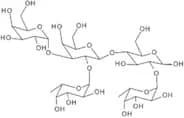
CAS:<p>Core antigen fragment in ABO blood group system</p>Formula:C12H22O10Purity:Min. 95%Color and Shape:White PowderMolecular weight:326.3 g/molSucralose
CAS:<p>Sucralose, an artificial sweetener, was discovered in a research programme supported by Tate & Lyle to halogenate sucrose. The majority of ingested sucralose is not broken down by the body, so it is noncaloric. In the European Union, it has been given the E number E955. Sucralose is about 320 to 1,000 times sweeter than sucrose, three times as sweet as both aspartame and acesulfame potassium, and twice as sweet as sodium saccharin. It is stable under heat and over a broad range of pH conditions. Therefore, it can be used in baking or in products that require a long shelf life. The commercial success of sucralose-based products stems from its favorable comparison to other low-calorie sweeteners in terms of taste profile, stability, and safety.</p>Formula:C12H19Cl3O8Purity:Min. 98 Area-%Color and Shape:White PowderMolecular weight:397.63 g/mol6-a-D-Glucopyranosyl maltotriose
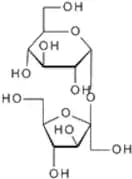
CAS:<p>Substrate for glucoamylases; derived from pullulan using pullulanase</p>Formula:C24H42O21Purity:Min. 97 Area-%Color and Shape:PowderMolecular weight:666.58 g/molTrehalulose
CAS:<p>Trehalulose is a sugar that is found in plants, animals, and fungi. It is a reaction product of glucose with the enzyme trehalase, which cleaves off two molecules of water to form one molecule of glucose and one molecule of trehalulose. Trehalulose has been shown to be an inhibitor of phosphofructokinase, an enzyme involved in glycolysis. This inhibition can be reversed by the addition of ATP or pyruvate kinase. Trehalulose also has been shown to inhibit the growth of cells by interfering with protein synthesis. Trehalulose may have biological functions including dietary uses as a replacement for sucrose or lactose due to its low calorie content and high level of sweetness.br>br> Trehalulose is structurally similar to sucrose because it has both a glucose part and a fructose part and it will react with hydrogen fluoride (HF) in dry weight reactions, forming trehalo-s</p>Formula:C12H22O11Purity:Min. 90 Area-%Color and Shape:Clear Viscous LiquidMolecular weight:342.3 g/molGalactooligosaccharides
<p>Galactooligosaccharides (GOS) have a sweetness of 30–60 % relative to sucrose. They have applications in a wide range of food products such as sweeteners, bulking agents, and sugar substitutes and are found in a range of product types including bread, ‘sports’ drinks, jams, fermented milk, confectionary and desserts. In Europe they are incorporated into infant formula foods.</p>Color and Shape:PowderForssman antigen pentaose
CAS:<p>Tumor associated antigen and target for the development of anti-cancer vaccines</p>Formula:C34H58N2O26Purity:Min. 90 Area-%Color and Shape:White PowderMolecular weight:910.82 g/molBlood Group B pentasaccharide
CAS:<p>Core antigen fragment in ABO blood group system</p>Formula:C30H52O24Purity:Min. 95%Color and Shape:PowderMolecular weight:796.72 g/molMonosialyl, monofucosyl-(1-2)-lacto-N-hexaose
<p>Monosialyl, monofucosyl-(1-2)-lacto-N-hexaose is a synthetic, fluorinated monosaccharide that is used to modify complex carbohydrates. It can be used for the synthesis of oligosaccharides and polysaccharides with a variety of sugar modifications. Monosialyl, monofucosyl-(1-2)-lacto-N-hexaose has the CAS Registry Number 111832-43-9.</p>Purity:Min. 95%Globopentaose
CAS:<p>Carbohydrate moiety of globopentaosylceramide</p>Formula:C32H55NO26Purity:Min. 95%Color and Shape:White PowderMolecular weight:869.77 g/molLewis X tetrasaccharide
CAS:<p>Lewis X tetrasaccharide (LX4) is a glycan that is found on the surface of human cells. It is an important diagnostic marker for microbial infections and has been shown to be present on the surfaces of both normal skin cells and malignant cells. The presence of LX4 can be detected using a monoclonal antibody in vitro. This glycan can also be used as a model system to study ischemia–reperfusion injury, since it has been shown to be sensitive to oxidative changes caused by reactive oxygen species generated during reperfusion. Studies have also shown that LX4 binds to enzymes such as malonic acid oxydoreductase, which are involved in the metabolism of lysine, arginine, and proline.</p>Formula:C26H45NO20Purity:Min. 90%Color and Shape:White PowderMolecular weight:691.64 g/mol4-O-{4-O-[[2,4-Di-O-acetyl-3-O-[2,4-di-O-(3,4,6-tri-O-acetyl-2-deoxy-2-phthalimido-β-D-glucopyranosyl)-3,6-di-O-benzyl-α-D-mannopyra nosyl]-6-O-[3,4-di-O-acetyl-2,6-di-O-(3,4,6-tri-O-acetyl-2-deoxy-2-phthalimido-β-D-glucopyranosyl)-α-D-mannopyranosyl]
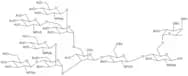
CAS:<p>4-O-{4-O-[[2,4-Di-O-acetyl-3-O-[2,4-di-O-(3,4,6-tri-O-acetyl-2-deoxy-2--phthalimido--bD--glucopyranosyl)-3,6--di--O--benzyl aDmannopyra nosyl]-6--O-[3,4--di--O--acetyl 2,6--di--O-(3,4,6--tri - O - acetyl 2 - deoxy 2 - phthalimido bDglucopyranosyl) aDmannopyranosyl] } is a synthetic complex carbohydrate. It is an oligosaccharide that can be used in glycosylation reactions. This carbohydrate has been custom synthesized and modified to include methyl groups. The CAS number for this compound is 9461642899.</p>Formula:C196H200N6O72Purity:Min. 95%Molecular weight:3,791.68 g/molHuman meconium oligosaccharides
<p>This mixture contains some of the neutral and sialylated oligosaccharides found in human meconium.</p>Purity:Min. 95%Color and Shape:Powder3'-Sialylgalactose sodium salt
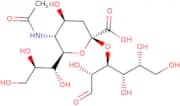
CAS:<p>Sialylated oligosaccharide with the ability to inhibit angiogenesis and tumour development by binding to the vascular endothelial growth factor receptor VEGFR-2. Moreover, sialylated N-glycans in intestinal epithelium of chickens were found to carry terminal sialylgalactose, which interacts with influenza viruses during early stages of infection.</p>Formula:C17H28NO14·NaPurity:Min. 95%Color and Shape:White PowderMolecular weight:493.39 g/mol4-O-(β-D-Glucopyranosyl)-β-D-thioglucopyranose
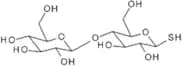
<p>4-O-(b-D-Glucopyranosyl)-b-D-thioglucopyranose is a methylated, saccharide. It is a polysaccharide that can be modified with Click chemistry to introduce a variety of modifications in order to make it more suitable for different applications. This compound may be glycosylated or fluorinated for use in pharmaceuticals, as well as have its carbohydrate content modified. 4-O-(b-D-Glucopyranosyl)-b-D-thioglucopyranose is used as a synthetic sugar and is CAS No. 97787-84-5.</p>Formula:C12H22O10SPurity:Min. 95%Molecular weight:358.36 g/molMethyl 3-O-(a-D-mannopyranosyl)-a-D-mannopyranoside
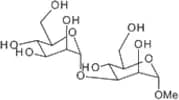
CAS:<p>Used for structural and conformational studies and as enzyme substrates</p>Formula:C13H24O11Purity:Min. 95%Color and Shape:PowderMolecular weight:356.32 g/molHeparin derived dp8 saccharide ammonium salt
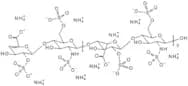
<p>Heparin is a glycosaminoglycan which is a complex carbohydrate that contains repeating disaccharide units of glucosamine and N-acetylglucosamine. Heparin has been shown to inhibit the activity of bacterial enzymes involved in fibrinolysis, such as plasminogen activator inhibitor 1 (PAI-1), and may act as an anticoagulant. Heparin is often used as an anticoagulant in patients with thrombotic disorders, including deep vein thrombosis, pulmonary embolism, or heart attack. Heparin also acts as a cofactor for the activation of clotting factors II (thrombin), VII, IX, X, XI and XII. In addition, it inhibits the activation of factor XIII by preventing its conversion from its inactive form into active factor XIIIa. The molecular weight of heparin is approximately 10 kilodaltons (kDa) and it has a molecular formula</p>Purity:Min. 95%Color and Shape:PowderMolecular weight:~2400 (Average)1,3-α-1,6-α-D-Mannotriose
CAS:<p>Intermediate for synthesis of N-acetyllactosaminic glycans</p>Formula:C18H32O16Purity:Min. 95 Area-%Color and Shape:White Off-White PowderMolecular weight:504.44 g/molGlycyl-Oligosaccharidesmannose 5
<p>Glycyl-Oligosaccharidesmannose 5 is a high purity, custom synthesis sugar that is fluorinated and glycosylated. It is an oligosaccharide with a mannose backbone and a glycyl group attached to the first mannose. The methylation of the glycyl group on Glycyl-Oligosaccharidesmannose 5 can be modified to produce different derivatives. This carbohydrate has been synthesized and has CAS Number: 68149-46-1.</p>Formula:C48H82N4O36Purity:Min. 95%Molecular weight:1,291.17 g/mol