


Biochemicals and Reagents
Biochemicals and reagents are fundamental substances for research and development in fields such as biotechnology, molecular biology, pharmacology, and medicine. These products are essential for a variety of applications, including compound synthesis, biological sample analysis, metabolic process research, and drug production. At CymitQuimica, we offer a wide selection of high-quality, high-purity biochemicals and reagents suitable for various scientific and industrial needs. Our catalog includes enzymes, antibodies, nucleic acids, amino acids, and many other products, all designed to support researchers and professionals in their research and development projects, ensuring reliable and reproducible results.
Subcategories of "Biochemicals and Reagents"
- Biomolecules(99,185 products)
- By Biological Target(99,150 products)
- By Pharmacological Effects(6,789 products)
- Cryopreservatives(21 products)
- Desinfectants and Related Compounds(28 products)
- Hormones(346 products)
- Plant Biology(6,764 products)
- Secondary Metabolites(14,307 products)
Found 130581 products of "Biochemicals and Reagents"
Sort by
Purity (%)
0
100
|
0
|
50
|
90
|
95
|
100
2-Palmitoyl-rac-glycerol
CAS:<p>Applications A biomarker of metabolic responses to hepatotoxicants and carcinogens.<br>References Broadhurst, D., et al.: Metabolomics, 2, 171 (2006), Shi, J., et al.: Nat. Biotechnol., 25, 930 (2007),<br></p>Formula:C19H38O4Color and Shape:NeatMolecular weight:330.50Phytantriol
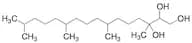
CAS:Controlled Product<p>Applications Phytantriol 74563-64-7 (cas# 74563-64-7) is a useful research chemical.<br></p>Formula:C20H42O3Color and Shape:NeatMolecular weight:330.55Amantadine
CAS:Controlled Product<p>Applications Amantadine is useful in biology studies. Particularly it has been used for solid-state NMR and membrane protein studies.<br>References Shigeta, A., et al.: New Developments in NMR, 20, 457 (2019)<br></p>Formula:C10H17NColor and Shape:White To Off-WhiteMolecular weight:151.25Acid Orange 3, Technical Grade
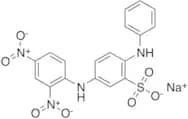
CAS:Controlled Product<p>Applications Acid Orange 3 (cas# 6373-74-6) is a useful research chemical.<br></p>Formula:C18H13N4O7S·NaColor and Shape:NeatMolecular weight:452.3732Pteroyltri-γ-L-glutamic acid (>85%)
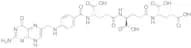
CAS:<p>Applications Pteroyltri-γ-L-glutamic acid is a folate derivative found in various foods such as yeast, spinach, beef liver, beef fillet and peas.<br>References Tamura, T., et al.: Br. J. Haematol., 25, 513 (1973); Ndaw, S., et al.: J. Chromatogr. A, 928, 77 (2001)<br></p>Formula:C29H33N9O12Purity:>85%Color and Shape:Off WhiteMolecular weight:699.625DL-Pipecolic Acid
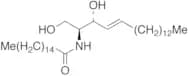
CAS:<p>Applications Pipecolic acid is involved in synaptic transmission in the central nervous system.<br>References Nomura Y., et al.: Neurochem. Res., 6, 391 (1981),<br></p>Formula:C6H11NO2Color and Shape:White To Off-WhiteMolecular weight:129.16C16-Ceramide
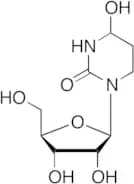
CAS:<p>Applications A predominant, rather hydrophobic natural ceramide. Activates a cytosolic serine/threonine protein phosphatase in T9 cells; induces EGF receptor phosphorylation in A-431 cells; stimulates ceramide-activated protein kinase.<br>References Shoyama, Y., et al.: J. Lipid Res., 19, 250 (1978), Mathias, S., et al.: Proc. Natl. Sci. USA, 88, 10009 (1991), Dobrowsky, R.T., et al.: J. Biol. Chem., 267, 5048 (1992)<br></p>Formula:C34H67NO3Color and Shape:NeatMolecular weight:537.903,4,5,6-Tetrahydrouridine (>80%)
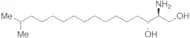
CAS:<p>Stability Light Sensitive<br>Applications 3,4,5,6-Tetrahydrouridine, is a derivative of Uridine (U829910). Tetrahydrouridine (THU), is a potent inhibitor of cytidine. It inhibits cell proliferation through cell cycle regulation regardless of cytidine deaminase expression levels deaminase (CDA), and thus can be used as a potential and promising treatment for tumors with highly expressed CDA.<br>References Lorine, P., et al.: J. Biol. Chem., 178, 439 (1949); Funamizu, N., PLoS One, 37424 (2012);<br></p>Formula:C9H16N2O6Purity:>80%Color and Shape:NeatMolecular weight:248.2315-Methylhexadeca Sphinganine
CAS:<p>Applications The major sphinganine from the ceramides phospholipids of Bacteroides melaninogenicus as arachidonate cascade inhibitor and blood platelet aggregation inhibitor.<br>References Dennis, R., et al.: Eur. J. Biochem., 146, 51 (1985), Dennis, R., et al.: J. Biol. Chem., 260,, 5370 (1985), Field, K., et al.: Science, 239, 748 (1988),<br></p>Formula:C17H37NO2Color and Shape:NeatMolecular weight:287.484-Aminohippuric Acid
CAS:Controlled Product<p>Applications 4-Aminohippuric Acid is used in the measurement of renal plasma flow as a diagnostic tool which may be applied towards kidney disorders.<br>References Phillips, R. et al.: Am. J. Physiol., 152, 523 (1948);<br></p>Formula:C9H10N2O3Color and Shape:Off White SolidMolecular weight:194.19Enalaprilat Dihydrate
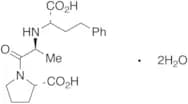
CAS:Controlled ProductFormula:C18H24N2O5·2H2OColor and Shape:NeatMolecular weight:384.42N-(9-((2R,3R,4R,5R)-5-((Bis(4-methoxyphenyl)(phenyl)methoxy)methyl)-4-hydroxy-3-methoxytetrahydrofuran-2-yl)-9H-purin-6-yl)benzamide
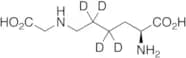
CAS:Controlled ProductFormula:C39H37N5O7Color and Shape:NeatMolecular weight:687.74Nε-(1-Carboxymethyl)-L-lysine-d4
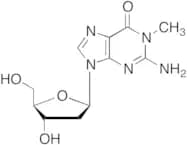
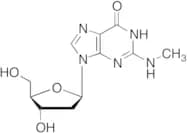
CAS:Controlled Product<p>Stability Hygroscopic<br>Applications CEL and CML are two stable, nonenzymatic chemical modifications of protein lysine residues resulting from glycation and oxidation reactions.<br>References Fu, M.X., et al.: J. Biol. Chem., 271, 9982 (1996), Ahmed M.U., et al.: Biochem.J., 324, 565 (1997), Schleicher, E.D., et al.: J. Clin. Invest., 99, 457 (1997), Shibayama, R., et al.: Diabetes, 48, 1842 (1999),<br></p>Formula:C8H12D4N2O4Color and Shape:NeatMolecular weight:208.25N1-Methyl-2’-deoxyguanosine
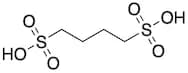
CAS:Controlled Product<p>Applications N1-Methyl-2’-deoxyguanosine is a model for alkylation of DNA. Also, it is formed from the reaction of 2’-Deoxyguanosine with N-Nitroso-N-methyl-N’-phenylurea in methanol.<br>References Fenselau, C., et al.: Adv. Mass. Spectrom., 7B, 1572-1577 (1978); Yoshida, K., et al.: Nucleic Acids Symp., 31, 111-112 (1994)<br></p>Formula:C11H15N5O4Color and Shape:NeatMolecular weight:281.271,4-Butanedisulfonic Acid (contains ~40% water)
CAS:<p>Applications 1,4-Butanedisulfonic acid - (CAS# 27665-39-0) is a useful research chemical compound.<br></p>Formula:C4H10O6S2Color and Shape:ColourlessMolecular weight:218.25Lincomycin Sulfone
CAS:Controlled Product<p>Applications Lincomycin Sulfone is a research reagent with potential antibiotic activities<br>References Sztaricskai, F. et al.: J. Antibiotics, 50, 866 (1997)<br></p>Formula:C18H34N2O8SColor and Shape:NeatMolecular weight:438.536Poly(ethylene Glycol) ~1000
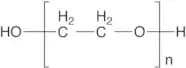
CAS:Controlled Product<p>Applications Poly(ethylene Glycol) molecules of an average molecular mass of 1000. Poly(ethylene Glycol) is used in various applications from industrial chemistry to biological chemistry. Recent research has shown PEG maintains the ability to aid the spinal cord injury recovery process, helping the nerve impulse conduction process in animals. In rats, it has been shown to aid in the repair of severed sciatic axons, helping with nerve damage recovery. It is industrially produced as a lubricating substance for various surfaces to reduce friction. PEG is also used in the preparation of vesicle transport systems in with application towards diagnostic procedures or drug delivery methods.<br>References Borgens, R. et al.: J. Neurosci. Res., 66, 1179 (2001); Stavisky, R. et al.: Neurosci. Lett., 376, 98 (2005); Nalam, P. et al.: Tribiol. Lett., 37, 541 (2010); Steinmetz, N. et al.: J. Am. Chem. Soc., 131, 17093 (2009); Li, X. et al.: J. Am. Chem. Soc., 133, 11147 (2011); Li, L. et al.: Int. J. Pharm., 447, 192 (2013);<br></p>Formula:H2O(C2H4O)nColor and Shape:White To Off-WhiteMolecular weight:62.07(2a,3b)-2,3-Dihydroxy-urs-12-en-28-oic Acid
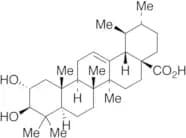
CAS:Controlled Product<p>Applications (2α,3β)-2,3-Dihydroxy-urs-12-en-28-oic Acid influences inflammatory gene expression regarding inflammatory bowel disease. In addition, its extracted from the plants Gentiana farreri and shows anti-tumor activity<br>References Mueller, D. et al.: Food Chem., 139, 339 (2013); Thilakarathna, S. et al.: Food Chem., 138, 463 (2013); Yang, A. et al.: Adv. Mat. Res., 554, 1682 (2012);<br></p>Formula:C30H48O4Color and Shape:NeatMolecular weight:472.70Higenamine Hydrochloride
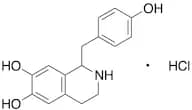
CAS:Controlled Product<p>Applications Higenamine is a chemical compound found in a variety of plants including Nandina domestica, Aconitum carmichaelii, Asarum heterotropioides, Galium divaricatum, Annona squamosa, and Nelumbo nucifera<br> Not a dangerous good if item is equal to or less than 1g/ml and there is less than 100g/ml in the package<br></p>Formula:C16H17NO3·ClHColor and Shape:NeatMolecular weight:307.77Kynurenic Acid-d5
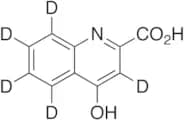
CAS:Controlled Product<p>Applications A labelled product of L-Tryptophan metabolism, possessing neruoactive activity having antiexcitotoxic and anticonvulsant properties.<br>References Wejksza, K., et al.: Pharmacol. Rep., 61, 751 (2009), Gohil, V., et al.: Nat. Biotechnol., 28, 249 (2010), Di Natale, B., et al.: Toxicol. Sci., 115, 89 (2010),<br></p>Formula:C102H5H2NO3Color and Shape:BeigeMolecular weight:194.202-[[3,4,6-Tri-O-acetyl-2-(acetylamino)-2-deoxy-β-D-galactopyranosyl]oxy]acetic Acid
CAS:Controlled Product<p>Applications 2-[[3,4,6-Tri-O-acetyl-2-(acetylamino)-2-deoxy-β-D-galactopyranosyl]oxy]acetic Acid is a therapeutic antisense oligonucleotide agent targeting gene G6PC cDNA for glycogen storage disease type Ia.<br>References Koizumi, M., et al.: PCT Int. Appl. 278pp. (2019)<br></p>Formula:C16H23NO11Color and Shape:NeatMolecular weight:405.35TopFluor Cholesterol
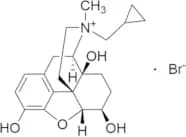
CAS:Controlled ProductFormula:C36H51BF2N2OColor and Shape:NeatMolecular weight:576.61Methyl-6b-naltrexol Bromide
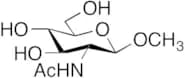
CAS:Controlled ProductFormula:C21H28NO4·BrColor and Shape:NeatMolecular weight:438.36Methyl 2-Acetamido-2-deoxy-β-D-glucopyranoside
CAS:Controlled ProductFormula:C9H17NO6Color and Shape:NeatMolecular weight:235.23NF 279
CAS:<p>Applications NF 279 is a potent and selective P2X1 antagonist.<br>References Kassack, M., et al.: Eur. J. Med. Chem., 39, 345 (2004); Damer, S., et al.: Eur. J. Pharm., 350, R5 (1998); Rettinger, J., et al.: Neuropharm., 39, 2044 (2000)<br></p>Formula:C49H30N6O23S6·6NaColor and Shape:NeatMolecular weight:1401.12Abamine
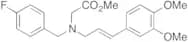
CAS:Controlled Product<p>Applications Abamine is an inhibitor of 9-Cis-Epoxycarotenoid dioxygenase (NCED), the key regulatory enzyme in the plant hormone abscisic acid (ABA) biosynthesis pathway.<br>References Kitahata, N., et al.: Bioorg. Med. Chem., 14, 5555 (2006); Han, S., et al.: Bioorg. Med. Chem. Lett., 14, 3033 (2004)<br></p>Formula:C21H24FNO4Color and Shape:NeatMolecular weight:373.42Chlorotrimethylsilane
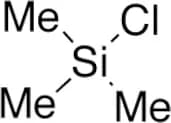
CAS:<p>Stability Moisture Sensitive<br>Applications Chlorotrimethylsilane have been used in the preparation of volatile derivatives of a wide range of compounds for GC analysis. Chlorotrimethylsilane has been used for silylation and as a protection group in the process of various organic synthesis.<br> E0<br>References Casimiro, M., et al.: Org. Lett., 15, 2378 (2013); Lifchits, O., et al.: J. Am. Chem. Soc., 135, 6677 (2013);<br></p>Formula:C3H9ClSiColor and Shape:NeatMolecular weight:108.64Benzyl D-Glucuronate
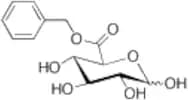
CAS:Controlled Product<p>Stability Hygroscopic<br>Applications Used in efficient synthesis of 1β-O-acyl glucuronides via regioselective acylation<br>References Meng, X., et al.: J. Med. Chem., 50, 6165 (2007),<br></p>Formula:C13H16O7Color and Shape:NeatMolecular weight:284.263-Oxo-5β-cholanoic Acid
CAS:Controlled Product<p>Applications 3-Oxo-5β-cholanoic Acid is a steroid compound with pharmacological activity. It is a bile acid. Also used in the preparation of lithocholic acid derivatives used as proteasome regulators.<br>References Iqbal, M. et al.: Steroids. 53, 413 (1989); Deyashiki, Y. et al.: Biochm. J., 282, 741 (1992);<br></p>Formula:C24H38O3Color and Shape:NeatMolecular weight:374.56OctaInd
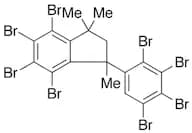
CAS:Controlled Product<p>Applications OctaInd is a commercial brominated flame retardant (BFR) used in styrenic and engineering thermoplastics.<br>References Andersson, P., et al.: Environ. Toxicol. Chem., 25, 1275 (2006), Richardson, S., et al.: Anal. Chem., 79, 4295 (2007),<br></p>Formula:C18H12Br8Color and Shape:NeatMolecular weight:867.51993-Chloro-L-tyrosine
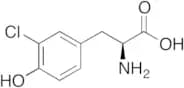
CAS:Controlled Product<p>Stability Hygroscopic<br>Applications 3-Chloro-L-tyrosine was used in the enzymatic synthesis of halogen derivatives of aromatic amino acids labeled with hydrogen isotope. 3-Chloro-L-tyrosine exhibited stronger antioxidant properties in Hb-induced oxidative stress as was evident by higher efficiency of reduction of ferryl species.<br>References Winnicka, E., et al.: J. Chem. Eng., 8, 54 (2014); Lu, N., et al.: Toxicol. In Vitro, 28, 847 (2014);<br></p>Formula:C9H10NO3ClColor and Shape:NeatMolecular weight:215.63L-165041
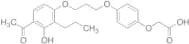
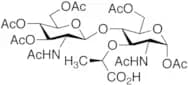
CAS:<p>Stability Light Sensitive<br>Applications L-165041 is a cell permeable peroxisome proliferator activator receptor b agonist.<br></p>Formula:C22H26O7Color and Shape:NeatMolecular weight:402.442-Acetamido-4-O-(2-acetamido-2-deoxy-β-D-glucopyranosyl)-1,6-di-O-N-acetyl-α-D-muramic Acid
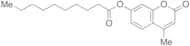
CAS:Controlled Product<p>Applications 2-Acetamido-4-O-(2-acetamido-2-deoxy-β-D-glucopyranosyl)-1,6-di-O-N-acetyl-α-D-muramic Acid (cas# 475502-13-7) is a compound useful in organic synthesis.<br></p>Formula:C29H42N2O18Color and Shape:NeatMolecular weight:706.654-Methylumbelliferyl Decanoate
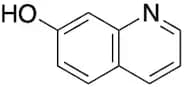
CAS:Controlled ProductFormula:C20H26O4Color and Shape:NeatMolecular weight:330.427-Hydroxyquinoline
CAS:<p>Applications 7-Hydroxyquinoline (cas# 580-20-1) is a useful research chemical.<br></p>Formula:C9H7NOColor and Shape:NeatMolecular weight:145.158D,L-Adrenochrome
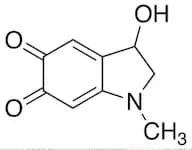
CAS:Controlled Product<p>Stability Light Senstiive<br>Applications D,L-Adrenochrome is the substance mainly responsible for the red colours produced during the mild oxidation of adrenaline<br>References Costa, V., et al.: Chem. Res. Toxicol., 20, 1183 (2007), Sotomayor-Zarate, R., et al.: Biol Reproduc., 78, 673 (2008),<br></p>Formula:C9H9NO3Color and Shape:NeatMolecular weight:179.1727CITCO
CAS:Controlled Product<p>Applications CITCO is a cell-permeable imidazothiazole compound that acts a CAR agonist.<br></p>Formula:C19H12Cl3N3OSColor and Shape:NeatMolecular weight:436.74Veratrole
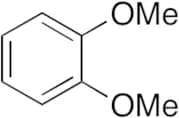
CAS:<p>Applications Veratrole is common reagent in organic synthesis such as the synthesis of arizonins B1 and C1. Also used in the synthesis of pharmacophores of salmeterol and roflumilast as dual β2-adrenoreceptor agonists-PDE4 inhibitors.<br>References Fernandes, R. et al.: Tetrahedron: Asymm., 24, 1548 (2013); Liu, A. et al.: Bioorg. Med. Chem. Lett., 23, 1548 (2013);<br></p>Formula:C8H10O2Color and Shape:NeatMolecular weight:138.16Bronopol
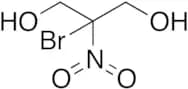
CAS:Controlled Product<p>Applications Bronopol is a component of gray wastewater.<br> Not a dangerous good if item is equal to or less than 1g/ml and there is less than 100g/ml in the package<br>References Eriksson, E., et al.: Urban Water, 4, 85 (2002);<br></p>Formula:C3H6BrNO4Color and Shape:NeatMolecular weight:199.99m-nitro-(R,R)-threo-Chloramphenicol
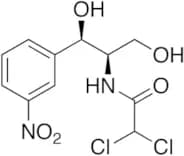
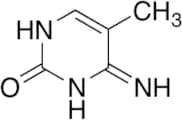
CAS:Controlled Product<p>Stability Hygroscopic<br>Applications The D-threo-stereoisomer of the m-nitro analog of (+/-)-Chloramphenicol.<br>References Cammarata, A., et al.: J. Med. Chem., 10, 525 (1967),<br></p>Formula:C11H12Cl2N2O5Color and Shape:NeatMolecular weight:323.135-Methylcytosine (~90%)
CAS:Controlled Product<p>Applications 5-Methylcytosine (cas# 554-01-8) is a useful research chemical.<br></p>Formula:C5H7N3OPurity:~90%Color and Shape:NeatMolecular weight:125.13Disperse Red 1 (Technical Grade)
CAS:Controlled Product<p>Applications Disperse Red 1 is an azo disperse dye which is water insoluble. Disperse Red 1 can be used to dye polyester and acetate fibers. Dyes and metabolites, Environmental Testing.<br>References Sareek, J.: J. Soc. Dyers Colour., 78, 326 (1962); Iskender, M., et al.: Textile Res. J., 75, 462 (2005)<br></p>Formula:C16H18N4O3Color and Shape:NeatMolecular weight:314.34Poly(ethylene Glycol) ~400
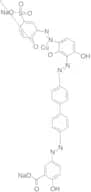
CAS:<p>Applications Poly(ethylene Glycol) ~400 is a polymer of ethylene oxide with a molecular weight of ~400 Daltons. Poly(ethylene Glycol) ~400 is considered a low molecular weight polyethylene glycol, and is used as a hydrophilic molecular probe for measuring intestinal permeability. Poly(ethylene Glycol) ~400 is also used as a hydrophilic plasticizer.<br>References Lu, E., et al.: J. Control. Release, 92, 375 (2003); Ma, T., et al.: Gastroenterology, 98, 39 (1990)<br></p>Formula:H2O(C2H4O)nColor and Shape:ColourlessMolecular weight:62.07Direct Brown 95 (Technical Grade)
CAS:Controlled Product<p>Applications Direct Brown 95, Techincal Grade is an azo dye used in PET/cotton blended fabrics as well as other textiles. Environmental reproductive toxin.Environmental toxin on US EPA Toxic Release Inventory list (TRI) list. Dyes and metabolites, Environmental Testing<br>References Pielesz, A., et al.: J. Mol. Struct., 511, 337 (1999); Galloway, S., et al.: Env. Mol. Mutagen., 10, 1 (1987)<br></p>Formula:C31H18CuN6O9S·2NaColor and Shape:Dark Purple To BlackMolecular weight:760.10N2-Methyl-2’-deoxyguanosine
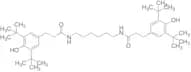
CAS:Controlled Product<p>Applications N2-Methyl-2’-deoxyguanosine is a product from the reaction of formaldehyde with exocyclic amino group of deoxyguanosine. Used as the template in primer extension reactions catalyzed by the Klenow fragment of Escherichia coli DNA polymerase I.<br>References Yasui, M., et al.: Nucleic Acids Res., 29, 1994-2001 (2001)<br></p>Formula:C11H15N5O4Color and Shape:NeatMolecular weight:281.27Antioxidant 1098
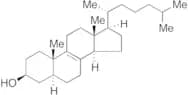
CAS:Controlled Product<p>Applications Antioxidant 1098 (cas# 23128-74-7) is used as a modifier in polymer stabilization.<br>References Li, C.; et al.: J. Appl. Poly. Sci., 134 (2017).<br></p>Formula:C40H64N2O4Color and Shape:NeatMolecular weight:636.95Zymostenol
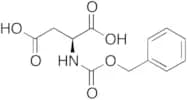
CAS:Controlled Product<p>Applications Zymostenol, is the derivative of Zymosterol (Z701520), which is an sterol intermediate in the biosynthesis of cholesterol (C432501).<br>References Roland, E.D., et al.: J. Am. Chem. Soc., 111, 278 (1989); Echevarria, F., et al.: J. Biol. Chem., 265, 8484 (1990); Baranovskii, A.V., et al.: Russian. J. Bioorg. Chem., 28, 250 (2002); Schoenheimer, et al.: J. Biol. Chem., 105, 355 (1934);<br></p>Formula:C27H46OColor and Shape:NeatMolecular weight:386.65N-Cbz-L-aspartic Acid
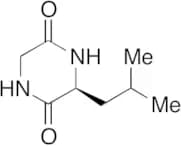
CAS:Controlled Product<p>Applications N-Cbz-L-aspartic acid is an N-Cbz-protected form of L-Aspartic acid (A790024). L-Aspartic acid is a nonessential amino acid that is used to biosynthesize other amino acids within the human body. L-Aspartic acid also increases membrane conductance of mammalian neurons by voltage-dependent means, causing depolarization and nerve impulses that travel to key areas of the central nervous system.<br>References Anderson, H., et al.: J. Nutr., 99, 82 (1969); Honey, C., et al.: Neurosci. Lett., 61, 135 (1985); MacDonald, J., et al.: Brain Res., 237, 248 (1982)<br></p>Formula:C12H13NO6Color and Shape:White To Off-WhiteMolecular weight:267.23Cyclo(Leu-Gly)
CAS:Controlled Product<p>Applications Cyclo(Leu-Gly) is an antimicrobial compound produced by Latobacillus plantarum.<br>References Niku-Paavola, M., et al.: J. Appl. Microbiol., 86, 29 (1999)<br></p>Formula:C8H14N2O2Color and Shape:Off-WhiteMolecular weight:170.212-Phenoxy-1-phenylethanol
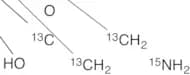
CAS:Controlled ProductFormula:C14H14O2Color and Shape:Off-WhiteMolecular weight:214.25β-Alanine-13C3,15N
CAS:Controlled Product<p>Applications β-Alanine-13C3,15N is the isotope labeled analogue of β-Alanine (A637320), which is a naturally occurring beta amino acid. β-Alanine is formed in vivo by the degradation of Dihydro Uracil (D449990) and Carnosine. β-Alanine is also the rate-limiting precursor of Carnosine, as a result supplementation with β-Alanine increases the concentration of Carnosine in muscles.<br>References Derave, W. et al.: J. Appl. Physiol., 103, 1736 (2007); Xia, J.-F. et al.: J. Chrom. B Anal. Technol. Biomed. Life Sci., 977, 1930 (2009); Artioli, G.G. et al.: Med. Sci. Sports Exer.,42, 1162 (2010);<br></p>Formula:C3H715NO2Color and Shape:NeatMolecular weight:93.06Riboflavine Tetrabutyrate
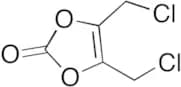
CAS:Controlled Product<p>Applications RIBOFLAVINE TETRABUTYRATE (cas# 752-56-7) is a useful research chemical.<br></p>Formula:C33H44N4O10Color and Shape:NeatMolecular weight:656.724,5-Bis(chloromethyl)-1,3-dioxol-2-one
CAS:<p>Stability Moisture Sensitive<br>Applications 4,5-Bis(chloromethyl)-1,3-dioxol-2-one is an impurity of Olmesartan Medoxomil (O550000), which is an angiotensin II receptor antagonist. Used as an anti-hypertensive.<br>References Yanagisawa, H., et al.: J. Med. Chem., 39, 323 (1996), Puchler, K., et al.: J. Hypertens., 15, 1809 (1997),<br></p>Formula:C5H4Cl2O3Color and Shape:NeatMolecular weight:182.98962-[2-(2-t-Boc-aminoethoxy]ethoxy]ethyl Bromide
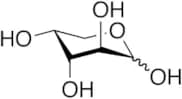
CAS:Controlled Product<p>Stability Light Sensitive, Moisture Sensitive<br>Applications A cross-linking reagent.<br>References Hatanaka, Y., et al.: Bioorg. Med. Chem., 2, 1367 (1994), Li, X., et al.: J. Med. Chem., 51, 3057 (2008),<br></p>Formula:C11H22BrNO4Color and Shape:NeatMolecular weight:312.2007D-Arabinose
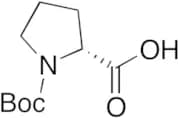
CAS:<p>Applications An inhibitor of the enzyme glucose dehydrogenase.<br>References Cozier, G.E. et al.: Biochem. J., 340, 639 (1999);<br></p>Formula:C5H10O5Color and Shape:White SolidMolecular weight:150.13tert-Butoxycarbonyl-D-proline
CAS:Controlled Product<p>Applications tert-Butoxycarbonyl-D-proline is Boc protected D-proline (P755990). It is used to prepare trichostatin A and trapoxin B analogs as histone deacetylase inhibitors. It is also used to prepare potent and selective nonpeptide inhibitors of caspases 3 and 7.<br>References Jung, M., et al.: Bioorg. Med. Chem. Lett., 7, 1655 (1997); Lee, D., et al.: J. Med. Chem,, 44, 2015 (2001)<br></p>Formula:C10H17NO4Color and Shape:NeatMolecular weight:215.25EPTC
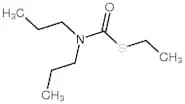
CAS:Controlled Product<p>Stability Hygroscopic<br>Applications EPTC is a pesticide, S-Ethyl-N,N-dipropylthiocarbamate<br></p>Formula:C9H19NOSColor and Shape:Light YellowMolecular weight:189.32β-Triglycidyl Isocyanurate
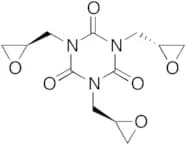
CAS:Controlled ProductFormula:C12H15N3O6Color and Shape:White To Off-WhiteMolecular weight:297.26Fructoseglutamic Acid Disodium Salt
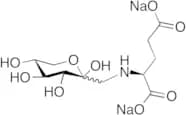
CAS:<p>Stability Very Hygroscopic<br>Applications Fructoseglutamic Acid Disodium Salt is an Amadori compound (derivatives of aminodeoxysugars) that is formed in food (such as dehydrated fruits such as tomatoes and carrots) as a result of the Maillard reactions.<br>References Baltes, W.: Food Chem., 9, 59 (1982); Sanz, M., et al.: J. Agr. Food Chem., 49, 5228 (2001); Wellner, A., et al.: J. Agr. Food Chem., 59, 7992 (2011)<br></p>Formula:C11H17NO9·2NaPurity:>80%Color and Shape:NeatMolecular weight:353.2342-Diethylaminoethanol-d10 Hydrochloride
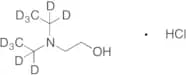
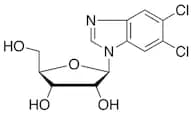
CAS:Controlled Product<p>Applications 2-Diethylaminoethanol-d10 Hydrochloride is an intermediate in the synthesis of Flurazepam-d10 Dihydrochloride (F500802). Flurazepam is used as an sedative, hypnotic. This is a controlled substance (depressant).<br></p>Formula:C6H6D10ClNOColor and Shape:WhiteMolecular weight:163.715,6-Dichloropurine-1-β-D-ribofuanosyl-H-benzimidazole
CAS:Controlled Product<p>Applications An inhibitor of RNA synthesis (causes premature termination of transcription).<br>References Braedlye, J. and Sporns, O.: Brain Res., 815, 140 (1999), Ljungman, M., et al.: Oncogene, 18, 583 (1999), Roele, R.H., et al.: Oncogene, 18, 5765 (1999)<br></p>Formula:C12H12Cl2N2O4Color and Shape:NeatMolecular weight:319.142-[2-[2-[2-[6-(Biotinylaminohexanoyl]aminoethoxy]ethoxy]ethoxy]-4-[3-(trifluoromethyl)-3H-diazirin-3-yl]benzoic Acid
CAS:<p>Stability Light and Moisture Sensitive<br>Applications A cross-linking, biotin-labelled compound.<br>References Hatanaka, Y. et al: Bioorg. Med. Chem., 2, 1367 (1994); Hatanaka, Y. et al: J. Org. Chem., 59, 383 (1994); Hatanaka, Y. et al: Bioorg. Med. Chem. 2, 1367 (1994)<br></p>Formula:C31H43F3N6O8SColor and Shape:NeatMolecular weight:716.7687SU 6656
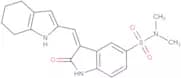
CAS:<p>M02518 - SU 6656</p>Formula:C19H21N3O3SPurity:>97%Color and Shape:Solid, PowderMolecular weight:371.465-Ethynyl-2’-deoxyuridine
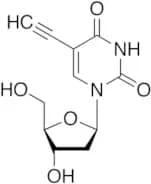
CAS:Controlled Product<p>Applications 5-Ethynyl-2’-deoxyuridine is an extensively used nucleoside analog used as a probe for DNA synthesis. 5-Ethynyl-2’-deoxyuridine is known as an toxic anti-metabolite, which potentially causes DNA instabiliy, necrosis and cell-cycle arrest, therefore it is often used for short-term DNA synthesis in tissue culture and living organisms where prolonged cell survival is not required.<br>References Neef, A.B., et al.: P. Natl. Acad. Sci.., 108, 20404 (2011); Gristwood, T., et al.: Nucleic. Acids. Rsch., 40, 5487 (2012);<br></p>Formula:C11H12N2O5Color and Shape:NeatMolecular weight:252.22Isoleucine-d10 (mixture of diastereomers)
CAS:Controlled Product<p>Applications Isoleucine-d10 (mixture of diastereomers) (CAS# 29909-02-2) is a useful isotopically labeled research compound and can be used in gas liquid chromatography.<br>References VandenHeuvel, W., et.al., J. Chromatogr., 50, 405-412, (1970);<br></p>Formula:C6D10H3NO2Color and Shape:NeatMolecular weight:141.2345N-Benzyloxycarbonyl L-Threonine Amide
CAS:Controlled Product<p>Applications Threonine derivative used in the synthesis of peptide.<br>References Dekker, C.A., et al.: J. Biol. Chem., 180, 155 (1949),<br></p>Formula:C12H16N2O4Color and Shape:NeatMolecular weight:252.27Folcysteine
CAS:Controlled Product<p>Applications A cysteine derivative as potential antitumor agent. (A609645)A vitamin needed to synthesize DNA, conduct DNA repair and methylate DNA, it also acts as a cofactor in biological reactions involving folate. (F680300)<br>References Paul, B., et al.: J. Med. Chem., et al.: 19, 1002 (1976), Xu, L., et al.: Mol. Pharm., 7, 1311 (2010), Everette, J., et al.: J. Agric. Food Chem., 58, 8139 (2010), Alshatwi, A., et al.: Food, Chem., Toxicol., 48, 1881 (2010), McKay, D., et al.: Nut. J., 9 (2010),<br></p>Formula:C19H19N7O6·C6H9NO3SColor and Shape:YellowMolecular weight:616.17TSTU
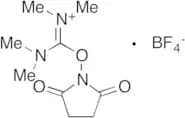
CAS:Controlled Product<p>Applications: TSTU is used as a peptide coupling reagent in solvent systems.<br>References Knorr, R., et. al.: Pept. 1990, Proc. Eur. Pept. Symp., 21st, 62-4 (1991)<br></p>Formula:C9H16N3O3·BF4Color and Shape:NeatMolecular weight:301.046N1,N3-Bis(2-ethylhexyl)-2-methyl-1,2,3-propanetriamine
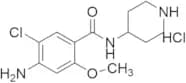
CAS:<p>Applications N1,N3-Bis(2-ethylhexyl)-2-methyl-1,2,3-propanetriamine is a hydrolysis product usually found in preparations of the antimicrobial drug hexetidine.<br>References Mende, P.; Food and Chem. Tox. 31(1), 53-58 (1993)<br></p>Formula:C20H45N3Color and Shape:NeatMolecular weight:327.59144-amino-5-chloro-2-methoxy-N-(piperidin-4-yl)benzamide hydrochloride
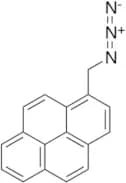
CAS:Controlled ProductFormula:C13H18ClN3O2·ClHColor and Shape:NeatMolecular weight:320.221-(Azidomethyl)pyrene
CAS:Controlled Product<p>Applications 1-(Azidomethyl)pyrene (cas# 1006061-57-9) is a useful research chemical.<br></p>Formula:C17H11N3Color and Shape:NeatMolecular weight:257.29L-Anserine Nitrate Salt
CAS:Controlled Product<p>Applications L-Anserine Nitrate Salt (cas# 10030-52-1) is a compound useful in organic synthesis.<br></p>Formula:C10H16N4O3·HNO3Color and Shape:NeatMolecular weight:303.27Perhydrofarnesyl Acetone
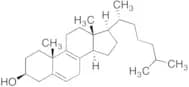
CAS:Controlled Product<p>Applications Perhydrofarnesyl Acetone is used as a flavor and fragrance agent, it is often used in jasmine compositions.<br>References Toda, H. et al.: Dev. Food Sci., 17, 181 (1988); Maggi, F. et al.: Food Chem., 113, 216 (2009); Maggi, F. et al.: Chem. Biodiv., 8, 2057 (2011);<br></p>Formula:C18H36OColor and Shape:ColourlessMolecular weight:268.488-Dehydrocholesterol
CAS:<p>Applications 8-Dehydrocholesterol is an intermediate in the synthesis of Zymostenol, which is the derivative of Zymosterol (Z701520), an sterol intermediate in the biosynthesis of cholesterol (C432501).<br>References Roland, E.D., et al.: J. Am. Chem. Soc., 111, 278 (1989); Echevarria, F., et al.: J. Biol. Chem., 265, 8484 (1990); Baranovskii, A.V., et al.: Russian. J. Bioorg. Chem., 28, 250 (2002); Schoenheimer, et al.: J. Biol. Chem., 105, 355 (1934);<br></p>Formula:C27H44OColor and Shape:NeatMolecular weight:384.64Homotaurine
CAS:<p>Applications Important gaba mimetic agent. It evokes neurological responses similar to those elicited by g-aminobutyric acid.<br>References Riv. Farmacol. Ter., 7, 155 (1976), Neuropharmacology, 17, 13 (1978), Br. J. Pharmacol., 59 373 (1977)<br></p>Formula:C3H9NO3SColor and Shape:NeatMolecular weight:139.172-Chloro-1,4-phenylenediamine Sulfate
CAS:Controlled Product<p>Stability Hygroscopic<br>Applications 2-Chloro-1,4-phenylenediamine Sulfate<br></p>Formula:C6H9ClN2O4SColor and Shape:NeatMolecular weight:142.5998081-Cyclopentyl-4-nitrosopiperazine-d9
CAS:Controlled Product<p>Applications 1-Cyclopentyl-4-nitrosopiperazine-d9 is an isotopically labeled compound of 1-Cyclopentyl-4-nitrosopiperazine (C213795). 1-Cyclopentyl-4-nitrosopiperazine is used in the green preparation of aminoazacyclic compounds via a new method of selective reduction.<br>References Yang, W., et al.: Chem. Heterocycl. Compd. 54, 780 (2018);<br></p>Formula:C9D9H8N3OColor and Shape:NeatMolecular weight:192.306Paraffin Oils
CAS:Controlled Product<p>Applications Paraffin Oils is a useful organic solvent for isolating the nucleus of the gian amphibian oocyte.<br>References Praine, P., et al.: Biotechniques, 13, 238 (1992);<br></p>Formula:C15H11ClO7Color and Shape:NeatMolecular weight:338.693-Indolyl-b-D-glucuronide Cyclohexylammonium salt
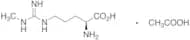
CAS:<p>M02724 - 3-Indolyl-b-D-glucuronide Cyclohexylammonium salt</p>Formula:C20H28N2O7Purity:97%Molecular weight:408.451NG-Monomethyl-L-arginine Acetate
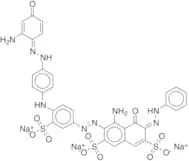
CAS:Controlled ProductFormula:C7H16N4O2·C2H4O2Color and Shape:NeatMolecular weight:248.28Direct Black 168 (tech grade)
CAS:Formula:C34H24N9Na3O11S3Color and Shape:NeatMolecular weight:899.772Phloxine B
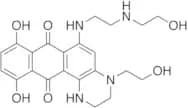
CAS:Controlled Product<p>Applications Phloxine B acts as the sensitizers of dye-sensitized solar cells. Also, it is a fluorescein photoactive dye. Dyes and metabolites, Environmental Testing.<br>References Ren, P., et al.: Int. J. Photoenergy, 2135847/1-2135847/11 (2016);<br></p>Formula:C20H2Br4Cl4O5·2NaColor and Shape:Red To Dark RedMolecular weight:829.63Mitoxantrone (2-Hydroxyethyl)piperazine Impurity(Mitoxantrone Impurity D)
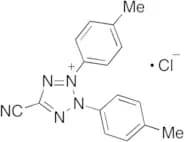
CAS:Controlled Product<p>Applications A metabolite of the anticancer agent Mitoxantrone (M373425)<br>References Feafanov, A. et al.: Anticcancer Res., 19, 5341 (1999); Ponousis, C. et al.: Biochem. Pharmacol., 48, 2223 (1994);<br></p>Formula:C22H26N4O6Color and Shape:NeatMolecular weight:442.465-Cyano-2,3-di-p-tolyltetrazolium Chloride (>85%)
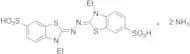
CAS:Controlled ProductFormula:C16H14N5·ClPurity:>85%Color and Shape:NeatMolecular weight:311.769Diammonium-2,2’ Azino-bis(3-ethylbenzothiazoline-6-sulfonate)
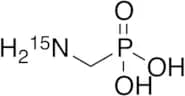
CAS:<p>Stability Hygroscopic, Light Sensitive<br>Applications Diammonium-2,2’ Azino-bis(3-ethylbenzothiazoline-6-sulfonate) has been shown to inhibit catalase, a mammalian antioxidant enzyme which degrades hydrogen peroxide into water and oxygen species.<br>References J. Biol. Chem. et al.: J. Biol. Chem., 280, 35372 (2005);<br></p>Formula:C18H18N4O6S4·2H3NColor and Shape:Light Green PowderMolecular weight:548.68AMPA-15N (>90%)
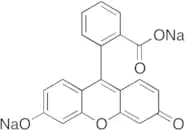
CAS:Controlled Product<p>Applications AMPA-15N is a useful labelled compound for determining the force constant and other properties of (Aminomethyl)phosphonic Acid in its stable form.<br>References Garrigou-Lagrange, C., et al.: C. R. Acad. Sci., 280, 969 (1975)<br></p>Formula:CH615NO3PPurity:>90%Color and Shape:NeatMolecular weight:112.03Fluorescein Sodium Salt
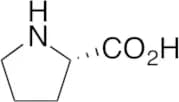
CAS:Controlled Product<p>Stability Hygroscopic<br>Applications Fluorescein sodium salt is a sodium salt of fluorescein. It can also be used in technical or engineered material use in-situ photochemical fabrication of transition metal-promoted amorphous molybdenum sulfide catalysts for enhanced photosensitized hydrogen evolution. Dyes and metabolites, Environmental Testing<br>References Hou, J., et al.: Int J Hydrogen Energ, 42, 11118 (2017)<br></p>Formula:C20H10O5·2NaColor and Shape:Dark RedMolecular weight:376.27L-Proline
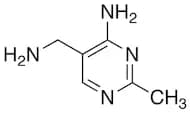
CAS:<p>Applications L-Proline is an amino acid and precursor (with vitamin C) for collagen, the building block of the structure of tendons, ligaments, arteries, veins and muscles. It is important in wound healing.<br>References Bondarenko, L.B., et al.: Int. J. Peptides., 2, 1687 (2012); Rimer, T., et al.: Biomacromolecules, 13, 2110 (2012);<br></p>Formula:C5H9NO2Color and Shape:NeatMolecular weight:115.134-Amino-5-aminomethyl-2-methylpyrimidine
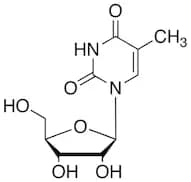
CAS:Controlled Product<p>Applications Substrate for TenA enzyme in the thiamin salvage pathway<br>References Jenkins, A., et al.: Nat. Chem. Biol., 3, 492 (2007), Jenkins, A., et al.: Bioorg. Chem., 36, 29 (2008),<br></p>Formula:C6H10N4Color and Shape:Light YellowMolecular weight:138.175-Methyluridine
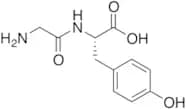
CAS:<p>Applications A primary degradation product of tRNA, an urinary nucleoside as biological marker for patients with colorectal cancer.<br>References Borek, E., et al.: Cancer Res., 37, 3362 (1977), Sander, G., et al.: Clin. Sci.,71, 367 (1986), Sander, G., et al.: Ann. Nutr. Metab., 30, 137 (1986), Rasmuson, T., et al.: Acta Oncol., 34, 61 (1995),<br></p>Formula:C10H14N2O6Color and Shape:NeatMolecular weight:258.23Glycyl-L-Tyrosine Dihydrate
CAS:Controlled Product<p>Applications Glycyl-L-Tyrosine Dihydrate is used in process for producing N-Glycyltyrosine. Glycyl-L-Tyrosine Dihydrate is the anhydrous form of Glycyl-L-tyrosine(G720108); which is used in preparation method of high quality Aspartame and Aspartame crystallization-inducing agent.<br>References Mimura, T., et al.: Eur. Pat. Appl., (1999); Gao, Z., et al.: Faming Zhuanli Shenqing, (2019);<br></p>Formula:C11H14N2O4·2H2OColor and Shape:NeatMolecular weight:274.27N6-({[3-(Methylsulfinyl)propyl]amino}carbonothioyl)lysine (SFN-Lys)
CAS:Formula:C12H25N3O3S2Color and Shape:NeatMolecular weight:323.48(S)-1-(4-Nitrophenyl)ethanamine Hydrochloride
CAS:<p>Applications (S)-1-(4-Nitrophenyl)ethanamine hydrochloride (cas# 132873-57-5) is a useful research chemical.<br></p>Formula:C8H10N2O2·HClColor and Shape:NeatMolecular weight:202.63







![2-[[3,4,6-Tri-O-acetyl-2-(acetylamino)-2-deoxy-β-D-galactopyranosyl]oxy]acetic Acid](/_next/image/?url=https%3A%2Fstatic.cymitquimica.com%2Fproducts%2FTR%2Fthumb-webp%2FT992240.webp&w=3840&q=75)









![2-[2-(2-t-Boc-aminoethoxy]ethoxy]ethyl Bromide](/_next/image/?url=https%3A%2Fstatic.cymitquimica.com%2Fproducts%2FTR%2Fthumb-webp%2FB618590.webp&w=3840&q=75)

![2-[2-[2-[2-[6-(Biotinylaminohexanoyl]aminoethoxy]ethoxy]ethoxy]-4-[3-(trifluoromethyl)-3H-diazirin…](/_next/image/?url=https%3A%2Fstatic.cymitquimica.com%2Fproducts%2FTR%2Fthumb-webp%2FB394857.webp&w=3840&q=75)











![N6-({[3-(Methylsulfinyl)propyl]amino}carbonothioyl)lysine (SFN-Lys)](/_next/image/?url=https%3A%2Fstatic.cymitquimica.com%2Fproducts%2FTR%2Fthumb-webp%2FM332338.webp&w=3840&q=75)
