Étalons de l'industrie alimentaire
Les standards de l'industrie alimentaire sont des matériaux de référence critiques utilisés pour garantir la sécurité, la qualité et la cohérence des produits alimentaires. Ces standards sont utilisés dans l'analyse et les tests des denrées alimentaires, y compris les contaminants, les additifs et les composants nutritionnels. Chez CymitQuimica, nous proposons des standards de haute qualité pour l'industrie alimentaire afin de soutenir la conformité aux réglementations en matière de sécurité alimentaire et les mesures de contrôle de la qualité.
Sous-catégories appartenant à la catégorie "Étalons de l'industrie alimentaire"
- Étalons relatives aux boissons(7 produits)
- Étalons laitières(39 produits)
- Matériaux en contact avec les aliments(1.074 produits)
- Étalons pour le vin(47 produits)
7930 produits trouvés pour "Étalons de l'industrie alimentaire"
Trier par
Degré de pureté (%)
0
100
|
0
|
50
|
90
|
95
|
100
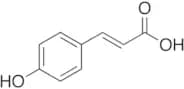
trans-p-Coumaric Acid
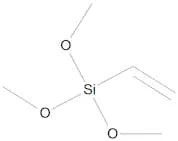
CAS :<p>Applications trans-p-Coumaric Acid is the E-isomer of p-Coumaric Acid (C755365), a hydroxy derivative of Cinnamic Acid with antioxidant properties. p-Coumaric acid is a is a major component of lignocellulose. Studies suggest that p-Coumaric Acid may reduce the risk of cancer by reducing the formation of carcinogenic nitrosamines.<br>References Kikugawa, K. et al.: J. Agric. Food Chem., 1, 780 (1983); Ferguson, L.R. et al.: Mol. Nutrit. Food Res., 585 (2005); Chung, F.L. et al.: IARC Sci. Pub., 57, 797 (1984);<br></p>Formule :C9H8O3Couleur et forme :BeigeMasse moléculaire :164.16Vinyltrimethoxysilane
CAS :<p>Applications Vinyltrimethoxysilane (cas# 2768-02-7) is a useful research chemical.<br></p>Formule :C5H12O3SiCouleur et forme :Light YellowMasse moléculaire :148.2325Di(n-butyl-d9) 1,10-Decanedioate
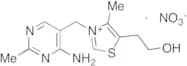
CAS :Produit contrôlé<p>Applications Di(n-butyl-d9) 1,10-Decanedioate is a useful isotopically labeled compound of Dibutyl Sebacate (D429525(P)). Dibutyl Sebacate (DBS) is a dibutyl ester of sebacic acid. Dibutyl Sebacate can be used for plastics in use in the food packaging industry, in plastics used for medical devices, and for pharmaceutical applications. Dibutyl Sebacate is also used as a desensitizer in Otto fuel II, a torpedo monopropellant.<br>References Eriksson, M., et al.: Plant Physiol., 132, 732 (2003), ,,Beuve, N., et al.: Plant Cell Environ., 27, 1035 (2004),<br></p>Formule :C18D18H16O4Couleur et forme :ColourlessMasse moléculaire :332.571Thiamine Nitrate
CAS :Produit contrôlé<p>Stability Hygroscopic<br>Applications Thiamine Nitrate is an orally administered vitamin. Thiamine is a essential nutrient required for carbohydrate metabolism and is involved in nerve function.<br>References Leuschner, J.: Arzneimittel-Forsch., 42, 114 (1992); Kawaski, T., et al.: Methods Enzymol., 122, 15 (1986); Mascher, H., et al.: J. Pharm. Sci., 82, 56 (1993)<br></p>Formule :C12H17N4OS·NO3Couleur et forme :WhiteMasse moléculaire :327.36Cantharidin
CAS :<p>Stability Hygroscopic<br>Applications Cantharidin is a well known natural compound produced by beetles of the Meloidae and Oedemeridae families. Insecticidal toxin. Apoptosis inducer in human H460 human lung cancer cells.<br> Not a dangerous good if item is equal to or less than 1g/ml and there is less than 100g/ml in the package<br>References Khan, R. et al.: GMR. Gen. Mol. Res., 12, 4393 (2013); Hsia, T. et al.: Int. J. Onc., 45, 245 (2014);<br></p>Formule :C10H12O4Couleur et forme :NeatMasse moléculaire :196.20Glutaric Acid
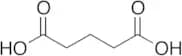
CAS :<p>Applications Glutaric Acid is an organic acid found in human urine which may be used for the detection of metabolic or other health disorders.<br>References Christou, C., et. al.: J. Chromatogr. B. Anal. Tech. Biomed. Life Sci., 964, 195 (2014)<br></p>Formule :C5H8O4Couleur et forme :White PowderMasse moléculaire :132.112-(2-Butoxyethoxy)ethyl Acetate
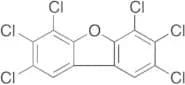
CAS :Formule :C10H20O4Couleur et forme :NeatMasse moléculaire :204.262,3,4,6,7,8-Hexachlorodibenzofuran
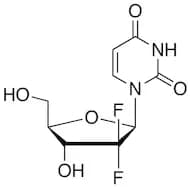
CAS :<p>Applications 2,3,4,6,7,8-Hexachlorodibenzofuran, is a toxic polychlorinated dibenzofurans (PCDD/F), detected in domestic meat and poultry. It can be used as purified standards for analytical, toxic, and biological studies of these environmental contaminants.<br>References Huwe, J., et al.: Food Addit. Contam., 21, 182 (2004), Llobet, J., et al.: Toxicol. Lett., 178, 117 (2008); Feil, V., et al.: J. Agric. Food Chem., 48, 6163 (2000); Safe, S. H., et al.: J. Agric. Food Chem., 32, 68 (1984);<br></p>Formule :C12H2Cl6OCouleur et forme :NeatMasse moléculaire :374.862’,2’-Difluoro-2’-deoxyuridine
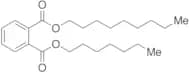
CAS :Produit contrôléFormule :C9H10F2N2O5Couleur et forme :White To Off-WhiteMasse moléculaire :264.18Heptyl Nonyl Phthalate
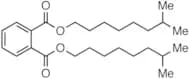
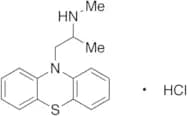
CAS :Produit contrôlé<p>Applications Heptyl Nonyl Phthalate is an phthalate esters used as plasticizers and additives. Used in toxiciology studies as well as risk assessment studies of food contamination that occurs via migration of phthalates into foodstuffs from food-contact materials (FCM).<br>References Peterson, J.C., et al.: Int. J. Envrion. Anal. Chem., 18, 237 (1984); Gharagheizi, F., et al.: Indust. Engin. Chem. Res., 49, 12685 (2010);<br></p>Formule :C24H38O4Couleur et forme :Colourless To Light YellowMasse moléculaire :390.56rac N-Demethyl Promethazine Hydrochloride
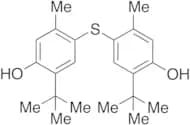
CAS :<p>Impurity Promethazine EP Impurity C<br>Applications rac N-Demethyl Promethazine Hydrochloride (Promethazine EP Impurity C) is a Promethazine (P757000) impurity.<br> Not a dangerous good if item is equal to or less than 1g/ml and there is less than 100g/ml in the package<br>References Keipert, S., et al.: Pharmazie, 31, 296 (1976),<br></p>Formule :C16H18N2S·ClHCouleur et forme :NeatMasse moléculaire :306.854,4'-Thiobis(2-tert-butyl-5-methylphenol)
CAS :Formule :C22H30O2SCouleur et forme :NeatMasse moléculaire :358.54Bisphenol A-d6 Diglycidyl Ether
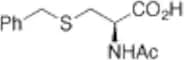
CAS :Produit contrôlé<p>Applications Labelled Bisphenol A derivative. A PPARγ antagonist; exhibits estrogenic activity.<br>References Krishnan, A.V., et al.: Endocrinology, 132, 2279 (1993), Steinmetz, R., et al.: Trends Endocrinol. Metab., 9, 124 (1998), Petersen, H., et al.: Eur. Food Res. Technol., 216, 355 (2003),<br></p>Formule :C21H18D6O4Couleur et forme :Off-WhiteMasse moléculaire :346.45N-Acetyl-S-benzyl-L-cysteine
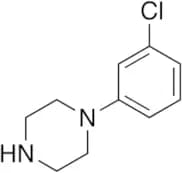
CAS :Produit contrôlé<p>Applications A metabolite of Toluene.<br>References Gargas, M., et al.: Toxicol. Appl. Pharmacol., 98, 87 (1989), Commandeur, J., et al.: Pharmacol. Rev., 47(2), 271 (1995), Campo, P., et al.: Neurotoxicol. Teratol., 21, 427 (1999), Lohse, C., et al.: J. Agr. Food Chem., 48, 5913 (2000),<br></p>Formule :C12H15NO3SCouleur et forme :Off-WhiteMasse moléculaire :253.321-(3-Chlorophenyl)piperazine
CAS :Produit contrôlé<p>Applications It is noteworthy that 1-(3-Chlorphenyl)piperazine (m-CPP), resulting from N-dealkylation of Trazodone, is a major circulating metabolite in humans common to several antidepressants including Trazodone, Nefazodone, and Etoperidone (1,2,3). The metabolite m-CPP is of significant interest because it has 5-HT2C agonistic and 5-HT2A antagonistic properties. It has also been suggested that m-CPP may contribute to the antidepressant efficacy of Trazodone.<br>References (1) Bo Wen, et al.: Drug Metab. Dispos., 36, 841 (2008) (2) Maes, M., et al.: J. Clin. Psychopharmacol., 17, 358 (1997) (3) Fiorella, D., et al.: Psychopharmacology, 119, 220 (1995)<br></p>Formule :C10H13ClN2Couleur et forme :NeatMasse moléculaire :196.68Pyridoxamine Dihydrochloride
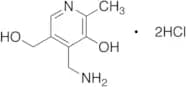
CAS :Produit contrôlé<p>Applications Pyridoxamine Dihydrochloride (cas# 524-36-7) is a compound useful in organic synthesis.<br></p>Formule :C8H12N2O2·2ClHCouleur et forme :White To Off-WhiteMasse moléculaire :241.12Vitamin B12
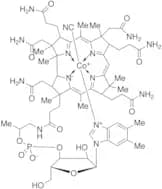
CAS :Produit contrôlé<p>Stability Hygroscopic<br>Applications Prototype of the family of naturally occurring cobalt coordination compounds knows as corrinoids. Analogs of vitamin B12 which differ only in the β-ligand of the cobalt are termed cobalamins. Synthesized almost exclusively by bacteria. Dietary sources include fish, meat, liver, and dairy products; plants have little or no cobalamins. Converted by the body into its bioactive forms, methylcobalamin and cobamamide, which serve as enzyme cofactors. Severe deficiency may result in megaloblastic anemia and/or neurological impairment.<br>References Rickes, et al.: Science, 107, 396 (1948); Kirschbaum, J., et al.: Anal. Profiles Drug Subs., 10, 183 (1981); Grasbeck, R., et al.: Clin. Biochem., 17, 99 (1984)<br></p>Formule :C63H88CoN14O14PCouleur et forme :Dark RedMasse moléculaire :1355.37S-(-)-Norketamine Hydrochloride
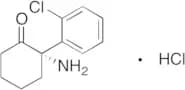
CAS :Produit contrôlé<p>Applications S-(-)-Norketamine Hydrochloride is the S-isomer and one of the main metabolites of ketamine (K165300), an anesthetic agent.<br>References Edwards, S.R., et al.: Life. Sci., 69, 2051 (2001); Zhao, X.C., et al.: Brit. J. Clin. Pharmacol., 74, 304 (2012);<br></p>Formule :C12H14ClNO·HClCouleur et forme :NeatMasse moléculaire :260.16Glycyrrhizic Acid
CAS :<p>Stability Hygroscopic<br>Applications Glycyrrhizic Acid is a triterpene saponin used in the traditional Chinese medicinal preparation for its anti-inflammatory, antiulcerous and antiallergic effects.<br>References Marsh, L., et al.: Biochem. J., 63, 9 (1956), Kitagawa, et al.: Chem. Pharm. Bull., 36, 3710 (1988),<br></p>Formule :C42H62O16Couleur et forme :White To Light BeigeMasse moléculaire :822.93(Z)-Fluoxastrobin
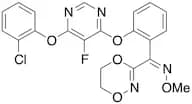
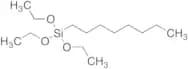
CAS :Produit contrôlé<p>Stability Light Sensitive<br>Applications (Z)-Fluoxastrobin is an isomer of Fluoxastrobin (F596000), Leaf-systemic broad-spectrum fungicide for use in cereal and food crops; member of methoxy-imiodihydro-dioxazines. Agricultural fungicide.<br> Not a dangerous good if item is equal to or less than 1g/ml and there is less than 100g/ml in the package<br>References Milus, E., et al.: Plant Dis., 78, 697 (1994), D'Mello, J., et al.: Eur. J. Plant Pathol., 104, 745 (1998), Domijan, A., et al.: Food Addit. Contam., 22, 677 (2005),<br></p>Formule :C21H16ClFN4O5Couleur et forme :Light YellowMasse moléculaire :458.83Triethoxy(octyl)silane
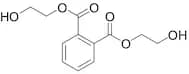
CAS :Produit contrôlé<p>Applications Triethoxy(octyl)silane is a hydrophobization agent used to limit coalescence in solid-stabilized emulsions.<br>References Arditty, S., et al.: Eur. Phys. J. E, 11, 273 (2003);<br></p>Formule :C14H32O3SiCouleur et forme :NeatMasse moléculaire :276.49Bis(2-hydroxyethyl) Phthalate (>90%)
CAS :Produit contrôléFormule :C12H14O6Degré de pureté :>90%Couleur et forme :Light YellowMasse moléculaire :254.24Rebaudioside A
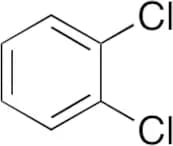
CAS :Produit contrôlé<p>Stability Hygroscopic<br>Applications Rebaudioside A is a glycoside from the stevia plant. Rebaudioside A is used as a sweetener with sweetness about 300 times that of sugar with negligible effect on blood glucose. As a result, Rebaudioside A is known for its application in treatment of many diseases like diabetes, high blood pressure and weight loss in some places.<br>References Mishra, P. et al.: Glob. J. Biotechnol. Biochem., 5, 62 (2010); Liu, J. et al.: Ship. Gong. Keji, 30, 359 (2009); Santini, A. et al.: Prog. Nutrit., 10, 5 (2008); Heerranz-Lopez, M. et al.: Agro Food Ind. Hi-Tech, 21, 38 (2010);<br></p>Formule :C44H70O23Couleur et forme :WhiteMasse moléculaire :967.011,2-Dichlorobenzene
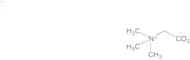
CAS :Produit contrôlé<p>Applications 1,2-Dichlorobenzene is used as an organic solvent in a wide array of chemical reactions. Also known to cause oxidative stress and induction of apoptotic markers in lung epithelial cells. 1,2-Dichlorobenzene is a side product of the production of chlorobenzene.<br> Not a dangerous good if item is equal to or less than 1g/ml and there is less than 100g/ml in the package<br>References Peljo, P. et al.: J. Am. Chem. Soc., 134, 5974 (2012); Morbt, N. et al.: J. Proteome Res., 10, 363 (2011); Serguchev, Y.A., et al.: Theoretic. Experiment. Chem., 47, 123 (2011); Aracil, I., et al.: Environ. Sci. Technol., 44, 4169 (2010);<br></p>Formule :C6H4Cl2Couleur et forme :Colourless Light YellowMasse moléculaire :147.00Betaine
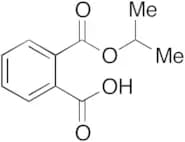
CAS :<p>Applications Betaine, is the product of the enzyme oxidation of choline. It can also be used as an organic osmolytes. Betain is a methyl donor of increasingly recognized significance in biology. It can also be used for the treatment of homocystinuria which is an inherited disorder of the metabolism of amino acid methionine.<br>References J. Biol. Chem., 234, 1171 (1959); Alex, N. et al.: Org. Chem., (1987); Rees, W. et al.: Biochem., 32, 137 (1993);<br></p>Formule :C5H11NO2Couleur et forme :WhiteMasse moléculaire :117.15Monoisopropyl Phthalate
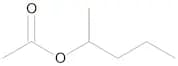
CAS :Produit contrôlé<p>Applications Monoisopropyl Phthalate, is shown to have anti-estrogenic activities at higher than 10-4 M. It can also be used for the preparation of SB-462795, a cathepsin K inhibitor.<br>References Okubo, T., et al.: Bio. Pharmace. Bulletin, 26 (8), 1219 (2003); Wang, H., et al.: Org. Process Res. Deve., 12, 226 (2008);<br></p>Formule :C11H12O4Couleur et forme :White To Off-WhiteMasse moléculaire :208.212-Pentyl Acetate (>90% purity)
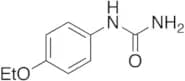
CAS :Produit contrôlé<p>Stability Volatile<br>Applications 2-Pentyl Acetate has a weak banana odor. 2-Pentyl Acetate is an irritant.Environmental contaminants; food contaminants.<br> Not a dangerous good if item is equal to or less than 1g/ml and there is less than 100g/ml in the package<br>References Dong, T., et al.: J. Hortic. Sci. Biotechnol. 89, 441 (2014); Xu, Z., et al.: Food Bioprocess Tech 9, 407 (2016)<br></p>Formule :C7H14O2Degré de pureté :>90%Couleur et forme :NeatMasse moléculaire :130.18Dulcin (>90%)
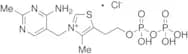
CAS :Produit contrôlé<p>Applications Dulcin is a non-nutritive sweetener. Dulcin is a sweet analgesic for use in medical procedures or treatments.<br>References Toropov, A.A., et al.: Eur. J. Med. Chem.,В 45,В 3581 (2010),<br></p>Formule :C9H12N2O2Degré de pureté :>90%Couleur et forme :NeatMasse moléculaire :180.20Thiamine Pyrophosphate Chloride
CAS :<p>Stability Hygroscopic<br>Applications Thiamine Pyrophosphate is a thiamine (T344185) derivative produced by enzyme thiamine pyrophosphatase. Thiamine pyrophosphate is a cofactor used to catalyze various biochemical reactions.<br>References Andrews, F.H. et al.: Biochem., 52, 3028 (2013); Mueller, C.R., et al.: Org. Biomolec. Chem., 11, 2000 (2013); Haag, N., et al.: J. Neurosci., 32, 17842 (2012); Nemeria, N., et al.: Biochem., 51, 7940 (2012);<br></p>Formule :C12H19N4O7P2S·ClCouleur et forme :Off-WhiteMasse moléculaire :460.774,4'-Methylenebis(2,6-dimethylphenol)
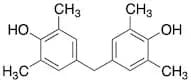
CAS :Produit contrôlé<p>Applications 4,4'-Methylenebis(2,6-dimethylphenol) is used in thermosetting resin composition for the industrial manufacture of metal-clad laminates and printed circuit boards.<br> Not a dangerous good if item is equal to or less than 1g/ml and there is less than 100g/ml in the package<br>References You, J., et al.: Faming Zhuanli Shenqing. 19 pp. (2019)<br></p>Formule :C17H20O2Couleur et forme :ColourlessMasse moléculaire :256.34sec-Hexyl Alcohol Phthalate
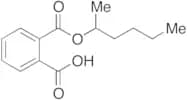
CAS :Produit contrôléFormule :C14H18O4Couleur et forme :NeatMasse moléculaire :250.29Tetrachloroethylene
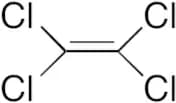
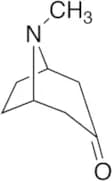
CAS :<p>Applications Tetrachloroethylene is a common industrial solvent that is often found as a contaminant in groundwater. Tetrachloroethylene is also a suspected carcinogen to humans and is difficult to degrade biologically as it has no natural source. This compound is a contaminant of emerging concern (CECs).<br> Not a dangerous good if item is equal to or less than 1g/ml and there is less than 100g/ml in the package<br>References Fathepure, B. & Boyd, S.: Appl Environ. Microb., 54, 2976 (1988); Ryoo, D., et al.: Nat. Biotech., 18, 775 (2000); Vogel, T. & McCarty, P.: Appl. Environ. Microb., 49, 1080 (1985)<br></p>Formule :C2Cl4Couleur et forme :NeatMasse moléculaire :165.83Tropinone
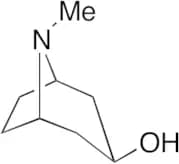
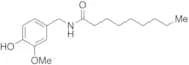
CAS :Produit contrôlé<p>Applications Tropinone is an oxidative product of Tropane, used to synthesize Morphine and Tropane alkaloids.<br>References Schmitt, K., et al.: J. Neurochem., 115, 296 (2010), Kok, G., et al.: Bioorg. Med. Chem. Lett., 20, 4499 (2010), Gohil, V., et al.: Nat. Biotechnol., 28, 249 (2010),<br></p>Formule :C8H13NOCouleur et forme :NeatMasse moléculaire :139.195N-Vanillylnonanamide
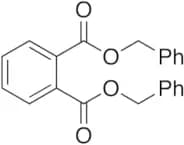
CAS :Produit contrôlé<p>Applications N-Vanillylnonanamide is a synthetic analogue of Capsaicin (175680) with similar bioactivity.<br> Not a dangerous good if item is equal to or less than 1g/ml and there is less than 100g/ml in the package<br>References Turgut, C., et al.: Environ. Sci. Pollut. Res., 11, 7 (2003), Xu, Q., et al.: Environ. Toxicol., 20, 467 (2005),<br></p>Formule :C17H27NO3Couleur et forme :WhiteMasse moléculaire :293.40Dibenzyl Phthalate
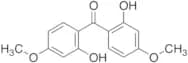
CAS :Produit contrôlé<p>Applications Dibenzyl Phthalate is an plasticizer used in toys that was found to exhibit potential estrogen agonist/ antagonist properties.<br>References Zhang, Z.B., et al.: Toxicol. Lett., 207, 7 (2011); Mentlein, R., et al.: BIochem. Pharma., 38, 3126 (1989);<br></p>Formule :C22H18O4Couleur et forme :NeatMasse moléculaire :346.382,2'-Dihydroxy-4,4'-dimethoxybenzophenone
CAS :Produit contrôlé<p>Applications 2,2'-Dihydroxy-4,4'-dimethoxybenzophenone (cas# 131-54-4) is a useful research chemical.<br></p>Formule :C15H14O5Couleur et forme :NeatMasse moléculaire :274.27Thiamine Hydrochloride
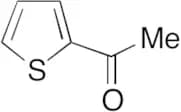
CAS :<p>Applications Thiamine is a essential nutrient required for carbohydrate metabolism; also involved in nerve function. Biosynthesized by microorganisms and plants. Dietary sources include whole grains, meat products, vegetables, milk, legumes and fruit. Also present in rice husks and yeast. Converted in vivo to Thiamine diphosphate, a coenzyme in the decarboxylation of α-keto acids. Chronic deficiency may lead to neurological impairment, bariberi, Wernicke-Korsakoff syndrome.<br>References Kawaski, T., et al.: Methods Enzymol., 122, 15 (1986), Mascher, H., et al.: J. Pharm. Sci., 82, 56 (1993),<br></p>Formule :C12H17N4OS·Cl·ClHCouleur et forme :WhiteMasse moléculaire :337.272-Acetylthiophene
CAS :Produit contrôlé<p>Applications 2-Acetylthiophene is used in the synthesis of organoboranes as well as chalcone derivatives as anti-inflammatories.<br> Not a dangerous good if item is equal to or less than 1g/ml and there is less than 100g/ml in the package<br>References Ko, H. et al.: Bioorg. Med. Chem., 11, 105 (2003); Brown, H. et al.: J. Am. Chem. Soc., 110, 1539 (1988);<br></p>Formule :C6H6OSCouleur et forme :NeatMasse moléculaire :126.18γ-Linolenic Acid Methyl Ester
CAS :Formule :C19H32O2Couleur et forme :ColourlessMasse moléculaire :292.46Dicyclohexyl Phthalate
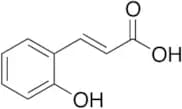
CAS :<p>Applications Dicyclohexyl Phthalate is a phthalate ester used as a plasticizer as well as being present in cosmetic products. Dicyclohexyl Phthalate that is a weak drug-type inducer of hepatic xenobiotic metabolism.<br>References Lake, B.G. et al.: Acta Pharmacol. Toxicol., 51, 217 (1982); Tsutsumi, N. et al.: Optic. Mat., 29, 435 (2006);<br></p>Formule :C20H26O4Couleur et forme :WhiteMasse moléculaire :330.422-Hydroxycinnamic Acid
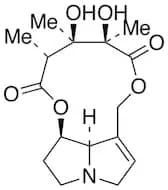
CAS :Produit contrôlé<p>Applications 2-Hydroxycinnamic Acid (cas# 614-60-8) is a useful research chemical.<br></p>Formule :C9H8O3Couleur et forme :NeatMasse moléculaire :164.16Monocrotaline
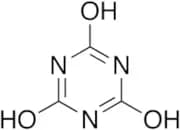
CAS :<p>Applications A toxic pyrrolizidine alkaloid isolated from Crotalaria spp. It is used for inducing pulmonary diseases in rats.<br> Not a dangerous good if item is equal to or less than 1g/ml and there is less than 100g/ml in the package<br>References Newberne, P.M., et al.: Toxicol. Appl. Pharmacol., 18, 387 (1971), Bober, M.A., et al.: Toxicon, 27, 1059 (1989), Wilson, D.W., et al.: Crit. Rev. Toxicol., 22, 307 (1992),<br></p>Formule :C16H23NO6Couleur et forme :White To Off-WhiteMasse moléculaire :325.36Cyanuric Acid
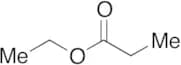
CAS :Produit contrôlé<p>Applications Diagnostic determination of Melamine and related compounds in kidney tissue.<br>References Mast, R., et al.: Food Chem. Toxicol., 21, 807 (1983), Yokley, R., et al.: J. Agric. Food Chem., 48, 3352 (2000), Ehling, S., et al.: Food Addit. Contam., 24, 1319 (2007), Vail, T., et al.: J. Anal. Toxicol., 31, 304 (2007),<br></p>Formule :C3H3N3O3Couleur et forme :WhiteMasse moléculaire :129.07Ethyl Propionate(Propionic Acid Ethyl Ester)
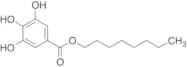
CAS :Formule :C5H10O2Couleur et forme :ColourlessMasse moléculaire :102.13Octyl Gallate
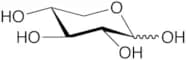
CAS :<p>Applications OCTYL GALLATE (cas# 1034-01-1) is a useful research chemical.<br></p>Formule :C15H22O5Couleur et forme :White To Off-WhiteMasse moléculaire :282.33D-Xylose
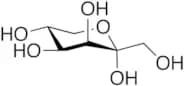
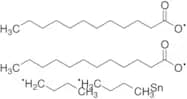
CAS :<p>Applications D-Xylose is used in diagnostic malabsorption tests as well as in the production of Furfural.<br>References Ehrenpreis E.D. et al.: J. Acquir. Immune. Defic. Syndr., 5, 1047 (1992); Sérgio L. et al.: Cat. Comm., 9, 2144 (2008);<br></p>Formule :C5H10O5Couleur et forme :NeatMasse moléculaire :150.13Dibutyltin Dilaurate
CAS :Produit contrôléFormule :C32H64O4SnCouleur et forme :NeatMasse moléculaire :631.5582Bisphenol F
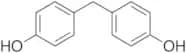
CAS :Produit contrôlé<p>Applications Bisphenol F is a bisphenol derivative with antioxidant activities. Bisphenol F has been reported to exhibit estrogen agonistic properties.<br>References Higashihara, N. et al.: Arch. Toxicol., 81, 825 (2007); Kanai, H. et al.: Int. J. Cancer, 93, 20 (2001); Pospisil, J. et al.: Kinet. Mech. Polyreacti.Int. Symp. Macromol. Chem. Prepr.,5, 383 (1969);<br></p>Formule :C13H12O2Couleur et forme :RedMasse moléculaire :200.23Nicotinic Acid
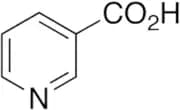
CAS :<p>Applications Nicotinic acid. It is a precursor of the coenzymes NAD and NADP. Widely distributed in nature; appreciable amounts are found in liver , fish, yeast and cereal grains. Dietary deficiency is associated with pellagra. The term “niacin” has also been applied to nicotinamide or to other derivatives exhibiting the biological activity of nicotinic acid. Vitamin (enzyme cofactor).<br>References Darby, W.J., et al.: Nutr. Rev., 33, 289 (1975), Black, A., et al.: Eur. J. Clin. Nutr., 54, 395 (2000), Cole, T., et al.: Br. Med. J., 320, 1240 (2000), Forshee, R., et al.: J. Nutr., 134, 2733 (2004),<br></p>Formule :C6H5NO2Couleur et forme :NeatMasse moléculaire :123.11Bisphenol A bis(3-chloro-2-hydroxypropyl) Ether
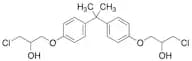
CAS :Produit contrôlé<p>Applications The epoxy resin bisphenol A diglycidyl ether (BADGE), its hydrolysis products and a chlorohydrin of BADGE (BADGE·2HCl), have been examined for their genotoxicity in the micronucleus test and mutagenicity in the Ames Salmonella assay.<br>References Suarez, S., et al.: Mutat. Res, 470, 221-228 (2000); Sueiro, R., et al.: Mutagenesis,16, 303-307 (2001).<br></p>Formule :C21H26Cl2O4Couleur et forme :White To Off-WhiteMasse moléculaire :413.331-Methyl-1H-benzotriazole
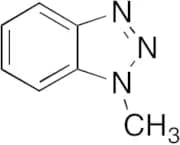
CAS :Produit contrôlé<p>Applications A benzotriazole derivative with potential inhibitory effect on protease enzymes chymotrypsin, trypsin and papain.<br>References Akin, M., Res. J. Biotechnol., 9, 19 (2014);<br></p>Formule :C7H7N3Couleur et forme :White To BeigeMasse moléculaire :133.15Mono(2-hydroxyisobutyl)phthalate-d4
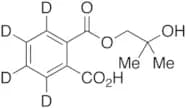
CAS :Produit contrôlé<p>Applications Labelled Mono(2-hydroxyisobutyl)phthalate (M547525). Mono(2-hydroxyisobutyl)phthalate is a metabolite of Di-isobutyl phthalate.<br>References Engelhardt, G., et al.: Chemosphere, 6, 347 (1977),<br></p>Formule :C12H10D4O5Couleur et forme :NeatMasse moléculaire :242.26Fertirelin Acetate
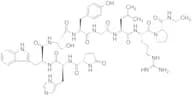
CAS :Produit contrôlé<p>Applications Fertirelin Acetate is a gonadotropin-releasing hormone (GnRH) agonists that induces estrus in dogs and cats . It also has an effect on the pregnancy rate in cows.<br>References Kutzler, M. A.: Theriogenology, 68, 354-374 (2007); Osawa, T., et al.: J. Reprod. Dev., 55, 163-169 (2009)<br></p>Formule :C55H76N16O12•xC2H4O2Couleur et forme :NeatMasse moléculaire :1153.296005Dihexylphthalate-D4
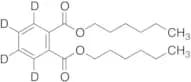
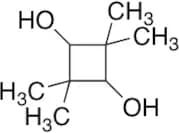
CAS :Produit contrôlé<p>Applications Dihexylphthalate-d4 is an labeled analog of Dihexylphthalate (B185430), which is a phthalic ester, which is used as a plasticizers for vinyl plastics. Phthalates may be associated with reproductive toxicity in humans and animals.<br>References Saido, K., et al.: ?J. Am. Oil Chem. Soc 61, 945 (1984); Foghmoes, S., et al.: J. Eur. Ceram. Soc. 36, 3441 (2016); Przybyli?ska, P. A. and Wyszkowski, M.: Ecol. Chem. Eng., S 23,347 (2016)<br></p>Formule :C20D4H26O4Couleur et forme :YellowMasse moléculaire :338.472,2,4,4-Tetramethyl-1,3-cyclobutanediol
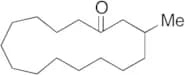
CAS :Produit contrôlé<p>Applications 2,2,4,4-Tetramethyl-1,3-cyclobutanediol (cas# 3010-96-6) is a useful research chemical.<br> Not a dangerous good if item is equal to or less than 1g/ml and there is less than 100g/ml in the package<br></p>Formule :C8H16O2Couleur et forme :NeatMasse moléculaire :144.211Muscone
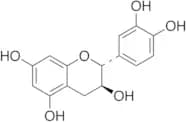
CAS :<p>Applications Muscone protects PC12 cells against glutamate-induced apoptosis.<br>References Yu, L., et. al.: Neurochem. Int., 70, 10 (2014)<br></p>Formule :C16H30OCouleur et forme :NeatMasse moléculaire :238.41(+)-Catechin
CAS :<p>Applications (+)-Catechin is a flavonoid found primarily in higher woody plants as (+)-Catechin along with (-)-Epicatechin (cis form). Antidiarrheal.<br>References Das, S., Biochem. J., et al.: 125, 417 (1971), Das, N.P., et al.: Biochem. Pharmacol., 20, 3435 (1971),<br></p>Formule :C15H14O6Couleur et forme :Light Brown To Light Orange ColourMasse moléculaire :290.271-Tetracosanol
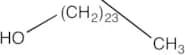
CAS :<p>Applications 1-Tetracosanol is a useful reagent for organic synthesis.<br></p>Formule :C24H50OCouleur et forme :White To Off-WhiteMasse moléculaire :354.65N,N-Bis(2-hydroxyethyl)dodecanamide(>80%)
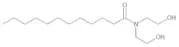
CAS :Produit contrôléFormule :C16H33NO3Degré de pureté :>80%Couleur et forme :NeatMasse moléculaire :287.443,4-Dihydroxybenzoic Acid
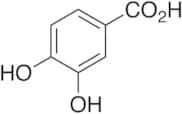
CAS :Produit contrôlé<p>Applications 3,4-Dihydroxybenzoic Acid is a metabolite of polyphenols such as Phloretin (P339000) and Quercetin (Q509500). It may protect skin against blue light and other environmental assaults.<br>References Vaidyanathan, J., et al.: Drug Metab. Dispos., 30, 897 (2002), Wolfe, K., et al.: J. Agric. Food Chem., 51, 609 (2003), Marks, S., et al.: J. Agric Food. Chem., 55, 8723 (2007); Chem. and Eng. News p.28 , May 14, 2018<br></p>Formule :C7H6O4Couleur et forme :NeatMasse moléculaire :154.12Xylitol
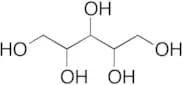
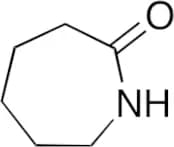
CAS :Produit contrôlé<p>Applications Xylitol, is a lower-calorie alternative to table sugar. Studies have shown xylitol chewing gum can help prevent acute otitis media. Xylitol is categorized by the U.S. Food and Drug Administration as a food additive.<br>References Code of Federal Regulations Title 21, US., FDA (2012); Azarparzhooh, A., et al.,: Cochrane data. Sys. Revi. (online) (11), (2011);<br></p>Formule :C5H12O5Couleur et forme :NeatMasse moléculaire :152.15ε-Caprolactam
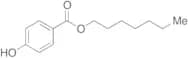
CAS :Produit contrôlé<p>Applications ε-Caprolactam is a synthetic precursor of Nylon-6 and other synthetic polymers. This compound also inhibits the growth of several Bacillus and Rhizobium species, but Arthrobacter species grow normally in the presence of this compound.<br>References Bomfim, Marcus V.J., et al.: Braz. J. Pharm. Sci., 45(1), 21-35 (2009); Kalinova, Jana P., et al.: Food Chem., 157, 380-384 (2014)<br></p>Formule :C6H11NOCouleur et forme :White To Off-WhiteMasse moléculaire :113.16n-Heptyl 4-Hydroxybenzoate
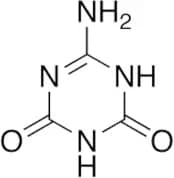
CAS :<p>Applications n-Heptyl 4-Hydroxybenzoate is used as a reagent in the synthesis of sulfonylbenzoic acid esters as potential inhibitors of oestrone sulphatase with antitumor activities.<br>References Owen, C., et al.: J. Pharm. Pharmacol., 55, 85 (2002)<br></p>Formule :C14H20O3Couleur et forme :NeatMasse moléculaire :236.31Ammelide
CAS :<p>Applications Ammelide, is a metabolite of Melamine (1) (M208700), which acts as a non-protein nitrogen food additive (2). Also present in pet foods as well (3).Drinking water contaminant candidate list 3 (CCL 3) compound as per United States Environmental Protection Agency (EPA). Environmental contaminants; Food contaminants.<br>References 1. Mast R. et al.: Food Chem Toxicol. 1983 Dec;21(6):807-10. 2. Ehling S. et al.: Food Addit. Contam. 2007 Dec;24(12):1319-25. 3. Vail T. et al.: J Anal Toxicol. 2007 Jul-Aug;31(6):304-12.<br></p>Formule :C3H4N4O2Couleur et forme :ColourlessMasse moléculaire :128.09Pyridoxal 5'-Phosphate
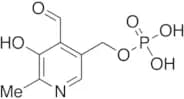
CAS :<p>Stability Hygroscopic<br>Applications Vitamin (enzyme co-factor).<br>References Lichstein, et al.: J. Biol. Chem., 161, 311 (1945), McPhalen, C., et al.: J. Mol. Biol., 225, 495 (1992), Fenn, T., et al.: Biochemistry, 44, 5317 (2005),<br></p>Formule :C8H10NO6PCouleur et forme :Light YellowMasse moléculaire :247.142-Methyldibenzofuran
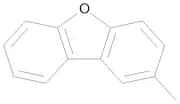
CAS :Produit contrôlé<p>Applications 2-Methyldibenzofuranis used in volatile composition of biomass tars used for liquid engine fuels with properties similar to gasoline and diesel fuels.<br>References Soltes, E. J., et al.: Biomass Convers. 5, 1 (1984)<br></p>Formule :C13H10OCouleur et forme :White To Off-WhiteMasse moléculaire :182.22Monohexyl Phthalate-d4
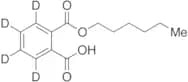
CAS :Produit contrôlé<p>Applications Labelled Monohexyl Phthalate is a phthalate ester that was used to characterize human salivary esterase in enzymatic hydrolysis.<br>References Niino, T., et al.: J. Health. Sci., 49, 76 (2003); Moss, E.J., et al.: Toxicol. Lett., 40, 77 (1988);<br></p>Formule :C14H14D4O4Couleur et forme :Off White SolidMasse moléculaire :254.31Gallic Acid-d2
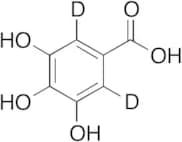
CAS :Produit contrôlé<p>Applications Gallic Acid-d2 is the labelled analogue of Gallic acid (G188978) which is a phenolic acid with antioxidant activity. Gallic acid was found to protect human cells against oxidative damage and showed cytotoxicity against cancer cells. Gallic Acid and its esters also show antiviral and antifungal activities.<br>References Yen, G. et al.: Food Chem., 79, 307 (2002); Chen, C. et al.: Mol. Nutrit. Food Res., 51, 962 (2007); Kratz, J. et al.: Mem. Inst. Oswaldo Cruz, 103, 437 (2008); Osborne, L. et al.: Infect. Immun., 33, 769 (1981);<br></p>Formule :C72H2H4O5Couleur et forme :NeatMasse moléculaire :172.13Syringic Acid
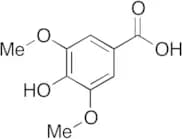
CAS :Produit contrôlé<p>Applications Syringic Acid is used in biological studies for electron transfer from plant phenolates to carotenoid radical cations with antioxidant interaction entering the Marcus theory inverted region.<br>References Cheng, H., et al.: J. Agric. Food Chem., 62, 942 (2014)<br></p>Formule :C9H10O5Couleur et forme :Off-WhiteMasse moléculaire :198.17Ethyl Vanillin
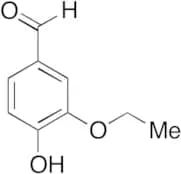
CAS :<p>Applications Ethyl Vanillin, is used as a flavorant, which is about three times as potent as vanillin (V097500) and can be utilized in the production of chocolate. It has also shown to have antioxidant properties.<br>References Akihiro, T., et al.: Biosci. Biotech. Biochem., 75, 2346 (2011); Yang, X., et al.: Biores. Technol., 102, 3498 (2011);<br></p>Formule :C9H10O3Couleur et forme :White To Off-WhiteMasse moléculaire :166.17Quercetin
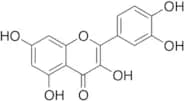
CAS :Produit contrôléFormule :C15H10O7Couleur et forme :Yellow Crystalline PowderMasse moléculaire :302.243-Sulfanylhexyl Acetate
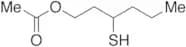
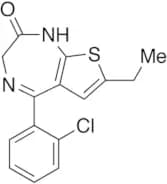
CAS :Produit contrôlé<p>Stability Hygroscopic<br>Applications 3-Sulfanylhexyl Acetate is a precursor of 3-mercaptohexan-1-ol (M225270) found in grape juice.<br>References Harsch, M.J., et al.: J. Agri. Food. Chem., 61, 3703 (2013); Makhotkina, O., et al.: Food. Chem., 135, 486 (2012);<br></p>Formule :C8H16O2SCouleur et forme :NeatMasse moléculaire :176.28N-Desmethyl Clotiazepam
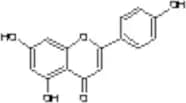
CAS :Produit contrôlé<p>Applications Clotiazepam (C587410) metabolite, with central nervous depressant and anxiolytic activity.<br>References Ito, K. et al.: Biopharm. Drug. Dispos., 18, 293 (1997); Nakanishi, M. et al.: J. Med. Chem., 16, 214 (1973)<br></p>Formule :C15H13ClN2OSCouleur et forme :NeatMasse moléculaire :304.79Apigenin
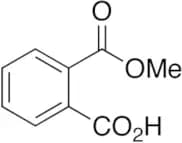
CAS :Produit contrôlé<p>Applications Induces the reversion of transformed phenotypes of v-H-ras-transformed NIH 3T3 cells at low concentration (12.5 uM) by inhibiting MAP kinase activity. Also inhibits the proliferation of malignant tumor cells by G2/M arrest and induces morphological differentiation. Apigenin has also been reported to enhance the gap juntion intracellular communication in liver cells.uv(max)ethanol: 269, 340 nm (e= 18,800, 20,900) moderately sol. in hot alcohol<br>References Chaumontet, C., et al.: Carcinogenesis, 15, 2325 (1994); Sato, F., et al.: Biochem. Biophys. Res. Commun., 204, 578 (1994); Kuo, M.L. et al.: Biochem. Biophys. Res. Commun., 212, 767 (1995);<br></p>Formule :C15H10O5Couleur et forme :Yellow To BrownMasse moléculaire :270.24Monomethyl Phthalate
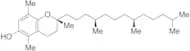
CAS :Produit contrôlé<p>Applications Phthalate Ester metabolite, linked to precocious puberty.<br>References Engel, S., et al.: NeuroToxicol., 30, 522 (2009), Blair, J., et al.: Environ., Sci., Technol., 43, 6262 (2009), Xu, Z., et al.: Environ. Sci. Technol., 44, 3130 (2010), Clewell, R., et al.: Toxicol. in Vitro, 24, 327 (2010),<br></p>Formule :C9H8O4Couleur et forme :Colourless CrystallineMasse moléculaire :180.16β-Tocopherol
CAS :Produit contrôlé<p>Applications One of the naturally occurring forms of Vitamin E. Is biologically less active than α-Tocopherol.<br>References Bianchi, G., et al.: Eur. J. Lipid Sci. Technology, 105, 229 (2003), Sakouhi, F., et al.: Food Chem., 108, 833 (2008),<br></p>Formule :C28H48O2Couleur et forme :Colourless To BeigeMasse moléculaire :416.68(-)-Ethyl L-Lactate
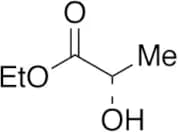
CAS :Produit contrôlé<p>Applications (-)-Ethyl L-Lactate is a naturally occuring chemical compound that is often used as an industrial solvent in chemical reactions.<br> Not a dangerous good if item is equal to or less than 1g/ml and there is less than 100g/ml in the package<br>References Paul, S. et al.: Tetra. Lett., 53, 2206 (2012); Santiago, A. et al.: Green Chem., 11, 65 (2009);<br></p>Formule :C5H10O3Couleur et forme :ColourlessMasse moléculaire :118.131Erucic Acid Methyl Ester
CAS :Produit contrôléFormule :C23H44O2Couleur et forme :NeatMasse moléculaire :352.59Methyl Decanoate(Methyl Caprate)
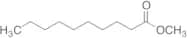
CAS :<p>Applications Methyl Caprate, is an unsaturated biodiesel fuel surrogate. It can also be used as flavor and fragrance ingredients.<br>References Wang, W., et al.: Energy & Fuels, 27, 5527 (2013);<br></p>Formule :C11H22O2Couleur et forme :ColourlessMasse moléculaire :186.29Quercetin 3-O-b-D Glucoside
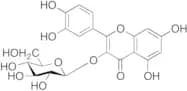
CAS :<p>Stability Hygroscopic<br>Applications Quercetin 3-O-β-D Glucoside is a metabolite of Quercetin (Q509500), a flavonoid with anticancer activity. It is a mitochondrial ATPase and phosphodiesterase inhibitor.<br>References Graziani, Y. et al.: J. Biochem., 135, 583 (1983); Levy, J. et al.: Biochem. Biophys. Res. Comm., 123, 1227 (1984); Wei, Y.Q. et al.: Cancer Res., 54, 4952 (1994);<br></p>Formule :C21H20O12Couleur et forme :NeatMasse moléculaire :464.382,2-Bis[4-(2-hydroxy-2-methylethoxy)phenyl]Propane
CAS :Formule :C21H28O4Couleur et forme :White To Off-WhiteMasse moléculaire :344.44dl-α-Tocopherol Acetate
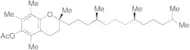
CAS :Produit contrôlé<p>Stability Light Sensitive<br>Applications dl-α-Tocopherol Acetate is the racemic analog of α-Tocopherol Acetate (T526155), one of the most bioactive of the naturally occurring forms of Vitamin E. Richest sources are green vegetables, grains, and oils, particularly palm, safflower and sunflower oils.<br>References Bianchi, G., et al.: Eur. J. Lipid Sci. Technology, 105, 229 (2003), Sakouhi, F., et al.: Food Chem., 108, 833 (2008),<br></p>Formule :C31H52O3Couleur et forme :NeatMasse moléculaire :472.74Azelaic Acid
CAS :Produit contrôlé<p>Applications Azelaic acid occurs in rancid oleic acid. Azelaic acid is an antiacne agent.<br>References Bladon, P.T., et al.: Br. J. Dermatol., 114, 493 (1986),<br></p>Formule :C9H16O4Couleur et forme :White To Off-WhiteMasse moléculaire :188.22β-Zearalenol
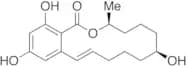
CAS :Produit contrôlé<p>Applications The more active Zearalenone (Z270500) metabolite.<br> Not a dangerous good if item is equal to or less than 1g/ml and there is less than 100g/ml in the package<br>References Olsen, M., et al.: Acta Pharmacol. Toxicol., 48, 15 (1981), Chang, W., et al.: Food Chem. Toxicol., 22, 887 (1984), El Golli, E., et al.: Toxicol Lett., 166, 122 (2006), Hassen, W., et al.: Toxicology, 232, 294 (2007), Benzoni, E., et al.: Reprod. Toxicol., 25, 461 (2008),<br></p>Formule :C18H24O5Couleur et forme :White To BeigeMasse moléculaire :320.38Di-n-heptyl Phthalate
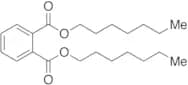
CAS :<p>Applications Di-n-heptyl Phthalate is a Phthalate derivative and an organic extract contaminant found in drinking water, which was shown to activate Nrf-2-Mediated Antioxidant response in human cell line.<br> Not a dangerous good if item is equal to or less than 1g/ml and there is less than 100g/ml in the package<br>References Wang, S., et al.: Environ. Sci. Technol., 47, 4768 (2013);<br></p>Formule :C22H34O4Couleur et forme :Light YellowMasse moléculaire :362.50p-Mentha-8-thiol-3-one(Mixture of cis and trans isomer)
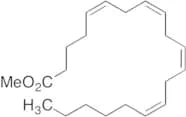
CAS :Formule :C10H18OSCouleur et forme :NeatMasse moléculaire :186.32Arachidonic Acid Methyl Ester
CAS :Formule :C21H34O2Couleur et forme :Light YellowMasse moléculaire :318.49Diisononyl Phthalate
CAS :<p>Applications A widely used chemical with potential thyroid-disrupting properties. Used in toxicology studies as well as risk assessment studies of food contamination that occurs via migration of phthalates into foodstuffs from food-contact materials (FCM).<br>References Boas, M. et al.: Env. Health Persp., 118, 1458 (2010); Petersen, J.H. et al.: Food Add. Contam. Part A Chem. Anal. Cont. Expos. Risk. Assess., 27, 1608 (2010); Kwack, S.J. et al.: Toxicol. Res., 26, 75 (2010);<br></p>Formule :C26H42O4Couleur et forme :Colourless To Light YellowMasse moléculaire :418.6093Fisetin
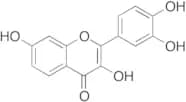
CAS :Produit contrôlé<p>Applications Fisetin is used in biological studies as spleen tyrosine kinase inhibitors for autoimmune inflammation disease. This compound has neuroprotective properties.<br>References Tanjguchi, T., et al.: J. Biol. Chem., 266, 15790 (1990); Singh, R., et al.: J. Med. Chem., 55, 3614 (2012)<br></p>Formule :C15H10O6Couleur et forme :Light Yellow To Dark YellowMasse moléculaire :286.245-Hydroxymethyl-2-furancarboxylic Acid-13C6
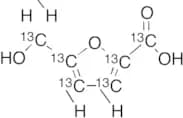
CAS :Produit contrôlé<p>Applications 5-Hydroxymethyl-2-furancarboxylic Acid-13C6 is a labelled analogue of 5-Hydroxymethyl-2-furancarboxylic Acid (H947020), which is used for green synthesis of 2,5-Furandicarboxylic Acid (F863750), one of the most important chemical building blocks from biomass.<br>References Gupta, N., et al.: Green Chem., 13, 824 (2011);<br></p>Formule :C6H6O4Couleur et forme :NeatMasse moléculaire :148.07Pyridoxal Hydrochloride
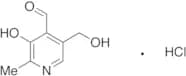
CAS :Produit contrôlé<p>Applications Pyridoxal is one of the three natural forms of vitamin B6, along with pyridoxamine and pyridoxine. All of these forms are converted in the human body into a single biologically active form, Pyridoxal 5-phosphate (P991715). Green plants are a natural source of Pyridoxal, and its deficiency in the human body can lead to serious complications such as epilepsy and seizures.<br>References Folch, J., et al.: J. Biol. Chem., 226, 497 (1957); Chattopadhyay, M., et al.: J. Biosci., 28, 363 (2003); Broadbent, J., et al.: J. Bacteriol. 192, 2445 (2010); Budinich, M., et al.: J. Dairy Sci., 94, 5263 (2011);<br></p>Formule :C8H9NO3·ClHCouleur et forme :Beige To Light BrownMasse moléculaire :203.62rac Mono(ethylhexyl) Phthalate-D4
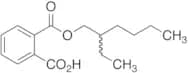
CAS :Produit contrôlé<p>Applications Labelled Phthalate metabolite, responsible for inducing apoptosis in germ and Sertoli cells by disrupting junction complexes.<br>References Ohno, S., et al.: Toxicol., Lett., 191, 353 (2009), Yao, P., et al.: Biol. Repro., 82, 516 (2010), Clewell, R., et al.: Toxicol. in Vitro, 24, 327 (2010), Gupta, R., et al.: Toxicol., App. Pharmacol., 242, 224 (2010),<br></p>Formule :C16H18D4O4Couleur et forme :Colourless To Light BeigeMasse moléculaire :282.37Ethyl Phthalyl Ethyl Glycolate
CAS :Produit contrôlé<p>Applications ETHYL PHTHALYL ETHYL GLYCOLATE (cas# 84-72-0) is a useful research chemical.<br></p>Formule :C14H16O6Couleur et forme :ColourlessMasse moléculaire :280.271,2,4-Benzenetricarboxylic Acid 2,4-Bis(2-ethylhexyl) Ester(Mixture of Diastereomers)
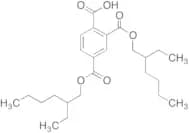
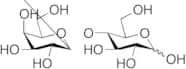
CAS :<p>Applications 1,2,4-Benzenetricarboxylic Acid 2,4-Bis(2-ethylhexyl) Ester is an analog of Trioctyl Trimellitate (T804400) which is a plasticizer that was evaluated for endocrine disrupting activities through estrogen receptor alpha binding assay.<br>References Riddick, W.: J. Coating. Technol., 55, 57 (1983); Ito, R., et al.: Int. J. Pharma., 360, 91 (2008); Ohashi, A., et al.: J. Artific. Organs., 8, 252 (2005);<br></p>Formule :C25H38O6Couleur et forme :ColourlessMasse moléculaire :434.57D-Glucose
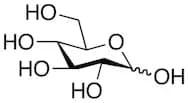
CAS :<p>Applications D-Glucose is a simple sugar that is present in plants. A monosaccharide that may exist in open chain or cyclic conformation if in solution. It plays a vital role in photosynthesis and fuels the energy required for cellular respiration. D-Glucose is used in various metabolic processes including enzymic synthesis of cyclohexyl-α and β-D-glucosides. Can also be used as a diagnostic tool in detection of type 2 diabetes mellitus and potentially Huntington's disease through analysis of blood-glucose in type 1 diabetes mellitus.<br>References Wang, R., et al.: J. Mol. Catal. B. Enz., 56, 131 (2009); Springhorn, C. et al.: J. Clin. Endocrinol. Metab., 97, 4640 (2012); Hashimoto, K. et al.: J. Clin. Endocrinol. Metab., 97, 3016 (2012); Avelange, M. et al.: Plant. Phys., 94, 1157 (1990); Cramer, C. et al.: J. Chem. Soc., 115, 5745 (1993);<br></p>Formule :C6H12O6Couleur et forme :NeatMasse moléculaire :180.16rac Mono(5-carboxy-2-ethylpentyl) Phthalate-d9
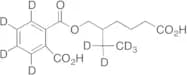
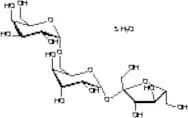
CAS :Produit contrôléFormule :C16H11D9O6Couleur et forme :NeatMasse moléculaire :317.38D-(+)-Raffinose Pentahydrate
CAS :Produit contrôlé<p>Applications D-(+)-Raffinose is a trisaccharide built from 1 mol each of D-galactose, D-glucose, and D-fructose which are obtained from it by acid hydrolysis. Invertase splits it into melibiose and saccharose. D-(+)-Raffinose occurs in Australian manna; in cottonseed meal.<br>References Suami, et al.: Carbohydr. Res., 26, 234 (1973), Rathbone, E.B., et al.: Dev. Food Carbohydr., 2, 145 (1980),<br></p>Formule :C18H32O16·5H2OCouleur et forme :WhiteMasse moléculaire :594.51Mono(3-carboxypropyl) Phthalate-d4
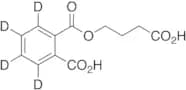
CAS :Produit contrôlé<p>Applications An isotope labelled derivative of Mono(3-carboxypropyl) Phthalate, a urinary phthalate metabolite.<br>References Engel, S., et al.: NeuroToxicol., 30, 522 (2009), Samandar, E., et al.: Environ. Res., 109, 641 (2009), Berman, T., et al.: Environ. Int., 35, 353 (2009),<br></p>Formule :C12D4H8O6Couleur et forme :NeatMasse moléculaire :256.244-Methylbenzophenone
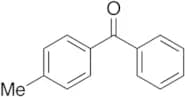
CAS :<p>Applications Benzophenone estrogenicity toxicity structure activity.<br>References Gantichev, T., et al.: J. Med. Chem., 37, 4164 (1994), Routledge, E., et al.: Biol. Chem., 272, 3280 (1997), Routledge, E., et al.: Toxicol. Appl. Pharmacol., 153, 12 (1998),<br></p>Formule :C14H12OCouleur et forme :NeatMasse moléculaire :196.2445Oxymorphone 3-b-D-Glucuronide
CAS :Produit contrôlé<p>Applications A metabolite of Oxymorphone. Controlled substance (opiate). Analgesic (narcotic).<br>References Eddy, N., et al.: J. Pharmacol. Exp. Ther., 125, 116 (1959), Cone, E., et al.: Drug Metab. Dispos., 11, 446 (1983),<br></p>Formule :C23H27NO10Couleur et forme :White To Light BeigeMasse moléculaire :477.462-Methoxyphenol
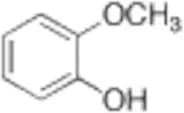
CAS :Produit contrôlé<p>Stability Light Sensitive<br>Applications 2-Methoxyphenol (CAS# 90-05-1) is useful for testing ruthenium- and palladium-containing catalysts activity via guaiacol hydrogenation.<br>References Shakirov, I. I., et al.: Pet. Chem., 60, 1136 (2020)<br></p>Formule :C7H8O2Couleur et forme :NeatMasse moléculaire :124.14Dimethyl Adipate
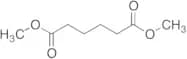
CAS :Produit contrôlé<p>Applications Dimethyl Adipate is used as a chemical intermediate (polymers, agrochemicals), a speciality solvent (inks, coatings, adhesives), an emollient and can also be utilized as a paint remover and plasticiser.<br>References Emmons, W., et al.: J. Coat. Technol., 49, 65 (1977); Llompart, M., et al.:J. Chrom. A, 1293, 10 (2013); Sipes, N., et al.: Chem. Res. Toxicol., 26, 878 (2013)<br></p>Formule :C8H14O4Couleur et forme :NeatMasse moléculaire :174.19Phomopsin A
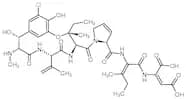
CAS :<p>Applications Phomopsin A is a potent microtubule inhibitor.<br>References Lacey, E., et al.: Biochem. Pharmacol., 36, 2133-2138 (1987); Ludueña, R.F., et al.: Biochem. Pharmacol., 39, 1603-1608 (1990); Chaudhuri, A.R., et al.: J. Protein Chem., 16, 99-105 (1997);<br></p>Formule :C36H45ClN6O12Couleur et forme :NeatMasse moléculaire :789.23(R/S)-δ-Hexalactone
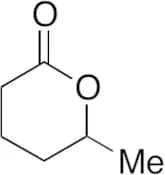
CAS :Produit contrôlé<p>Applications (R/S)-δ-Hexalactone is a volatile lactone found in fruits giving ripe produce their aroma.<br>References Tavori, H., et al.: Bioorg. Med. Chem., 16, 7504 (2008), Pandit, S., et al.: J. Sci. Food Agric., 89, 2071 (2009), Xiang, D., et al.: Biochem., 48, 2237 (2009), Pandit, S., et al.: Food Chem., 114, 363 (2009),<br></p>Formule :C6H10O2Couleur et forme :NeatMasse moléculaire :114.14Linoleic Acid
CAS :<p>Stability Light Sensitive<br>Applications Linoleic Acid is anti-inflammatory, acne reductive, and moisture retentive when applied topically on the skin. It is popular in the beauty products industry because of its beneficial properties on the skin.<br>References Letawe, C., et al.: Clin. Exp. Dermatol., 23, 56 (2002); Darmstadt, GL., et al.: Acta Paediatr., 91, 546 (2002);<br></p>Formule :C18H32O2Couleur et forme :Colourless LiquidMasse moléculaire :280.453-Methylfuran
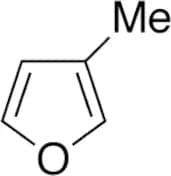
CAS :<p>Stability Very Volatile<br>Applications 3-Methylfuran is a volatile organic compound (VOCs) used as a potential non-intrusive tool for screening of lung cancer.<br> Not a dangerous good if item is equal to or less than 1g/ml and there is less than 100g/ml in the package<br>References McWilliams, et al.: Curr. Oncol. Rep., 4, 487 (2002), Buszewski, B., et al.: Biomed. Chromatogr., 21, 553 (2007), Ligor, T., et al.: J. Breath. Res., 1, 1 (2007),<br></p>Formule :C5H6OCouleur et forme :Light YellowMasse moléculaire :82.10Polypropylene (Amorphous)
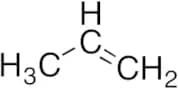
CAS :<p>Applications Polypropylene is used in the design of a self-powered smart mask for COVID-19. Polypropylene is also used in the production of consumer sanitary products and non-flushable wipes.<br>References van D., et al.: medRxiv, 1 (2020); Ghatak, B., et al.: arXiv.org, e-Print Archive, Physics, 1 (2020); Briain, O., et al.: Water Res., PagesAhead of Print (2020); Ge, D., et al.: Open Access (OA) Online-First Publishing of Research Papers on COVID-19, 1(2020);<br></p>Formule :n(C3H6)Couleur et forme :NeatMasse moléculaire :42.083-Methylfuran-d3 (1 mg/mL in Methanol)
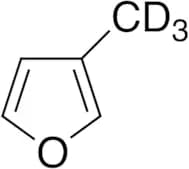
CAS :Produit contrôléFormule :C52H3H3OCouleur et forme :Single SolutionMasse moléculaire :85.12Theobromine
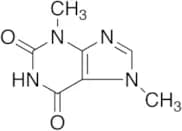
CAS :Produit contrôlé<p>Applications A metabolite of Caffeine.<br>References Suto, M., et al.: Anticancer Drug Des., 6, 107 (1991), Burkart, V., et al.: Nat. Med., 5, 314 (1999), Hassa, P., et al.: J. Biol. Chem., 278, 45145 2003), Veres, B., et al.: J. Pharmacol. Exp. Ther., 310, 247(2004),<br></p>Formule :C7H8N4O2Couleur et forme :NeatMasse moléculaire :180.161,2,4-Triethylbenzene
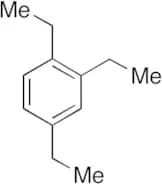
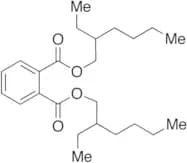
CAS :Produit contrôlé<p>Applications 1,2,4-Triethylbenzene, can be used for the synthesis of ethyl derivative of indan and tetralin, biological makers in fossil fuels.<br>References Adamczyk,M., et al.: J. Org. Chem., 49, 22, 4227 (1984);<br></p>Formule :C12H18Couleur et forme :NeatMasse moléculaire :162.27Bis(2-ethylhexyl) Phthalate
CAS :<p>Applications Bis(2-ethylhexyl) Phthalate plasticizer is used to impart softness and flexibility to PVC products. Bis(2-ethylhexyl) Phthalate has been implicated in obesity and insulin resistance. It inhibits prostaglandin synthesis and adversely affects the endocrine system. This compound is a contaminant of emerging concern (CECs).<br>References Heindel, J., et al.: Toxicol. Appl. Pharmacol., 115, 116<br></p>Formule :C24H38O4Couleur et forme :ColourlessMasse moléculaire :390.56Monopentyl Phthalate
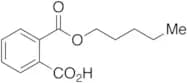
CAS :<p>Applications A metabolite of Di-n-pentyl phthalate (DPP), used mainly as a plasticizer in nitrocellulose.<br>References Schmid, P., et al.: Xenobiotica, 1985, 15, 251 (1985), Nativelle, C., et al.: Food Chem. Toxicol., 37, 905 (1999), Howdeshell, K., et al.: Toxicol. Sci., 105, 153 (2008),<br></p>Formule :C13H16O4Couleur et forme :White To Off-WhiteMasse moléculaire :236.262-Methyl Hippuric Acid
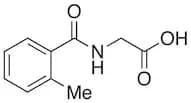
CAS :Produit contrôlé<p>Applications The main metabolite of o-xylene.<br>References Gregus, Z., et al.: Drug Metab. Dispos., 26, 1082 (1998), Gregus, Z., et al.: Xenobiotica, 29, 547 (1999), Gonzalez-Reche, L., et al.: Arch. Toxicol., 77, 80 (2003),<br></p>Formule :C10H11NO3Couleur et forme :White To Off-WhiteMasse moléculaire :193.20Eriocitrin (Mixture of Diastereomers)
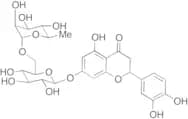
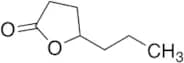
CAS :Formule :C27H32O15Couleur et forme :NeatMasse moléculaire :596.53γ-Heptalactone
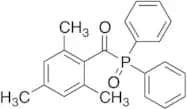
CAS :Produit contrôlé<p>Applications ��-Heptanolactone, �� 98.0% (cas# 105-21-5) is a useful research chemical.<br></p>Formule :C7H12O2Couleur et forme :NeatMasse moléculaire :128.17Diphenyl(2,4,6-trimethylbenzoyl)phosphine Oxide
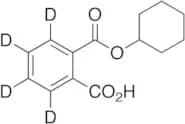
CAS :<p>Applications Diphenyl(2,4,6-trimethylbenzoyl)phosphine oxide (cas# 75980-60-8) is a useful research chemical.<br></p>Formule :C22H21O2PCouleur et forme :YellowMasse moléculaire :348.37Monocyclohexyl Phthalate-d4
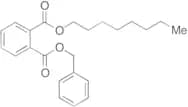
CAS :Produit contrôlé<p>Applications Labelled Dicyclohexyl Phthalate (DCHP) metabolite.<br>References Okubo, T., et al.: Biol. Pharm. Bull., 26, 1219 (2003), Silva, M., et al.: J. Anal. Toxicol., 29, 819 (2005), Matsumoto, M., et al.: Reg. Toxicol. Pharmacol., 50, 37 (2008),<br></p>Formule :C14D4H12O4Couleur et forme :NeatMasse moléculaire :252.3Octyl Benzyl Phthalate
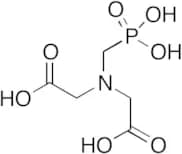
CAS :Produit contrôléFormule :C23H28O4Couleur et forme :NeatMasse moléculaire :368.47N-(Carboxymethyl)-N-(phosphonomethyl)-glycine
CAS :Formule :C5H10NO7P·H2OCouleur et forme :NeatMasse moléculaire :245.12Pentacosanoic Acid
CAS :<p>Applications Pentacosanoic Acid is a saturated fatty acid.<br>References Gomez-Cortes, P., et al.: Eur. J. Lipid Sci. Technol., 119 (2017)<br></p>Formule :C25H50O2Couleur et forme :NeatMasse moléculaire :382.66Methyl Nonadecanoate
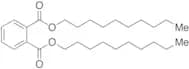
CAS :Produit contrôlé<p>Applications Methyl Nonadecanoate displays antisickling activity which may be used in the treatment of sickle cell anemia.<br>References Tshilanda, D. et al.: Am. Sci. J. 11, ACSJ.22734 (2016);<br></p>Formule :C20H40O2Couleur et forme :White To Off-WhiteMasse moléculaire :312.53Didecyl Phthalate (~90%)
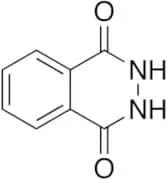
CAS :Produit contrôlé<p>Applications Didecyl Phthalate is a primary plasticizer for vinyl resins and also shown to be compatible with polystyrene and cellulosics.<br>References Li, H.W., et al.: Chem. Mate.. 21, 2403 (2009) Akl, M.A., et al.: Electroanal., 18, 299 (2006);<br></p>Formule :C28H46O4Degré de pureté :~90%Couleur et forme :YellowMasse moléculaire :446.66Phthalic Hydrazide
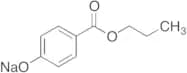
CAS :<p>Applications Phthalic Hydrazide is a reagent in the synthesis in various pyrazolophthalazine derivatives.<br>References Rezaei, S.et al.: Tetra. Lett., 53, 5123 (2012);<br></p>Formule :C8H6N2O2Couleur et forme :NeatMasse moléculaire :162.15Sodium Propylparaben
CAS :<p>Applications Sodium Propylparaben is a preservative. Sodium Propylparaben is also an excipient used in various pharmaceutical formulations.<br>References Jin, H., et al.: Zhongguo Shipin Tianjiaji, 8, 128 (2014); Naik, S. D., et al.: Pharma Science Monitor, 4, 195 (2013)<br></p>Formule :C10H11O3·NaCouleur et forme :WhiteMasse moléculaire :202.18Nalorphine Hydrochloride
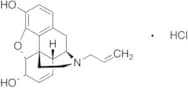
CAS :Produit contrôlé<p>Applications Narcotic antagonist.Controlled substance.<br>References McCawley, H., et al.: J. Pharmacol., 82, 339 (1944), Goldenthal, E.I., et al.: Toxicol. Appl. Pharmacol., 18, 185 (1971), Zubair, M.U., et al.: Anal. Profiles Drug Subs., 18, 195 (1989),<br></p>Formule :C19H21NO3·ClHCouleur et forme :NeatMasse moléculaire :347.836N-Ethyl-p-toluenesulfonamide
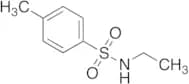
CAS :Produit contrôlé<p>Applications N-Ethyl-p-toluenesulfonamide is a reagent used in the sulfonamidation of imidazopyridines.<br>References Gao, Y. et al.: Org. Biomol. Chem., 15, 8102 (2017);<br></p>Formule :C9H13NO2SCouleur et forme :White To Off-WhiteMasse moléculaire :199.27Ricinic Acid Methyl Ester
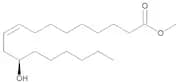
CAS :<p>Stability Light Sensitive<br>Applications Ricinoleic acid, formally called 12-hydroxy-9-cis-octadecenoic acid is a fatty acid. It is an unsaturated omega-9 fatty acid and a hydroxy acid. It is a major component of the seed oil obtained from mature Castor plant (Ricinus communis L., Euphorbiaceae) seeds or in sclerotium of ergot (Claviceps purpurea Tul., Clavicipitaceae). About 90% of the fatty acid content in castor oil is the triglyceride formed from ricinoleic acid.<br>References Feraz, A.C. et al.: Pharmacol. Biochem. Behav., 63, 367 (1999); Zhao, Z. et al.: Zhong. Niang., 6, 13 (2009);<br></p>Formule :C19H36O3Couleur et forme :ColourlessMasse moléculaire :312.49Vitamin K3
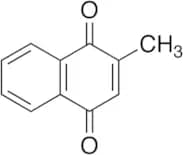
CAS :Produit contrôlé<p>Applications Precursor to various types of Vitamin K. Used as a micronutrient for livestock and pet foods.<br>References Sakamoto, S., et al.: Anal. Bioanal. Chem., 396, 2955 (2010), Gohil, V., et al.: Nat. Biotechnol., 28, 249 (2010), Hu, W., et al.: Anal. Biochem., 398, 245 (2010),<br></p>Formule :C11H8O2Couleur et forme :Light Yellow To GreenMasse moléculaire :172.18Diisobutyl Phthalate
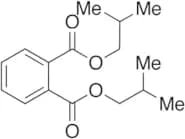
CAS :Produit contrôlé<p>Applications Diisobutyl Phthalate is a Dialkyl phthalate ester phthalate plasticizer which can be used as a substitute of dibutyl phthalate. Diisobutyl Phthalate as well as other phthalates have genotoxic effects and studies shown an increase in its monoester metabolite in human urine over the years.<br> Not a dangerous good if item is equal to or less than 1g/ml and there is less than 100g/ml in the package<br>References Kleinsasser, N.H. et al.: Tetragen. Carconogen. Mutagen., 21, 189 (2001); Silva, M.J. et al.: Environ. Health Perspect., 112, 331 (2004); Wittassek, M. et al.: Int. J. Androl., 31, 131 (2008);<br></p>Formule :C16H22O4Couleur et forme :ColourlessMasse moléculaire :278.34D-Tagatose
CAS :<p>Applications A monosaccharide (hexose) that can be used as a low-calorie sweetener, as an intermediate for synthesis of other optically active compounds, and as an additive in detergent, cosmetic, and pharmaceutical formulation.<br>References Oh, D. et al.: Appl. Microbiol. Biotech., 76, 76, 1 (2007); Lu, Y. et al.: Int. J. Cosm. Sci., 24, 225 (2002); Donner, T.W. et al.: Diab. Obes. Metab., 1, 285 (1999);<br></p>Formule :C6H12O6Couleur et forme :WhiteMasse moléculaire :180.16Acrylamide-d3
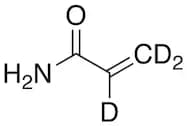
CAS :Produit contrôlé<p>Stability Light Sensitive<br>Applications Acrylamide-d3 is deuterium labeled Acrylamide (A191300). Acrylamide is a chemical intermediate in production of polyacrylamides that are use in protein electrophoresis (PAGE), synthesis of dyes and copolymers for contact lenses. It is reasonably anticipated to be a human carcinogen (1,2).<br> Not a dangerous good if item is equal to or less than 1g/ml and there is less than 100g/ml in the package<br>References (1) Mottram, D.S., et al.: Nature, 419, 448 (2002)(2) Tareke, E., et al.: J. Agric. Food Chem., 50, 4998 (2002)<br></p>Formule :C32H3H2NOCouleur et forme :Off-WhiteMasse moléculaire :74.10(-)-Hycosamine
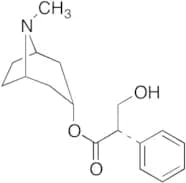
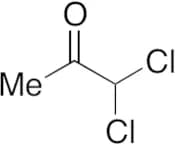
CAS :Produit contrôlé<p>Applications (-)-Hycosamine is a natural compound that has inhibitory activity against cholinesterases.<br> Not a dangerous good if item is equal to or less than 1g/ml and there is less than 100g/ml in the package<br>References Brunhofer, G., et al.: Bioorg. Med. Chem., 20, 6669 (2012);<br></p>Formule :C17H23NO3Couleur et forme :NeatMasse moléculaire :289.371,1-Dichloro-2-propanone
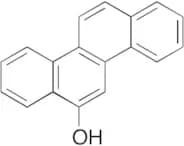
CAS :<p>Applications 1,1-Dichloro-2-propanone is a disinfection byproduct in drinking water. It may cause bladder cancer and other adverse health effects.<br> Not a dangerous good if item is equal to or less than 1g/ml and there is less than 100g/ml in the package<br>References Farre, M., et al.: Water Sci. Tehnol., 12, 573 (2012); Catherine, M., et al.: Water Res., 47, 3231 (2013); Neale, P., et al.: Environ. Sci. Technol., 46, 10317 (2012)<br></p>Formule :C3H4Cl2OCouleur et forme :Light YellowMasse moléculaire :126.976-Hydroxychrysene
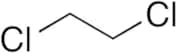
CAS :Formule :C18H12OCouleur et forme :Light Brown To Dark BrownMasse moléculaire :244.291,2-Dichloroethane
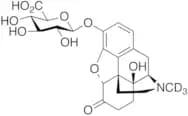
CAS :Produit contrôlé<p>Applications 1,2-Dichloroethane is one of the major waste products of the Vinyl Chloride industries, and has also been classified as a potential human carcinogen.<br> Not a dangerous good if item is equal to or less than 1g/ml and there is less than 100g/ml in the package<br>References Hung, W., et al.: Appl. Surf. Sci., 255, 2205 (2008); Rannug, U., et al.: Chem.-Biol. Int., 20, 1 (1978)<br></p>Formule :C2H4Cl2Couleur et forme :NeatMasse moléculaire :98.96Oxymorphone-d3 3-β-D-Glucuronide
CAS :Produit contrôlé<p>Applications A labelled metabolite of Morphone. Controlled substance (opiate). Analgesic (narcotic).<br>References Eddy, N., et al.: J. Pharmacol. Exp. Ther., 125, 116 (1959), Cone, E., et al.: Drug Metab. Dispos., 11, 446 (1983),<br></p>Formule :C23H24D3NO10Couleur et forme :NeatMasse moléculaire :480.48L-(+)-Tartaric Acid
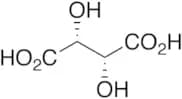
CAS :Produit contrôlé<p>Applications L-(+)-Tartaric Acid is a naturally occurring chemical compound found in berries, grapes and various wines. It provides antioxidant properties and contributes to the sour taste within these products.<br>References Baiano, A. et al.: Food. Chem., 135, 2694 (2012); Forney, C. et al.: J. Berry. Res., 2, 169 (2012); Khiati, Z. et al.: Chem. Sci. Trans., 1, 185 (2012);<br></p>Formule :C4H6O6Couleur et forme :WhiteMasse moléculaire :150.09Tricaprylin(>90%)
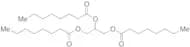
CAS :Produit contrôlé<p>Applications Tricaprylin is used in biological studies for fatty acid selectivity of lipases during acidolysis reaction between oleic acid and monoacid triacylglycerols.<br>References Karabulut, I., et al.: J. Agri. Food. Chem., 57, 10466 (2009);<br></p>Formule :C27H50O6Degré de pureté :>90%Couleur et forme :ColourlessMasse moléculaire :470.68Creatine
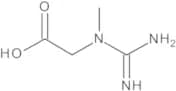
CAS :<p>Applications Creatine can be used in biological study of high fat diets with different ketogenic ratios on hippocampal accumulation of creatine.<br>References Skoczen, A., et al.: Spectrochim Acta A, 184, 13 (2017)<br></p>Formule :C4H9N3O2Couleur et forme :NeatMasse moléculaire :131.13Decyl Hexyl Phthalate
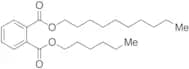
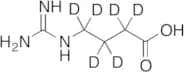
CAS :<p>Applications Decyl Hexyl Phthalate is an phthalate esters used as plasticizers and additives. Used in toxiciology studies as well as risk assessment studies of food contamination that occurs via migration of phthalates into foodstuffs from food-contact materials (FCM).<br> Not a dangerous good if item is equal to or less than 1g/ml and there is less than 100g/ml in the package<br>References Awad, N.E., et al.: Bull. Factul. Pharma., 40, 233 (2002); Harris, C.A., et al.: Environ. Health. Perspect., 105, 802 (1997);<br></p>Formule :C24H38O4Couleur et forme :ColourlessMasse moléculaire :390.564-Guanidinobutanoic Acid-d6
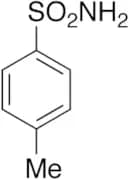
CAS :Produit contrôlé<p>Applications 4-Guanidinobutanoic Acid-D6 is an isotopic labeled compound of 4-Guanidinobutanoic acid (G825100). 4-Guanidinobutanoic acid is a guanidine derivative and a metabolite a found in urine, synthesized by gut microbiota.<br>References Yu, C.; et al.: Biomed. Chromatogr., 32 (2018); Lin, Z.; et al.: Scientific Reports, 8, 1 (2018).<br></p>Formule :C5D6H5N3O2Couleur et forme :NeatMasse moléculaire :151.1974-Tolylsulfonamide
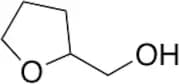
CAS :Produit contrôlé<p>Applications 4-Tolylsulfonamide is a carbonic anhydrase inhibitor used the synthesis of antiglaucoma and anticancer drugs.<br>References Vullo, D. et al.: Bioorg. Med. Chem. Lett., 15, 963 (2005); Vullo, D. et al.: Bioorg. Med. Chem. Lett., 15, 971 (2005);<br></p>Formule :C7H9NO2SCouleur et forme :NeatMasse moléculaire :171.22Tetrahydrofurfuryl Alcohol
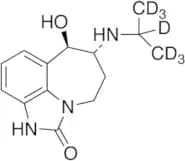
CAS :Produit contrôlé<p>Applications Tetrahydrofurfuryl alcohol (cas# 97-99-4) is a useful research chemical.<br></p>Formule :C5H10O2Couleur et forme :NeatMasse moléculaire :102.1317Zilpaterol-d7
CAS :Produit contrôlé<p>Applications b-Adrenergic agonist. Zipaterol, is used to promote growth. Zilpaterol is used to increase the size of cattle.<br>References Shelver, W.L., et al.: J. Agric. Food Chem., 52, 2159 (2004),<br></p>Formule :C14H12D7N3O2Couleur et forme :Light BrownMasse moléculaire :268.36Dimethyl Phthalate
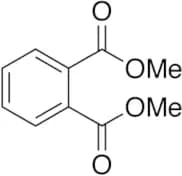
CAS :Produit contrôlé<p>Applications Dimethyl Phalate is the methyl ester of phthalic acid. Dimethyl phthalate is an ectoparasiticide and has many other uses, including in solid rocket propellants, plastics, and insect repellents.<br>References Iselin, B., et al.: Helv. Chim. Acta., 40, 373 (1957),<br></p>Formule :C10H10O4Couleur et forme :ColourlessMasse moléculaire :194.184-(Trifluoromethyl)nicotinoyl Glycine
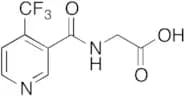
CAS :Produit contrôlé<p>Applications 4-(Trifluoromethyl)nicotinoyl Glycine is a metabolite of Flonicamid (F405710); a novel insecticide with rapid inhibitory effect against aphid feeding.<br>References Lee, Sung Woo., et al.: J. Chrom. A., 1218(28), 4366-4377 (2011); Hengel, Matt J., et al.: J. Agr. Food Chem., 55(20), 8033-8039 (2007); Morita, M., et al.: Pest. Manag. Sci.,63, 969 (2007); Sabatino, L., et al.: Food. Additive. Contamin., 6, 11 (2013)<br></p>Formule :C9H7F3N2O3Couleur et forme :YellowMasse moléculaire :248.16(+)-Gallocatechin
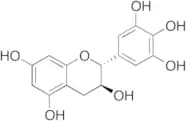
CAS :<p>Stability Hygroscopic<br>Applications (+)-Gallocatechin is antioxidant isomer of (-)-Gallocatechin (G188990), a potential cancer chemopreventive agent that inhibits the growth and adherence of P. gingivalis onto the buccal epithelial cells. An epimer of (-)-Epigallocatechin (E588940).<br>References Rychlik, J., et. al: J. Sci. Food Agr., 95, 1892 (2015); Guo, Q. et al.: Biochim. Biophys. Acta, 1427, 13 (1999); Sakanaka, S. et al.: Biosci. Biotechnol. Biochem., 60, 745 (1996)<br></p>Formule :C15H14O7Couleur et forme :White To Light BrownMasse moléculaire :306.27D-Glucono-1,5-lactone
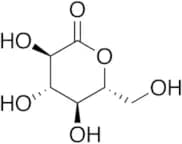
CAS :Produit contrôlé<p>Applications A lactone (cyclic ester) of D-gluconic acid used as a used as a sequestrant, an acidifier, or a curing, pickling, or leavening agent.<br>References Jacob, M. et al.: Food Hydrocoll., 25, 928 (2011); Li, J. et al.: J. Sci. Food Agric., 91, 38, 2011;<br></p>Formule :C6H10O6Couleur et forme :NeatMasse moléculaire :178.142,4-Di-tert-butyl-6-(5-chloro-2H-benzotriazol-2-yl)phenol
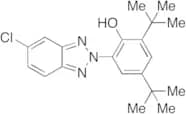
CAS :<p>Applications 2,4-Di-tert-butyl-6-(5-chloro-2H-benzotriazol-2-yl)phenol is a UV absorber.<br>References Moisan, J.: Eur. Polymer J., 16, 979 (1980); Nakata, H., et al.: Environ. Sci. Technol.,43, 6920 (2009)<br></p>Formule :C20H24ClN3OCouleur et forme :Light YellowMasse moléculaire :357.88Methyl Palmitoleate
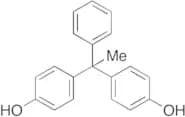
CAS :<p>Applications Methyl Palmitoleate is used as a component in the preparation of a biodiesel fuels.<br>References Luo, H. et al.: Biores. Tech., 140, 337 (2013); Arias-Penaranda, M. et al.: Biores. Tech., 140, 158 (2013);<br></p>Formule :C17H32O2Couleur et forme :ColourlessMasse moléculaire :268.43Bisphenol AP
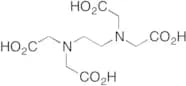
CAS :Produit contrôlé<p>Applications Bisphenol AP is used to prepare triphenylmethane derivatives as inhibitors of hepatitis C virus helicase. It is a derivative of Bisphenol A (B519495) which is a monomer used for policarbonate and epoxy resins.<br>References Chen, C., et al.: J. Med. Chem., 52, 2716 (2009); Krishnan, A.V., et al.: Endocrinology, 132, 2279 (1993); Steinmetz, R., et al.: Trends Endocrinol. Metab., 9, 124 (1998); Petersen, H., et al.: Eur. Food Res. Technol., 216, 355 (2003);<br></p>Formule :C20H18O2Couleur et forme :NeatMasse moléculaire :290.36Ethylenediamine-N,N,N’,N’-tetraacetic Acid
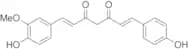
CAS :<p>Applications: Ethylenediamine-N,N,N’,N’-tetraacetic Acid (EDTA) is a powerful chelating agent; EDTA forms stable complexes with most metal ions. EDTA is used in treatment of lead and heavy metal poisoning of farm animals. This compound is a contaminant of emerging concern (CECs).<br>References Heindorff, K., et al.: Mutat. Res., 115, 149 (1983), Grier, M.T., et al.: Ann. Pharmacother., 27, 1504 (1993), Krokidis, A.A., et al.: Anal. Chim. Acta, 535, 57 (2005),<br></p>Formule :C10H16N2O8Couleur et forme :ColourlessMasse moléculaire :292.24(2E)-Demethoxy Curcumin
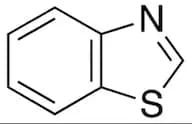
CAS :<p>Applications The demethoxy derivative of Curcumin (C838500) that regulates anti-inflammatory and anti-proliferative responses through a ROS-independent mechanism. It attenuates the Wnt/β-catenin pathway through down-regulation of the transcriptional coactivator p300.<br> Not a dangerous good if item is equal to or less than 1g/ml and there is less than 100g/ml in the package<br>References Ryu, M.J. et al.: Biochem. Biophys. Res. Comm., 377, 1304 (2008); Sandur, S.K. et al.: Carcinogenesis, 28, 1765 (2007); Huang, T. et al.: J. Agric. Food. Chem., 58, 10639 (2010);<br></p>Formule :C20H18O5Couleur et forme :Pink To RedMasse moléculaire :338.35Benzothiazole
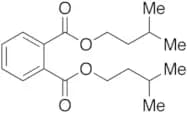
CAS :Produit contrôlé<p>Applications Various benzothiazole-benzamides synthesized were evaluated for their analgesic and antidepressant activities.<br>References Porsolt, R., et al.: Nature, 266, 730 (1977), Foster, J., et al.: Bioorg. Med. Chem., 7, 2415 (1999), Caliendo, G., et al.: Eur. J. Med. Chem., 36, 517 (2001), Rana, A., et al.: Eur. J. Med. Chem., 43, 1114 (2008),<br></p>Formule :C7H5NSCouleur et forme :Light YellowMasse moléculaire :135.19Diisopentyl Phthalate
CAS :Produit contrôlé<p>Applications One of the several phthalate esters which showed clear fetotoxicity, embryolethality and teratogenicity.<br> Not a dangerous good if item is equal to or less than 1g/ml and there is less than 100g/ml in the package<br>References Hellwig, J., et al.: Food Chem. Toxicol., 35, 501 (1997),<br></p>Formule :C18H26O4Couleur et forme :NeatMasse moléculaire :306.402,2,2-Trichloroethanol
CAS :<p>Applications 2,2,2-trichloroethanol (TCE) is an active metabolite of Trichloroacetaldehyde monohydrate [chloral hydrate (CH)] (T774055), a sedative/hypnotic that increases cerebral blood flow (CBF).<br>References Parelkar, N., et al.: J. Pharma. Exper. Ther., 332, 803 (2010); Merdink, J., et al.: Toxicol, 245, 130 (2008)<br></p>Formule :C2H3Cl3OCouleur et forme :NeatMasse moléculaire :149.40Stearic Acid
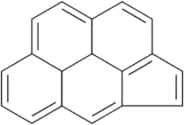
CAS :<p>Applications Stearic Acid is used in the synthesis of surfactants and detergents due to the fatty acid component of its structure.<br>References Dax, D. et al.: BioRes., 8, 3771 (2013); Ghumare, A. et al.: J. Surf. Deter., 26, 85 (2013);<br></p>Formule :C18H36O2Couleur et forme :NeatMasse moléculaire :284.48Acepyrene
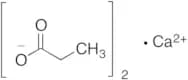
CAS :<p>Stability Light Sensitive<br>Applications Acepyrene is a novel constituent discovered that belongs to the pyrene class of the polycyclic aromatic hydrocarbons. Acepyrene occurs in a large variety of carbon black soots, in cigarette smoke and is the major representative of PAH in car engine exhaust gases.<br>References Murray, R.W., et al.: Chem. Res. Toxicol., 8, 239 (1995); Mari, M., et al.: Sci. Total. Enviro., 408, 2387 (2010); Todorov, P.D., et al.: Chem. Phys. Lett., 454, 30 (2008);<br></p>Formule :C18H10Couleur et forme :Orange To Dark RedMasse moléculaire :226.27Calcium Propionate
CAS :Produit contrôlé<p>Applications Calcium Propionate is an antifungal agent and used as a food preservative.Environmental contaminants; food contaminants.<br>References Channaiah, L. H., et al.: J Food Prot. 79, 544 (2016); Li, N., et al.: Zhongguo shipin xuebao 16, 130 (2016)<br></p>Formule :C3H5O2·CaCouleur et forme :Off-WhiteMasse moléculaire :186.22Vinyltris(2-methoxyethoxy)silane
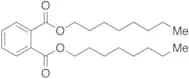
CAS :<p>Applications VINYLTRIS(2-METHOXYETHOXY)SILANE (cas# 1067-53-4) is a useful research chemical.<br></p>Formule :C11H24O6SiCouleur et forme :ColourlessMasse moléculaire :280.39Di-n-octyl Phthalate
CAS :Produit contrôlé<p>Applications Phthalate ester used as plasticizers and additives. Used in toxicology studies as well as risk assessment studies of food contamination that occurs via migration of phthalates into foodstuffs from food-contact materials (FCM).<br>References Irvin, E.A. et al.: Chemosphere, 80, 1301 (2010); Petersen, J.H. et al.: Food Add. Contam. Part A Chem. Anal. Cont. Expos. Risk. Assess., 27, 1608 (2010); Kwack, S.J. et al.: Toxicol. Res., 26, 75 (2010);<br></p>Formule :C24H38O4Couleur et forme :ColourlessMasse moléculaire :390.562-Bromoethanol
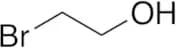
CAS :Produit contrôlé<p>Applications 2-Bromoethanol is an widely used intermediate in organic synthesis.<br> Not a dangerous good if item is equal to or less than 1g/ml and there is less than 100g/ml in the package<br>References Tian, Z., et al.: Int. J. Quant. Chem., 111, 631 (2011); Thayer, F.K., et al.: Org. Syntheses., 6, (1926);<br></p>Formule :C2H5BrOCouleur et forme :NeatMasse moléculaire :124.96Terephthalic Acid
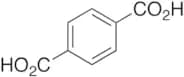
CAS :<p>Applications Terephthalic acid is a benzenepolycarboxylic acid with potential anti-hemorrhagic properties.<br>References Veronese, E., et al.: Phytomedicine, 12, 123 (2005), Panfoli, I., et al.: Toxins, 2, 417 (2010), Aung, H., et al.: Bioorg. Med. Chem., 19, 2392 (2011),<br></p>Formule :C8H6O4Couleur et forme :ColourlessMasse moléculaire :166.13rac-cis-N-Desmethyl Sertraline Hydrochloride
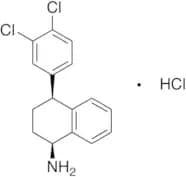
CAS :Produit contrôléFormule :C16H15Cl2N·ClHCouleur et forme :WhiteMasse moléculaire :328.66(-)-Riboflavin
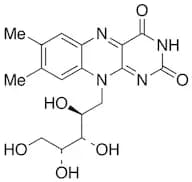
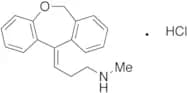
CAS :Produit contrôlé<p>Stability Hygroscopic<br>Applications (-)-Riboflavin is a nutritional factor found in milk, eggs, malted barley, liver, kidney, heart, leafy vegetables. Richest natural source is yeast. Minute amounts present in all plant and animal cells. Vitamin (enzyme cofactor).<br>References Unna, K., et al.: J. Pharmacol. Exp. Ther., 76, 75 (1942), Rivlin, et al.: N. Engl. J. Med., 283, 463 (1970), Al-Shammary, F.J., et al.: Anal. Profiles Drug Subs., 19, 429 (1990),<br></p>Formule :C17H20N4O6Couleur et forme :NeatMasse moléculaire :376.36Nor Doxepin Hydrochloride
CAS :<p>Applications A metabolite of Doxepin (D550000).<br> Not a dangerous good if item is equal to or less than 1g/ml and there is less than 100g/ml in the package<br>References Gupta, R., et al.: Biopharm. Drug Dispos., 1, 259 (1980), Linder, M., et al.: Clin. Chem., 44, 1073 (1998),<br></p>Formule :C18H19NO·HClCouleur et forme :White To Off-WhiteMasse moléculaire :301.811-Methyl-2-pyrrolidinone-d3
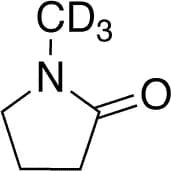
CAS :Produit contrôlé<p>Applications Labelled 1-Methyl-2-pyrrolidinone (M326120). It is a versatile industrial solvent. NMP is currently approved for use only in veterinary pharmaceuticals. The determination of the disposition and metabolism of NMP in the rat will contribute toward understanding the toxicology of this exogenous chemical which man may likely be exposed to in increasing amounts.<br>References Southwell, D., et al.: J. Pharm. Pharmacol., 33, 3 (1981), Barry, W., et al.: J. Invest. Dermatol., 82, 49 (1984),<br></p>Formule :C5H6D3NOCouleur et forme :NeatMasse moléculaire :102.15Vanillic Acid
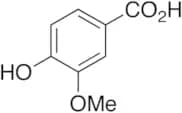
CAS :Produit contrôlé<p>Applications Vanillin, a compound widely used in foods, beverages, cosmetics and drugs, has been reported to exhibit multifunctional effects such as antimutagenic, antiangiogenetic, anti-colitis, anti-sickling, and antianalgesic effects. However, results of studies on the antioxidant activity of vanillin are not consistent.<br>References Ohta, T., et al.: Food Chem. Toxicol., 24, 51 (1986), Zhou, Y., et al.: Biochem. Pharmacol., 42, 1177 (1991), Santos, J., et al.: Mutat. Res., 444, 355 (1999),<br></p>Formule :C8H8O4Couleur et forme :NeatMasse moléculaire :168.15Saccharin
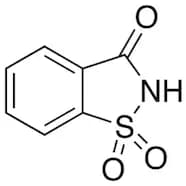
CAS :<p>Applications It is a non-nutritive sweetener; pharmaceutic aid (flavor). Saccharin was formerly listed as reasonably anticipated to be a human carcinogen; delisted because the cancer data are not sufficient to meet the current criteria for this listing.<br>References Taylor, J.D., et al.: Food Cosmet. Toxicol., 6, 313 (1968), Arnold, D.L., et al.: Fundam. Appl. Toxicol., 4, 674 (1984),<br></p>Formule :C7H5NO3SCouleur et forme :ColourlessMasse moléculaire :183.18Potassium Sorbate
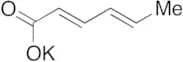
CAS :<p>Applications Potassium Sorbate acts as a potential antifungal agent when used in conjunction with polyethylene films. Also used as a corrosion inhibitor via corrosion mitigation.<br>References Alrabadi, N. et al.: Amer. Eur. J. Agri. Env., 13, 1497 (2013); Gelman, D. et al.: Corr. Sci., 82, 271 (2014);<br></p>Formule :C6H7O2·KCouleur et forme :NeatMasse moléculaire :150.22Dehydro Lercanidipine
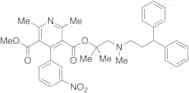
CAS :<p>Applications Dehydro Lercanidipine is the main metabolite of Lercanidipine (L179000), an antihypertensive. Lercanidipine impurity D.<br>References Hayase, N., et al.: J. Pharm. Sci., 83, 532 (1994), Nayler, W., et al.: J. Clin. Basic Cardiol., 2, 155 (1999), Mielcarek, J., et al.: J. Pharm. Biomed. Anal., 24, 71 (2000),<br></p>Formule :C36H39N3O6Couleur et forme :Colourless To YellowMasse moléculaire :609.71Glycerine Trioleate (Technical Grade)
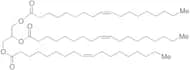
CAS :<p>Applications Glycerine Trioleate is one of the two components of Lorenzo's oil which is used in the investigational treatment of asymptomatic patients with adrenoleukodystrophy (ALD).<br>References Sassa, T., et al.: J. Lipid Res,. 55, 524 (2014); Macro, C., et al.: J. Inherit. Metab. Dis., 35, 899 (2012); Alexander, S., et al.: Expert Rev. Neurother., 8, 1367 (2008)<br></p>Formule :C57H104O6Couleur et forme :NeatMasse moléculaire :885.43Phenyl 4-Hydroxybenzoate
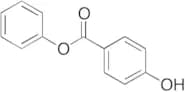
CAS :Produit contrôlé<p>Applications Phenyl 4-Hydroxybenzoate is a substance for the production of stable exenatide preparations for treating diabetes and obesity. Investigation of drug partition property in artificial sebum for the targeted delivery of therapeutic agent into the hair and sebaceous follicles. In vitro and molecular docking studies on the side chains of parabens as modulators of antiandrogenic activities.<br>References Valiveti, S., et al.: Int. J. Pharm.; Zhong, H., et al.: From Faming Zhuanli Shenqing (2009), CN 101366692 A 20090218; Ding, K., et al.: Env. Sci. Technol., 51, 6452 (2017)<br></p>Formule :C13H10O3Couleur et forme :NeatMasse moléculaire :214.227-Hydroxy Coumarin Sulfate Potassium Salt
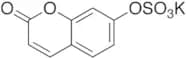
CAS :Produit contrôlé<p>Applications Metabolite of 7-hydroxycoumarin (7-HC). Found in hepatocyte, microsome, S9 fraction of human, dog, monkey, rat and mouse liver.<br>References Ekins, S., et al.: Drug Metab. Dispos. 24, 990 (1996), Bock, K., et al.: Biochem. Pharmacol. 66, 691 (2003), Naritomi, Y., et al.: Drug Metab. Dispos. 31, 580 (2003).<br></p>Formule :C9H5KO6SCouleur et forme :Light YellowMasse moléculaire :280.302-(2-Fluorophenyl)-2-(methylamino)-cyclohexanone Hydrochloride
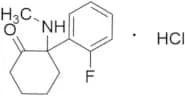
CAS :Produit contrôlé<p>Applications 2-(2-Fluorophenyl)-2-(methylamino)-cyclohexanone Hydrochloride is a related compound of Ketamine (K165300), an anesthetic.<br>References Sass, W.C., et al.: Anal. Profiles Drug Subs., 6, 297 (1977); Reich, D.L., et al.: Can. J. Anaesth., 36, 186 (1989);<br></p>Formule :C13H16FNO·HClCouleur et forme :NeatMasse moléculaire :257.70Heptadecanoic Acid
CAS :<p>Applications Heptadecanoic acid is a saturated fatty acid and occurs as a trace component of the fat in ruminants.<br>References Beare-Rogers., et al.: Pure. Applied. Chem., 73, 685 (2001);<br></p>Formule :C17H34O2Couleur et forme :NeatMasse moléculaire :270.45Valencene (>85%)
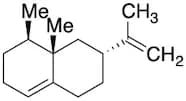
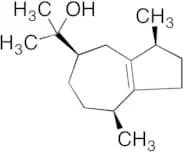
CAS :Formule :C15H24Degré de pureté :>85%Couleur et forme :NeatMasse moléculaire :204.35Rabeprazole Sulfone
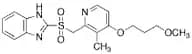
CAS :<p>Impurity Rabeprazole EP Impurity A<br>Applications Rabeprazole Sulfone (Rabeprazole EP Impurity A) is a metabolite of Rabeprazole (R070500).<br>References Miura, M., et al.: Eur. J. Clin. Pharmacol., 62, 113 (2006),<br></p>Formule :C18H21N3O4SCouleur et forme :White To YellowMasse moléculaire :375.44Safranal (>80%)
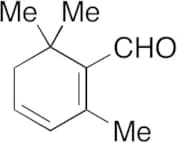
CAS :Produit contrôlé<p>Stability Light Sensitive<br>Applications Safranal, is isolated from Saffron, and is primarily responsible for the aroma of saffron. It has also been shown to have anticonvulsant properties, acting as agonist at GABAA receptors. It is also possessing anticancer and antidepressant properties.<br>References Hosseinzadeh, H., et al.: Acta. Horticulturae, 650, 435 (2004); Hosseinzadeh, H, et al.: Phytomedicine, 14 (4), 256 (2007); Assimopoulou AN., et al.: Phytoherapy Res., 19 (11), 997 (2005);<br></p>Formule :C10H14ODegré de pureté :>80%Couleur et forme :Dark YellowMasse moléculaire :150.222-Ethylpentanoic Acid
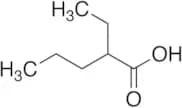
CAS :Produit contrôlé<p>Applications 2-Ethylpentanoic Acid is a known metabolite and analog of valproic acid (V094750). Experimental results have shown potential acute anticonvulsant and toxic effects exhibited by 2-Ethylpentanoic Acid.<br>References Loescher, W.; et al.: Neuropharmacol., 24, 427 (1985); Chapman, A.G.; et al.: Life Sci., 32, 2023 (1983);<br></p>Formule :C7H14O2Couleur et forme :ColourlessMasse moléculaire :130.18PEG-2 Hydrogenated Tallow Amine
CAS :<p>Applications PEG-2 Hydrogenated Tallow Amine is a surfactants derived from animal fats with primary use as emulsifiers.<br>References Fu, X., et al.: Faming Zhuanli Shenqing., 4 (2018)<br></p>Couleur et forme :Neatβ-Geranyl Acetate
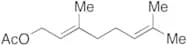
CAS :<p>Applications β-Geranyl Acetate is found in essential oils such as Moroccan commercial essential oils which has anti-oxidant, anti-inflammatory and anti-proliferative activities; and in Salvia scabiosifolia from Bulgaria.<br>References Aazza, S., et. al.: Nat. Prod. Comm., 9, 587 (2014); Marchev, A., et. al.: J. Essential Oil-bearing Plants, 15, 908 (2012)<br></p>Formule :C12H20O2Couleur et forme :NeatMasse moléculaire :196.29Diphenyl Carbonate
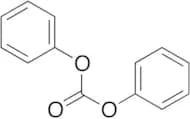
CAS :Produit contrôléFormule :C13H10O3Couleur et forme :NeatMasse moléculaire :214.22Caffeine-13C3
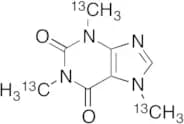
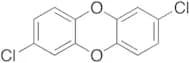
CAS :<p>Applications Caffeine-13C3 is a labelled analogue of Caffeine (C080100), a bitter, white crystalline xanthine alkaloid that acts as a stimulant drug and a reversible acetylcholinesterase inhibitor. Caffeine is found in varying quantities in the seeds, leaves, and fruit of some plants, where it acts as a natural pesticide that paralyzes and kills certain insects feeding on the plants. In humans, caffeine acts as a central nervous system stimulant, temporarily warding off drowsiness and restoring alertness. Caffeine is a cardiac and respiratory stimulant; diuretic. Caffeine is toxic at sufficiently high doses.A study at Johns Hopkins University indicates that caffeine can improve pattern separation memory.<br>References Zubair, U.M., et al.: Anal. Profiles Drug Subs., 15, 71 (1986); Cherrah, Y., et al.: Biochem. Pharmacol., 37, 1311 (1988); Chem. and Eng. News p.34, Jan. 20, (2014)<br></p>Formule :C3C5H10N4O2Couleur et forme :White To Off-WhiteMasse moléculaire :197.172,7-Dichlorodibenzo-p-dioxin
CAS :Produit contrôlé<p>Applications 2,7-Dichlorodibenzo-p-dioxin is a standard used in environmental testing and research and in the study of enthalpy of vaporization of ersistant organic pollutants.<br>References Sosnowska, A. et al.: Atmos. Env., 87, 10 (2014);<br></p>Formule :C12H6Cl2O2Couleur et forme :NeatMasse moléculaire :253.081













![2,2-Bis[4-(2-hydroxy-2-methylethoxy)phenyl]Propane](/_next/image/?url=https%3A%2Fstatic.cymitquimica.com%2Fproducts%2FTR%2Fthumb-webp%2FB016472.webp&w=3840&q=75)