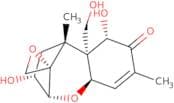
CAS 51481-10-8
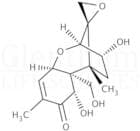
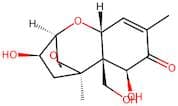
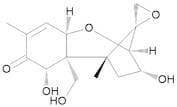
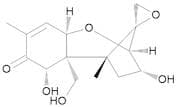
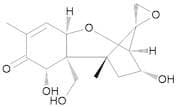
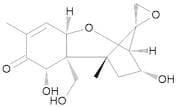
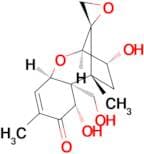
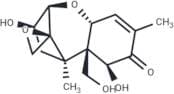
:Deoxynivalenol
- (3α,7α)-12,13-Epoxy-3,7,15-trihydroxytrichothec-9-en-8-one
- 4-Deoxynivalenol
- 4-Desoxynivalenol
- DON
- Dehydronivalenol
- Deoxynivalenol
- Nsc 269144
- Spiro[2,5-methano-1-benzoxepin-10,2′-oxirane], trichothec-9-en-8-one deriv.
- Trichothec-9-en-8-one, 12,13-epoxy-3,7,15-trihydroxy-, (3α,7α)-
- Vomitoxin
Deoxynivalenol
CAS:DeoxynivalenolFormula:C15H20O6Purity:By hplc: 99.66% (Typical Value in Batch COA)Color and Shape:Solid-PowderMolecular weight:296.3157Trichothec-9-en-8-one, 12,13-epoxy-3,7,15-trihydroxy-, (3a,7a)-
CAS:Formula:C15H20O6Purity:97%Color and Shape:SolidMolecular weight:296.3157LC PestiMix 7 10 µg/mL in Acetonitrile
CAS:- 102-07-8
- 104098-48-8
- 113-48-4
- 117337-19-6
- 1220-83-3
- 12771-68-5
- 133408-50-1
- 139920-32-4
- 145701-21-9
- 150824-47-8
- 152-16-9
- 158474-72-7
- 162650-77-3
- 1631-52-3
- 16709-30-1
- 18530-56-8
- 2008-58-4
- 20300-00-9
- 205650-65-3
- 22071-15-4
- 22936-75-0
- 248593-16-0
- 252913-85-2
- 26259-45-0
- 27512-72-7
- 28159-98-0
- 28434-01-7
- 28730-17-8
- 30125-64-5
- 31895-22-4
- 338-45-4
- 34643-47-5
- 3478-94-2
- 3567-62-2
- 38727-55-8
- 39515-41-8
- 40020-01-7
- 4658-28-0
- 495-48-7
- 51481-10-8
- 5221-53-4
- 5259-88-1
- 55297-96-6
- 55635-13-7
- 57052-04-7
- 57369-32-1
- 61592-45-8
- 63782-90-1
- 63935-38-6
- 64529-56-2
- 658066-35-4
- 67375-30-8
- 72178-02-0
- 72459-58-6
- 736994-63-1
- 8003-34-7
- 84496-56-0
- 89269-64-7
- 90717-03-6
- 946578-00-3
- 950782-86-2
- 95266-40-3
- 98967-40-9
Color and Shape:MixtureDeoxynivalenol 100 µg/mL in Acetonitrile
CAS:Controlled ProductFormula:C15H20O6Color and Shape:Single SolutionMolecular weight:296.32A + B-Trichothecenes and Zearalenone Mixture 10 µg/mL in Acetonitrile
CAS:Controlled ProductColor and Shape:MixtureA + B-Trichothecenes and Zearalenone Mixture 10 µg/mL in Acetonitrile
CAS:Controlled ProductColor and Shape:MixtureDeoxynivalenol 100 µg/mL in Acetonitrile
CAS:Controlled ProductFormula:C15H20O6Color and Shape:Single SolutionMolecular weight:296.32Deoxynivalenol
CAS:Controlled ProductApplications Deoxynivalenol is a tricothecene mycotoxin and potent protein synthesis inhibitor. Deoxynivalenol exhibits cytotoxic activity in vivo via the ribotoxic stress response. Deoxynivalenol induces p38-mediated gene expression and apoptosis in leukocytes; activity results in systemic expression of interleukin-6 (IL-6) and other proinflammatory cytokines. Also induces migration of NF-κB into the nucleus.Environmental contaminants; Food contaminants
Not a dangerous good if item is equal to or less than 1g/ml and there is less than 100g/ml in the package
References Bae, et al.: Toxicol. Sci., 105, 59 (2008), Shi, et al.: Toxicol. Sci., 109, 247 (2009), Krishnaswamy, et al.: Free Radic. Biol. Med., 49 50 (2010),Formula:C15H20O6Color and Shape:NeatMolecular weight:296.32Deoxynivalenol
CAS:Deoxynivalenol, a Fusarium-produced mycotoxin, causes nausea, diarrhea, and gut inflammation, entering cells bypassing tight junctions.Formula:C15H20O6Purity:99.47% - 99.84%Color and Shape:SolidMolecular weight:296.32Deoxynivalenol
CAS:Deoxynivalenol is a mycotoxin that is produced by the fungi Fusarium graminearum and F. culmorum. It produces toxic effects in humans and animals, including human immunoglobulin E (IgE) production, acute toxicities, and cytotoxic effects on cultured human leukocytes. The analytical method for deoxynivalenol detection includes a variety of in vitro methods such as enzyme-linked immunosorbent assays (ELISA), competitive ELISA, fluorescent antibody staining assay, fluorescence polarization immunoassay (FPIA), competitive FPIA, and high performance liquid chromatography (HPLC). Deoxynivalenol binds to dna with high affinity and has been shown to have fusarial activity. The toxicity of deoxynivalenol can be confirmed by the mitochondrial membrane potential assay or by the assessment of vomitoxin levels. Colloidal gold can be used for identification of deox
Formula:C15H20O6Purity:Min. 95%Color and Shape:White PowderMolecular weight:296.32 g/mol