Apoptosis
Apoptosis inhibitors are compounds that prevent or delay the process of programmed cell death, known as apoptosis. These inhibitors are vital in studying cell survival mechanisms and are used to investigate diseases where apoptosis is dysregulated, such as cancer, neurodegenerative disorders, and autoimmune diseases. By modulating apoptosis, these inhibitors can help in the development of therapies aimed at controlling cell death. At CymitQuimica, we provide a comprehensive selection of high-quality apoptosis inhibitors to support your research in cell biology, oncology, and related fields.
Subcategories of "Apoptosis"
- ASK(6 products)
- BCL(11 products)
- Caspase(125 products)
- FOXO1(3 products)
- IAP(66 products)
- Mdm2(12 products)
- PD-1/PD-L1(125 products)
- PDK(9 products)
- PERK(25 products)
- Serine/threonin kinase(15 products)
- Survivin(13 products)
- TNF(92 products)
- c-RET(51 products)
- p53(62 products)
Show 6 more subcategories
Found 5592 products of "Apoptosis"
Sort by
Purity (%)
0
100
|
0
|
50
|
90
|
95
|
100
OBAA
CAS:<p>OBAA is a potent inhibitor of phospholipase A2 (PLA2) with an IC 50 of 70 nM. OBAA blocks Melittin-induced Ca 2+ influx in Trypanosoma brucei with an IC 50 of 0.4 μM [1] [2] [3].</p>Formula:C28H44O3Purity:98%Color and Shape:SolidMolecular weight:428.65(R)-Verapamil hydrochloride
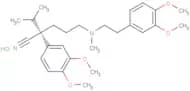
CAS:<p>(R)-Verapamil hydrochloride ((R)-(+)-Verapamil hydrochloride) is an inhibitor of P-Glycoprotein.</p>Formula:C27H39ClN2O4Color and Shape:SolidMolecular weight:491.06PIM-447 dihydrochloride
CAS:<p>PIM-447 dihydrochloride is an orally available and selective inhibitor of pan-PIM kinase(Ki values of 6, 18, and 9 pM for PIM1, PIM2, and PIM3, respectively).</p>Formula:C24H25Cl2F3N4OPurity:98%Color and Shape:SolidMolecular weight:513.38WEHI-539 hydrochloride
CAS:<p>WEHI-539 hydrochloride is a selective Bcl-XL inhibitor with an IC50 of 1.1 nM.</p>Formula:C31H30ClN5O3S2Purity:98%Color and Shape:SolidMolecular weight:620.18AP1867-3-(aminoethoxy)
CAS:<p>AP1867-3-(aminoethoxy) is a synthetic ligand for FKBP and can be used in the synthesis of PROTAC FKBP12 F36V degrader.</p>Formula:C38H50N2O9Color and Shape:SolidMolecular weight:678.81β-Zearalanol
CAS:<p>Beta-Zearalenol, a derivative of zearalenone (ZEA) capable of conjugating with glucuronic acid[2], is a mycotoxin produced by Fusarium spp. It induces apoptosis and oxidative stress in mammalian reproductive cells[1].</p>Formula:C18H26O5Color and Shape:SolidMolecular weight:322.4Actinonin
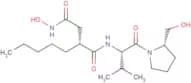
CAS:<p>Actinonin ((-)-Actinonin) is a naturally occurring antibacterial agent produced by Actinomyces and a potent reversible peptide deformylase (PDF) inhibitor with a Ki of 0.28 nM. It also induces apoptosis and inhibits aminopeptidase M, aminopeptidase N, and leucine aminopeptidase, as well as MMP-1, MMP-3, MMP-8, MMP-9, and meprin α with Ki values of 300 nM, 1,700 nM, 190 nM, 330 nM, and 20 nM, respectively. Actinonin exhibits antiproliferative and antitumor activities [1][2][3][4][5].</p>Formula:C19H35N3O5Color and Shape:SolidMolecular weight:385.5Amiloride hydrochloride dihydrate
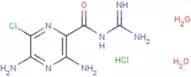
CAS:<p>Amiloride hydrochloride dihydrate (Amiloride HCl dihydrate) is a pyrazine compound inhibiting SODIUM reabsorption through SODIUM CHANNELS in renal EPITHELIAL CELLS. This inhibition creates a negative potential in the luminal membranes of principal cells, located in the distal convoluted tubule and collecting duct. Negative potential reduces secretion of potassium and hydrogen ions. Amiloride hydrochloride dihydrate is used in conjunction with DIURETICS to spare POTASSIUM loss.</p>Formula:C6H8ClN7O·HCl·2H2OPurity:99.07% - >99.99%Color and Shape:SolidMolecular weight:302.12Platinum, diammine[1,1-cyclobutanedi(carboxylato-kO)(2-)]-, (SP-4-2)-
CAS:Formula:C6H10N2O4PtPurity:98%Color and Shape:SolidMolecular weight:369.23265-Amino-1-β-D-ribofuranosyl-1H-imidazole-4-carboxamide
CAS:Formula:C9H14N4O5Purity:95%Color and Shape:SolidMolecular weight:258.2313Ac-IETD-CHO TFA
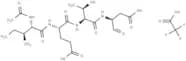
<p>Ac-IETD-CHO TFA is a granzyme B and caspase-8 inhibitor that inhibits caspase8 activity by blocking caspase3 precursor cleavage.Ac-IETD-CHO TFA inhibits Fas-mediated apoptosis.</p>Formula:C23H35F3N4O12Color and Shape:SoildMolecular weight:616.54Carubicin hydrochloride
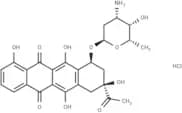
CAS:<p>Carubicin HCl is an anthracycline antineoplastic antibiotic. Through intercalates into DNA and interacts with topoisomerase II, Carubicin inhibits DNA replication and repair and RNA and protein synthesis.</p>Formula:C26H28ClNO10Color and Shape:SolidMolecular weight:549.95Prostaglandin A2
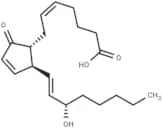
CAS:<p>PGA2 is a naturally occurring prostaglandin in gorgonian corals where it may function in self defense. It is generally not present in mammals. PGA2 has low biological potency in most bioassays, but it does show some antiviral/antitumor activity.[1] At a 25 uM concentration, PGA2 blocks the cell cycle progression of NIH 3T3 cells at the G1 and G2/M phase .[2] It has also been shown to act as a vasodilator with natriuretic properties.[3]</p>Formula:C20H30O4Color and Shape:SolidMolecular weight:334.45ENMD-2076 tartrate
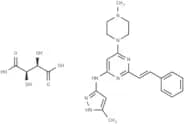
CAS:<p>ENMD-2076 is an orally active kinase inhibitor. It also has antiangiogenic and antiproliferative mechanisms of action.</p>Formula:C25H31N7O6Color and Shape:SolidMolecular weight:525.56Thalidomide-O-C6-COOH
CAS:<p>Thalidomide-O-C6-COOH is a synthetic conjugate that combines a Thalidomide-derived cereblon ligand with a PROTAC technology linker (E3 ligase ligand-linker).</p>Formula:C20H22N2O7Color and Shape:SolidMolecular weight:402.403Ingenol 3,20-dibenzoate
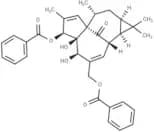
CAS:<p>Ingenol 3,20-dibenzoate is a powerful activator of protein kinase C (PKC) isoforms that effectively induces the translocation of nPKC-delta, -epsilon, and -theta, as well as PKC-mu, from the cytosolic fraction to the particulate fraction. Through de novo synthesis of macromolecules, it triggers apoptosis with characteristic morphology. Moreover, Ingenol 3,20-dibenzoate enhances IFN-γ production and degranulation in NK cells, particularly when stimulated by NSCLC cells[1][2].</p>Formula:C34H36O7Color and Shape:SolidMolecular weight:556.65Yatein
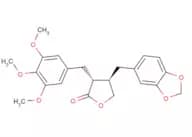
CAS:<p>Yatein inhibits herpes simplex virus type 1 replication by interruption the immediate-early gene expression. Yatein is a lignan isolated from A. chilensis. It also has antiproliferative activity.</p>Formula:C22H24O7Purity:98%Color and Shape:SolidMolecular weight:400.42MI-773
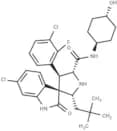
CAS:<p>MI-773 is a potent inhibitor of the MDM2-p53 protein interaction (PPI) with a high affinity for MDM2 and a Kd value of 8.2 nM. MI-773 exhibits antitumour effects.</p>Formula:C29H34Cl2FN3O3Color and Shape:SolidMolecular weight:562.5Imifoplatin
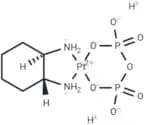
CAS:<p>Imifoplatin (PT-112) is a platinum compound with antitumor activity and may be used to study prostate cancer and immune system disorders.</p>Formula:C6H16N2O7P2PtPurity:≥95.0%Color and Shape:SolidMolecular weight:485.23RRD-251
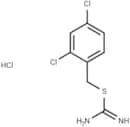
CAS:<p>RRD-251 is an Rb-Raf-1 interaction inhibitor that induces apoptosis in metastatic melanoma cells and synergizes with dacarbazine[1].</p>Formula:C8H9Cl3N2SColor and Shape:SolidMolecular weight:271.59Thalidomide-O-amido-C4-NH2 hydrochloride
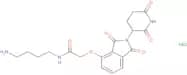
CAS:<p>Thalidomide-O-amido-C4-NH2 hydrochloride, a synthesized E3 ligase ligand-linker conjugate, combines the cereblon ligand derived from Thalidomide with a linker and is commonly used in the synthesis of PROTACs[1].</p>Formula:C19H23ClN4O6Purity:98%Color and Shape:SolidMolecular weight:438.86Thalidomide-O-C5-NH2 hydrochloride
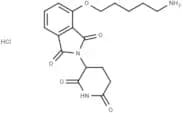
CAS:<p>Thalidomide-O-C5-NH2 hydrochloride is a synthetic compound consisting of a ligand-linker conjugate with E3 ligase activity. It combines a cereblon ligand based on Thalidomide and a linker commonly utilized in PROTAC technology.</p>Formula:C18H22ClN3O5Color and Shape:SolidMolecular weight:395.84SCH79797
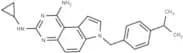
CAS:<p>SCH79797 is a potent and specific protease-activated receptor 1 (PAR1) antagonistwith antimicrobial, anticancer, anti-inflammatory, and neuroprotective effects.</p>Formula:C23H25N5Purity:99.80%Color and Shape:SolidMolecular weight:371.48Vatiquinone
CAS:<p>Vatiquinone, also known as EPI 743, is an orally bioavailable para-benzoquinone being developed for inherited mitochondrial diseases. The mechanism of action of EPI-743 involves augmenting the synthesis of glutathione, optimizing metabolic control, enhanc</p>Formula:C29H44O3Color and Shape:SolidMolecular weight:440.66XMU-MP-3
CAS:<p>XMU-MP-3 is a robust, non-covalent inhibitor of BTK, exhibiting exceptional potency with IC50 values of 10.7 nM and 17.0 nM for BTK WT and BTK C481S mutation, respectively, in the presence of 10 μM ATP. Moreover, XMU-MP-3 elicits apoptosis.</p>Formula:C27H27F3N8OColor and Shape:SolidMolecular weight:536.563A-192621
CAS:<p>A-192621 is a potent, nonpeptide, orally active, and selective endothelin B (ETB) receptor antagonist with an IC50 of 4.5 nM and a Ki of 8.8 nM. A-192621 promotes apoptosis in PASMCs and elevates both arterial blood pressure and plasma ET-1 levels[1][2][3]. Its selectivity is 636-fold higher for ETB than ETA (IC50 of 4280 nM and Ki of 5600 nM).</p>Formula:C33H38N2O6Purity:98%Color and Shape:SolidMolecular weight:558.66DB818
CAS:<p>DB818 is a synthetic Homeobox A9 (HOXA9) inhibitor and can be used for research on the treatment of acute myeloid leukaemia associated with HOXA9 overexpression.</p>Formula:C19H16N6SPurity:98%Color and Shape:SolidMolecular weight:360.44Swainsonine
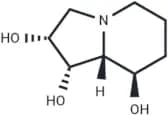
CAS:<p>Swainsonine (Tridolgosir) is an alkaloid isolated from Astragalus membranaceus and is a potent and reversible inhibitor of alpha-mannosidase. swainsonine has antitumour activity and induces apoptosis and cell cycle arrest in the G2/M phase.</p>Formula:C8H15NO3Purity:98%Color and Shape:Lyophilized PowderMolecular weight:173.21Ciprofloxacin lactate
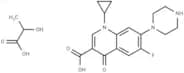
CAS:<p>Ciprofloxacin lactate is a useful organic compound for research related to life sciences. The catalog number is T66299 and the CAS number is 97867-33-9.</p>Formula:C20H24FN3O6Color and Shape:SolidMolecular weight:421.43Thalidomide-5-COOH
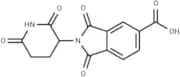
CAS:<p>Thalidomide-5-COOH is a useful organic compound for research related to life sciences. The catalog number is T64600 and the CAS number is 1216805-11-6.</p>Formula:C14H10N2O6Color and Shape:SolidMolecular weight:302.242Mcl-1 inhibitor 6
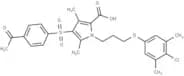
CAS:<p>Mcl-1 inhibitor 6 binds Mcl-1 with KD 0.23 nM and Ki 0.02 μM, shows strong selectivity over Bcl-2 family, and demonstrates antitumor efficacy.</p>Formula:C26H28ClNO6SColor and Shape:SolidMolecular weight:518.02PDK1-IN-RS2
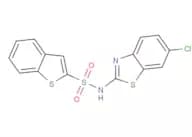
CAS:<p>PDK1-IN-RS2, a PIFtide mimic, selectively inhibits PDK1, blocking S6K1 activation (Kd: 9 μM).</p>Formula:C15H9ClN2O2S3Purity:98%Color and Shape:SolidMolecular weight:380.89Ref: TM-T16450
Discontinued productCTB
CAS:<p>CTB (Cholera Toxin B subunit) is an activator of p300 histone acetyltransferase and induces apoptosis in MCF-7 cells.</p>Formula:C16H13ClF3NO2Purity:99.82%Color and Shape:SolidMolecular weight:343.73Faradiol 3-Myristate
CAS:Controlled ProductFormula:C44H76O3Color and Shape:NeatMolecular weight:653.072anti-TNBC agent-2
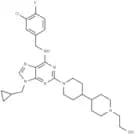
CAS:<p>Anti-TNBC agent-2 (3j), a purine derivative, acts as an anti-triple negative breast cancer (TNBC) therapeutic.</p>Formula:C28H37ClFN7OPurity:98%Color and Shape:SolidMolecular weight:542.09Cyy-272
CAS:<p>Cyy-272 is an orally active JNK inhibitor with IC50 values of 1.25, 1.07, and 1.24 μM against JNK1, JNK2, and JNK3, respectively. It exerts anti-inflammatory effects by inhibiting the phosphorylation of JNK, thereby alleviating acute lung injury (ALI) induced by lipopolysaccharide (LPS). Moreover, Cyy-272 significantly reduces inflammation in cardiomyocytes and cardiac tissues caused by high lipid concentrations, further mitigating resultant cardiac hypertrophy, fibrosis, and apoptosis. Cyy-272 is utilized in the study of obesity-related myocarditis.</p>Formula:C23H23F2N7Color and Shape:SolidMolecular weight:435.47Ref: TM-T200453
Discontinued productSMIP34
CAS:<p>SMIP34 is an inhibitor of PELP1 that demonstrates the capability to reduce cell viability and colony formation. Additionally, SMIP34 induces cell apoptosis (apoptosis) and causes cell cycle arrest in the S phase. It reduces the expression of PELP1 and exhibits anti-tumor activity. SMIP34 also has potential for research in triple-negative breast cancer (TNBC).</p>Formula:C20H15ClFN5O2SColor and Shape:LiquidMolecular weight:443.88DETD-35
CAS:<p>DETD-35 is a promising chemical compound in anti-melanoma therapy, functioning as an inhibitor of the MEK-ERK, Akt, and STAT3 signaling pathways. It enhances cancer cell apoptosis (Apoptosis) and diminishes resistance to Vemurafenib in cancer cells. The compound exhibits IC 50 values of 2.7, 6.0, 3.9, 3.1, and 2.5 μM against melanoma cell lines B16-F10, MeWo, SK-MEL-2, A2058c, and A375c, respectively. DETD-35 offers significant potential for advancing research in melanoma treatment strategies.</p>Formula:C27H24O6Color and Shape:SolidMolecular weight:444.48Taltobulin
CAS:<p>Taltobulin (HTI-286) is a synthetic analog of the tripeptide cysteine, a microtubule protein inhibitor that inhibits liver tumor cell proliferation in vitro and tumor growth in vivo.Taltobulin is cytotoxic, induces mitotic arrest and apoptosis, and may be used in the study of breast cancer and microtubule tissue-related diseases.</p>Formula:C27H43N3O4Purity:99.86%Color and Shape:SolidMolecular weight:473.65IHMT-MST1-39
CAS:<p>IHMT-MST1-39 is an orally effective MST kinase inhibitor with IC50 values of 42 nM for MST1 and 109 nM for MST2. It activates the AMPK signaling pathway in hepatocytes and inhibits apoptosis in pancreatic β cells. Additionally, IHMT-MST1-39 improves type 1 diabetes in mice induced by Streptozotocin.</p>Formula:C20H18F2N6O3SColor and Shape:SolidMolecular weight:460.46Ref: TM-T200512
Discontinued productZSQ836
CAS:<p>ZSQ836 is a dual covalent inhibitor of CDK12/CDK13 with oral bioactivity, displaying an EC50 value of 32 nM against CDK12. This compound can induce cell apoptosis (apoptosis) and demonstrates in vivo anticancer properties. ZSQ836 is applicable for research in ovarian cancer.</p>Formula:C27H28AsClN6OS2Color and Shape:SolidMolecular weight:627.05Ref: TM-T200333
Discontinued productCHMFL-48
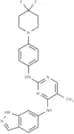
CAS:<p>CHMFL-48, an orally active inhibitor of BCR-ABL kinase, demonstrates efficacy against both the wild-type (wt) and various imatinib-resistant mutants. It exhibits potent inhibitory activity, with IC 50 values of 1 nM for the ABL wild-type and 0.8 nM for the ABL T315I mutant. CHMFL-48 operates by inhibiting the autophosphorylation of both wild-type and mutant BCR-ABL, affecting downstream signaling mediators including STAT5 and CRKL. This disruption leads to cell cycle arrest and triggers apoptosis. Given its properties, CHMFL-48 is a promising candidate for research on chronic myeloid leukemia (CML).</p>Formula:C31H30F3N7OColor and Shape:SolidMolecular weight:573.61

![Platinum, diammine[1,1-cyclobutanedi(carboxylato-kO)(2-)]-, (SP-4-2)-](/_next/image/?url=https%3A%2Fstatic.cymitquimica.com%2Fproducts%2FIN%2Fthumb-webp%2FDA00I84B.webp&w=3840&q=75)