Antimicrobials
Subcategories of "Antimicrobials"
- Antibiotics(4,137 products)
- Antifungals(904 products)
- Antiparasitics(700 products)
- Antivirals(767 products)
Found 2432 products of "Antimicrobials"
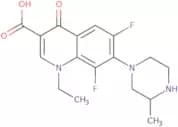
Lomefloxacin
CAS:Lomefloxacin is a fluoroquinolone antibiotic with a mode of action that inhibits bacterial DNA gyrase and topoisomerase IV. It is used for treating bacterial infections like bronchitis and urinary tract infections.
Formula:C17H19F2N3O3Purity:Min. 98 Area-%Color and Shape:PowderMolecular weight:351.35 g/molRef: 3D-FL170160
Discontinued productMaduramicin ammonium
CAS:Maduramicin ammonium is an anticoccidial agent with action on protozoal parasites by disrupting ion gradients and is used for preventing coccidiosis in poultry.
Formula:C47H83NO17Purity:Min. 95%Color and Shape:PowderMolecular weight:934.16 g/molRef: 3D-AM24971
Discontinued productRoxithromycin
CAS:Roxithromycin is a macrolide antibiotic with action on bacterial protein synthesis by binding to the 50S ribosomal subunit and is used for treating respiratory, skin, and soft tissue infections.
Formula:C41H76N2O15Purity:Min. 95%Color and Shape:White PowderMolecular weight:837.05 g/molRef: 3D-AR27766
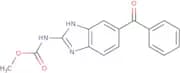
Discontinued productMebendazole
CAS:Mebendazole is a benzimidazole anthelmintic with action on microtubule formation in parasitic worms and is used for treating intestinal worm infections like threadworms and roundworms.
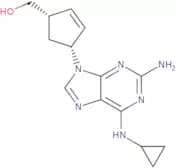
Formula:C16H13N3O3Purity:99.0 To 101.0%Color and Shape:PowderMolecular weight:295.29 g/molAbacavir - Bio-X ™
CAS:Abacavir is an antiviral nucleoside reverse transcriptase inhibitor that is used for the treatment of HIV. This drug inhibits the activity of HIV-1 reverse transcriptase (RT) both by competing with dGTP and by its incorporation into viral DNA.
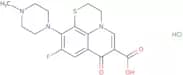
Formula:C14H18N6OPurity:Min. 95%Color and Shape:PowderMolecular weight:286.33 g/molRufloxacin HCl
CAS:Fluoroquinolone; gyrase inhibitor
Formula:C17H18FN3O3S·HClPurity:Min. 95%Color and Shape:PowderMolecular weight:399.87 g/molRef: 3D-AR37901
Discontinued productHerbicidin B
CAS:Herbicidin B is a natural herbicidal compound, which is a secondary metabolite produced through the fermentation of certain Streptomyces species. This compound functions as a potent inhibitor of plant growth by interfering with essential physiological processes within the plant cells. The mode of action of Herbicidin B primarily involves disruption of metabolic pathways that are critical for the development and survival of plants, leading to effective control of undesired vegetation.
Formula:C18H23N5O9Purity:Min. 95%Molecular weight:453.4 g/molTicarcillin disodium salt - 80%
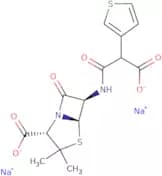
CAS:Ticarcillin disodium salt is a beta-lactam antibiotic that has in vitro activity against Gram-positive and Gram-negative bacteria. Ticarcillin is active against penicillinase-producing strains of Staphylococcus aureus, Enterobacter aerogenes, Proteus mirabilis, Escherichia coli, Pseudomonas aeruginosa, Klebsiella pneumoniae, Serratia marcescens, Streptococcus pyogenes, Streptococcus faecalis, and Streptococcus pneumoniae. Furthermore, it inhibits transpeptidase activity of the cell wall of bacteria which prevents peptidoglycan synthesis. It is bactericidal for many bacteria at low concentrations.
Formula:C15H14N2Na2O6S2Purity:Min. 90 Area-%Color and Shape:PowderMolecular weight:428.4 g/molCaspofungin acetate - Bio-X ™
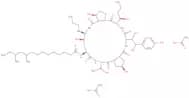
CAS:Controlled ProductCaspofungin is an echinocandin that belongs to the class of antifungal agents. It is used to treat Aspergillus and Candida infections. It works by inhibiting the synthesis of beta-(1,3)-D-glucan, an essential component of the cell wall of Aspergillus species and Candida species.
Formula:C52H88N10O15·2C2H4O2Purity:Min. 95%Color and Shape:PowderMolecular weight:1,213.42 g/molNalidixic acid sodium salt
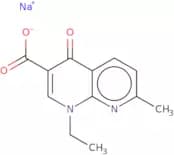
CAS:Nalidixic acid sodium salt is a sodium salt form of nalidixic acid with similar action and applications as nalidixic acid.
Formula:C12H11N2NaO3Purity:(%) Min. 98%Color and Shape:White PowderMolecular weight:254.22 g/molRef: 3D-FN16321
Discontinued productTipranavir - Bio-X ™
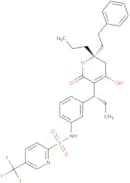
CAS:This product is part of our Bio-X ™ Range. These products are aimed at life science researchers who need high quality ready-to-use products for assay development, screening or other R&D work. With a solubility datasheet and convenient vials, all of our Bio-X ™ products are in stock across our global warehouses for rapid delivery and ease of use.
Formula:C31H33F3N2O5SPurity:Min. 95%Color and Shape:PowderMolecular weight:602.67 g/molFamciclovir - Bio-X ™
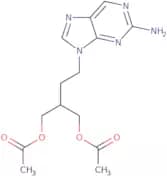
CAS:Famciclovir is a guanosine analogue antiviral agent that is used for the treatment of various herpesvirus infections, most commonly for herpes zoster. It works by inhibiting the replication of the herpes virus. Famciclovir prevents viral DNA synthesis by inhibiting the viral DNA polymerase and by blocking viral DNA replication. Its active form is penciclovir.
Formula:C14H19N5O4Purity:Min. 95%Color and Shape:PowderMolecular weight:321.33 g/mol4-Epichlortetracycline
CAS:4-Epichlortetracycline is a metabolite of chlortetracycline, which is derived from the Streptomyces genus of bacteria. It is structurally related to tetracycline antibiotics but differs specifically in its epimerization at the fourth position. This alteration results in a product with significantly reduced antibacterial activity compared to its parent compound. The mechanism of action primarily involves ribosomal binding, inhibiting protein synthesis in susceptible bacteria; however, the epimerization here compromises this efficacy.
Formula:C22H23ClN2O8Purity:Min. 95%Molecular weight:478.9 g/molPenicillin G potassium
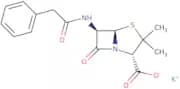
CAS:Penicillin G potassium is a natural penicillin antibiotic with action on bacterial cell wall synthesis and is used for treating severe bacterial infections like meningitis, syphilis, and endocarditis.
Formula:C16H17KN2O4SPurity:Min. 95 Area-%Color and Shape:PowderMolecular weight:372.48 g/molOrnidazole
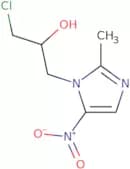
CAS:Ornidazole is a nitroimidazole antibiotic with action on DNA synthesis disruption in anaerobic bacteria and protozoa and is used for treating infections like amoebiasis, giardiasis, and trichomoniasis.
Formula:C7H10ClN3O3Purity:Min. 98 Area-%Color and Shape:White Slightly Yellow PowderMolecular weight:219.63 g/molRef: 3D-FO26585
Discontinued productFlubendazole
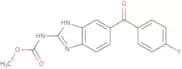
CAS:Flubendazole is a benzimidazole anthelmintic with action on microtubule formation in parasites and is used for treating intestinal worms in humans and animals.
Formula:C16H12FN3O3Purity:Min. 95%Color and Shape:White PowderMolecular weight:313.28 g/molRef: 3D-FF23317
Discontinued productEmtricitabine - Bio-X ™
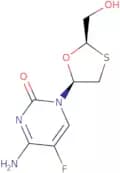
CAS:Emtricitabine is an antiviral drug that is used to treat chronic viral hepatitis, which is caused by the hepatitis B and C viruses. The drug blocks the activity of reverse transcriptase, which is an enzyme necessary for the replication of viral RNA in the body. Emtricitabine has been shown to be effective against acute hepatitis B virus infection and chronic hepatitis B virus infection with or without cirrhosis. It also has been shown to be effective against chronic hepatitis C virus infection with or without cirrhosis.
Formula:C8H10FN3O3SPurity:Min. 95%Color and Shape:White/Off-White SolidMolecular weight:247.25 g/molCefaclor
CAS:Inhibitor of bacterial cell wall biogenesis; cephalosporin
Formula:C15H14ClN3O4SPurity:Min. 95 Area-%Color and Shape:White PowderMolecular weight:367.81 g/molRef: 3D-AC34967
Discontinued productCephradine
CAS:Cephradine is a first-generation cephalosporin antibiotic with action on bacterial cell wall synthesis and is used for treating bacterial infections like urinary tract infections, respiratory infections, and skin infections.
Formula:C16H19N3O4SPurity:Min. 95%Color and Shape:PowderMolecular weight:349.41 g/molRef: 3D-AA44691
Discontinued productTigecycline hydrochloride
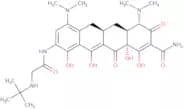
CAS:Inhibitor of protein synthesis; glycylcycline class
Formula:C29H39N5O8·HClPurity:Min. 95%Molecular weight:622.11 g/molDelafloxacin
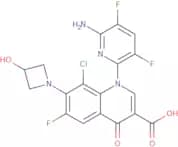
CAS:Delafloxacin is a fluoroquinolone antibiotic with action on bacterial DNA gyrase and topoisomerase IV and is used for treating acute bacterial skin and skin structure infections.
Formula:C18H12ClF3N4O4Purity:Min. 98 Area-%Color and Shape:PowderMolecular weight:440.76 g/molRef: 3D-FA44045
Discontinued productPazufloxacin hydrochloride
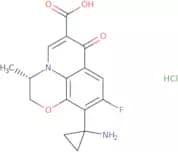
CAS:Pazufloxacin hydrochloride is a synthetic antibacterial agent, which is derived from the fluoroquinolone class of antibiotics with a broad-spectrum activity against various bacterial pathogens. This compound, sourced through chemical synthesis, functions primarily by inhibiting bacterial DNA gyrase and topoisomerase IV, which are critical enzymes for DNA replication, transcription, repair, and recombination. The inhibition of these enzymes leads to the disruption of bacterial DNA processes, ultimately resulting in bacterial cell death.
Formula:C16H15FN2O4•HClPurity:Min. 95%Molecular weight:354.76 g/molSTAADIUM™ GalactoZide II
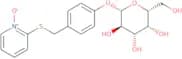
CAS:STAADIUMTM GalactoZide II is a targeted inhibitor for β-galactosidase producing bacteria. The antibacterial activity of STAADIUMTM GalactoZide II is triggered by the enzyme β-galactosidase which is produced by E.coli (EHEC), thermophilic lactic acid bacteria, and other coliform bacteria. STAADIUMTM GalactoZide II can help to selectively inhibit the growth of E. coli in complex bacterial cultures and canbe used in microbiome studies, food control, environmental safety, hygiene, and clinical diagnostics. STAADIUMTM GalactoZide II is not compatible with some experimental conditions, e.g. pH indicators such as neutral red, indigo stains, and possibly H2S staining. STAADIUMTM GalactoZide II can be added as an enzyme-specific selective supplement to agar plates and as an enrichment agent to broth culture.
Formula:C18H21NO7SPurity:Min. 95 Area-%Color and Shape:PowderMolecular weight:395.43 g/molGramicidin S TFA salt
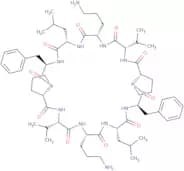
CAS:Gramicidin S TFA salt is a cyclic peptide antibiotic, which is originally derived from the soil bacterium Bacillus brevis. Its mode of action involves disrupting bacterial cell membranes by integrating into the lipid bilayer, which affects membrane integrity and leads to cell lysis. The unique cyclic dodecapeptide structure allows Gramicidin S to interact specifically with membrane lipids, forming pores that increase permeability and ion flux.In terms of applications, Gramicidin S is primarily used in research settings for studying membrane dynamics and permeability. Its potent antibiotic activity makes it a valuable compound in bacteriological studies, particularly for investigating multi-drug resistance mechanisms and testing novel antimicrobial strategies. Additionally, due to its peptide nature, it serves as a model compound for the design of synthetic analogs aimed at overcoming bacterial resistance.
Formula:C60H92N12O10(freebase)Purity:Min. 95 Area-%Color and Shape:White Off-White PowderMolecular weight:1,141.45 g/molCloxacillin sodium hydrate
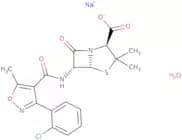
CAS:β-lactam antibiotic of penicillin subclass, which inhibits bacterial cell wall synthesis by targeting the proteoglycan synthesis. Cloxacillin has a narrow spectrum of action and is effective against Gram-positive organisms. Cloxacillin is resistant to the action of β-lactamase and therefore preferentially used for treatment of Staphylococcal infections.
Formula:C19H18ClN3O5S•H2O•NaPurity:Min. 95%Color and Shape:White PowderMolecular weight:476.89 g/molRef: 3D-AS59804
Discontinued productAmicoumacin B
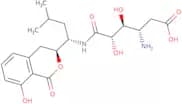
CAS:Amicoumacin B is a potent antibiotic, which is isolated from the bacterial species Bacillus pumilus. It acts by inhibiting protein synthesis, targeting the ribosomal 30S subunit and disrupting translational fidelity in bacterial cells. This interference in protein production leads to the effective elimination of various Gram-positive and certain Gram-negative bacteria.
Purity:Min. 95%Telithromycin
CAS:Ketolide; binds bacterial ribosomes and inhibits translation
Formula:C43H65N5O10Purity:Min. 95%Color and Shape:White PowderMolecular weight:812 g/molEntecavir hydrate
CAS:Nucleoside reverse transcriptase inhibitor; anti-Hepatitis B virus
Formula:C12H15N5O3·xH2OPurity:Min. 98 Area-%Color and Shape:White PowderMolecular weight:277.28 g/molNovobiocin
CAS:Novobiocin is an aminocoumarin antibiotic with action on bacterial DNA gyrase to inhibit ATPase activity and is used for treating staphylococcal infections and research on DNA replication.
Formula:C31H36N2O11Purity:(%) Min. 94%Color and Shape:White PowderMolecular weight:612.62 g/molAmphotericin A
CAS:Amphotericin A is a polyene macrolide antibiotic, which is derived primarily from the soil bacterium *Streptomyces nodosus*. This compound functions by binding to ergosterol, an essential component of fungal cell membranes. This binding creates pores in the membrane, increasing its permeability and ultimately leading to cell death. Unlike its more widely used counterpart Amphotericin B, Amphotericin A is less frequently utilized but is critical in the study and understanding of antifungal activity.
Formula:C47H75NO17Purity:Min. 95%Molecular weight:926.09 g/molValidoxylamine A
CAS:Validoxylamine A is an antibiotic, which is a secondary metabolite produced by certain strains of the Actinomyces species. It functions as a potent inhibitor of the enzyme glucose isomerase, which plays a crucial role in the isomerization of glucose to fructose, an important biochemical reaction in various microbial and plant systems.
Formula:C14H25NO8Purity:Min. 95%Molecular weight:335.35 g/molTomopenem
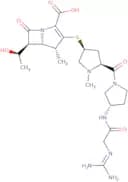
CAS:Tomopenem is a carbapenem antibiotic, which is a product of synthetic origin with broad-spectrum antibacterial properties. It acts by inhibiting the synthesis of bacterial cell walls through binding to penicillin-binding proteins, thereby disrupting the structural integrity of the cell wall and leading to bacterial cell lysis and death.
Formula:C23H35N7O6SPurity:Min. 95%Molecular weight:537.63 g/molNosiheptide
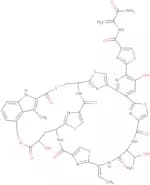
CAS:A thiopeptide antibiotic produced by the bacterium Streptomyces actuosus. In addition, nosiheptide inhibits bacterial protein biosynthesis by acting during the elongation of the protein.
Formula:C51H43N13O12S6Purity:Min. 95%Color and Shape:PowderMolecular weight:1,222.36 g/molRef: 3D-FA76383
Discontinued productEnduracidin hydrochloride
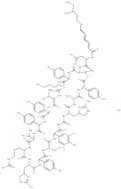
CAS:Enduracidin hydrochloride is an antimicrobial compound, which is a lipopeptide antibiotic derived from the genus Streptomyces, specifically Streptomyces fungicidicus or Streptomyces roseosporus. The compound exerts its antimicrobial activity by inhibiting the synthesis of bacterial cell walls, primarily targeting the lipid II cycle, a critical precursor in the peptidoglycan synthesis pathway. This inhibition disrupts the construction of peptidoglycan layers, ultimately leading to bacterial cell lysis and death.
Formula:C107H138Cl2N26O31HClPurity:Min. 95%Molecular weight:2,391.76 g/molCeftazidime pentahydrate
CAS:A broad-spectrum antibiotic of cephalosporin class, which inhibits bacterial cell wall synthesis by targeting the penicillin-binding protein, involved in peptidoglycan synthesis. This third-generation cephalosporin is very active against Pseudomonas species and can also be used to treat bacterial meningitis as it penetrates in the cerebrospinal fluid.
Formula:C22H32N6O12S2Purity:Min. 98 Area-%Color and Shape:White PowderMolecular weight:636.65 g/molRef: 3D-AC19871
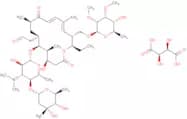
Discontinued productTylosin tartrate
CAS:Tylosin tartrate is a macrolide antibiotic with action on bacterial protein synthesis inhibition and is used for treating bacterial infections in livestock and poultry.
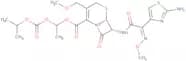
Formula:C50H83NO23Purity:Min. 95%Color and Shape:PowderMolecular weight:1,066.19 g/molCefpodoxime proxetil
CAS:Cefpodoxime proxetil is a prodrug of cefpodoxime with action on bacterial cell wall synthesis and is used for treating bacterial infections such as pneumonia, bronchitis, and gonorrhea.
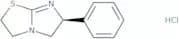
Formula:C21H27N5O9S2Purity:Min. 95%Color and Shape:White PowderMolecular weight:557.6 g/molLevamisole HCl - Bio-X ™
CAS:Levamisole is a synthetic imidazothiazole derivative belonging to the family of anthelmintic drugs. It is a nicotinic acetylcholine receptor (nAChR) agonists that binds to nAChRs on the neuromuscular junctions of parasitic worms, mimicking the action of the neurotransmitter acetylcholine. This excessive stimulation of nAChRs leads to persistent depolarization of muscle cells and spastic paralysis to expel of the worms. Levamisole exhibits broad-spectrum activity against various roundworms, whipworms, hookworms, and threadworms.
Formula:C11H12N2S·HClPurity:Min. 98.0%Color and Shape:PowderMolecular weight:240.75 g/molChloroquine diphosphate
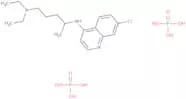
CAS:Controlled ProductChloroquine is a 4-aminoquinolone that is used to prevent and treat malaria, caused by parasitic protozoan from the Plasmodium genus. Chloroquine i a schizonticidal agent and is a widely prescribed antimalarial compound. The antiviral activity of chloroquine in vitro has been reported in 1960’s and recent publications have brought attention to its possible benefits in the treatment of COVID-19 patients, infected with the newly emerged coronavirus (SARS-CoV-2). Current evidence shows that chloroquine inhibits SARS CoV-2 entry in host cells by interfering with endocytosis and affecting the glycoprofile on the S-glycoprotein.
Formula:C18H32ClN3O8P2Color and Shape:White Off-White PowderMolecular weight:515.86 g/molRef: 3D-FC20382
Discontinued productRepromicin
CAS:Repromicin is a novel antibiotic, which is derived from a unique strain of actinobacteria. This organism is known for its ability to produce a wide range of bioactive compounds. Repromicin operates by inhibiting bacterial protein synthesis, a mode of action that involves binding to the bacterial ribosome and interfering with the translation process. This leads to an effective halt in bacterial growth and proliferation.
Formula:C31H51NO8Purity:Min. 95%Molecular weight:565.74 g/molKanamycin sulfate, Antibiotic for Culture Media Use Only
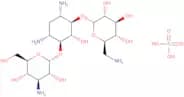
CAS:Kanamycin sulfate is a water-soluble antibiotic. Genes encoding kanamycin resistance are commonly used as selection markers in molecular biology .It acts during the translation mechanism in prokaryotic ribosomes to avoid bacterial cell growth.
Formula:C18H38N4O15SMolecular weight:582.58 g/molCefsulodin sodium salt (SCE-129), Antibiotic for Culture Media Use Only
CAS:Cefsulodin sodium salt is a beta lactam antibiotic in the third-generation cephalosporin family that inhibits penicillin-binding proteins (PBPs) to disrupt bacterial cell wall synthesis.
Formula:C22H19N4NaO8S2Purity:Min. 97.0 Area-%Molecular weight:554.53 g/molLedipasvir D-tartrate
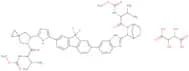
CAS:Ledipasvir D-tartrate is an antiviral compound, which is a direct-acting antiviral agent used in the treatment of hepatitis C virus (HCV) infection. It originates from synthetic sources designed to inhibit the replication of specific viral proteins. Ledipasvir functions by targeting the NS5A protein of the hepatitis C virus, a key component necessary for viral replication. By binding to this protein, Ledipasvir disrupts and inhibits the HCV replication complex, effectively suppressing the viral load in patients.
Formula:C53H60F2N8O12Purity:Min. 95%Molecular weight:1,039.1 g/molDapivirine
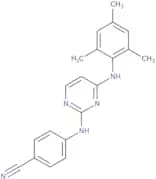
CAS:Dapivirine is a non-nucleoside reverse transcriptase inhibitor with action on HIV-1 reverse transcriptase and is used for preventing HIV infection through vaginal rings.
Formula:C20H19N5Purity:Min. 95%Color and Shape:PowderMolecular weight:329.4 g/molRef: 3D-FD20796
Discontinued productOfloxacin
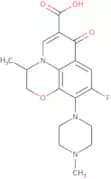
CAS:Ofloxacin is a fluoroquinolone antibiotic with action on bacterial DNA gyrase and topoisomerase IV and is used for treating bacterial infections like pneumonia, urinary tract infections, and skin infections.
Formula:C18H20FN3O4Purity:Min 98%Color and Shape:PowderMolecular weight:361.37 g/molSisomicin
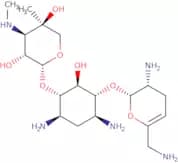
CAS:Sisomicin is an aminoglycoside antibiotic with action on bacterial protein synthesis inhibition and is used for treating severe bacterial infections resistant to other aminoglycosides.
Formula:C19H37N5O7Purity:Min. 95%Color and Shape:PowderMolecular weight:447.53 g/molRef: 3D-AS27839
Discontinued productTipranavir
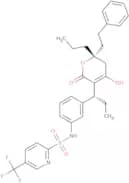
CAS:Antiviral; nonpeptidic HIV-1 protease inhibitor
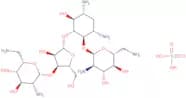
Formula:C31H33F3N2O5SPurity:(%) Min. 98%Color and Shape:White PowderMolecular weight:602.67 g/molNeomycin trisulfate hydrate
CAS:Neomycin, one of the many oligosaccharide containing antibiotics, is an aminoglycoside antibiotic found in Streptomyces fradiae (Collins, 2006) with wide spectrum, active against Gram-negative Gram-positive bacteria. Neomycin is commony used as a selection marker in cloning, and is therefore used in growth media to select colonies with the neomycin resistance cassette integrated into their genome. Neomycin is a mixture of neomycin B (Framycetin) and its epimer Neomycin C, the latter component accounting for some 515% of the mixture.
Formula:C23H46N6O13·3H2SO4Purity:Min. 600 Ug/MgColor and Shape:White Slightly Yellow PowderMolecular weight:908.88 g/molTaniborbactam
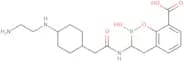
CAS:Taniborbactam is a groundbreaking boronic acid-based beta-lactamase inhibitor, which is a chemically synthesized compound designed to enhance the efficacy of beta-lactam antibiotics. Its mode of action involves the irreversible inhibition of a wide range of beta-lactamase enzymes, including both serine and metallo-beta-lactamases, which are responsible for the antibiotic resistance in many bacterial pathogens. By binding to the active sites of these enzymes, Taniborbactam prevents them from hydrolyzing the beta-lactam ring, thus restoring the antibacterial activity of beta-lactam antibiotics.
Formula:C19H28BN3O5Purity:Min. 95%Molecular weight:389.3 g/molCarbomycin
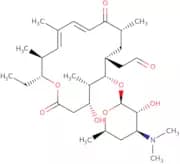
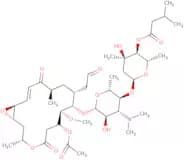
CAS:Carbomycin is a macrolide antibiotic, which is derived from the bacterium Streptomyces halstedii. This antibiotic functions by binding to the 50S ribosomal subunit, thereby inhibiting bacterial protein synthesis. Through this mechanism, carbomycin effectively disrupts the growth and replication of susceptible bacterial strains, making it a potent tool in combating bacterial infections.
Formula:C42H67NO16Purity:Min. 95%Molecular weight:841.98 g/mol