Peptides
Peptides are short chains of amino acids linked by peptide bonds, serving as important biological molecules that play key roles in cellular processes. They function as hormones, neurotransmitters, and signaling molecules, and are widely used in therapeutic and diagnostic applications. Peptides are also crucial in research for studying protein interactions, enzyme activities, and cell signaling pathways. At CymitQuimica, we provide a diverse selection of high-quality peptides to support your research and development needs in biotechnology and pharmaceuticals.
Subcategories of "Peptides"
Found 30332 products of "Peptides"
Sort by
Purity (%)
0
100
|
0
|
50
|
90
|
95
|
100
Tetanus toxin 830-843 acetate
Tetanus toxin 830-843 acetate (119260-99-0) is a T cell epitope from toxoid, triggering T-cell activation for vaccine aid.Formula:C76H122N18O24Purity:98%Color and Shape:SolidMolecular weight:1671.89COG 133 Acetate
<p>COG 133 Acetate, (C97H181N37O19) is a peptide with the sequence Ac-Leu-Arg-Val-Arg-Leu-Ala-Ser-His-Leu-Arg-Lys-Leu-Arg-Lys-Arg-Leu-Leu-amide.</p>Formula:C99H185N37O21Purity:99.73%Color and Shape:SolidMolecular weight:2229.76H-Phe-Phe-OH
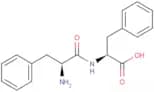
CAS:H-Phe-Phe-OH is a dipeptide consisting of two phenylalanine (an essential amino acid and precursor to tyrosine) units linked together.Formula:C18H20N2O3Purity:98.50% - 99.83%Color and Shape:SolidMolecular weight:312.36Bacitracin Zinc
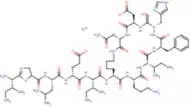
CAS:Bacitracin Zinc is a dephosphorylated disruptor of C55-isoprene pyrophosphate that inhibits Tyr cleavage in Met-enkephalin with an IC50 of 10 μM.Formula:C66H101N17O16SZnPurity:63.98%Color and Shape:Light-Colored Free-Flowing PowdersMolecular weight:1486.07TRAP-6 amide acetate
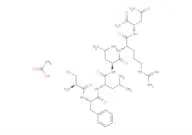
<p>TRAP-6 amide acetate is a PAR-1 thrombin receptor agonist peptide[1].</p>Formula:C36H61N11O10Purity:98.55%Color and Shape:SolidMolecular weight:807.94EGF Receptor Peptide Acetate
EGFR Peptide Acetate (96249-43-3), a cell surface receptor tyrosine kinase, activates upon ligand binding.Formula:C63H97N13O25Purity:98.81%Color and Shape:SolidMolecular weight:1436.52G280-9 acetate(156761-76-1 free base)
<p>G280-9 acetate, a melanoma epitope for HLA-A2, is notable for CTL recognition at low levels but has low immunogenicity due to weak HLA-A2 affinity.</p>Formula:C46H71N9O16Purity:99.32%Color and Shape:SolidMolecular weight:1006.12H-PRO-HIS-CYS-LYS-ARG-MET-OH acetate
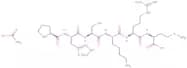
CAS:H-PRO-HIS-CYS-LYS-ARG-MET-OH acetate acts as antioxidant by reacting with active oxygen species such as superoxide and hydroxyl radicals.Formula:C33H58N12O9S2Purity:98.74% - 99.4%Color and Shape:SolidMolecular weight:831.02Handle region peptide, rat acetate
Handle region peptide, rat acetate is a prorenin receptor antagonist, suppresses the progression of diabetic nephropathy and has anti-inflammatory in the eye.Formula:C56H105N15O14SPurity:99.01%Color and Shape:SolidMolecular weight:1244.61FMRF acetate(74012-06-9 free base)
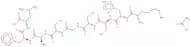
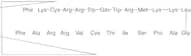
FMRF acetate is a peptide consisting of 4 amino acid residues.Formula:C31H45N7O7SPurity:99.94%Color and Shape:SolidMolecular weight:659.8[Gln8]-C517 (LH-RH), chicken acetate
<p>Avian peptide [Gln8]-C517 (LH-RH) triggers gonadotropin release, regulating reproduction.</p>Formula:C56H75N15O16Purity:99.83%Color and Shape:SolidMolecular weight:1214.31Abl Cytosolic Substrate acetate
Abl Cytosolic Substrate acetate is a substrate for Abelson tyrosine kinase (Abl ).Formula:C66H105N15O18Purity:>99.99%Color and Shape:SolidMolecular weight:1396.65PKC ζ pseudosubstrate acetate
PKC ζ pseudosubstrate acetate is an inhibitor of protein kinase C (PKC) ζ; attached to cell permeabilisation Antennapedia domain vector peptide.Formula:C78H132N30O18Purity:98.78%Color and Shape:SolidMolecular weight:1778.10Camstatin acetate
Camstatin acetate, a 25-residue fragment, inhibits neuronal NOS by binding calmodulin.Formula:C124H207N39O36Purity:98.3%Color and Shape:SolidMolecular weight:2820.21Shepherdin 79-87 acetate
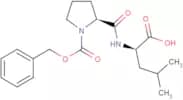
<p>Shepherdin 79-87 acetate is a peptidomimetic antagonist of the complex between Hsp90 and survivin, another key regulator of tumor cell viability.</p>Formula:C43H68N12O14SPurity:98.08%Color and Shape:SolidMolecular weight:1009.14Prolylleucine
CAS:Prolylleucine (((Benzyloxy)carbonyl)-L-prolyl-D-leucine) is a dipeptide containing branched-chain amino acids.Formula:C19H26N2O5Purity:98.67%Color and Shape:SolidMolecular weight:362.42Aminopeptidase M
CAS:Aminopeptidase M (AMP) inhibition is of interest for several diseases, such as highly vascularized cancer types.Formula:C12H24O2Purity:98%Color and Shape:Colorless Needles Lauric Acid Is A White Solid With A Slight Odor Of Bay Oil (Uscg 1999)Molecular weight:200.17763Boc-Asp(OMe)-fluoromethyl ketone
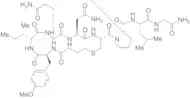
CAS:<p>Boc-Asp(OMe)-FMK is a broad-spectrum caspase inhibitor that blocks Fas-mediated processes without affecting IL-8 chemotaxis.</p>Formula:C11H18FNO5Purity:≥98%Color and Shape:SolidMolecular weight:263.26Carbetocin
CAS:<p>Applications An obstetric drug used to control postpartum hemorrhaging.<br>References Sanz-Nebot, V., et al.: Anal. Bioanal. Chem., 377, 306 (2003), Gimpl, G., et al.: Eur. J. Pharmacol., 510, 9 (2005), Handler, J., et al.: Theriogenol., 66, 1397 (2006), Klenerova, V., et al.: J. Physiol. Pharmacol., 60, 57 (2009),<br></p>Formula:C45H69N11O12SColor and Shape:NeatMolecular weight:988.16Benzotriazol-1-yl-oxytripyrrolidinphosphonium Hexafluorophosphate
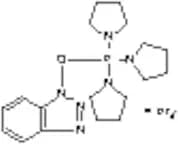
CAS:Controlled Product<p>Applications Benzotriazol-1-yl-oxytripyrrolidinphosphonium Hexafluorophosphate (cas# 128625-52-5) is a compound useful in organic synthesis.<br></p>Formula:C18H28N6OP·F6PColor and Shape:NeatMolecular weight:520.39(+)-Lactacystin
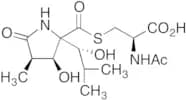
CAS:Controlled Product<p>Applications A selective and potent inhibitor of proteasome-mediated degradation of ubiquitin-tagged proteins. A Streptomyces metabolite that acts as a highly specific inhibitor of the 20S proteasome (MCP: multicatalytic proteinase complex).<br>References Fenteany, G., et al.: Science, 268, 726 (1995), Fenteany, G., et al.: Proc. Natl. Acad. Sci. USA, 91, 3358 (1994),<br></p>Formula:C15H24N2O7SColor and Shape:NeatMolecular weight:376.43[Leu5]-Enkephalin Acetate
CAS:<p>Applications [Leu5]-Enkephalin is a neurotransmitter used in molecular dynamics studies for the insertion of neurotransmitters into lipid bilayer membranes and their implication on membrane stability.<br>References Shen, C., et al.: ChemPhysChem, pages ahead of print (2017)<br></p>Formula:C28H37N5O7·x(C2H4O2)Color and Shape:NeatMolecular weight:615.67Fmoc N-Hydroxysuccinimide Ester
CAS:<p>Stability Moisture Sensitive<br>Applications Used in conjunction with Isothiocyanate to conduct partial Edman Degradation on biologically active peptides.<br> Not a dangerous good if item is equal to or less than 1g/ml and there is less than 100g/ml in the package<br>References Heidenreich, O., et al.: J. Biol. Chem., 269, 2131 (1994), Kothe, U., et al.: Anal. Biochem., 356, 148 (2006), Thakkar, A., et al.: Anal. Chem., 78, 5935 (2006),<br></p>Formula:C19H15NO5Color and Shape:NeatMolecular weight:337.33MG-101 (ALLN)
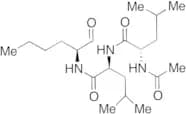
CAS:Controlled Product<p>Applications MG-101 (ALLN) is a potent inhibitor of cysteine proteases including caplains and cathespins. Used in the treatment of genotoxic agents or replication stress of cells. Neuroprotective product.<br>References Wang, H. et al.: Biochem., 54, 5781 (2015); Fukunaga, Y. et al.: Neurosci. Res., 101, 6 (2014);<br></p>Formula:C20H37N3O4Color and Shape:NeatMolecular weight:383.53Poly(ethylene Glycol) ~400
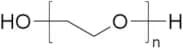
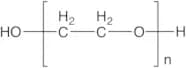
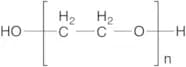
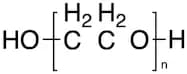
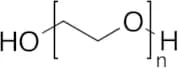
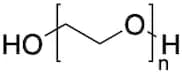
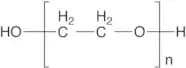
CAS:<p>Applications Poly(ethylene Glycol) ~400 is a polymer of ethylene oxide with a molecular weight of ~400 Daltons. Poly(ethylene Glycol) ~400 is considered a low molecular weight polyethylene glycol, and is used as a hydrophilic molecular probe for measuring intestinal permeability. Poly(ethylene Glycol) ~400 is also used as a hydrophilic plasticizer.<br>References Lu, E., et al.: J. Control. Release, 92, 375 (2003); Ma, T., et al.: Gastroenterology, 98, 39 (1990)<br></p>Formula:H2O(C2H4O)nColor and Shape:ColourlessMolecular weight:62.07Fmoc-His-OH
CAS:Fmoc-His-OH (FMOC-L-Histidine) is a histidine derivative and a common material for peptide synthesis.Formula:C21H19N3O4Purity:98.38% - 99.82%Color and Shape:SolidMolecular weight:377.39H-Asp-Leu-OH
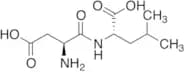
CAS:Controlled Product<p>Stability Hygroscopic<br>Applications H-Asp-Leu-OH (cas# 3062-14-4) is a useful research chemical.<br></p>Formula:C10H18N2O5Color and Shape:NeatMolecular weight:246.26Poly(ethylene Glycol) ~200
CAS:Controlled Product<p>Applications Poly(ethylene Glycol) molecules of an average molecular mass of 200. Poly(ethylene Glycol) is used in various applications from industrial chemistry to biological chemistry. Recent research has shown PEG maintains the ability to aid the spinal cord injury recovery process, helping the nerve impulse conduction process in animals. In rats, it has been shown to aid in the repair of severed sciatic axons, helping with nerve damage recovery. It is industrially produced as a lubricating substance for various surfaces to reduce friction. PEG is also used in the preparation of vesicle transport systems in with application towards diagnostic procedures or drug delivery methods.<br>References Borgens, R. et al.: J. Neurosci. Res., 66, 1179 (2001); Stavisky, R. et al.: Neurosci. Lett., 376, 98 (2005); Nalam, P. et al.: Tribiol. Lett., 37, 541 (2010); Steinmetz, N. et al.: J. Am. Chem. Soc., 131, 17093 (2009); Li, X. et al.: J. Am. Chem. Soc., 133, 11147 (2011); Li, L. et al.: Int. J. Pharm., 447, 192 (2013);<br></p>Formula:H2O(C2H4O)nColor and Shape:ColourlessMolecular weight:62.07Ethyl Cyano(hydroxyimino)acetate
CAS:Controlled Product<p>Applications Ethyl Cyano(hydroxyimino)acetate is used in peptide synthesis and has shown to suppress racemiztion, has high coupling efficiency in both solution and solid phase synthesis and is a non-explosive alternative to 1-hydroxybenzotriazole (HOBt) and 1-hydroxy-7-azabenzotriazole (HOAt).<br>References Khattab, S.N.: Bull. Chem. Soc. Jpn., 83, 1374 (2010)<br></p>Formula:C5H6N2O3Color and Shape:NeatMolecular weight:142.11Insulin (Human)
CAS:<p>Applications Insulin (Human) is a peptide hormone regulating the metabolism of carbohydrates and fats. It is used in the treatment of those suffering from the diabetes type I and II metabolic disorders. Regulates the absorption of glucose from the blood to skeletal muscles and fat storage.<br>References Lai, Y. et al.: Biochem. J., 460, 363 (2014); Hedman, C. et al.: Clin. Endocrinol., 81, 58 (2014);<br></p>Formula:C257H383N65O77S6Color and Shape:NeatMolecular weight:5807.57Z-VAL-MET-OH
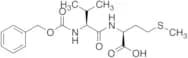
CAS:Controlled Product<p>Applications Z-VAL-MET-OH (cas# 108543-82-4) is a useful research chemical.<br></p>Formula:C18H26N2O5SColor and Shape:White To Off-WhiteMolecular weight:382.474n-Octyl-oligo-oxyethylene
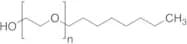
CAS:Controlled Product<p>Applications n-Octyl-oligo-oxyethylene is a detergent for useful solubilization, purification and crystallization of proteins.<br> Not a dangerous good if item is equal to or less than 1g/ml and there is less than 100g/ml in the package<br></p>Formula:(C2H4O)nC8H18OColor and Shape:NeatMolecular weight:n(44.05)+(130.23)N-CBZ-Glycyl-glycyl-L-arginine 7-Amido-4-methylcoumarin Hydrochloride
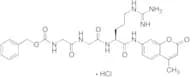
CAS:<p>Applications N-CBZ-Glycyl-glycyl-L-arginine 7-Amido-4-methylcoumarin Hydrochloride is a fluorogenic substrate for uPA (urokinase).<br>References Zimmerman, M., et al. Proc. Natl. Acad. Sci. USA 75, 750 (1978);<br></p>Formula:C28H33N7O7·HClColor and Shape:NeatMolecular weight:579.60 + (36.46)Poly(ethylene Glycol) ~2000
CAS:<p>Applications Poly(ethylene Glycol) molecules of an average molecular mass of 2000. Poly(ethylene Glycol) is used in various applications from industrial chemistry to biological chemistry. Recent research has shown PEG maintains the ability to aid the spinal cord injury recovery process, helping the nerve impulse conduction process in animals. In rats, it has been shown to aid in the repair of severed sciatic axons, helping with nerve damage recovery. It is industrially produced as a lubricating substance for various surfaces to reduce friction. PEG is also used in the preparation of vesicle transport systems in with application towards diagnostic procedures or drug delivery methods.<br>References Borgens, R. et al.: J. Neurosci. Res., 66, 1179 (2001); Stavisky, R. et al.: Neurosci. Lett., 376, 98 (2005); Nalam, P. et al.: Tribiol. Lett., 37, 541 (2010); Steinmetz, N. et al.: J. Am. Chem. Soc., 131, 17093 (2009); Li, X. et al.: J. Am. Chem. Soc., 133, 11147 (2011); Li, L. et al.: Int. J. Pharm., 447, 192 (2013);<br></p>Formula:H2O(C2H4O)nColor and Shape:White To Off-WhiteMolecular weight:62.07Poly(ethylene Glycol) ~20000
CAS:Controlled Product<p>Stability Hygroscopic<br>Applications Poly(ethylene Glycol) molecules of an average molecular mass of 20000. Poly(ethylene Glycol) is used in various applications from industrial chemistry to biological chemistry. Recent research has shown PEG maintains the ability to aid the spinal cord injury recovery process, helping the nerve impulse conduction process in animals. In rats, it has been shown to aid in the repair of severed sciatic axons, helping with nerve damage recovery. It is industrially produced as a lubricating substance for various surfaces to reduce friction. PEG is also used in the preparation of vesicle transport systems in with application towards diagnostic procedures or drug delivery methods.<br>References Borgens, R. et al.: J. Neurosci. Res., 66, 1179 (2001); Stavisky, R. et al.: Neurosci. Lett., 376, 98 (2005); Nalam, P. et al.: Tribiol. Lett., 37, 541 (2010); Steinmetz, N. et al.: J. Am. Chem. Soc., 131, 17093 (2009); Li, X. et al.: J. Am. Chem. Soc., 133, 11147 (2011); Li, L. et al.: Int. J. Pharm., 447, 192 (2013);<br></p>Formula:H2O(C2H4O)nColor and Shape:Off-WhiteMolecular weight:62.07TCEP Hydrochloride (0.5M in water)
CAS:Controlled ProductFormula:C9H15O6P·ClHColor and Shape:ColourlessMolecular weight:286.65Fructose Valine (mixture of diastereomers)
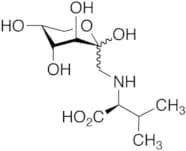
CAS:Controlled Product<p>Applications An Amadori compound having the potential to alter cellular adhesion, inhibit cancer metastasis and induce apoptosis.<br>References Horiuchi, T., et al.: Agric. Biol. Chem., 55, 333 (1991), Sosnovsky, G., et al.: J. Pharm. Sci., 82, 649 (1993), Glinsky, G., et al.: Cancer Res., 56, 5319 (1996),<br></p>Formula:C11H21NO7Color and Shape:Off-White To Dark BrownMolecular weight:279.29D-Lactic Acid
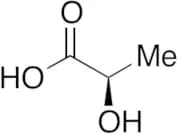
CAS:<p>Applications D-Lactic Acid occurs in small quantities in the blood and muscle fluid of man and animals. The lactic acid concentration increases in muscle and blood after vigorous activity.<br>References He, W. et al.: Comp. Biochem. Phys. Part A: Mol. Int. Phys., 166, 308 (2013)<br></p>Formula:C3H6O3Purity:90%Color and Shape:Colourless To Light YellowMolecular weight:90.08CA-074 Methyl Ester
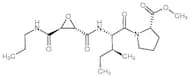
CAS:Controlled Product<p>Applications CA-074 methyl ester is a cell-permeable cathepsin B inhibitor.<br></p>Formula:C19H31N3O6Color and Shape:NeatMolecular weight:397.47NG-Monomethyl-L-arginine Acetate
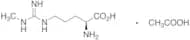
CAS:Controlled ProductFormula:C7H16N4O2·C2H4O2Color and Shape:NeatMolecular weight:248.28L-Carnosine
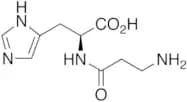
CAS:Controlled Product<p>Applications L-Carnosine is a naturally-occurring histidine-containing compound and the biological role of this dipeptide is to act as cytosolic buffering agents. Other roles ascribed to L-Carnosine include actions as neurotransmitters, modulation of enzymic activities and chelation of heavy metals.<br>References Quinn, P.J., et al.: Mol. Aspects. Med., 13, 379 (1992); Aruoma, O.I., et al.: Biochem. J., 264, 863 (1989);<br></p>Formula:C9H14N4O3Color and Shape:NeatMolecular weight:226.23Glycyl-Glycyl-Glycine
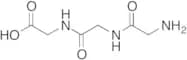
CAS:Controlled Product<p>Applications Glycyl-glycyl-glycine is used as a model peptide for studies of physicochemical parameters and molecular associations of small peptides. It is also used as a copper chelator.<br></p>Formula:C6H11N3O4Color and Shape:NeatMolecular weight:189.17N-Glycylproline
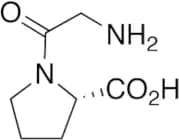
CAS:<p>Applications N-Glycylproline was found to exhibit anti-ischemic effects on the metabolism of neuroactive amino acids and indices of energy turnover in the neocortex of rats after experimental brain ischemia.<br>References Bashun, Z.N., et al.: Neurochem. J., 7, 39 (2013);<br></p>Formula:C7H12N2O3Color and Shape:NeatMolecular weight:172.182γ-Polyglutamic Acid Sodium Salt (Technical Grade)
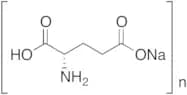
CAS:Controlled Product<p>Stability Hygroscopic<br>Applications gamma-Polyglutamic acid - sodium salt (cas# 25513-46-6) is a useful research chemical.<br></p>Formula:(C5H8NNaO4)nColor and Shape:NeatMolecular weight:NAN-L-γ-GLUTAMYL-L-LEUCINE
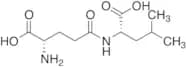
CAS:Controlled Product<p>Applications N-L-GAMMA-GLUTAMYL-L-LEUCINE (cas# 2566-39-4) is a useful research chemical.<br></p>Formula:C11H20N2O5Color and Shape:White To Off-WhiteMolecular weight:260.29Urolithin A
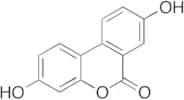
CAS:<p>Applications Urolithin A is a major metabolite of ellagitannin and exhibits anti-inflammatory and antioxidant properties.<br>References Ishimoto, H., et. al.: Bioorg. Med. Chem. Lett., 21, 5901 (2011);<br></p>Formula:C13H8O4Color and Shape:NeatMolecular weight:228.20N-tert-Boc-L-alanine
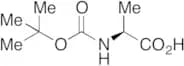
CAS:Controlled Product<p>Applications N-tert-Boc-L-alanine is the protected form of L-Alanine (A481500), a non-essential amino acid that can be found naturally in the human body and is obtained by our diet.<br>References Anderson, H., et al.: J. Nutr., 99, 82 (1969)<br></p>Formula:C8H15NO4Color and Shape:NeatMolecular weight:189.21H-Ala-Asp-OH
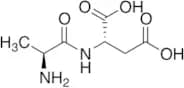
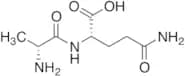
CAS:Controlled Product<p>Stability Hygroscopic<br>Applications H-ALA-ASP-OH (cas# 20727-65-5) is a useful research chemical.<br></p>Formula:C7H12N2O5Color and Shape:NeatMolecular weight:204.18Arg-Gly-Asp-Ser
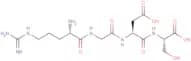
CAS:Arg-Gly-Asp-Ser (RGDS peptide) is a conserved tetrapeptide sequence found in fibronectin, and the von Willebrand factor.Formula:C15H27N7O8Purity:98.29%Color and Shape:SolidMolecular weight:433.42Melittin
CAS:Melittin: principal bee venom toxin, 26 amino acids, activates low-weight PLA2, not high-weight PLA2.Formula:C131H229N39O31Purity:98.37% - 99.92%Color and Shape:SolidMolecular weight:2846.46H-β-Ala-pNA HBr
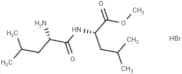
CAS:Controlled ProductFormula:C9H11N3O3·HBrColor and Shape:NeatMolecular weight:290.114H-Leu-Leu-OMe HBr
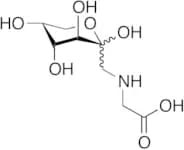
CAS:H-Leu-Leu-OMe HBr (L-Leucyl-L-Leucine methyl ester HBr) is a dipeptide condensation of L-Leucine methyl ester, a peptide that is toxic to natural killer T-cellsFormula:C13H27BrN2O3Purity:98.15%Color and Shape:SolidMolecular weight:339.27Fructosyl Glycine α/β Mixture (Mixture of Diastereomers)
CAS:<p>Stability Hygroscopic<br>Applications Fructosyl Glycine is a synthetic glycoamine used in the study of glycoamine analogs and their effect on metastatic carcinoma cells.<br>References Glinsky, G. et al.: Clin. Exp. Metastas., 14, 253 (1996);<br></p>Formula:C8H15NO7Color and Shape:NeatMolecular weight:237.207Poly(ethylene Glycol) ~6000
CAS:Controlled Product<p>Applications Poly(ethylene Glycol) molecules of an average molecular mass of 6000. Poly(ethylene Glycol) is used in various applications from industrial chemistry to biological chemistry. Recent research has shown PEG maintains the ability to aid the spinal cord injury recovery process, helping the nerve impulse conduction process in animals. In rats, it has been shown to aid in the repair of severed sciatic axons, helping with nerve damage recovery. It is industrially produced as a lubricating substance for various surfaces to reduce friction. PEG is also used in the preparation of vesicle transport systems in with application towards diagnostic procedures or drug delivery methods.<br>References Borgens, R. et al.: J. Neurosci. Res., 66, 1179 (2001); Stavisky, R. et al.: Neurosci. Lett., 376, 98 (2005); Nalam, P. et al.: Tribiol. Lett., 37, 541 (2010); Steinmetz, N. et al.: J. Am. Chem. Soc., 131, 17093 (2009); Li, X. et al.: J. Am. Chem. Soc., 133, 11147 (2011); Li, L. et al.: Int. J. Pharm., 447, 192 (2013)<br></p>Formula:H2O(C2H4O)nColor and Shape:White To Off-WhiteMolecular weight:62.07Poly(ethylene Glycol) ~4000
CAS:Controlled ProductFormula:H2O(C2H4O)nColor and Shape:White To Off-WhiteMolecular weight:62.07AEBSF Hydrochloride
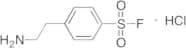
CAS:Controlled Product<p>Applications AEBSF Hydrochloride is an irreversible serine protease inhibitor.<br>References Diatchuk, V., et. al.: J. Biol. Chem., 272, 13292 (1997)<br></p>Formula:C8H11ClFNO2SColor and Shape:NeatMolecular weight:239.69Kollisolv PEG 300
CAS:Controlled Product<p>Applications Kollisolv PEG 300 is used as a thickening agent and gel binder in the pharmaceutical industry.<br></p>Formula:H2O(C2H4O)nColor and Shape:ColourlessMolecular weight:62.07H-Gly-Pro-Hyp-OH
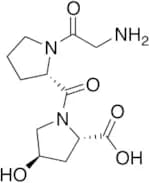
CAS:Controlled ProductFormula:C12H19N3O5Color and Shape:White To Off-WhiteMolecular weight:285.3L-Cysteine Hydrochloride Monohydrate
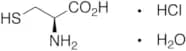
CAS:<p>Stability Moisture Sensitive<br>Applications L-Cysteine is a non-essential amino acid that can be synthesized by the human body under normal physiological conditions if a sufficient quantity of methionine is available. L-Cysteine is commonly used as a precursor in the food and pharmaceutical industries. L-Cysteine is used as a processing aid for baking, as an additive in cigarettes, as well as in the preparation of meat flavours.<br>References Hui, N. et al.: Meat Sci. Appl., 74 (2001); Kiviharju, K. et al.: J. Biotechnol., 117, 299 (2005); Pecivova, P. et al.: J. Sci. Food Agric., 90, 1681 (2010);<br></p>Formula:C3H7NO2S·ClH·H2OColor and Shape:NeatMolecular weight:175.63PEG4-azide
CAS:Controlled Product<p>Applications 1-Azido-3,6,9-trioxaundecane-11-ol (cas# 86770-67-4) is a compound useful in organic synthesis.<br>References Hatch, D., et al.: ChemBioChem., 9, 2433 (2008),<br></p>Formula:C8H17N3O4Color and Shape:NeatMolecular weight:219.24Poly(ethylene Glycol) ~1000
CAS:Controlled Product<p>Applications Poly(ethylene Glycol) molecules of an average molecular mass of 1000. Poly(ethylene Glycol) is used in various applications from industrial chemistry to biological chemistry. Recent research has shown PEG maintains the ability to aid the spinal cord injury recovery process, helping the nerve impulse conduction process in animals. In rats, it has been shown to aid in the repair of severed sciatic axons, helping with nerve damage recovery. It is industrially produced as a lubricating substance for various surfaces to reduce friction. PEG is also used in the preparation of vesicle transport systems in with application towards diagnostic procedures or drug delivery methods.<br>References Borgens, R. et al.: J. Neurosci. Res., 66, 1179 (2001); Stavisky, R. et al.: Neurosci. Lett., 376, 98 (2005); Nalam, P. et al.: Tribiol. Lett., 37, 541 (2010); Steinmetz, N. et al.: J. Am. Chem. Soc., 131, 17093 (2009); Li, X. et al.: J. Am. Chem. Soc., 133, 11147 (2011); Li, L. et al.: Int. J. Pharm., 447, 192 (2013);<br></p>Formula:H2O(C2H4O)nColor and Shape:White To Off-WhiteMolecular weight:62.07(S)-N-(2-(2-Cyano-4,4-difluoropyrrolidin-1-yl)-2-oxoethyl)quinoline-4-carboxamide (UAMC1110)
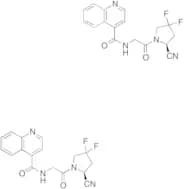
CAS:Controlled ProductFormula:C17H14F2N4O2Color and Shape:NeatMolecular weight:344.323X HA Tag
<p>3X HA Tag (Triple-HA Tag) is a bioactive peptide consisting of three repetitive HA tags (YPYDVPDYA) and is mainly used for protein and peptide detection.</p>Formula:C205H272N38O67SPurity:99.78%Color and Shape:SoildMolecular weight:4372.63N-Carbamoyl-2-fluoro-(β)-alanine
CAS:Controlled Product<p>Applications A metabolite of Capecitabine.<br>References Arellano, M., ET AL.: Br. J. Cancer, 77, 79 (1998), Budman, D., ET AL.: J. Clin. Oncol., 16, 1795 (1998), Khanna, R., et al.: Cancer Res., 60, 4725 (2000), Charasson, V., et al.: Drug Metab. Dispos., 30, 731 (2002),<br></p>Formula:C4H7FN2O3Color and Shape:NeatMolecular weight:150.116-Azidohexanoic Acid
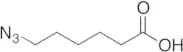
CAS:Controlled Product<p>Applications 6-Azidohexanoic Acid is a reagent that is useful for click chemistry.<br>References Alleti, R.,et al.: J. Org. Chem., 75, 5895 (2010); Daumar, P., et al.: Bioconjug. Chem., 23, 1557 (2012)<br></p>Formula:C6H11N3O2Color and Shape:NeatMolecular weight:157.17Cyclo(Leu-Gly)
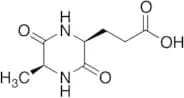
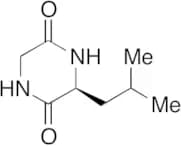
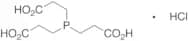
CAS:Controlled Product<p>Applications Cyclo(Leu-Gly) is an antimicrobial compound produced by Latobacillus plantarum.<br>References Niku-Paavola, M., et al.: J. Appl. Microbiol., 86, 29 (1999)<br></p>Formula:C8H14N2O2Color and Shape:Off-WhiteMolecular weight:170.21TCEP Hydrochloride
CAS:<p>Applications Biochemical tool for selective reduction of disulfide bridges at low pH; reductant for redox assay.<br> Not a dangerous good if item is equal to or less than 1g/ml and there is less than 100g/ml in the package<br>References Neuburger, M., et al.: Eur. J. Biochem., 267, 2882 (2000), Krijt, J., et al.: Clin. Chem., 47, 1821 (2001), Yen, T.-Y., et al.: J. Mass Spectrom., 37, 15 (2002),<br></p>Formula:C9H15O6P·ClHColor and Shape:NeatMolecular weight:286.65Biotin NHS
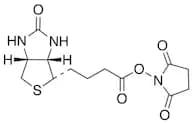
CAS:Controlled Product<p>Stability Moisture Sensitive<br>Applications Amino reactive biotin reagent for preparing biotinylated surfaces or polypeptides.<br>References Ngo, T.T., et al.: Applied Biochem. Biotech, 7, 443 (1982), Wojchowski, D.M., et al.: J. Immunol. Methods, 90, 173 (1986);<br></p>Formula:C14H19N3O5SColor and Shape:NeatMolecular weight:341.38L-Histidyl-D-tryptophyl-L-alanyl-L-tryptophyl-D-phenylalanyl-L-lysinamide Acetate Salt
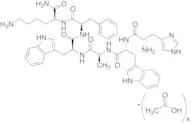
CAS:Controlled ProductFormula:C46H56N12O6·x(C2H4O2)Color and Shape:NeatMolecular weight:873.01 + x(60.05)Lactoferrin
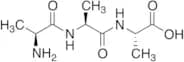
CAS:Controlled Product<p>Applications Lactoferrin is a multifunctional protein of transferin family. A glycoprotein present in various secretions including milk, saliva and tears. Antiviral agent, it binds to liproproteins of cell membranes dispersing virus molecules from host cells.<br>References Sánchez L. et al.: Arch. Dis. CHild., 67, 657 (1992); Harmsen MC. et al.: J. Infect. Dis., 172, 380 (1995);<br></p>Formula:C141H224N46O29S3Color and Shape:NeatMolecular weight:3123.8L-Alanyl-L-alanyl-L-alanine
CAS:Controlled Product<p>Applications L-Alanyl-L-alanyl-L-alanine (cas# 5874-90-8) is a useful research chemical.<br></p>Formula:C9H17N3O4Color and Shape:White To Off-WhiteMolecular weight:231.25Boc-L-Nitroarginine
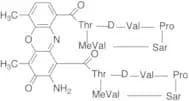
CAS:Controlled Product<p>Applications Boc-L-Nitroarginine, can be used in peptide chemistry. It has been also shown to act as NO synthase inhibitor, and thus used in the study of The effects of methylene blue (MB) for treatment of sepsis induced by bowel perforation.<br>References Galili, Y. Euro. surg. Rese. vol. 29, P:390-395 (19997);<br></p>Formula:C11H21N5O6Color and Shape:NeatMolecular weight:319.31Actinomycin D (Dactinomycin)
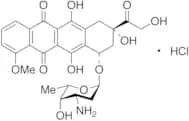
CAS:Controlled Product<p>Applications Antibiotic substance belonging to the actinomycin complex, produced by several Streptomyces spp. Antineoplastic.<br> Not a dangerous good if item is equal to or less than 1g/ml and there is less than 100g/ml in the package<br>References Manaker, et al.: Antibiot. Ann., 55, 853 (1954), Jain, S., et al.: J. Mol. Biol., 114, 317 (1977), Nakajima, K., et al.: Pept. Chem., 19, 143 (1981), Shereda, R., et al.: J. Biol. Chem., 282, 19247 (2007),<br></p>Formula:C62H86N12O16Color and Shape:RedMolecular weight:1255.42Doxorubicin Hydrochloride
CAS:<p>Stability Hygroscopic, Light Sensitive<br>Applications Doxorubicin Hydrochloride is an antineoplastic agent.<br>References Di Marco, A., et al.: Cancer Chemother. Rep., (part 1), 53, 33 (1969); Mihich, E. and Ehrke, M.J.: Transplant. Proc., 16, 499 (1984);<br></p>Formula:C27H29NO11·ClHColor and Shape:NeatMolecular weight:579.98N-(2-Aminoethyl)-2-[phenyl(phenylmethyl)amino]acetamide
CAS:Controlled Product<p>Stability Hygroscopic<br>Applications This compound is an impurity in the synthesis of Antazoline (A678405) which acts as a histamine H1 receptor blocker, functioning as an antihistamine pharmaceutical.<br>References Constanti, A. et al.: Brit. J. Pharmacol. 58, 583 (1976);<br></p>Formula:C17H21N3OColor and Shape:NeatMolecular weight:283.37D,L-Homoglutamine
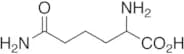
CAS:Controlled Product<p>Applications Glutamine analog.<br>References Hellberg, S., et al.: J. Med. Chem., 30, 1126 (1987), Blondelle, S., et al.: Antimicrob. Agents Chemother., 38, 2280 (1994), Jiracek, J., et al.: J. Biol. Chem., 270, 21701(1995),<br></p>Formula:C12H24N2O6Color and Shape:NeatMolecular weight:292.329L-Cysteinylglycine
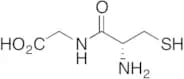
CAS:<p>Stability Air Sensitive<br>Applications L-Cysteinylglycine, is a biologically important compound since it is formed during the γ-glutamyl cycle. It is a cysteinyl peptide, that can be used in the studies of many peptides and important proteins.<br>References Marvin D., et al.: New J. Org. Synth., 12, 185 (1980); Sheehan, J. C., et al.: New Synth. Cysteinyl Peptide, 1159 (1958);<br></p>Formula:C5H10N2O3SColor and Shape:NeatMolecular weight:178.21N-Methyl-DL-glutamic acid
CAS:2-(Methylamino)pentanedioic acid (N-Methyl-DL-glutamic acid) inhibits Glutaminase, adds freshness to edible products, and can be used in tuberculosis research.Formula:C6H11NO4Purity:99.62%Color and Shape:SolidMolecular weight:161.16Nisin
CAS:Nisin A: a lantibiotic peptide made by L. lactis, contains unique amino acids like lanthionine, and fights bacteria.Formula:C143H230N42O37S7Purity:98%Color and Shape:SolidMolecular weight:3354.07L-Pyroglutamyl-L-alanine
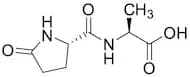
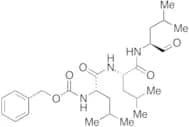
CAS:Controlled ProductFormula:C8H12N2O4Color and Shape:NeatMolecular weight:200.192MG 132
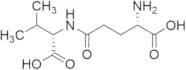
CAS:<p>Stability Hygroscopic<br>Applications MG 132 is a potent, membrane-permeable proteasome inhibitor. It induces neurite outgrowth in PC12 cells. Neuroprotective product.<br>References Lee, D., et al.: Trends in Cell Biol., 8, 397 (1998); Tsubuki, S., et al.: J. Biochem., 119., 572 (1996); Grimm, L., et al.: EMBO J., 15, 3835 (1996)<br></p>Formula:C26H41N3O5Color and Shape:NeatMolecular weight:475.62L-γ-Glutamyl-L-valine
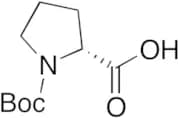
CAS:<p>Applications H-Glu(Val-OH)-OH (CAS# 2746-34-1) is a useful research chemical compound.<br></p>Formula:C10H18N2O5Color and Shape:NeatMolecular weight:246.26tert-Butoxycarbonyl-D-proline
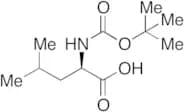
CAS:Controlled Product<p>Applications tert-Butoxycarbonyl-D-proline is Boc protected D-proline (P755990). It is used to prepare trichostatin A and trapoxin B analogs as histone deacetylase inhibitors. It is also used to prepare potent and selective nonpeptide inhibitors of caspases 3 and 7.<br>References Jung, M., et al.: Bioorg. Med. Chem. Lett., 7, 1655 (1997); Lee, D., et al.: J. Med. Chem,, 44, 2015 (2001)<br></p>Formula:C10H17NO4Color and Shape:NeatMolecular weight:215.25N-Boc-D-leucine
CAS:Controlled Product<p>Applications N-Boc-D-leucine is an N-Boc-protected form of D-Leucine (L330150). D-Leucine is an unnatural isomer of L-Leucine (L330110) that acts as an auto-inhibitor of lactic streptococci in culture. D-Leucine causes analgesia in humans and also exhibits inhibitory activity in bacterial cell cultures.<br>References Chuan, Y., et al.: Chin. J. Anim. Vet. Sci., 4, 003 (1985); Fox, S., et al.: J. Biol. Chem., 155, 465 (1944); Gillillad, S. & Speck, M.: J. Dairy Sci., 51, 1573 (1968); Schoenheimer, R., et al.: J. Biol. Chem., 130, 703 (1939); Seltzer, S., et al.: Pain, 11, 141 (1981)<br></p>Formula:C11H21NO4Color and Shape:NeatMolecular weight:231.29DAPT
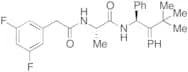
CAS:<p>Applications DAPT is a γ-secretase inhibitor which inhibits thegrowth of cancer cells and epethelial and mesenchymal transition (1,2).<br>References (1) Li, L. et al.: Oncol Lett. 7, 2160 (2014) (2) Wang, M. et al.: Int. J. Onc., 44, 1401 (2014)<br></p>Formula:C23H26F2N2O4Color and Shape:Off White SolidMolecular weight:432.46N-Boc-γ-aminobutyric Acid
CAS:Controlled ProductFormula:C9H17NO4Color and Shape:Off-WhiteMolecular weight:203.24Ilomastat
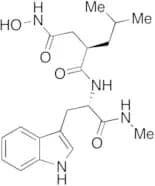
CAS:Controlled Product<p>Applications Ilomastat is a metalloprotease inhibitor.<br>References Dietrich, C., et. al.: J. Immunol., 192, 5382 (2014)<br></p>Formula:C20H28N4O4Color and Shape:NeatMolecular weight:388.46Poly(ethylene Glycol) ~9000
CAS:Controlled ProductFormula:H2O(C2H4O)nColor and Shape:White To Off-WhiteMolecular weight:62.07H-Glu-Lys-Oh
CAS:Controlled Product<p>Applications H-GLU-LYS-OH (cas# 5891-53-2) is a useful research chemical.<br></p>Formula:C11H21N3O5Color and Shape:NeatMolecular weight:275.31N,N'-Dicyclohexylcarbodiimide
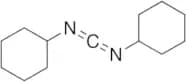
CAS:Controlled ProductFormula:C13H22N2Color and Shape:Off-White To Light YellowMolecular weight:206.33Poly(ethylene Glycol) ~600
CAS:Controlled Product<p>Applications Poly(ethylene Glycol) molecules of an average molecular mass of 600. Poly(ethylene Glycol) is used in various applications from industrial chemistry to biological chemistry. Recent research has shown PEG maintains the ability to aid the spinal cord injury recovery process, helping the nerve impulse conduction process in animals. In rats, it has been shown to aid in the repair of severed sciatic axons, helping with nerve damage recovery. It is industrially produced as a lubricating substance for various surfaces to reduce friction. PEG is also used in the preparation of vesicle transport systems in with application towards diagnostic procedures or drug delivery methods.<br>References Borgens, R. et al.: J. Neurosci. Res., 66, 1179 (2001); Stavisky, R. et al.: Neurosci. Lett., 376, 98 (2005); Nalam, P. et al.: Tribiol. Lett., 37, 541 (2010); Steinmetz, N. et al.: J. Am. Chem. Soc., 131, 17093 (2009); Li, X. et al.: J. Am. Chem. Soc., 133, 11147 (2011); Li, L. et al.: Int. J. Pharm., 447, 192 (2013);<br></p>Formula:H2O(C2H4O)nColor and Shape:Colourless To Off-WhiteMolecular weight:62.07N-Boc-L-proline
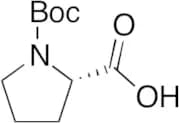
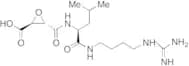
CAS:Controlled Product<p>Applications N-Boc-L-proline is a useful synthetic intermediate. It is used to synthesize Daclatasvir (D101500) which nhibits the HCV protein NS5A. Daclatasvir (D101500) can be used as a drug candidate for the treatment of hepatitis C (HCV).<br>References Gao, M., et al.: Nature, 465(7294), 96 (2010); Bell, T. W., Chem. Med. Chem., 5(10), 1663 (2010);<br></p>Formula:C10H17NO4Color and Shape:NeatMolecular weight:215.25E-64d
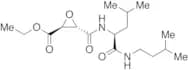
CAS:Controlled Product<p>Applications E-64d is an inhibitor of cathepsins B and L as well as a potential inhibitor of calpain. E-64d has been shown to inhibit lysosomal proteases. E-64d has been used in combination with Prepstatin A to interfere with autolysosomal digestion. E-64d displays neurovascular and neuronal protective effects after focal cerebral ischemia in rats.<br>References Wilcox, D. et al.: Biochem. J., 285, 495 (1992); McGowan, E.B. et al.: Biochem. Biophys. Res. Comm., 158, 432 (1989); Tsubokawa, T. et al.: J. Neurosci. Res., 84, 832 (2006);<br></p>Formula:C17H30N2O5Color and Shape:NeatMolecular weight:342.43CY5-SE
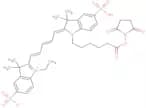
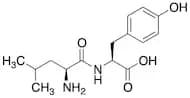
CAS:CY5-SE (Cy5 NHS Ester) is a reactive dye used to label amino groups in peptides, proteins, and nucleotides.Formula:C37H43N3O10S2Purity:99.56%Color and Shape:SolidMolecular weight:753.88L-Leucyl-L-tyrosine
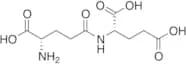
CAS:Controlled ProductFormula:C15H22N2O4Color and Shape:NeatMolecular weight:294.35γ-L-Glutamyl L-Glutamic Acid
CAS:Controlled Product<p>Applications H-GAMMA-GLU-GLU-OH (cas# 1116-22-9) is a useful research chemical.<br></p>Formula:C10H16N2O7Color and Shape:NeatMolecular weight:276.24



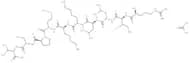
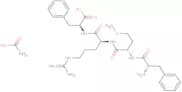
![[Gln8]-C517 (LH-RH), chicken acetate](/_next/image/?url=https%3A%2Fstatic.cymitquimica.com%2Fproducts%2FTM%2Fthumb-webp%2FTP1648L.webp&w=3840&q=75)

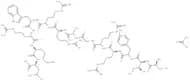
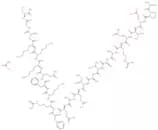


![[Leu5]-Enkephalin Acetate](/_next/image/?url=https%3A%2Fstatic.cymitquimica.com%2Fproducts%2FTR%2Fthumb-webp%2FL330340.webp&w=3840&q=75)













![N-(2-Aminoethyl)-2-[phenyl(phenylmethyl)amino]acetamide](/_next/image/?url=https%3A%2Fstatic.cymitquimica.com%2Fproducts%2FTR%2Fthumb-webp%2FA609260.webp&w=3840&q=75)