GPCR/G-Protein
GPCR/G-Protein inhibitors are compounds that target G-protein coupled receptors (GPCRs) and associated G-proteins, which play critical roles in transmitting signals from the outside to the inside of cells. These inhibitors are essential for studying the signaling pathways mediated by GPCRs, which are involved in numerous physiological processes, including sensory perception, immune response, and neurotransmission. GPCR inhibitors are also important in drug development, as many therapeutic agents target these receptors. At CymitQuimica, we offer a wide range of high-quality GPCR/G-Protein inhibitors to support your research in pharmacology, cell biology, and related fields.
Subcategories of "GPCR/G-Protein"
- 5-HT Receptor(1,025 products)
- Adenosine Receptor(251 products)
- Adrenergic Receptor(3,027 products)
- Bombesin Receptor(35 products)
- Bradykinin Receptor(61 products)
- CXCR(158 products)
- CaSR(34 products)
- Cannabinoid Receptor(218 products)
- Cholecystokinin(1 products)
- Dopamine Receptor(445 products)
- Endothelin Receptor(86 products)
- GNRH Receptor(84 products)
- GPCR19(36 products)
- GRK(33 products)
- GTPase(23 products)
- Glucagon Receptor(195 products)
- Hedgehog/Smoothened(49 products)
- Histamine Receptor(385 products)
- LPA Receptor(21 products)
- Melatonin Receptor(26 products)
- OX Receptor(41 products)
- Opioid Receptor(327 products)
- PAFR(14 products)
- PKA(60 products)
- S1P Receptor(18 products)
- SGLT(31 products)
- Sigma receptor(46 products)
Show 19 more subcategories
Found 6011 products of "GPCR/G-Protein"
Sort by
Purity (%)
0
100
|
0
|
50
|
90
|
95
|
100
13,14-dihydro-15-keto Prostaglandin E2
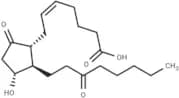
CAS:13,14-dihydro-15-keto Prostaglandin E2 (13,14-dihydro-15-keto PGE2) serves as the predominant metabolite of PGE2 in plasma, created through a 15-keto PGE2 intermediate by the action of 15-oxo-PG Δ13 reductase. Unlike its precursor PGE2, this compound exhibits poor binding affinity towards EP2 and EP4 PGE2 receptors (Ki values of 12 and 57 µM, respectively) in CHO cells and fails to stimulate adenylate cyclase activity therein (EC50s >18 and >38 µM, respectively). Concentrations of 13,14-dihydro-15-keto PGE2 are notably higher in the plasma of pregnant women during their third trimester and at labor and delivery stages, whereas its levels are found to be reduced in the tumor tissues of patients with non-small cell lung cancer (NSCLC) compared to adjacent healthy tissue.Formula:C20H32O5Color and Shape:SolidMolecular weight:352.5Hemopressin(rat) TFA
CAS:Hemopressin(rat) TFA, a nonapeptide from hemoglobin α1-chain, selectively inhibits CB1 receptors and reduces inflammatory pain.Formula:C55H78F3N13O14Color and Shape:SolidMolecular weight:1202.28Bufuralol
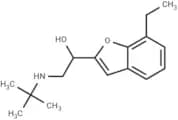
CAS:Bufuralol (Ro 3-4787) is a 尾-adrenergic receptor blocker with a certain degree of sympathomimetic effects and can be used to study cardiovascular diseases.Formula:C16H23NO2Purity:98.26%Color and Shape:SolidMolecular weight:261.36NTNCB hydrochloride
CAS:NTNCB hydrochloride is an antagonist of neuropeptide Y (NPY) Y5 receptor.Formula:C25H34ClN3O4SPurity:98.38%Color and Shape:SolidMolecular weight:508.07Alclofenac
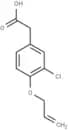
CAS:Alclofenac (W-7320) aids chronic rheumatism by affecting acute phase proteins and L-tryptophan binding.Formula:C11H11ClO3Purity:99.89%Color and Shape:SolidMolecular weight:226.66Xanthine amine congener
CAS:Xanthine amine congener is an Adenosine receptor antagonist.Formula:C21H28N6O4Purity:99.7%Color and Shape:SolidMolecular weight:428.48Prostaglandin D2-1-glyceryl ester
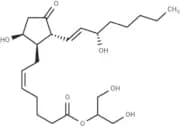
CAS:Prostaglandin D2-1-glyceryl ester (PGD2-G; PGD2 2-glyceryl ester) is a chemical compound known for its significance in various biological processes. This compound, commonly referred to by its abbreviations PGD2-G or PGD2 2-glyceryl ester, plays a crucial role in the mediation of physiological functions.Formula:C23H38O7Color and Shape:SolidMolecular weight:426.55NBI-34041
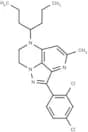
CAS:NBI-34041: High-affinity CRF1 antagonist; reduces endocrine responses to CRF challenges.Formula:C22H26Cl2N4Color and Shape:SolidMolecular weight:417.37Ebopiprant
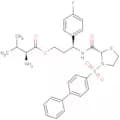
CAS:Ebopiprant (OBE022) is a prostaglandin F2α (PGF2α) receptor antagonist that can be used to study obesity.Formula:C30H34FN3O5S2Purity:98.73%Color and Shape:SolidMolecular weight:599.748-iso-15(R)-Prostaglandin F2α
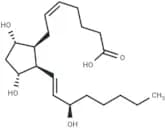
CAS:8-iso-15(R)-Prostaglandin F2α (8-iso-15(R) PGF2α) is a chemically distinct member within a broad group of prostaglandin-like eicosanoids, produced through the free radical peroxidation of arachidonic acid contained in membrane phospholipids. It represents the C-15 epimer of 8-isoPGF2α, distinguished as the sole isoprostane isomer extensively examined across numerous biological systems.Formula:C20H34O5Color and Shape:SolidMolecular weight:354.5GLP-1R agonist 17
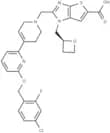
CAS:GLP-1R agonist 17 excels in stimulating GLP-1 receptors, useful for cardiovascular metabolic disease research.Formula:C28H26ClFN4O4SColor and Shape:SolidMolecular weight:569.05CYM50260
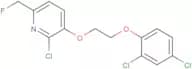
CAS:CYM50260 is a potent and exquisitely selective agonist of sphingosine-1-phosphate 4 receptor (S1P4-R, EC50= nM) with no activity against S1P1-R, S1P2-R, S1P3-RFormula:C14H11Cl3FNO2Purity:99.88%Color and Shape:SolidMolecular weight:350.6Ref: TM-T15031
1mg50.00€5mg105.00€1mL*10mM (DMSO)116.00€10mg170.00€25mg356.00€50mg533.00€100mg758.00€Nemonapride
CAS:Nemonapride is a dopamine D2-like receptor antagonist.Formula:C21H26ClN3O2Purity:98%Color and Shape:SolidMolecular weight:387.9Butanoyl PAF
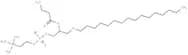
CAS:Oxidized low-density lipoprotein (oxLDL) encompasses low molecular weight entities that facilitate monocyte differentiation and activate polymorphonuclear leukocytes. A substance, recently isolated and purified from oxLDL and identified as azelaoyl PC, exemplifies this. Similarly, Butanoyl PAF, a compound closely related to azelaoyl PC, maintains over 10% of the agonist potency of platelet-activating factor (PAF). Notably, Butanoyl PAF's concentration in oxLDL surpasses that of enzymatically generated PAF by more than 100-fold, making it a significant signalling molecule within oxLDL.Formula:C28H58NO7PColor and Shape:SolidMolecular weight:551.7Meclizine N-oxide
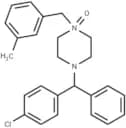
CAS:Meclizine N-oxide, a metabolite of the histamine H1 receptor antagonist meclizine (1), also acts as a degradation product and potential impurity in commercial meclizine preparations (2).Formula:C25H27ClN2OColor and Shape:SolidMolecular weight:407Mitemcinal
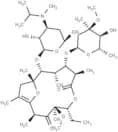
CAS:Mitemcinal is a motilin agonist.Formula:C40H69NO12Color and Shape:SolidMolecular weight:755.98Piribedil N-oxide
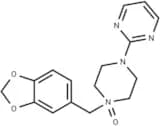
CAS:Piribedil N-oxide, a metabolite of the dopamine receptor agonist piribedil, represents a chemical compound involved in the metabolic processing of its parent compound, piribedil.Formula:C16H18N4O3Color and Shape:SolidMolecular weight:314.34Prostaglandin F1β
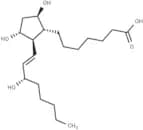
CAS:PGF1β, a biochemical compound, functions as a pivotal mediator in inflammatory processes and plays an integral role in uterine contractions. It exhibits significant regulatory effects on platelet aggregation and vasodilation, demonstrating its critical importance in cardiovascular health. Additionally, PGF1β contributes to the regulation of kidney function and electrolyte balance, illustrating its widespread impact across various physiological systems.Formula:C20H36O5Color and Shape:SolidMolecular weight:356.5ST4206
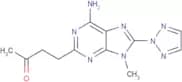
CAS:ST4206 is an antagonist of adenosine A2A. For adenosine A2A receptor and adenosine A1 receptor, the Kis values are 12 nM and 197 nM , respectively.Formula:C12H14N8OPurity:98%Color and Shape:SolidMolecular weight:286.29(R)-JNJ-31020028
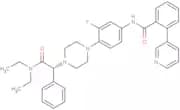
CAS:(R)-JNJ-31020028: High-affinity, selective brain-penetrant Y2 receptor antagonist; pIC50: human 8.07, rat 8.22, mouse 8.21.Formula:C34H36FN5O2Purity:98%Color and Shape:SolidMolecular weight:565.68