Metabolism
Metabolism inhibitors are compounds that interfere with metabolic pathways, altering the production and utilization of energy within cells. These inhibitors are used to study the regulation of metabolism, the role of metabolic pathways in diseases like cancer and diabetes, and to develop new therapeutic strategies. Metabolism inhibitors can target various enzymes and processes involved in glycolysis, fatty acid oxidation, and other metabolic functions. At CymitQuimica, we offer a wide range of high-quality metabolism inhibitors to support your research in biochemistry, metabolic disorders, and drug development.
Subcategories of "Metabolism"
- AhR(42 products)
- Aminopeptidase(76 products)
- CETP(20 products)
- Carbonic Anhydrase(196 products)
- Casein Kinase(138 products)
- DHFR(32 products)
- Decarboxylase(4 products)
- Dehydrogenase(302 products)
- FAAH(64 products)
- FXR(62 products)
- Factor Xa(85 products)
- Fatty Acid Synthase(37 products)
- Ferroptosis(226 products)
- GR(3 products)
- GSNOR(3 products)
- Glucokinase(57 products)
- HIF/HIF Prolyl-Hydroxylase(146 products)
- HMG-CoA Reductase(34 products)
- Hydroxylase(36 products)
- IDO(84 products)
- LDL(7 products)
- Lipase(107 products)
- Lipid(61 products)
- Lipoxygenase(134 products)
- MAO(87 products)
- MPO(2 products)
- NAMPT(40 products)
- P450(6 products)
- PAI-1(26 products)
- PDE(169 products)
- PED(1 products)
- PKM(17 products)
- PPAR(170 products)
- Phospholipase(86 products)
- ROR(47 products)
- Retinoid Receptor(22 products)
- SGK(10 products)
- Thioredoxin(12 products)
- Transferase(29 products)
- Transporter(45 products)
- UGT(4 products)
- Xanthine Oxidase (XO) Inhibitors(9 products)
Show 34 more subcategories
Found 9182 products of "Metabolism"
Sort by
Purity (%)
0
100
|
0
|
50
|
90
|
95
|
100
HSD17B13-IN-17
CAS:HSD17B13-IN-17 (compound 9) serves as a potent inhibitor of hydroxysteroid 17β-dehydrogenase 13 (HSD17B13). It demonstrates inhibitory efficacy with IC50 values of <0.1 μM for estradiol and <1 μM for Leukotriene B3 as substrates. This compound is significant in the management of nonalcoholic fatty liver diseases (NAFLDs), including nonalcoholic steatohepatitis (NASH) [1].Formula:C20H16ClFN2O3SColor and Shape:SolidMolecular weight:418.87Dioctanoylphosphatidic acid sodium
CAS:Dioctanoylphosphatidic acid sodium serves as a modulator of phagocyte respiratory bursts, a precursor to diacylglycerol and lyso-phosphatidic acid, and influences the phosphorylation of the mammalian target of rapamycin (mTOR). Additionally, it enhances the viability of gallbladder cancer cells inhibited by histone deacetylase inhibitors (HDACI). This compound is derived from glycerophospholipids through the action of phospholipase D.Formula:C19H36NaO8PColor and Shape:SolidMolecular weight:446.457α,24(S)-Dihydroxycholesterol
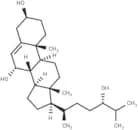
CAS:7α,24(S)-Dihydroxycholesterol ((3β,7α,24S)-Cholest-5-ene-3,7,24-triol) acts as a ligand for liver X receptors (LXR), specifically binding to the ligand-binding domains of LXRα and LXRβ. This compound is synthesized through the E-α,β-unsaturated ketone process, starting with arsindole and J-secondary-butyl dimethylsiloxy-bis-positive-5-cholestenal as the initial materials. It undergoes a series of transformations to produce 7α,24(S)-dihydroxycholesterol.Formula:C27H46O3Color and Shape:SolidMolecular weight:418.65DG013A
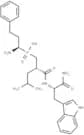
CAS:DG013A inhibits ERAP1 & ERAP2 (IC50: 33 nM & 11 nM) to research autoimmune diseases & cancer.Formula:C27H37N4O4PColor and Shape:SolidMolecular weight:512.58Propofol sulfate sodium
CAS:Propofolsulfate (sodium) is a metabolite of Propofol.Formula:C12H17NaO4SColor and Shape:SolidMolecular weight:280.316BMS-185354
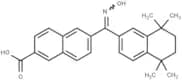
CAS:BMS-185354 is a selective RARγ activator with an EC50 value of 28 nM, offering potential for cancer research.Formula:C26H27NO3Color and Shape:SolidMolecular weight:401.4973-Ferrocenylpropionic anhydride
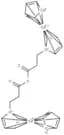
CAS:3-Ferrocenylpropionic anhydride is extensively used in compound synthesis, serving as an intermediary for producing various bioactive compounds. Additionally, by modulating specific enzyme activities, 3-Ferrocenylpropionic anhydride has demonstrated potential anti-tumor properties.Formula:C26H26Fe2O3Color and Shape:SolidMolecular weight:498.172,4-Dihydroxybutanoic acid
CAS:2,4-Dihydroxybutanoic acid is typically not found in extracts of normal human urine and is present only in trace amounts in newborns, while cases of succinic semialdehyde dehydrogenase deficiency consistently exhibit elevated levels of this metabolite.Formula:C4H8O4Color and Shape:SolidMolecular weight:120.10RBM14C12
CAS:RBM14C12 is a compound known for its cell signaling activity. It plays a crucial role in researching lipid metabolism and cell membrane structure. Additionally, RBM14C12 can be utilized in the development of novel compounds aimed at modulating the biological mechanisms associated with lipid-related diseases.Formula:C26H39NO6Color and Shape:SolidMolecular weight:461.594-Amino-3-hydroxyphenylalanine
CAS:4-Amino-3-hydroxyphenylalanine (4-AHP) is a photodegradation product of eumelanin. It can be utilized in research focused on the formation of cutaneous melanoma and age-related macular degeneration.Formula:C9H12N2O3Color and Shape:SolidMolecular weight:196.203Lipid 11
CAS:Lipid 11 (Compound Lipid 1) is a cationic lipid designed for nucleic acid delivery. It forms lipid nanoparticles (LNPs) through electrostatic interactions with nucleic acids, such as ceDNA. By using its cationic amine groups, Lipid 11 complexes with negatively charged nucleic acids, enabling cellular uptake and release of the nucleic acid cargo. Lipid 11 shows potential for use in the development of gene therapy drug delivery systems.Formula:C43H85NO4Color and Shape:SolidMolecular weight:680.149-cis-β-Carotene
CAS:9-cis-β-Carotene, a precursor of retinal, is cleaved by beta-carotene oxygenase 1 (BCMO1) to produce 9-cis-retinal.Formula:C40H56Purity:98%Color and Shape:SolidMolecular weight:536.87HSD17B13-IN-19
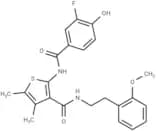
CAS:HSD17B13-IN-19 (compound 16) acts as a potent inhibitor of hydroxysteroid 17β-dehydrogenase 13 (HSD17B13), exhibiting IC50 values under 0.1 μM and under 1 μM when using estradiol and Leukotriene B3 as substrates, respectively. This compound is crucial in the treatment of nonalcoholic fatty liver diseases (NAFLDs), such as nonalcoholic steatohepatitis (NASH) [1].Formula:C23H23FN2O4SColor and Shape:SolidMolecular weight:442.5DRX-065
CAS:DRX-065, a deuterated R-enantiomer of pioglitazone, treats NASH without PPARγ weight gain issues.Formula:C19H20N2O3SColor and Shape:SolidMolecular weight:357.45ABT-046
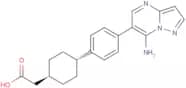
CAS:ABT-046 is an orally active, selective, and highly efficient Diacylglycerol Acyltransferase 1 (DGAT-1) inhibitor that can be used in metabolic disease research.Formula:C20H22N4O2Purity:98.13%Color and Shape:SolidMolecular weight:350.41Nsp12-IN-2
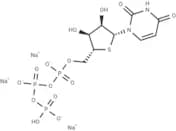
CAS:Nsp12-IN-2 (Compound 8), a triphosphate metabolite of 4'-thiouridine, functions as an inhibitor of SARS-CoV-2 Nsp12. It effectively suppresses the RNA-dependent RNA polymerase (RdRp) activity of the SARS-CoV-2 Nsp12-Nsp7-Nsp8 complex, halting RNA synthesis and blocking the RNA capping and NMP capping of Nsp9. Nsp12-IN-2 shows potential for research into infections caused by SARS-CoV-2, other coronaviruses, and additional RNA viruses.Formula:C9H12N2Na3O14P3SColor and Shape:SolidMolecular weight:566.15FXR agonist 12
CAS:FXR agonist12 (Compound C7) is an orally active FXR agonist. It downregulates bile acid synthesis-related genes and upregulates bile acid transport-related genes in HepG2 cells. FXR agonist12 alleviates ANIT-induced cholestasis and reduces liver damage and fibrosis in a mouse model of NASH.
Formula:C26H44O3Color and Shape:SolidMolecular weight:404.626MAFP
CAS:MAFP (Methyl Arachidonyl Fluorophosphonate) is an effective irreversible inhibitor of anandamide amidase.Formula:C21H36FO2PColor and Shape:SolidMolecular weight:370.48DLCI-1
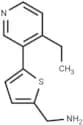
CAS:DLCI-1 is a potent and selective oral inhibitor of cytochrome P450 2A6 (CYP2A6), significantly reducing self-administered nicotine doses in both male and female mice.Formula:C12H14N2SColor and Shape:SolidMolecular weight:218.32(S)-CPP sodium
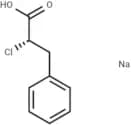
CAS:(S)-CPP sodium serves as an inhibitor of the branched-chain α-keto acid dehydrogenase complex (BCKDC) kinase, commonly referred to as BDK or keto acid dehydrogenase kinase. As a negative regulator of BCKDC activity, (S)-CPP (IC50 of 6.3 μM) inhibits BDK, which activates the complex, leading to a significant reduction in the levels of leucine/isoleucine and valine in the plasma of wild-type mice.Formula:C9H8ClNaO2Color and Shape:SolidMolecular weight:206.60