Metabolism
Metabolism inhibitors are compounds that interfere with metabolic pathways, altering the production and utilization of energy within cells. These inhibitors are used to study the regulation of metabolism, the role of metabolic pathways in diseases like cancer and diabetes, and to develop new therapeutic strategies. Metabolism inhibitors can target various enzymes and processes involved in glycolysis, fatty acid oxidation, and other metabolic functions. At CymitQuimica, we offer a wide range of high-quality metabolism inhibitors to support your research in biochemistry, metabolic disorders, and drug development.
Subcategories of "Metabolism"
- AhR(41 products)
- Aminopeptidase(67 products)
- CETP(18 products)
- Carbonic Anhydrase(178 products)
- Casein Kinase(130 products)
- DHFR(33 products)
- Decarboxylase(4 products)
- Dehydrogenase(270 products)
- FAAH(64 products)
- FXR(58 products)
- Factor Xa(80 products)
- Fatty Acid Synthase(33 products)
- Ferroptosis(215 products)
- GR(3 products)
- GSNOR(3 products)
- Glucokinase(54 products)
- HIF/HIF Prolyl-Hydroxylase(142 products)
- HMG-CoA Reductase(33 products)
- Hydroxylase(30 products)
- IDO(82 products)
- LDL(8 products)
- Lipase(97 products)
- Lipid(59 products)
- Lipoxygenase(125 products)
- MAO(87 products)
- MPO(2 products)
- NAMPT(36 products)
- P450(6 products)
- PAI-1(25 products)
- PDE(166 products)
- PED(1 products)
- PKM(15 products)
- PPAR(164 products)
- Phospholipase(82 products)
- ROR(42 products)
- Retinoid Receptor(29 products)
- SGK(11 products)
- Thioredoxin(12 products)
- Transferase(30 products)
- Transporter(42 products)
- UGT(4 products)
- Xanthine Oxidase (XO) Inhibitors(9 products)
Show 34 more subcategories
Found 8625 products of "Metabolism"
Sort by
Purity (%)
0
100
|
0
|
50
|
90
|
95
|
100
4-methyl-2-Oxovalerate (sodium salt)
CAS:<p>4-Methyl-2-oxovalerate is an L-leucine precursor/metabolite and a key compound in 2-methylpropyl glucosinolate synthesis and diabetes marker.</p>Formula:C6H9NaO3Color and Shape:SolidMolecular weight:152.12EDDA
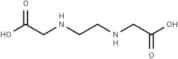
CAS:<p>Ethylenediaminediacetic acid is derived from two molecules of glycine linked by amines.</p>Formula:C6H12N2O4Color and Shape:SolidMolecular weight:176.17Pancreatic lipase-IN-2
Pancreatic lipase-IN-2 (compound 7r) is a potent inhibitor of pancreatic lipase (PL), with an IC50 value of 2.67 μM, and exhibits anti-obesity effects.Formula:C32H33N3O2SMolecular weight:523.22935Avellanin B
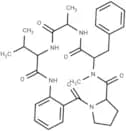
CAS:<p>Avellanin B is a fungal metabolite.</p>Formula:C30H37N5O5Color and Shape:SolidMolecular weight:547.656DPPD-Q
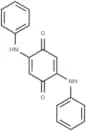
CAS:<p>DPPD-Q, an antioxidant and an oxidative derivative of substituted p-phenylenediamine (DPPD), is identified in tire wear particles, rubber debris, particulate matter 2.5 (PM2.5), and wastewater influents and effluents. At a concentration of 5 µM, DPPD-Q inhibits soybean urease by 91.4%.</p>Formula:C18H14N2O2Color and Shape:SolidMolecular weight:290.324,7,10,13,16-Docosapentaenoic acid
CAS:<p>4,7,10,13,16-Docosapentaenoic acid is an endogenous metabolite.</p>Formula:C22H34O2Purity:98%Color and Shape:SolidMolecular weight:330.51Amastatin hydrochloride
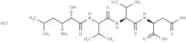
CAS:<p>Amastatin HCl is an inhibitor of aminopeptidase. It also induces vasoconstriction.</p>Formula:C21H39ClN4O8Color and Shape:White To Off-White PowderMolecular weight:511.01Carboxypeptidase B
CAS:<p>Carboxypeptidase B degrades peptides from C-terminal, freeing amino acids, and targets basic residues.</p>Color and Shape:SolidML162-yne
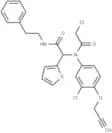
CAS:<p>ML162-yne is an effective GPX4 inhibitor affinity probe with click chemistry properties. The compound contains an alkyne group capable of reacting with azide-containing molecules through a copper-catalyzed azide-alkyne cycloaddition reaction (CuAAc), making it suitable for protein labeling and related studies.</p>Formula:C25H22Cl2N2O3SColor and Shape:SolidMolecular weight:501.435,6-epoxy-13-cis Retinoic Acid
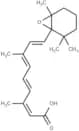
CAS:<p>5,6-epoxy-13-cis Retinoic Acid is a metabolite of 13-cis retinoic acid.</p>Formula:C20H28O3Color and Shape:SolidMolecular weight:316.441N,S-Bis-Fmoc-Glutathione
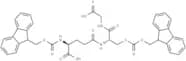
CAS:<p>N,S-Bis-Fmoc-Glutathione is a potent inhibitor of glyoxalase II, exhibiting a K i of 0.32 mM [1].</p>Formula:C40H37N3O10SColor and Shape:SolidMolecular weight:751.8Calcium gluconate monohydrate
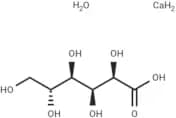
CAS:<p>Calcium gluconate monohydrate is a useful organic compound for research related to life sciences. The catalog number is T35350 and the CAS number is 66905-23-5.</p>Formula:C6H16CaO8Purity:98%Color and Shape:SolidMolecular weight:256.264α-2-3,6-sialidase (BiNanH2)
<p>Alpha-2-3,6-sialidase (BiNanH2) is a sialyltransferase for biochemical studies, transferring sialic acid to galactosides.</p>Color and Shape:Solid24,25-Epoxycholesterol
CAS:24,25-Epoxycholesterol is an oxysterol agonist of the liver X receptor, known to inhibit the activity of 3-hydroxy-3-methylglutaryl coenzyme A reductase (HMG-CoA reductase) in hepatic cells. Additionally, 24,25-Epoxycholesterol plays a role in regulating cholesterol metabolism within the liver.Formula:C27H44O2Molecular weight:400.64Angiotensin 1/2 (1-9)
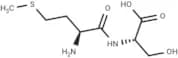
CAS:<p>Angiotensin 1/2 (1-9) is containing the amino acids 1-9 that are converted from Angiotensin I/II peptide.</p>Formula:C56H78N16O13Purity:98%Color and Shape:SolidMolecular weight:1183.32Methionylserine
CAS:<p>Methionylserine (H-MET-SER-OH), a dipeptide, binds hPEPT1 (Km 0.2 mM), inhibits ACE, used in hypertension research.</p>Formula:C8H16N2O4SColor and Shape:SolidMolecular weight:236.29PKM2-IN-10
<p>PKM2-IN-10 is a PKM2 inhibitor. It effectively suppresses the proliferation of A549 and HCC1833 cell lines with IC50 values of 3.36 μM and 9.20 μM, respectively. PKM2-IN-10 demonstrates antitumor activity in human non-small cell lung cancer (NSCLC) and mouse lung adenocarcinoma models. It is applicable for research in lung cancer.</p>Formula:C21H15F4N5Color and Shape:SolidMolecular weight:413.126363-Methylcholanthrene
CAS:3-Methylcholanthrene is a carcinogenic polycyclic hydrocarbon formed during combustion, accumulates in prostate tissue, and serves as a prostate cancer model.Formula:C21H16Purity:99.49%Molecular weight:268.35L-739750 2HCl
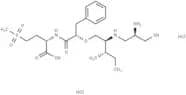
<p>L-739750 2HCl is a potent inhibitor of peptidomimetic farnesyltransferase, a novel pseudopeptide mimetic with potential anticancer activity.</p>Formula:C23H41Cl2N3O6S2Purity:98.69% - 99.16%Color and Shape:SoildMolecular weight:590.623α,7α-Dihydroxycoprostanic acid
CAS:3α,7α-Dihydroxycoprostanic acid, an endogenous metabolite and bile acid, serves as the precursor to chenodeoxycholic acid [1].Formula:C27H46O4Molecular weight:434.65