Metabolism
Metabolism inhibitors are compounds that interfere with metabolic pathways, altering the production and utilization of energy within cells. These inhibitors are used to study the regulation of metabolism, the role of metabolic pathways in diseases like cancer and diabetes, and to develop new therapeutic strategies. Metabolism inhibitors can target various enzymes and processes involved in glycolysis, fatty acid oxidation, and other metabolic functions. At CymitQuimica, we offer a wide range of high-quality metabolism inhibitors to support your research in biochemistry, metabolic disorders, and drug development.
Subcategories of "Metabolism"
- AhR(42 products)
- Aminopeptidase(76 products)
- CETP(20 products)
- Carbonic Anhydrase(197 products)
- Casein Kinase(139 products)
- DHFR(30 products)
- Decarboxylase(4 products)
- Dehydrogenase(303 products)
- FAAH(64 products)
- FXR(63 products)
- Factor Xa(87 products)
- Fatty Acid Synthase(37 products)
- Ferroptosis(233 products)
- GR(3 products)
- GSNOR(3 products)
- Glucokinase(56 products)
- HIF/HIF Prolyl-Hydroxylase(146 products)
- HMG-CoA Reductase(36 products)
- Hydroxylase(36 products)
- IDO(84 products)
- LDL(7 products)
- Lipase(107 products)
- Lipid(62 products)
- Lipoxygenase(134 products)
- MAO(84 products)
- MPO(2 products)
- NAMPT(40 products)
- P450(6 products)
- PAI-1(26 products)
- PDE(169 products)
- PED(1 products)
- PKM(17 products)
- PPAR(170 products)
- Phospholipase(84 products)
- ROR(47 products)
- Retinoid Receptor(16 products)
- SGK(10 products)
- Thioredoxin(12 products)
- Transferase(30 products)
- Transporter(43 products)
- UGT(4 products)
- Xanthine Oxidase (XO) Inhibitors(9 products)
Show 34 more subcategories
Found 9204 products of "Metabolism"
Sort by
Purity (%)
0
100
|
0
|
50
|
90
|
95
|
100
1-Stearoyl-3-Linoleoyl-rac-glycerol
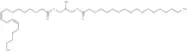
CAS:1-Stearoyl-3-linoleoyl-rac-glycerol, a diacylglycerol, incorporates stearic acid at the sn-1 position and linoleic acid at the sn-3 position. Its levels rise in a time-dependent manner throughout the ripening process of dry-cured sausages.Formula:C39H72O5Color and Shape:SolidMolecular weight:620.99Fulvestrant 3-β-D-Glucuronide
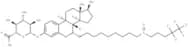
CAS:Fulvestrant 3-β-D-Glucuronide,Fulvestrant的代谢产物,为葡萄糖醛酸结合物,属于纯抗雌激素类固醇。该化合物可应用于乳腺癌研究领域。Formula:C38H55F5O9SColor and Shape:SolidMolecular weight:782.91,2-Dilinoleoyl-3-α-Linolenoyl-rac-glycerol
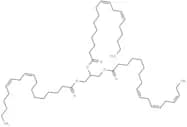
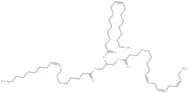
CAS:1,2-Dilinoleoyl-3-α-linolenoyl-rac-glycerol is a triacylglycerol featuring linoleic acid at the sn-1 and sn-2 positions and α-linolenic acid at the sn-3 position, identified within corn and soybean oils.Formula:C57H96O6Color and Shape:SolidMolecular weight:877.37Indeloxazine
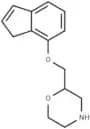
CAS:Indeloxazine is a cerebral activator and anticonvulsant.Formula:C14H17NO2Color and Shape:SolidMolecular weight:231.29(±)13,14-EDT
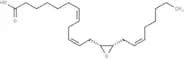
CAS:(±)13,14-EDT, an oxylipin metabolite derived from adrenic acid through the cytochrome P450 (CYP) pathway, acts as a potent activator of large-conductanceFormula:C22H36O3Color and Shape:SolidMolecular weight:348.50Flucythrinate
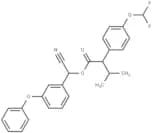
CAS:Flucythrinate is an insecticide.Formula:C26H23F2NO4Color and Shape:Viscous Liquid SolidMolecular weight:451.46TP-1454
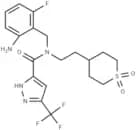
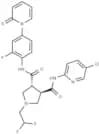
CAS:TP-1454 is an activator against PKM2 with a biochemically determined AC50 of 10 Nm. It can regulate tumor immune responses by acting on T regulatory cells.Formula:C19H22F4N4O3SColor and Shape:SolidMolecular weight:462.46SCH-39370
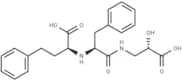
CAS:SCH-39370 is a potent and specific neutral metalloendopeptidase (NEP) inhibitor.Formula:C22H26N2O6Color and Shape:SolidMolecular weight:414.45R-1663
CAS:R-1663 inhibits factor Xa, prolongs clotting, reduces thrombin without affecting bleed time; more effective on peak than ETP.Formula:C24H21ClF3N5O3Color and Shape:SolidMolecular weight:519.9Testololactone
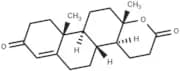
CAS:Testololactone, an aromatase inhibitor, may be utilized in breast carcinoma research [1].Formula:C19H26O3Color and Shape:SolidMolecular weight:302.412,3-Diphospho-D-glyceric acid pentasodium salt
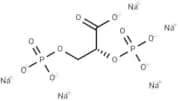
CAS:2,3-Diphospho-D-glyceric acid pentasodium salt is a highly anionic polyphosphorus compound located within the concave center of red blood cells, where itFormula:C3H3Na5O10P2Color and Shape:SolidMolecular weight:375.9511(Z),14(Z),17(Z)-Eicosatrienoic Acid methyl ester
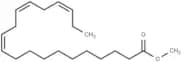
CAS:11(Z),14(Z),17(Z)-Eicosatrienoic acid methyl ester is the ester derivative of 11(Z),14(Z),17(Z)-eicosatrienoic acid, identified within lipid-producing microalgae Nannochloropsis, as well as in diesel-contaminated soils and residential wastewater.Formula:C21H36O2Color and Shape:SolidMolecular weight:320.5171,2-Dioleoyl-3-α-Linolenoyl-rac-glycerol
CAS:1,2-Dioleoyl-3-α-linolenoyl-rac-glycerol, a triacylglycerol, features oleic acid at the sn-1 and sn-2 positions and α-linolenic acid at the sn-3 position. This compound has been identified in the fat body of male B. lapidarius bumblebees.Formula:C57H100O6Color and Shape:SolidMolecular weight:881.41-Palmitoyl-sn-glycerol 3-phosphate
CAS:1-Palmitoyl-sn-glycerol 3-phosphate (1-P-GPA), an endogenous metabolite, is utilized in the research of non-alcoholic fatty liver disease [1].Formula:C19H39O7PColor and Shape:SolidMolecular weight:410.48Palmitoleic Acid sodium
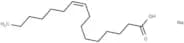
CAS:Palmitoleic acid, an ω-7 monounsaturated fatty acid found in macadamia and sea buckthorn oils, enhances both basal and insulin-stimulated glucose uptake, as well as Glut4 protein levels in 3T3-L1 adipocytes at a 200 µM concentration. Ex vivo, at a dosage of 300 mg/kg per day, it significantly increases glucose uptake and both aerobic and anaerobic glycolysis, while decreasing de novo fatty acid synthesis and the activity of lipogenic enzymes, specifically ATP citrate lyase (ACL) and glucose-6-phosphate dehydrogenase (G6PDH), in isolated murine adipocytes. Furthermore, the dietary administration of palmitoleic acid at 300 mg/kg mitigates high-fat diet-induced insulin resistance and liver inflammation in mice.Formula:C16H29O2NaColor and Shape:SolidMolecular weight:276.39(2E,9Z)-Octadeca-2,9-dienoic acid
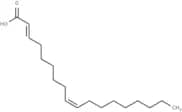
CAS:(2E,9Z)-Octadeca-2,9-dienoic acid, a polyunsaturated fatty acid, is utilized in the study of lipoxygenase-dependent metabolism [1].Formula:C18H32O2Color and Shape:SolidMolecular weight:280.4511β-Prostaglandin F2α Ethanolamide
CAS:11β-Prostaglandin F2αethanolamide (11β-PGF2α-EA), posited as the hepatic metabolite derived from PGD2-EA during COX-2 metabolism of AEA—an endogenous cannabinoid present in brain, liver, and various mammalian tissues—is synthesized directly from AEA via COX-2 and specific prostaglandin synthase, leading to ethanolamide versions of classical prostaglandins. Additionally, PGD2-EA formation occurs in activated RAW 264.7 cells upon AEA treatment.Formula:C22H39NO5Color and Shape:SolidMolecular weight:397.614S(15R)-EET methyl ester
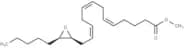
CAS:14S(15R)-EET methyl ester, an oxylipin derived from arachidonic acid through cytochrome P450 metabolism, demonstrates specific biological activities. It exhibits affinity for isolated guinea pig monocytes, evidenced by a competitive binding assay with a Ki value of 612.5 nM using [3H]14(15)-EET. This compound notably enhances the dilation of precontracted isolated canine epicardial arterioles (EC50= 4 pM) and denuded porcine subepicardial arterioles (EC50= 3 pM), indicating potent vasodilatory effects. Unlike its isomer 14R(15S)-EET, 14S(15R)-EET methyl ester does not inhibit COX activity in enzyme assays or affect isolated platelets, highlighting its distinct functional profile.Formula:C21H34O3Color and Shape:SolidMolecular weight:334.491-Arachidonoyl Glycerol
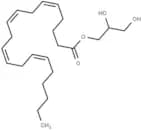
CAS:2-Arachidonoylglycerol (2-AG) is identified as a more potent endogenous cannabinoid ligand compared to its analogue, 1-Arachidonoylglycerol (1-AG), exhibiting 10 to 100 times the ligand binding affinity and agonist activity at the CB1 receptor, thus making it a natural ligand. However, 2-AG's chemical instability leads to rapid isomerization to 1-AG (also referred to as 1(3)-AG) both in vitro and in vivo. This isomerization process, where 1-AG becomes a frequent contaminant in synthetic 1-AG preparations, significantly decreases their cannabinergic potency. Furthermore, 1-AG is characterized as a weak CB1 receptor agonist with potential for other pharmacological effects.Formula:C23H38O4Color and Shape:SolidMolecular weight:378.6Human enteropeptidase-IN-1
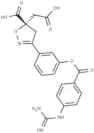
CAS:Enteropeptidase-IN-1: orally active, potent inhibitor, low systemic exposure, for anti-obesity research.Formula:C20H18N4O7Color and Shape:SolidMolecular weight:426.38