Metabolism
Metabolism inhibitors are compounds that interfere with metabolic pathways, altering the production and utilization of energy within cells. These inhibitors are used to study the regulation of metabolism, the role of metabolic pathways in diseases like cancer and diabetes, and to develop new therapeutic strategies. Metabolism inhibitors can target various enzymes and processes involved in glycolysis, fatty acid oxidation, and other metabolic functions. At CymitQuimica, we offer a wide range of high-quality metabolism inhibitors to support your research in biochemistry, metabolic disorders, and drug development.
Subcategories of "Metabolism"
- AhR(42 products)
- Aminopeptidase(76 products)
- CETP(20 products)
- Carbonic Anhydrase(197 products)
- Casein Kinase(139 products)
- DHFR(30 products)
- Decarboxylase(4 products)
- Dehydrogenase(302 products)
- FAAH(64 products)
- FXR(62 products)
- Factor Xa(87 products)
- Fatty Acid Synthase(37 products)
- Ferroptosis(227 products)
- GR(3 products)
- GSNOR(3 products)
- Glucokinase(56 products)
- HIF/HIF Prolyl-Hydroxylase(146 products)
- HMG-CoA Reductase(34 products)
- Hydroxylase(36 products)
- IDO(84 products)
- LDL(7 products)
- Lipase(107 products)
- Lipid(62 products)
- Lipoxygenase(134 products)
- MAO(85 products)
- MPO(2 products)
- NAMPT(40 products)
- P450(6 products)
- PAI-1(26 products)
- PDE(169 products)
- PED(1 products)
- PKM(17 products)
- PPAR(170 products)
- Phospholipase(85 products)
- ROR(47 products)
- Retinoid Receptor(17 products)
- SGK(10 products)
- Thioredoxin(12 products)
- Transferase(30 products)
- Transporter(43 products)
- UGT(4 products)
- Xanthine Oxidase (XO) Inhibitors(9 products)
Show 34 more subcategories
Found 9188 products of "Metabolism"
Sort by
Purity (%)
0
100
|
0
|
50
|
90
|
95
|
100
244cis
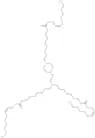
CAS:244cis, an ionizable cationic lipid incorporating a piperazine structure, facilitates the creation of lipid nanoparticles (LNPs). These LNPs, when formulated with 244cis and coated with an mRNA reporter gene, exhibit preferential accumulation in the lungs of mice, in contrast to those formulated with SM-102. Additionally, it leads to a reduction in the levels of serum chemokine (C-C motif) ligand 2 (CCL2) [1].Formula:C60H111N3O6Color and Shape:SolidMolecular weight:970.54HIF-2α-IN-9
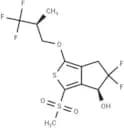
CAS:HIF-2α-IN-9 (compound 35r) serves as an HIF-2α inhibitor, effectively suppressing VEGF-A with an IC50 of 305 nM, and modulating growth-promoting genes withinFormula:C12H13F5O4S2Purity:98%Color and Shape:SolidMolecular weight:380.35ALP/Carbonic anhydrase-IN-1
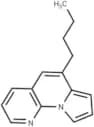
CAS:Compound 1e, also known as ALP/Carbonic anhydrase-IN-1, is a dual inhibitor targeting both carbonic anhydrase (CA) isozymes II, IX, and XII, as well as alkalineFormula:C15H16N2Purity:98%Color and Shape:SolidMolecular weight:224.3TMC-649128
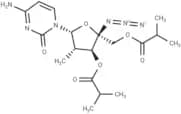
CAS:TMC-649128, a RNA polymerase NS5B inhibitor, is used for the treatment of HCV infection.Formula:C18H26N6O6Color and Shape:SolidMolecular weight:422.44Eucalyptacid A
CAS:Eucalyptacid A, a metabolite with antifungal properties, demonstrates efficacy against Alternaria solani, displaying minimum inhibitory concentrations (MIC)Formula:C17H32O5Color and Shape:SolidMolecular weight:316.43N-Stearoyl Taurine
CAS:N-Arachidonoyl dopamine (NADA) and N-Arachidonoyl serine (ARA-S), among various arachidonoyl amino acids, have been extracted from bovine brain, while a novel series of fatty acyl amides of taurine were unearthed in rat brain through mass spectral lipidomic analysis, indicating the discovery of a new class of compounds also located in the kidney. These compounds are known to activate members of the transient receptor potential (TRP) family of calcium channels. Notably, N-Stearoyl taurine emerges as a significant amino-acyl endocannabinoid identified in rat brain lipidomics profiling.Formula:C20H41NO4SColor and Shape:SolidMolecular weight:391.61ICMT-IN-50
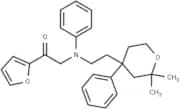
CAS:ICMT-IN-50 (compound 3) serves as an inhibitor of ICMT with an IC50 value of 0.31 µM [1].Formula:C27H31NO3Color and Shape:SolidMolecular weight:417.543-Hydroxycarbofuran
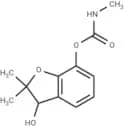
CAS:3-Hydroxycarbofuran, a principal metabolite of Carbofuran, acts as a reversible inhibitor of acetylcholinesterase (AChE) [1].Formula:C12H15NO4Purity:98%Color and Shape:SolidMolecular weight:237.25Methyl γ-Linolenyl Fluorophosphonate
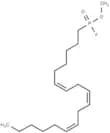
CAS:MγLnFP, an analog of methyl arachidonyl fluozophosphonate (MAFP), holds significance in pharmacological research due to its potential as an inhibitor of phospholipases, FAAH, and its role as a CB receptor ligand. However, the properties and effects of the γ-linolenyl variant of MAFP remain to be fully explored.Formula:C19H34FO2PColor and Shape:SolidMolecular weight:344.451Frunexian
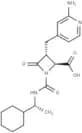
CAS:Frunexian (EP-7041) is a selective and potent inhibitor of coagulation factor XI/activated factor XI, specifically targeting XIa.Formula:C19H26N4O4Purity:98%Color and Shape:SolidMolecular weight:374.43h15-LOX-2 inhibitor 1
CAS:Compound 105 (h15-LOX-2 inhibitor 1) is a potent inhibitor of human epithelial 15-lipoxygenase-2 (h15-LOX-2), exhibiting an IC50 of 0.34 μM [1].Formula:C17H13F3N2SPurity:98%Color and Shape:SolidMolecular weight:334.36GSK321
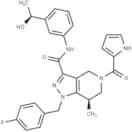
CAS:GSK321 is an IDH1 inhibitor that prevents cytoplasmic glutamine reductive carboxylation.GSK321 is used in the study of leukemia.Formula:C28H28FN5O3Purity:99.73%Color and Shape:SolidMolecular weight:501.55(±)11(12)-EpETE
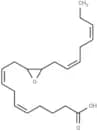
CAS:Eicosapentaenoic acid (EPA) is metabolized into epoxyeicosatetraenoic acids (EpETE) by multiple cytochrome P450 isoforms. The predominant compound of this epoxygenase pathway, (±)17(18)-EpETE, induces relaxation in vascular and airway smooth muscles through its action on large conductance Ca2+-activated K+ (BKCa) channels, specifically by binding to the BKα channel subunits. Another notable epoxygenase pathway derivative, (±)11(12)-EpETE, also generated from EPA via CYP450 activity in both in vitro and in vivo studies, has biological and physiological roles that are yet to be fully elucidated.Formula:C20H30O3Color and Shape:SolidMolecular weight:318.5Lp-PLA2-IN-13
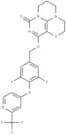
CAS:Lp-PLA2-IN-13 (compound 15), a potent Lp-PLA2 inhibitor, holds potential for research in neurodegenerative-related diseases [1].Formula:C22H17F5N4O4Purity:98%Color and Shape:SolidMolecular weight:496.397-hydroxy Etodolac
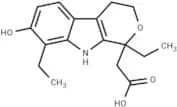
CAS:7-Hydroxy Etodolac, an inactive metabolite of the non-steroidal anti-inflammatory drug (NSAID) and COX inhibitor etodolac, serves no active function in the drug's pharmacological effects.Formula:C17H21NO4Color and Shape:SolidMolecular weight:303.35Nicorandil N-oxide
CAS:Nicorandil N-oxide, a metabolite of nicorandil, functions as an activator of the ATP-sensitive potassium channel Kir6.2 (SUR2B/Kir6.2) and is associated with the sulfonylurea receptor 2B (SUR2B), while also serving as a nitric oxide donor.Formula:C8H9N3O5Color and Shape:SolidMolecular weight:227.17PHD2-IN-1
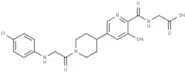
CAS:PHD2-IN-1, a potent and orally active HIF prolyl hydroxylase 2 (PHD2) inhibitor, exhibits an IC50 of 22.53 nM and is applicable in anemia research [1].Formula:C21H23ClN4O5Purity:98%Color and Shape:SolidMolecular weight:446.881-Stearoyl-2-Eicosapentaenoyl-sn-glycero-3-PC
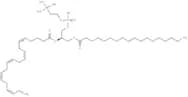
CAS:1-Stearoyl-2-eicosapentaenoyl-sn-glycero-3-PC is a phospholipid comprising stearic acid and eicosapentaenoic acid at the sn-1 and sn-2 positions, respectively, identified in human red blood cells (RBCs).Formula:C46H82NO8PColor and Shape:SolidMolecular weight:808.12Deleobuvir sodium
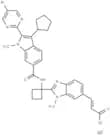
CAS:Deleobuvir sodium (BI207127), a hepatitis C NS5B inhibitor, showed promise in some trials but was discontinued in 2013 due to insufficient efficacy.Formula:C34H32BrN6NaO3Color and Shape:SolidMolecular weight:675.5618-carboxy dinor Leukotriene B4
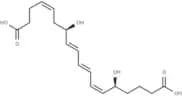
CAS:18-Carboxy dinor Leukotriene B4 (18-carboxy dinor LTB4) represents a β-oxidation metabolite of Leukotriene B4 (LTB4). Initially, LTB4 is metabolized in the liver to 20-carboxy LTB4, which subsequently undergoes β-oxidation to form 18-carboxy dinor LTB4.Formula:C18H26O6Color and Shape:SolidMolecular weight:338.4